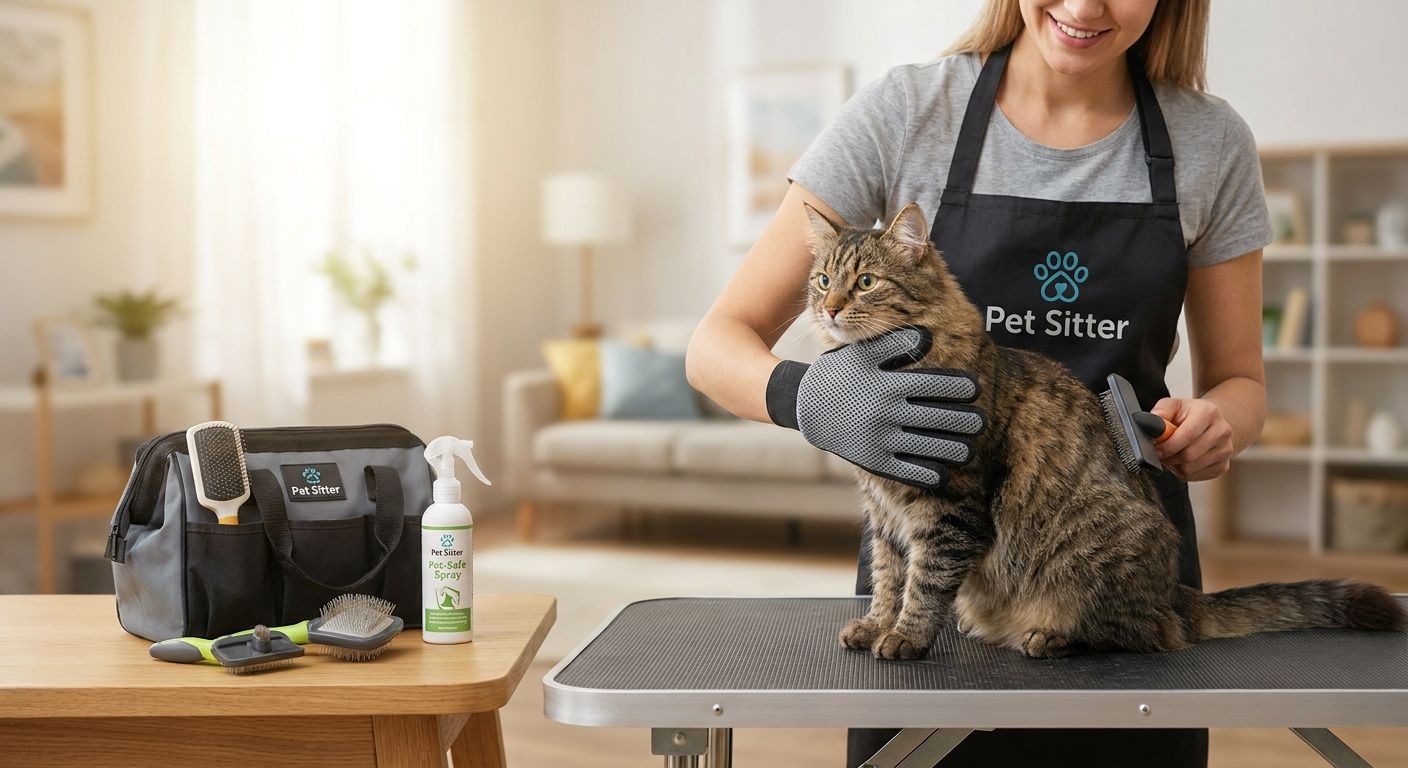
Professional pet sitters need cat grooming gloves that survive back-to-back visits, work on cats they've never touched before, and don't turn a five-minute brush-out into a wrestling match. The right glove cuts grooming time per stop and keeps clients' cats calm enough that owners actually rebook you.
- Silicone nub gloves are the fastest pick for multi-cat routes in 2026 but struggle on thick undercoats.
- Sanitize cat grooming gloves for pet sitters between every household — shared gloves carry ringworm spores and mites.
- Bristle-lined mitts pull more loose hair on long-haired cats but trap fur and take longer to clean.
- Pair gloves with a wrap like the Snug Pro Cat Wrap for anxious cats that won't tolerate a full-body glove session.
- Retire gloves once the nubs flatten — worn silicone stops lifting loose hair after roughly 40-60 uses.
Why cat grooming gloves matter for professional pet sitters
A pet sitter isn't grooming one cat in one home for years. They're grooming a different cat, in a different house, on a tight visit window, often for the first time. That changes what matters in a glove: speed of application, ease of cleaning between stops, and how a strange cat reacts to a stranger's hand wearing rubber or silicone.
A brush that works beautifully on your own cat can fail on day one of a new client's cat that's never seen a grooming tool. Cat grooming gloves for pet sitters have to work on the first try, every time, with zero warm-up period. That's the constraint driving every recommendation below.
Running a cat grooming gloves routine across multiple households
Build a multi-cat glove kit
One pair of gloves does not cover every cat on a route. Short-haired, long-haired, senior, and anxious cats respond to different textures and pressure. A durability-ranked glove is a solid daily-driver, but pet sitters running five or more stops a day need backups on hand.
- Keep at least two glove pairs in rotation so one can dry after washing while the other works
- Carry a spare in a zip pouch — a torn nub mid-visit means an incomplete groom
- Separate gloves by coat type if you serve both long-haired and short-haired clients regularly
- Note which glove worked on which cat in your visit log, so the next sitter isn't guessing
Match glove material to coat type
Silicone nubs lift loose hair fast on short coats but don't reach deep enough on a Maine Coon's undercoat. Bristle-lined mitts pull more from long-haired cats but need more time to clean out afterward.
- Use soft silicone or rubber nubs on cats flagged for sensitive skin
- Reach for bristle-lined gloves on double-coated or long-haired breeds shedding heavily
- Skip stiff plastic teeth on senior cats with thin, fragile skin
- Ask the owner at intake which texture their cat already tolerates — it saves the first five minutes of every visit
Sanitize gloves between every visit
This is the step most sitters skip because of time pressure, and it's the one with the highest real risk. Cats carry ringworm spores and mites that survive on unwashed grooming tools and transfer to the next cat you touch.
- Wipe gloves down with a pet-safe disinfectant between every household, not just at the end of the day
- Air-dry gloves fully before the next use — damp silicone holds bacteria longer
- Machine-wash fabric-backed gloves weekly if your route includes cats with known skin conditions
- Flag any cat with visible flaking, bald patches, or scabs and switch to a dedicated glove for that client only
Introduce gloves slowly with new or anxious cats
A cat that's never met you doesn't know your gloved hand isn't a threat. Rushing straight into a full groom on visit one is how sitters get scratched and how cats learn to bolt at the sight of a glove.
- Let the cat sniff the glove on your hand before any contact starts
- Start with two or three strokes on the cheek or shoulder, not the belly or tail
- Stop the first time the cat's tail starts flicking or ears go flat
- Build up groom length over two or three visits instead of forcing a full session immediately
Pair gloves with restraint tools for high-risk grooms
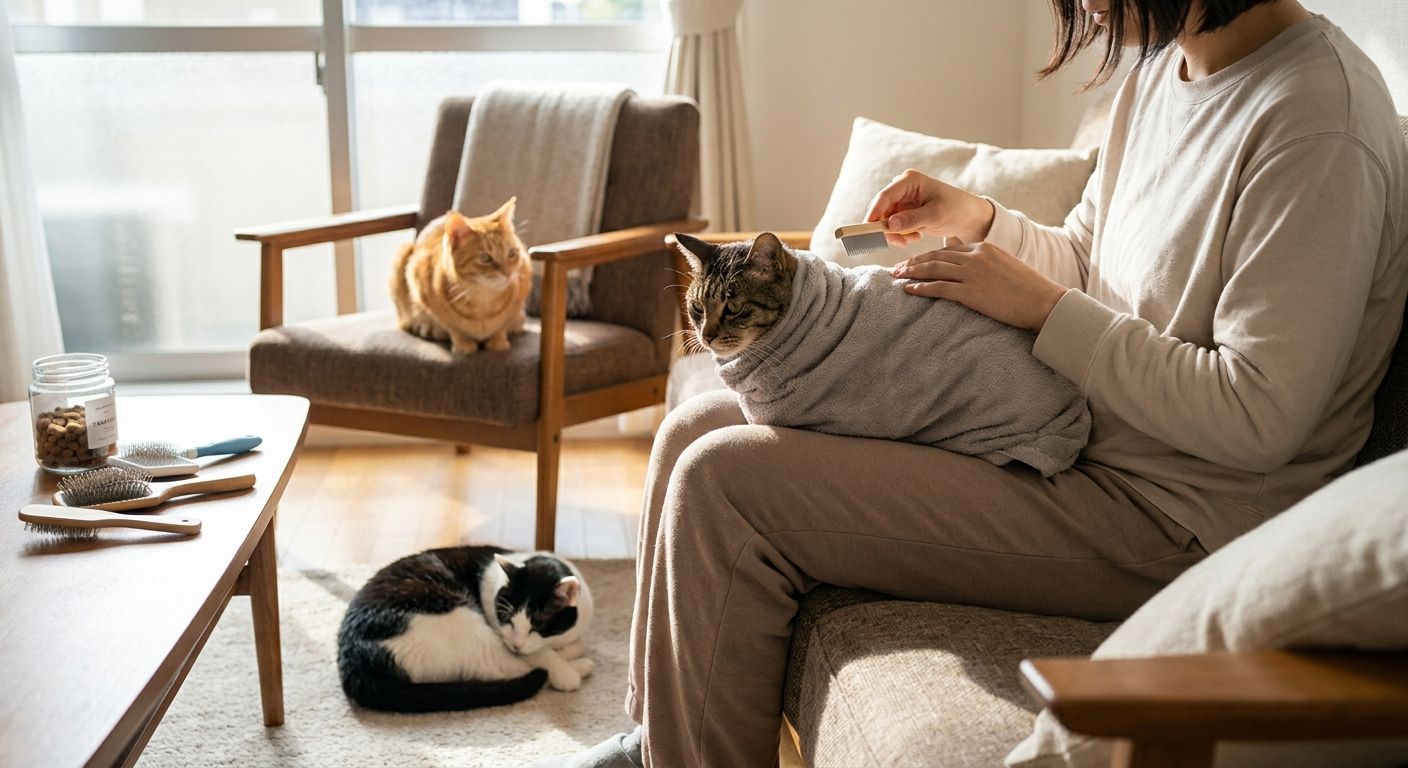
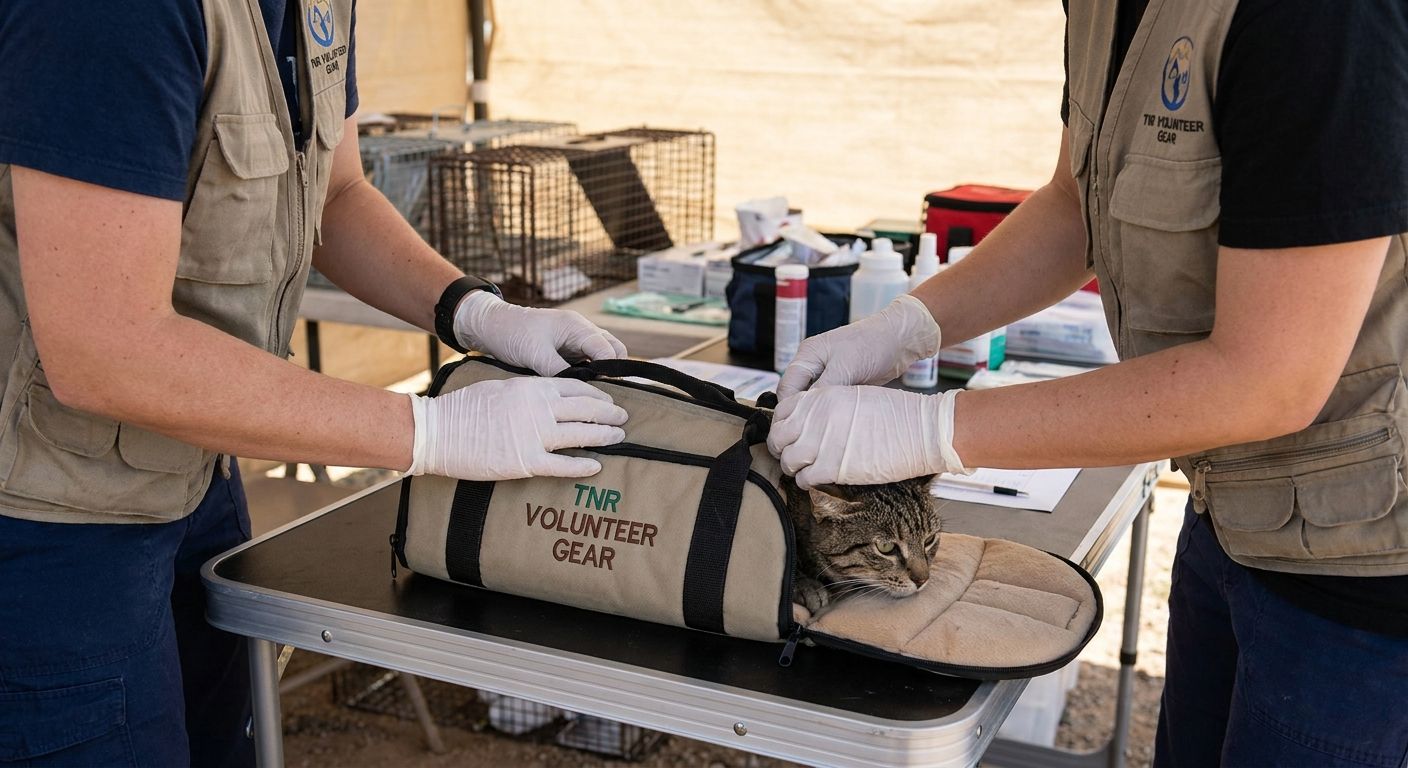
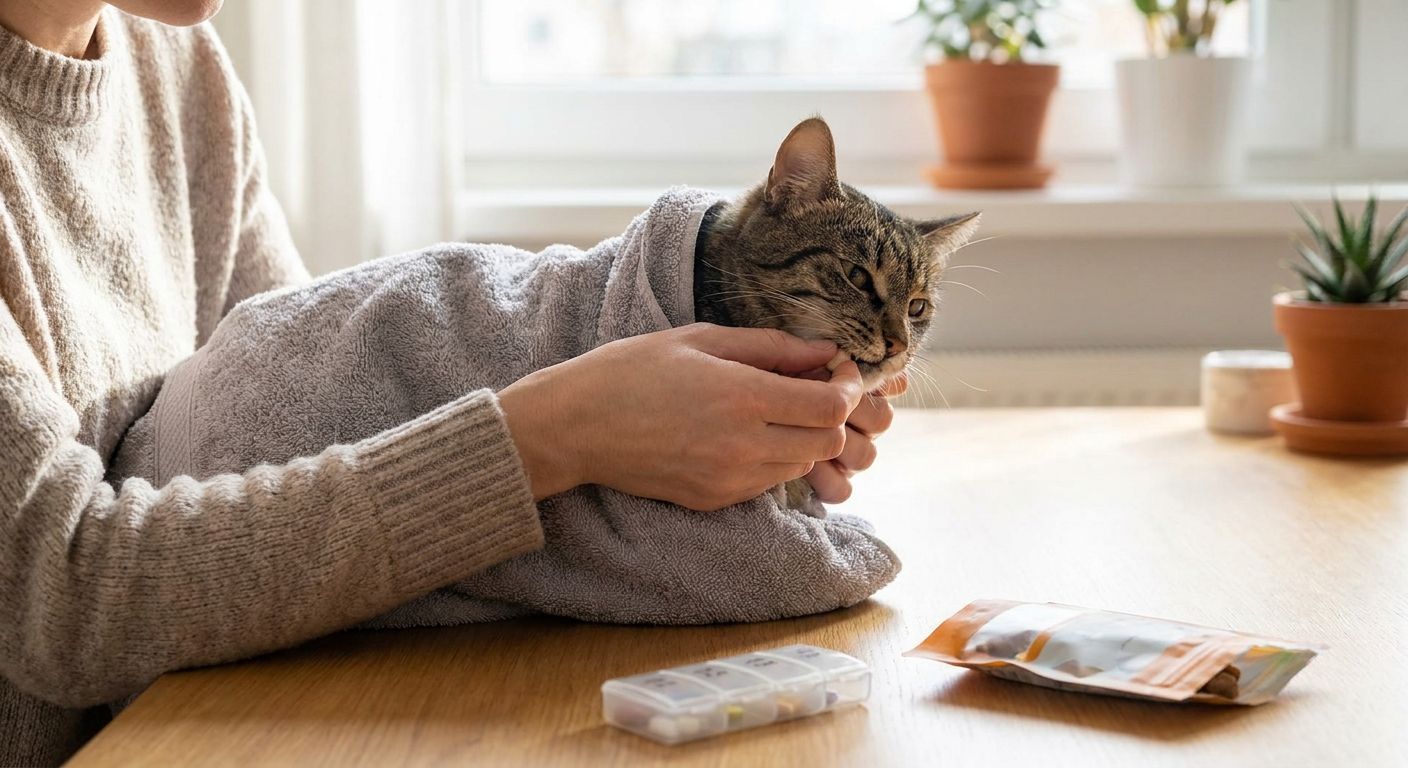
Gloves handle brushing. They don't handle a cat that thrashes during a nail trim, a medication dose, or a vet-bound transfer. For those moments, a wrap that holds a cat snugly without pinning it down reduces the risk of a scratch on someone else's property.
The Snug Pro Cat Wrap is built for calmer nail trims, medication, and vet visits — it keeps a cat gently contained while letting it feel like it can still move, which matters when you're the one accountable for a client's animal, not the owner. Pair it with a proper clipper, like the Full Stainless Steel Cat Nail Clipper, for the appointments where a glove alone isn't enough.


Track wear and retire gloves on schedule
A flattened nub or a bristle mitt with matted fur stops doing its job long before it looks broken. Sitters running a high volume of cats through the same glove wear it out faster than a single-cat household ever would.
- Check nub height weekly under a light — flattened silicone stops lifting hair effectively
- Retire fabric-backed gloves once seams start to fray, since loose threads can catch a claw
- Replace any glove that's been used on a cat later diagnosed with a fungal or parasitic skin issue
- Budget for a full kit refresh at least twice a year on high-volume routes
Cat grooming glove options for pet sitters, compared
| Option | Best for | Key limitation |
|---|---|---|
| Silicone nub gloves | Fast multi-cat routes, short coats | Weak on thick undercoats |
| Bristle-lined mitts | Long-haired, heavy-shedding cats | Traps hair, slower to clean |
| Rubber massage gloves | Sensitive-skin and anxious cats | Doesn't pull loose hair as effectively |
| Double-sided brush gloves | Sitters wanting one tool for brush + comb | Bulkier, slower to switch sides mid-groom |
Verdict: silicone nub gloves win for standard multi-cat pet-sitting routes in 2026, but a sitter serving long-haired or double-coated clients needs a bristle-lined mitt in the bag too.
“If a glove needs two hands to get on, it's slowing you down on every single cat on the route.”
Common mistakes pet sitters make with cat grooming gloves
- Reusing one unwashed pair across every household — this is the fastest way to move ringworm or mites between clients' cats
- Sizing gloves for the sitter, not the cat — a loose-fitting glove slips mid-groom and increases the chance of a dropped or startled cat
- Skipping the sniff-and-settle step with new cats — jumping straight to a full groom on visit one erodes trust fast
- Using bristle mitts on senior or thin-skinned cats — stiffer bristles that suit a healthy adult coat can scrape fragile senior skin
- Not logging which glove worked on which cat — the next sitter covering the route starts from zero instead of what already worked
FAQ
What are the best cat grooming gloves for pet sitters in 2026?
Silicone nub gloves are the best overall pick for pet sitters in 2026 because they apply fast and clean up quickly between households. Sitters working long-haired or double-coated clients should carry bristle-lined mitts as a second option.
Do cat grooming gloves work better than brushes for pet sitters?
Gloves work faster than a standalone brush because most cats tolerate a gloved hand like petting rather than a foreign tool. A brush still pulls more hair on heavy-shedding long-haired cats, so many sitters carry both.
How often should pet sitters sanitize grooming gloves?
Wipe gloves down with a pet-safe disinfectant between every household on the route, not just at the end of the day. Unwashed gloves can carry ringworm spores and mites from one cat to the next.
Are grooming gloves safe for anxious or first-time cats?
Grooming gloves are safe for anxious cats when introduced slowly, starting with a sniff and a few strokes on the cheek before a full session. Rushing a new cat into a full-body groom on the first visit is the most common cause of scratches.
Can grooming gloves replace nail clippers for pet sitters?
No. Grooming gloves handle loose hair and coat maintenance but do nothing for nail length. Nail trims still need a proper clipper, and a wrap like the Snug Pro Cat Wrap helps hold a squirming cat still during the trim.
How long do cat grooming gloves last for pet sitters?
On a high-volume route, silicone nubs typically flatten and lose grip after roughly 40-60 uses. Fabric-backed gloves should be retired once seams fray, since loose threads can catch a claw.
Which cat grooming gloves work best for sensitive-skin cats?
Soft silicone or rubber nub gloves are gentler on sensitive-skin cats than stiff bristle mitts. Skip anything with hard plastic teeth on cats flagged for thin or reactive skin.
One last thing
The glove is never the whole job. Every pet sitter who's had a client cat bolt mid-groom learns the same lesson: the glove handles the coat, but a proper hold or wrap handles the moments a cat decides it's done. Build the kit around both, and 2026 routes get faster with fewer scratches, not just softer coats.