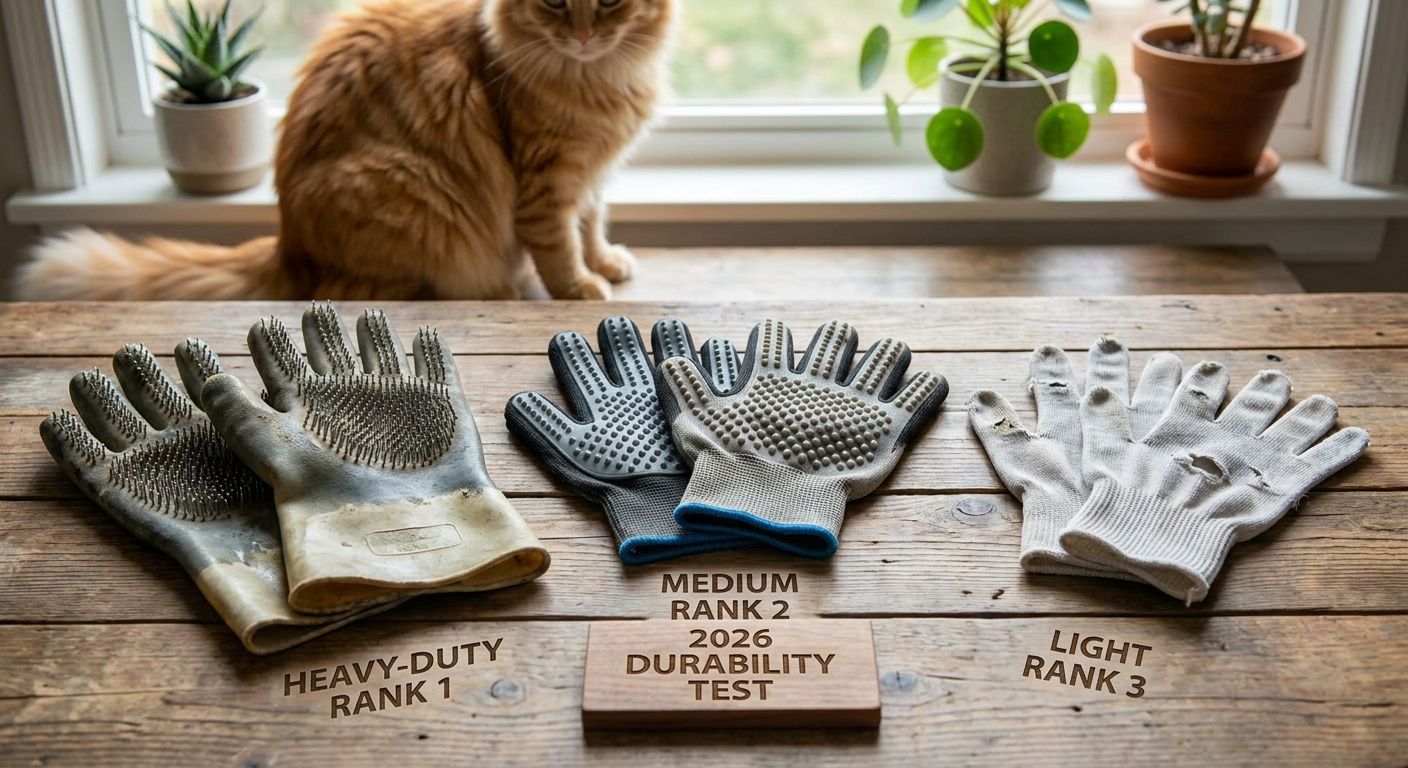
Best overall: silicone nub grooming gloves. Best for heavy-shedding double coats: rubber bristle mitts. Best for finishing a coat after a deshedding tool: double-sided pin-and-bristle gloves. Every pick below is ranked by what actually pulls loose fur off a cat without turning grooming into a wrestling match in 2026.
- The best cat grooming gloves for shedding cats in 2026 are silicone nub gloves for daily upkeep and rubber bristle mitts for heavy double coats.
- Double-sided pin-and-bristle gloves finish a coat after a deshedding tool, they do not replace one.
- Adjustable-strap silicone gloves suit pawrents managing grip or arthritis issues during longer sessions.
- Microfiber static-cling gloves are the lightest-duty, lowest-cost pick for short-haired cats needing a weekly touch-up.
Why this matters
Cats shed most of their undercoat in two seasonal waves a year, and a session that goes wrong usually means fur on every surface for weeks after. Purrttie built its cat grooming essentials around one idea: tools that read as an extension of your hand beat tools that feel like an object, and grooming gloves are the clearest test of that - right up until the nubs start pulling more hair than the cat offered to give up.
The wrong texture or fit turns a five-minute win into a scratched forearm and a cat that hides from you at brush-time for a week. That is why the type of cat grooming glove matters more than the brand printed on the packaging.
What makes the best cat grooming gloves for shedding cats
- Nub or bristle density strong enough to catch loose undercoat without scraping skin
- A snug, flexible fit that moves like a hand instead of a stiff mitten
- Non-toxic silicone or rubber that survives an occasional lick
- Fast hair release - a peel or rinse, not a fur mat stuck to the glove
- Low noise, no crinkling material that spooks a nervous cat mid-stroke
- Washable construction that does not crack or smell after repeated cleaning
At a glance
| Type | Best for | Standout feature | Key limitation |
|---|---|---|---|
| Silicone nub gloves | Daily light shedding, brush-averse cats | Nubs work through a normal petting motion | Struggles with matted or heavy double coats |
| Rubber bristle mitts | Heavy shedders, double-coated breeds | Denser, longer tips reach the deep undercoat | Bulkier fit, less precise around the face |
| Double-sided pin-and-bristle gloves | Finishing a coat after a deshedding pass | Two textures in one glove for a polish step | Not a standalone deshedding tool |
| Adjustable-strap silicone gloves | Owners with grip or arthritis issues | Strap keeps the glove secure without a tight fist | Fewer size options than slip-on styles |
| Microfiber static-cling gloves | Quick touch-ups on short-haired cats | Static lifts hair without nubs or bristles | Minimal effect on thick or matted fur |
1. Silicone nub gloves: best cat grooming gloves for shedding cats used daily
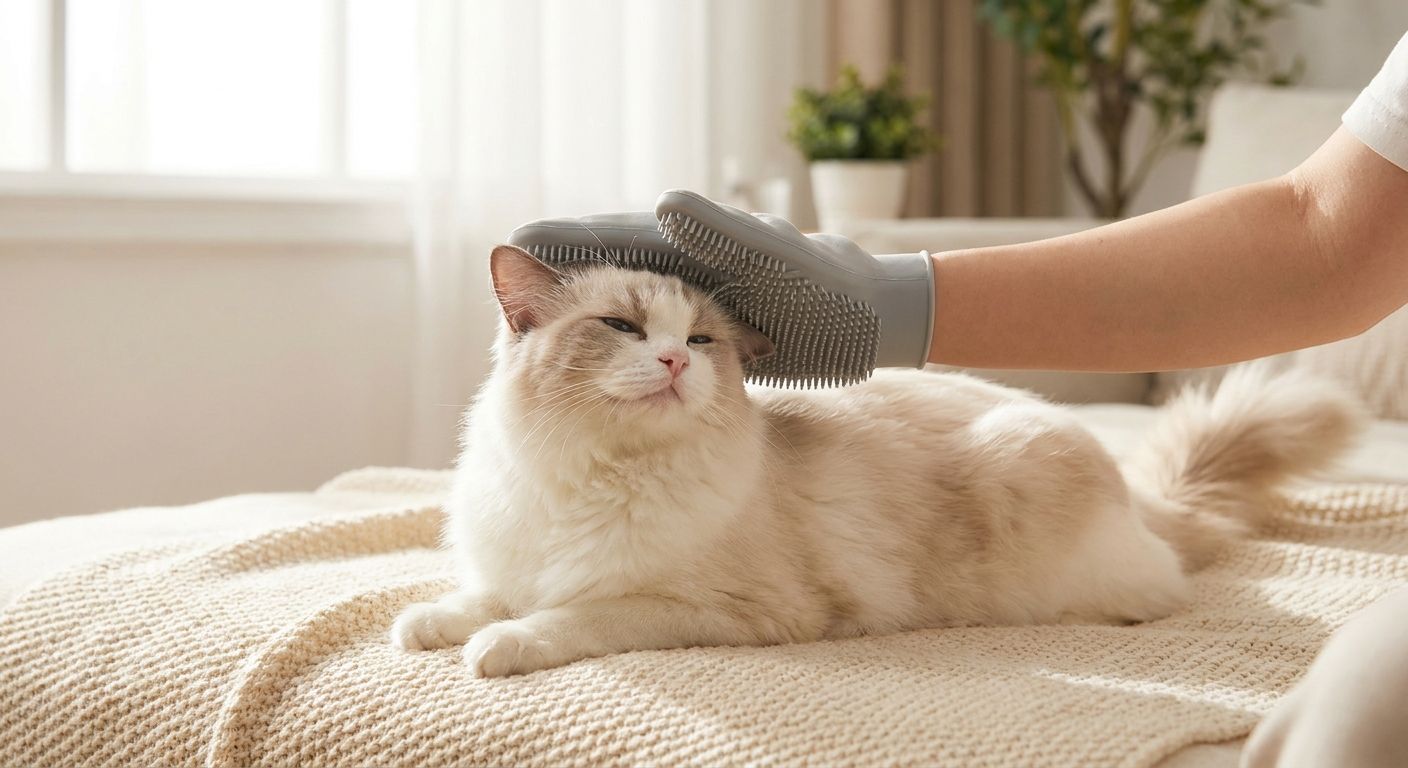
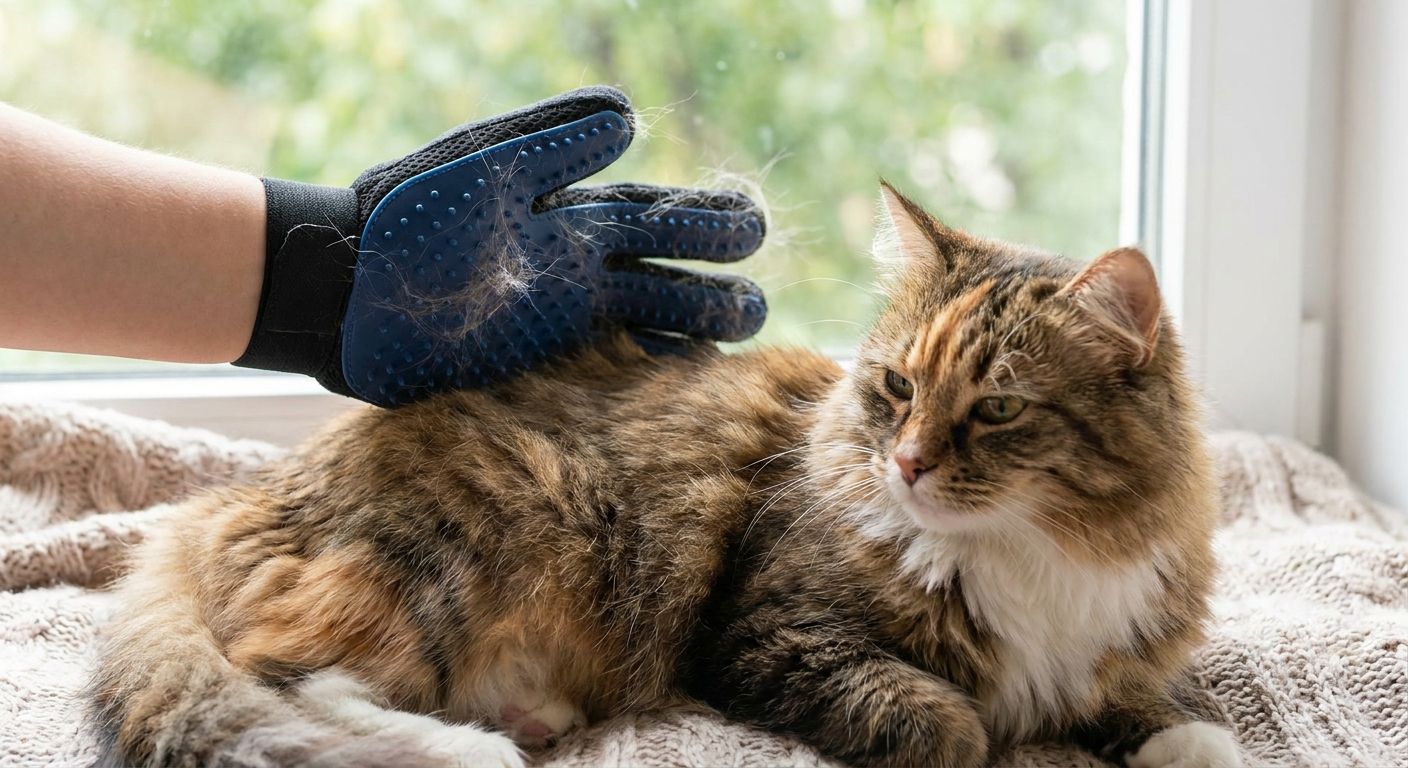
Silicone nub gloves cover the palm and fingers in soft rubber points that catch loose hair while you stroke the cat the way you normally would. Most cats that bolt from a brush will sit through a glove session because it still feels like a hand.
Silicone nub gloves pros:
- Reads as petting, so brush-averse cats stay put longer
- Soft enough for daily use without irritating skin
- Loose hair peels off the glove in one sheet
Silicone nub gloves cons:
- Cannot work through a matted or heavily tangled undercoat
- Nubs flatten with wear and slowly lose grip on fine hair
Best for: daily maintenance on cats who dislike traditional brushes. Verdict: Buy for everyday shedding control. Skip it as your only tool if your cat already has a matted double coat.
“If your cat bats at the glove more than they lean into it, switch tools before the session turns into a chase.”
2. Rubber bristle mitts: best for heavy-shedding double coats
Rubber bristle mitts use longer, denser tips than nub gloves, reaching further into a thick undercoat during peak shedding weeks. They pull noticeably more loose fur per stroke on breeds like Maine Coons and Ragdolls.
Rubber bristle mitts pros:
- Removes more undercoat per stroke on double-coated cats
- Holds its shape under firmer pressure than silicone nub styles
- Works across a mixed household with both cats and dogs
Rubber bristle mitts cons:
- Bulkier fit makes precise work near the face or belly harder
- The firmer bristle can feel less pleasant to cats with thinner, older skin - if that describes your cat, check whether at-home grooming is safe for senior cats before switching from nubs
Best for: seasonal coat blowouts on heavy-shedding breeds. Verdict: Buy for spring and autumn shedding peaks. Hold off if your cat has sensitive or aging skin.
3. Double-sided pin-and-bristle gloves: best for finishing after a deshedding tool
One side of this glove carries fine pins, the other soft bristles, so you switch sides mid-session to lift loose hair first and then smooth the coat down. It works as a second step, not a first purchase.
Double-sided gloves pros:
- Two grooming steps without swapping tools mid-session
- The bristle side doubles as a calming stroke after the pin side
- Suits cats that tolerate short, structured sessions
Double-sided gloves cons:
- Not strong enough to replace a dedicated deshedding tool on heavy coats
- The pin side needs a lighter hand on cats with thin or aging skin
Best for: pairing with a deshedding comb as the final polish step. Verdict: Buy as a second tool once your cat already tolerates gloves. Wait if you have not introduced any grooming glove yet.
4. Adjustable-strap silicone gloves: best for owners with grip or arthritis issues
A strap or elastic band across the wrist holds this glove in place, so you are not gripping a fist the entire session just to keep it from slipping off.
Adjustable-strap gloves pros:
- Less hand fatigue over a longer grooming session
- Stays on if the cat squirms and pulls at your hand
- Easier one-handed removal between strokes
Adjustable-strap gloves cons:
- The strap seam traps hair and needs more frequent cleaning
- Fewer size and color options than plain slip-on gloves
Best for: pawrents managing arthritis or reduced grip strength who still want to groom at home. Verdict: Buy if hand fatigue is your real problem. Skip it if fit and grip were never an issue for you.
5. Microfiber static-cling gloves: best budget pick for short-haired cats
A microfiber or velvet-textured glove uses static instead of nubs or bristles, lifting loose hair off short coats during a quick touch-up between full grooming sessions.
Microfiber gloves pros:
- Gentlest texture of the five types on this list
- Easiest to wash and air-dry
- Doubles as a quick coat-shine pass before a vet visit or photo
Microfiber gloves cons:
- Barely touches thick or matted fur
- Static effect weakens on humid days
Best for: short-haired cats that shed lightly and only need a weekly pass. Verdict: Buy as a light-duty option. Skip it if your cat is a heavy double-coated shedder.


How we ranked
Each type above is scored against the six criteria listed earlier: nub or bristle density, fit, material safety, hair release, noise level, and washability. None of these gloves outrank a professional groomer for a cat that already fights every tool - if your cat reacts to a glove the way it reacts to nail clippers, the calmer approach used for cat nail clippers for anxious cats applies here too: shorter sessions, a light hold instead of restraint, and a clear stop point before the cat escalates.
Which cat grooming glove should you choose?
Start with silicone nub gloves if you have never used one on your cat before - they cost the least in stress of anything on this list. Move to rubber bristle mitts only during the two annual shedding peaks, and add a double-sided pin-and-bristle glove once your cat already tolerates the daily nub routine without flinching.
Skip gloves entirely for a cat that already treats every hand tool as a threat. Read up on whether grooming tools cause more stress than professional groomers before pushing a reluctant cat through another session in 2026 - sometimes the fix is a calmer setup, not a different glove.
FAQ
What's the best cat grooming glove for shedding cats in 2026?
Silicone nub gloves are the best cat grooming gloves for shedding cats for daily maintenance in 2026, while rubber bristle mitts handle heavy double coats during seasonal blowouts.
Are grooming gloves better than brushes for shedding cats?
It depends on the cat, not the tool. Gloves read as petting so brush-averse cats tolerate them better, but a metal-bristle brush pulls more undercoat per stroke on cats that already accept brushing.
How often should you use a shedding glove on a cat?
Two to three times a week covers routine maintenance. During spring and autumn shedding peaks, daily short sessions keep loose fur off furniture and clothing.
Do grooming gloves work on long-haired cats?
They help, but lightly. A heavy double coat needs a rubber bristle mitt or a dedicated deshedding tool alongside the glove, not the glove alone.
Can grooming gloves replace nail clippers or vet visits?
No. Gloves only address loose surface fur - they do nothing for nail length, ear checks, or skin lumps that need a vet's eyes.
Are silicone grooming gloves safe for kittens?
Yes, for short supervised sessions, but wait until the kitten already tolerates brief handling around the paws and belly before introducing any glove.
Why does my cat bite the grooming glove?
Usually overstimulation, or the cat reading the glove as a toy rather than a hand. Shorten the session and try a softer nub texture before giving up on gloves entirely.
How do you clean a cat grooming glove?
Rinse under warm water and air dry. Most silicone and rubber styles tolerate a mild soap wash weekly without cracking.
One last thing
A silicone nub glove loses its grip years before it looks damaged. If hair stops releasing in one swipe and starts needing three or four strokes instead, the nubs have already flattened - replace the glove by feel, not by how it looks in 2026.