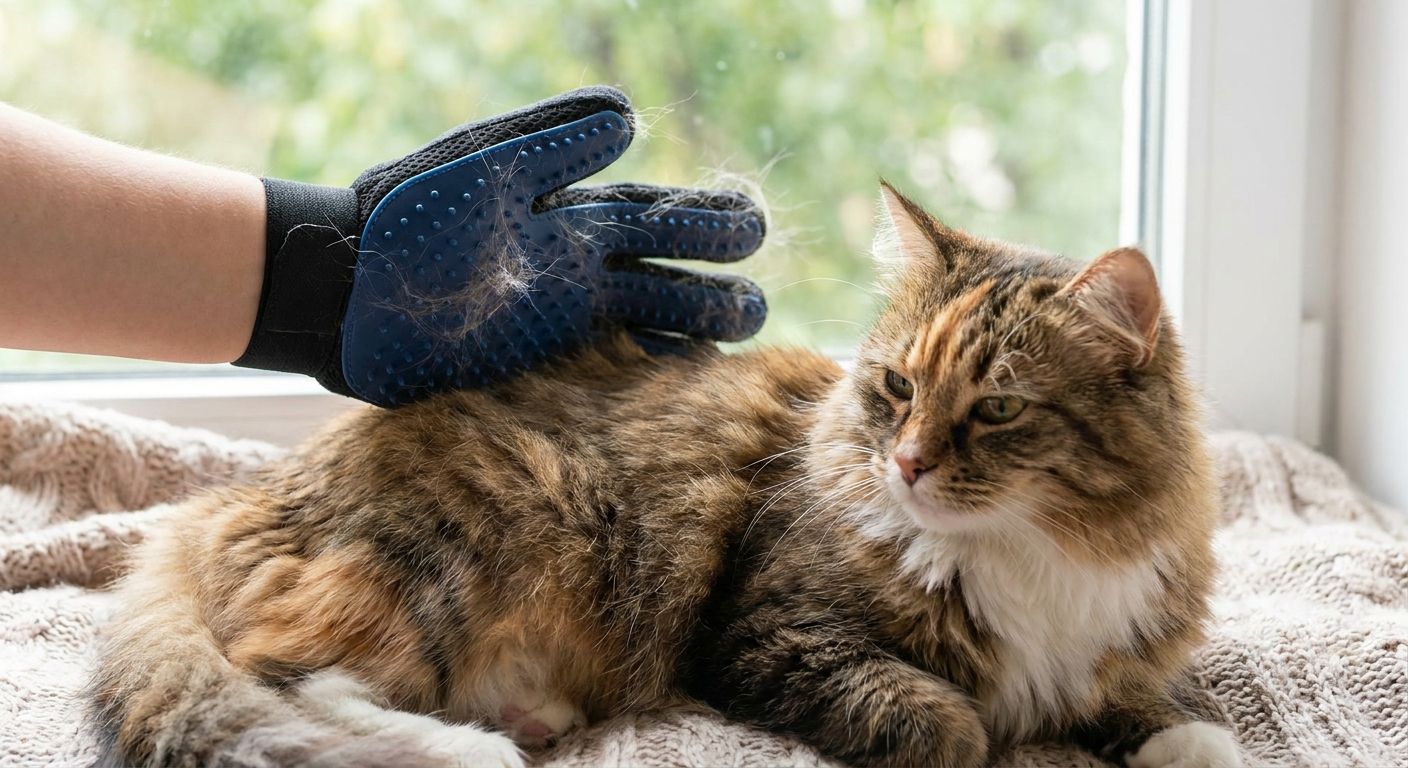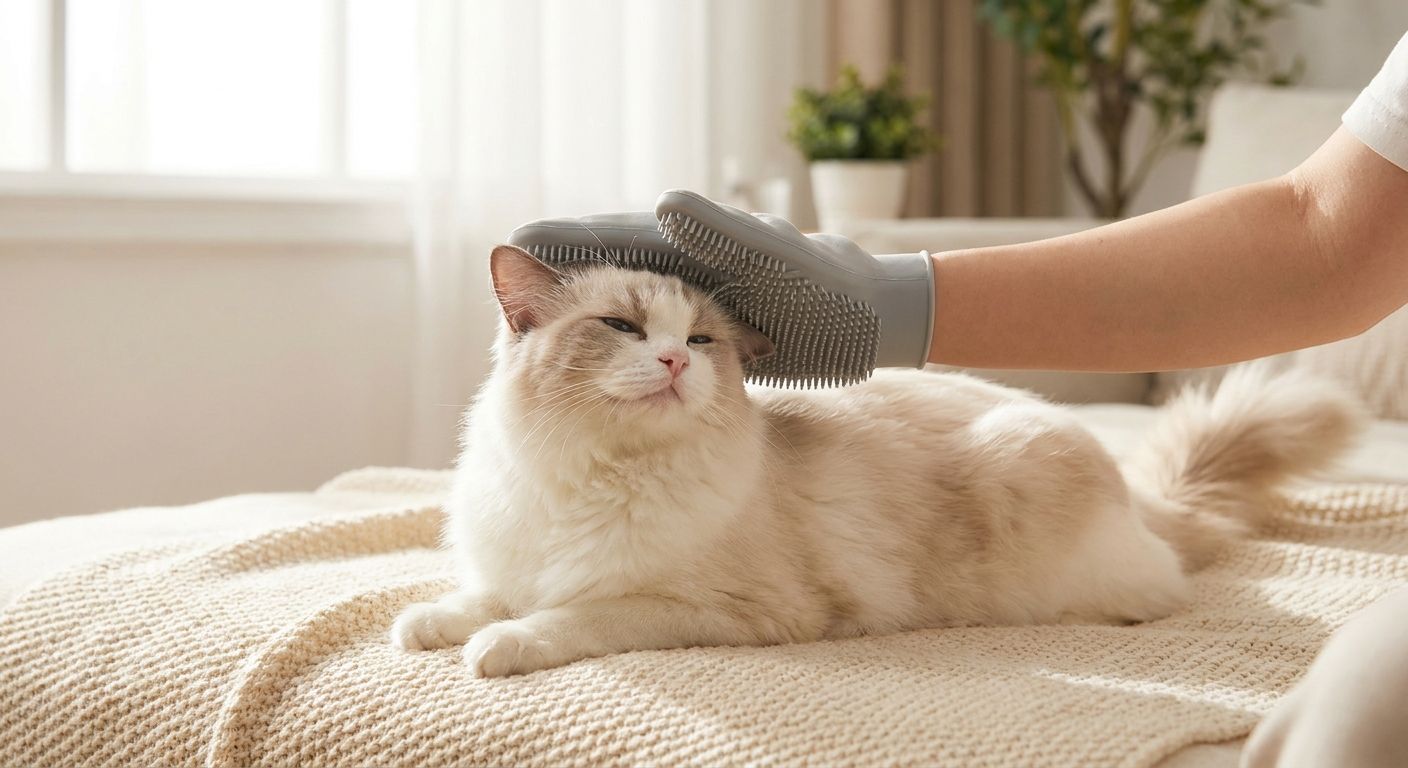
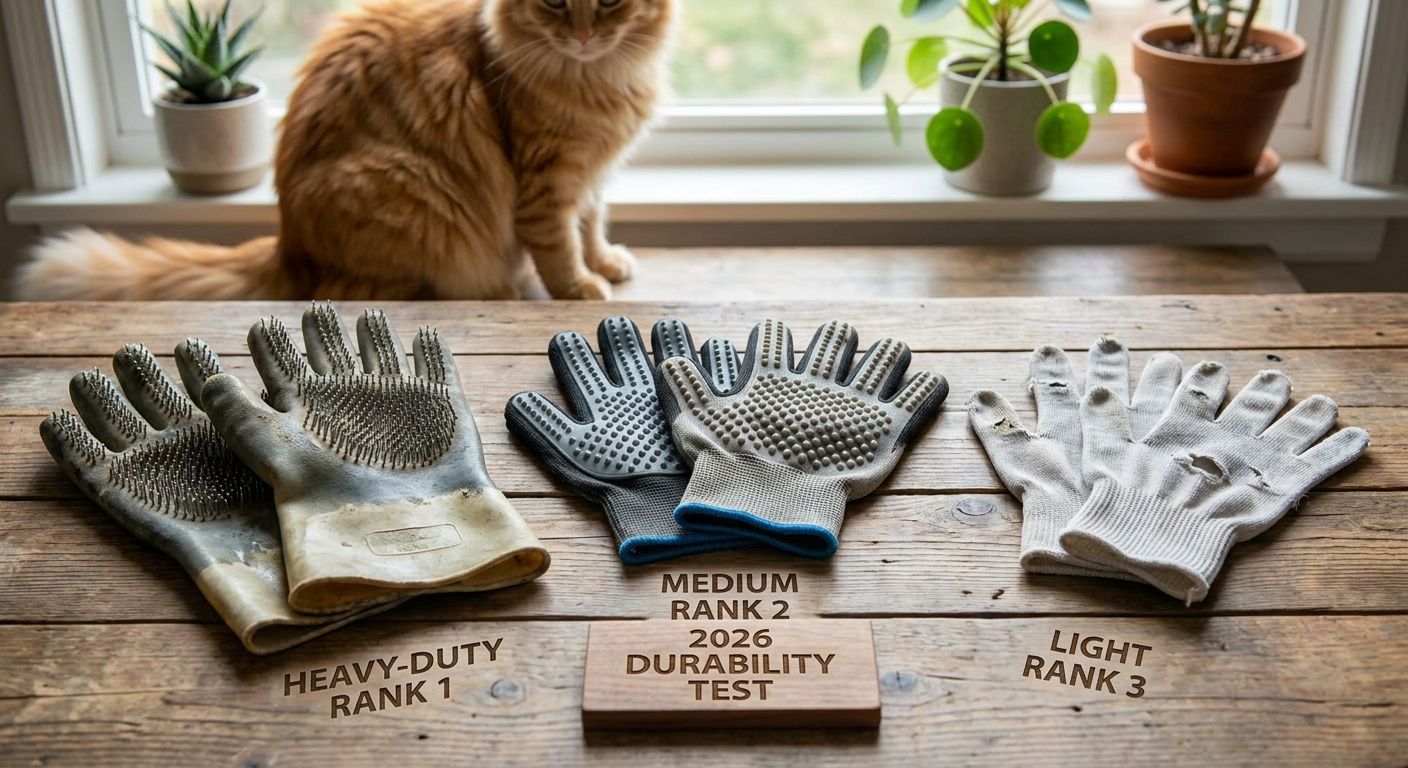
One-piece molded rubber or silicone nub gloves hold up longest among cat grooming gloves; stitched mesh-back gloves tear at the seams first. This ranks the four common cat grooming glove constructions sold across Malaysia, Singapore, Thailand and Australia in 2026, and flags the one job no glove was ever built for.
- One-piece molded rubber or silicone nub gloves rank highest for durability among cat grooming gloves in 2026.
- Mesh-back fabric gloves with glued-on rubber tips fail first, usually at the nub attachment points and side seams.
- Silicone bristle gloves handle heavy shedding and long-haired cats better than firm rubber nub gloves.
- Grooming gloves aren't designed to hold a cat still for nail trims or vet visits; a wrap-style restraint does that job instead.
Why this matters
A grooming glove earns its keep by surviving repeated claw contact, saliva, and machine washing, not by looking good in a product photo. Cheap construction shows up fast: nubs peel off after a few washes, seams split when a cat pulls away mid-stroke, and elastic wrist bands loosen within weeks. None of that shows up in a listing photo or a five-star review written after one use.
This ranking sorts cat grooming gloves by how they're built, not by brand, because the same three or four constructions get reused across dozens of listings under different names. Pick the construction, not the packaging. Purrttie sells restraint and nail-trim tools rather than gloves, so this list has no horse in the race.
Cat grooming gloves ranked by durability in 2026 (verdict first)
Best overall: one-piece molded rubber or silicone nub gloves. They have no seams to split and no glued-on nubs to peel, so they survive the longest under daily claws and washing.
Best for shedding season and long-haired cats: silicone bristle gloves. Finer bristles pull loose undercoat without snagging on longer fur the way blunt rubber nubs do.
Best budget option: mesh-back fabric gloves with rubber fingertip nubs. They cost less upfront but wear out fastest, so plan on replacing them within a season of regular use.
Best for detangling mats: double-sided pin-and-bristle brush gloves. They cut through knots that nub gloves slide over, at the cost of the shortest lifespan of the four.
What makes a cat grooming glove durable
- Attachment method — nubs molded into the rubber outlast nubs glued onto a fabric backing.
- Seam count — one-piece gloves have nothing to split; stitched gloves fail at the seam first.
- Nub or bristle material — silicone flexes and springs back; stiff rubber cracks with repeated stretching.
- Palm thickness — thin, cheap rubber punctures under claws faster than a thicker molded palm.
- Wrist closure — elastic cuffs that stay snug after repeated washes beat velcro tabs that lose grip.
- Wash tolerance — some silicone gloves go straight in the washing machine; fabric-backed ones need hand washing to survive.
Cat grooming gloves at a glance
| Glove type | Best for | Standout feature | Key limitation |
|---|---|---|---|
| One-piece molded rubber/silicone | Daily brushing, all-around durability | No seams or glued parts to fail | Nubs are blunter, less effective on mats |
| Silicone bristle gloves | Shedding season, long-haired cats | Fine bristles pull loose undercoat | Bristles flatten faster than firm nubs |
| Mesh-back fabric with rubber tips | Budget buyers, occasional use | Lower upfront cost, breathable back | Nubs peel and seams split within months |
| Double-sided pin-and-bristle | Detangling stubborn mats | Pins reach through matted fur | Shortest lifespan of the four types |
1. One-piece molded rubber nub gloves: best overall for daily brushing
A single sheet of rubber or silicone is molded with the nubs built in, so there's no seam and no adhesive holding the bristles on. That construction is why this type survives years of daily brushing where stitched alternatives wear out in months.
One-piece molded gloves pros:
- No seams to split under a squirming cat
- Nubs won't peel or fall off with repeated washing
- Wipes clean or machine washes without the fabric backing degrading
One-piece molded gloves cons:
- Nubs are usually less aggressive on tight mats than pin-style gloves
- Thicker rubber can feel stiffer and less breathable in humid climates
Verdict: Buy. For everyday brushing across a cat's coat, this is the construction that lasts.
2. Silicone bristle grooming gloves: best for shedding season and long-haired cats
These swap blunt rubber nubs for finer silicone bristles, closer to a soft brush than a nub pad. Most are still molded as one piece, so durability holds up nearly as well as the rubber nub gloves above, and the finer bristles work loose undercoat out of long or double coats without snagging.
Silicone bristle gloves pros:
- Finer bristles lift loose fur without pulling on longer coats
- Comfortable for cats that dislike firmer nub pressure
- Molded construction avoids the seam failures of fabric-backed gloves
Silicone bristle gloves cons:
- Less effective than pin gloves on fur that's already matted
- Bristles flatten with heavy use faster than firm rubber nubs
Verdict: Buy if shedding, not matting, is the main problem.
3. Mesh-back fabric gloves with rubber tips: best budget option
These pair a stretchy fabric or mesh back with rubber nubs glued or stitched onto the palm. The lower cost comes from cheaper materials and construction, and it shows up fast in how long the glove holds together.
Mesh-back fabric gloves pros:
- Lower upfront cost than molded silicone gloves
- Breathable back panel is more comfortable in humid climates
- Fine for cats groomed only occasionally
Mesh-back fabric gloves cons:
- Glued nubs peel off after repeated washing or scratching
- Side seams split where the glove flexes most, often within a season
- Not built for daily use
Verdict: Hold for light, occasional grooming; skip if you brush daily.
4. Double-sided pin-and-bristle brush gloves: best for detangling mats
These combine short metal or hard-plastic pins on one side with soft bristles on the other, stitched onto a glove backing. They handle mats and tangles better than smooth nub gloves, but the stitched construction and rigid pins are also the first to fail.
Double-sided pin gloves pros:
- Pins reach through mats that nub gloves slide over
- Two grooming surfaces in one glove
Double-sided pin gloves cons:
- Stitched seams and pin bases are the weakest point of any glove type on this list
- Pins can loosen or bend with heavy use
- Not comfortable for cats sensitive to firmer pressure
Verdict: Wait unless mat removal is the specific problem you're solving; a dedicated grooming tool built for mats will outlast this construction.
How we ranked these
This ranking sorts constructions, not brand names, using the criteria above: attachment method, seam count, nub material, palm thickness, wrist closure, and wash tolerance. One-piece molded gloves win because they remove the two failure points that show up across cat grooming glove reviews in 2026: peeling nubs and split seams. Mesh-back and stitched pin gloves keep both failure points, so they rank lower regardless of price.
Where cat grooming gloves stop working
Every glove on this list is built for surface grooming: brushing loose fur, working out light tangles, giving a cat something that feels like a hand rather than a tool. None of them are built to hold a cat still.
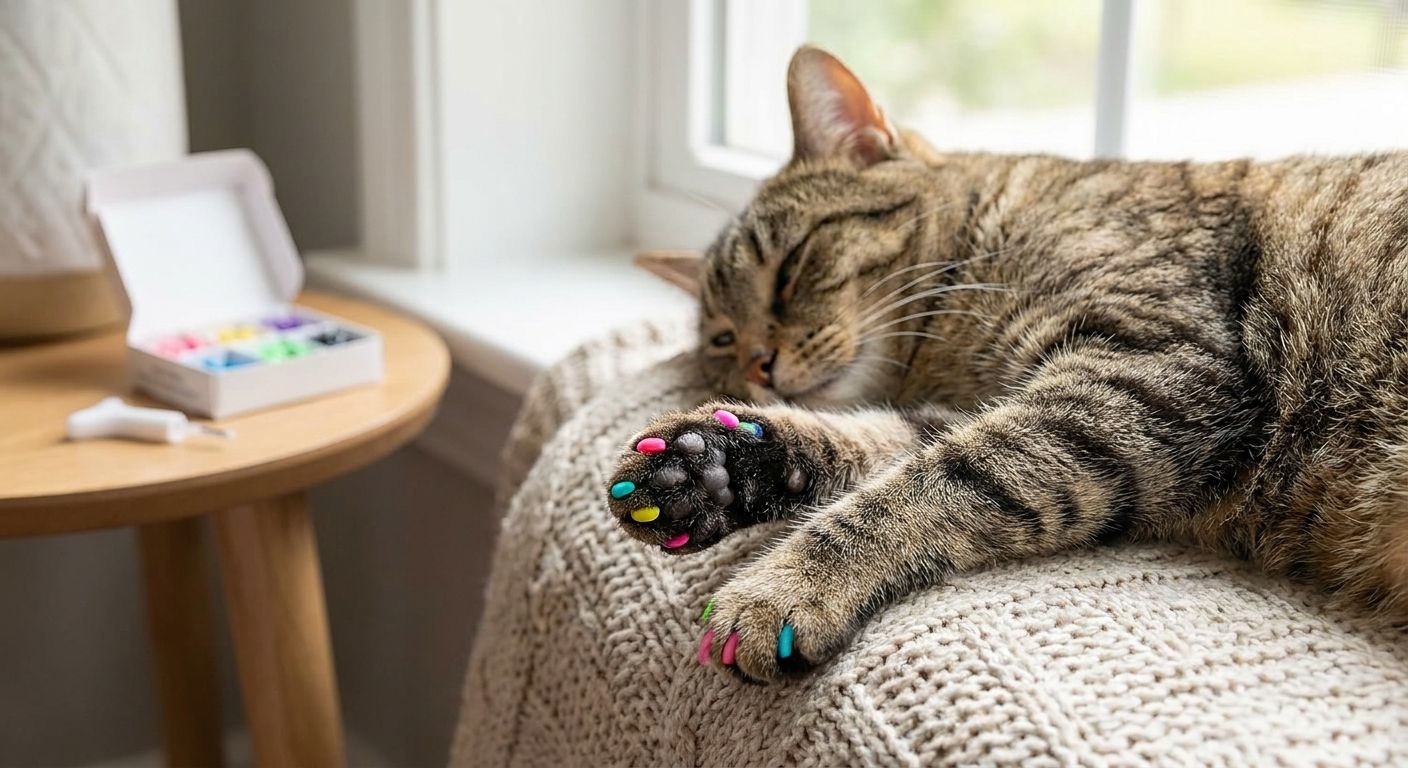
Nail trims, oral medication and vet visits need restraint, not just contact, and a glove gives a cat's paws and teeth just as much room to move as bare hands do. Purrttie's grooming lineup skips gloves entirely and focuses on restraint and nail tools instead.
Purrttie's Snug Pro Cat Wrap keeps a cat gently wrapped snug, not tight, so paws and teeth are out of the way during nail trims, medication or a vet visit. Pair that with a one-piece steel clipper like the Full Stainless Steel Cat Nail Clipper, and both the surface grooming and the higher-stress tasks are covered.


“A grooming glove removes loose fur. It does not hold a cat still for a nail trim.”
Which cat grooming glove should you buy in 2026
For daily brushing across most cats, a one-piece molded rubber or silicone nub glove is the safest buy — no seams, no glued nubs, nothing to peel off mid-groom. If shedding season is the real problem, size up to a silicone bristle glove instead of a firmer nub pad.
Skip fabric-backed or stitched pin gloves if you're grooming more than once a week; the seams won't hold. And if the real challenge is nail trims, medication, or getting to the vet without a fight, a glove was never the right tool for that job — that's restraint work, and it belongs to a wrap like the Snug Pro Cat Wrap, not a glove.
FAQ
What's the most durable cat grooming glove material in 2026?
One-piece molded rubber or silicone nub gloves are the most durable because they have no seams and no glued-on parts to fail. Stitched or mesh-back gloves wear out first at the seam and nub attachment points.
How long do cat grooming gloves usually last?
Lifespan depends on construction more than price: one-piece molded gloves outlast stitched or glued gloves by multiple grooming seasons. Fabric-backed gloves with glued nubs typically show peeling within a season of regular use.
Is a silicone grooming glove better than a rubber nub glove for shedding?
Silicone bristle gloves handle heavy shedding and long-haired cats better because the finer bristles pull loose undercoat without snagging. Firm rubber nub gloves work fine on short coats but flatten fur on longer-haired cats.
Can a cat grooming glove replace nail clippers?
No. A grooming glove brushes fur; it doesn't trim nails. Purrttie's Full Stainless Steel Cat Nail Clipper handles the cut, and a wrap like the Snug Pro Cat Wrap handles keeping the cat still for it.
Do cat grooming gloves work well on long-haired cats?
Silicone bristle gloves work better than blunt rubber nub gloves on long-haired cats because the finer bristles reach the undercoat without pulling on the topcoat. Double-sided pin gloves handle existing mats better than either.
Are grooming gloves safe for anxious or aggressive cats?
Gloves don't restrain a cat, so an anxious or aggressive cat can still scratch, bite, or bolt mid-groom. A wrap-style restraint tool addresses the handling problem that a glove can't.
What should I check before buying a cat grooming glove in 2026?
Check the attachment method (molded versus glued), seam count, nub or bristle material, and wrist closure before buying. One-piece molded construction with an elastic wrist cuff holds up longest under regular use.
One last thing
The failure point that kills most cat grooming gloves isn't fabric wear from brushing — it's the moment a cat bites down or claws at the glove itself during an overstimulated session, concentrating force exactly where a seam or glued nub sits. Judge durability by construction, not by the product photo, and the ranking above holds regardless of which listing you're looking at in 2026.