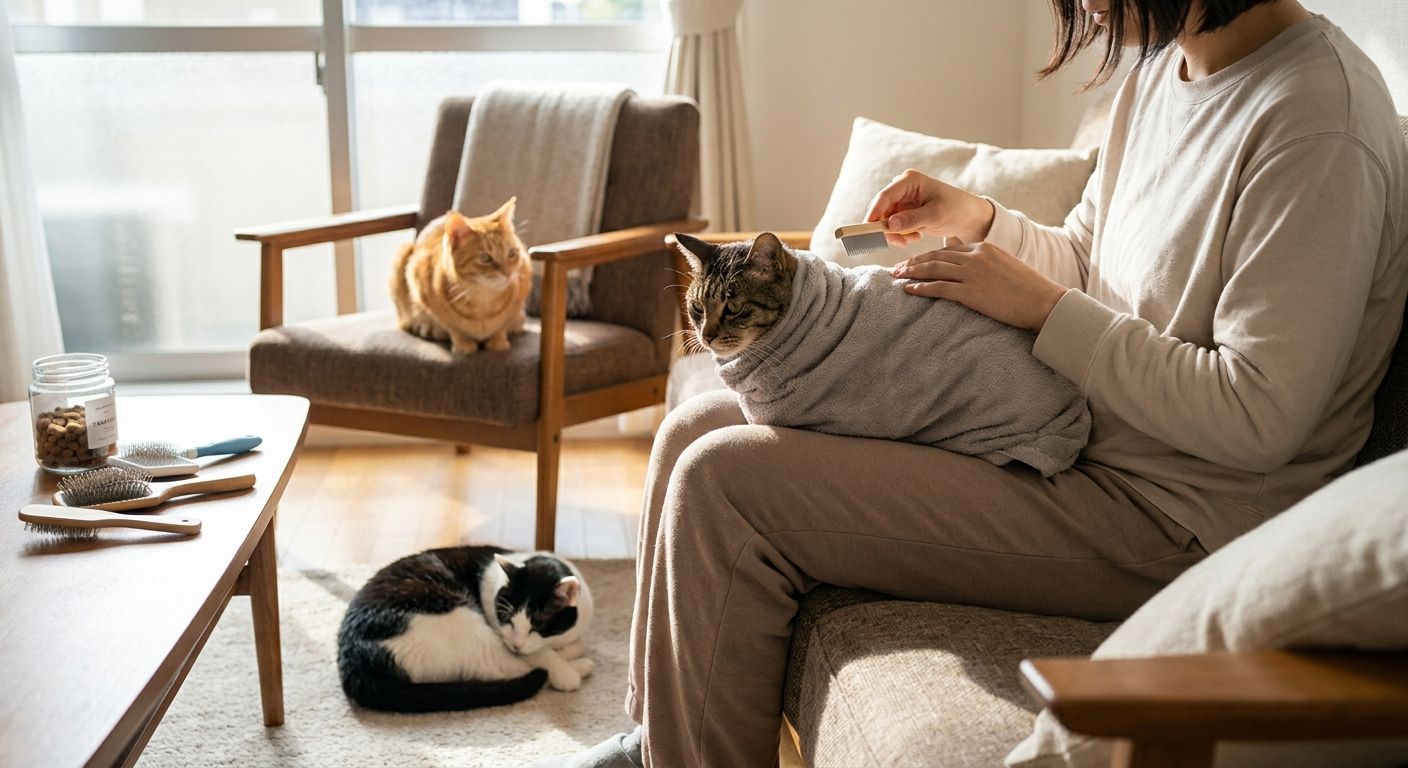
Grooming three or four cats back to back turns into chaos fast unless the handoff between cats is planned, not improvised. Instead of chasing each cat separately with a different set of nerves every time, run one wrap and one nail clipper through a fixed rotation so every cat gets a calm, predictable turn.
- A multi cat household grooming rotation works with one shared wrap if you reset scent and fit between each cat.
- Groom from most tolerant to least tolerant so your hands stay steady for the harder cat.
- Wipe and air the wrap 30-60 seconds between cats to stop scent-triggered refusal.
- The same rotation covers nail trims, medication, and short vet-prep sessions with small swaps.
- Senior and anxious cats go last in the 2026 sequence, never first.
Why this matters
A single wrap is not personalised per cat the way a collar is. It has to work cold, every time, on whichever cat goes in next. Skip the reset step and you carry one cat's stress scent straight into the next session, which is why rotations fall apart on cat two or three even when cat one went perfectly.
In households running three or more cats through nail trims on the same afternoon, the second and third cat get harder, not easier, without a structured handoff. The fix isn't more restraint — it's sequencing plus a 60-second reset between turns.
Before you start
- One cat wrap sized to your largest cat. Smaller cats go in the same one, wrapped snugly, not tightly.
- A quiet room, and one carrier or separate room per waiting cat. Never let the next cat watch the current session.
- The gotcha: cats read scent before they read your body language. If cat two smells cat one's stress on the fabric, it resists entry even if it's normally easy. Build the reset in from day one, not after it fails once.
Set your session order
- Rank your cats from most tolerant to least tolerant of handling, based on your last real grooming attempt rather than guesswork.
- Put the calmest cat first. That session warms up your technique and confirms wrap fit before a harder cat is involved.
- Put the most senior or most anxious cat last, when the room is already quiet from the earlier turns.
Expected result: you have a fixed order (Cat A, Cat B, Cat C) before a single cat enters the room.
Configure your grooming station
- Lay out the wrap, the clipper or medication, and treats within arm's reach. No walking away mid-session to fetch anything.
- Keep a dedicated cloth or wipe beside the station for the inside of the wrap between cats.
- Close the door. One cat in the room at a time, full stop — an audience raises stress for every cat present, including the one being handled.
Expected result: the station is ready so a full session, wrap-on to release, runs under two minutes per cat.
Wrap, trim, release, reset
- Bring in Cat A. Wrap snugly, not tightly, leaving only the paw you need exposed.
- Trim or medicate, then let Cat A leave on their own terms rather than pulling the wrap off fast.
- Wipe the inside of the wrap and let it air 30-60 seconds before Cat B comes in. This is the step most rotations skip and where they break.
- Repeat the wrap-trim-release-reset cycle through your whole order.
Expected result: each cat's session holds steady or gets easier through the rotation instead of escalating.
Adjust the fit cat by cat
- Check tension per cat before you start. A fit that's snug on a 3kg cat sits loose on a 6kg cat.
- Re-check paw exposure each time. A wrap positioned for a long-haired cat's back paw usually needs repositioning for a short-haired cat's front paw.
- If a cat squirms hard in the first 10 seconds, stop, loosen slightly, restart. Never push through tight.
Expected result: no cat loses more than a few seconds to mid-session re-adjustment.


Run the same rotation on medication days
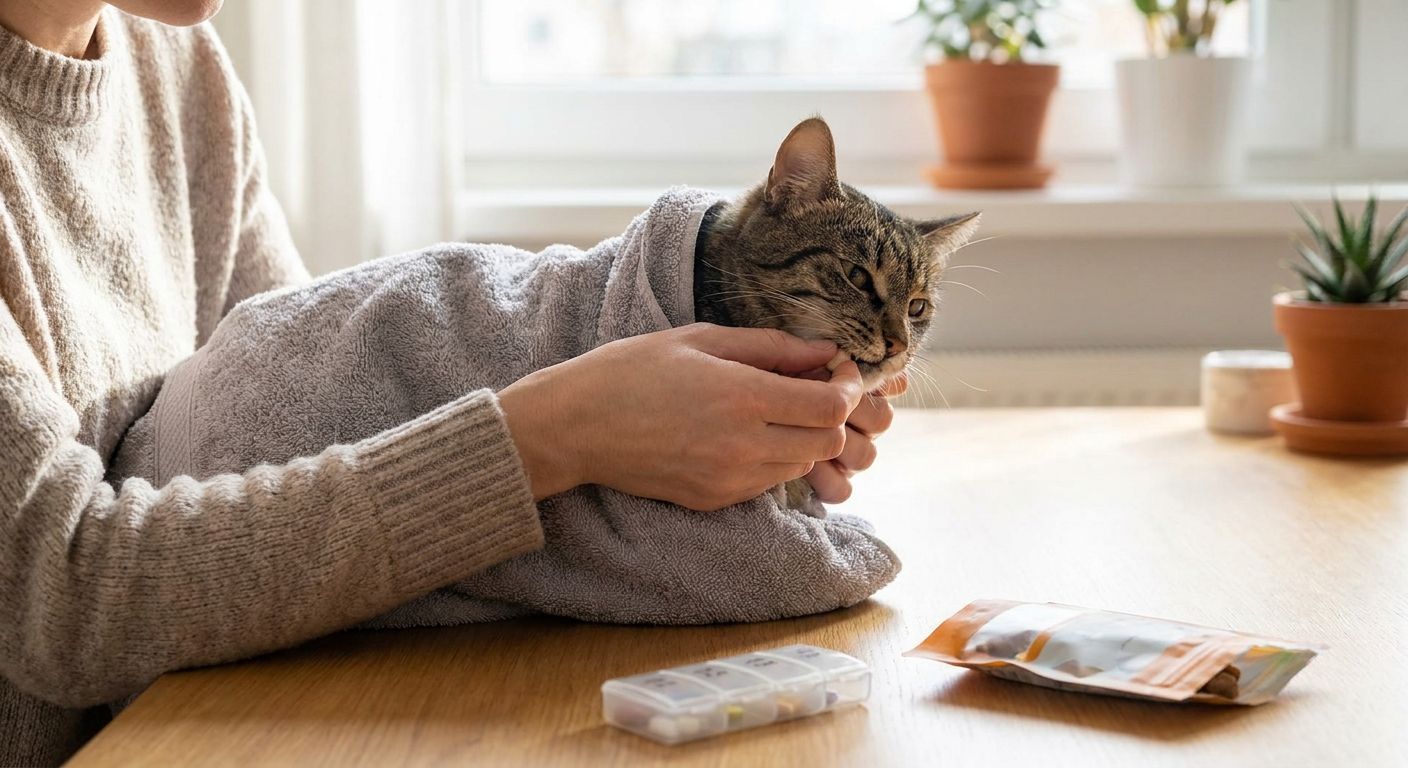
The wrap-trim-release-reset sequence works almost unchanged for pilling or liquid medication. Swap the clipper step for the medication step, keep the same tolerant-to-difficult order, and keep the wipe-and-air reset between cats. Medication days run higher stress, so skipping the reset costs you more here than on a nail-trim day.
If your household does nail trims one week and medication the next, run both through the same order instead of inventing a new one each time. Consistency in sequence is what your cats learn to predict, not the specific task. Purrttie's whole approach to multi-cat grooming rests on that predictability.
“Wipe the wrap, give it 30 seconds of air, and cat three behaves like cat one.”
Troubleshooting
- Cat two refuses a wrap cat one just used. You skipped the wipe-and-air reset. Add it back and hold at least 30 seconds of air time.
- One cat takes twice as long as the rest. Move that cat permanently to the end of the order instead of fighting the same fight every session.
- A senior cat resists more than usual. Check whether at-home grooming is safe for senior cats in your case — grip strength and mobility change with age and call for shorter turns.
- Kittens squirm through the entire session. Groom kittens early, while your hands are steadiest, and keep their turns under 30 seconds.
- Waiting cats wind each other up. Separate rooms, not side-by-side carriers. Cats pick up stress through sound alone.
Customize your rotation
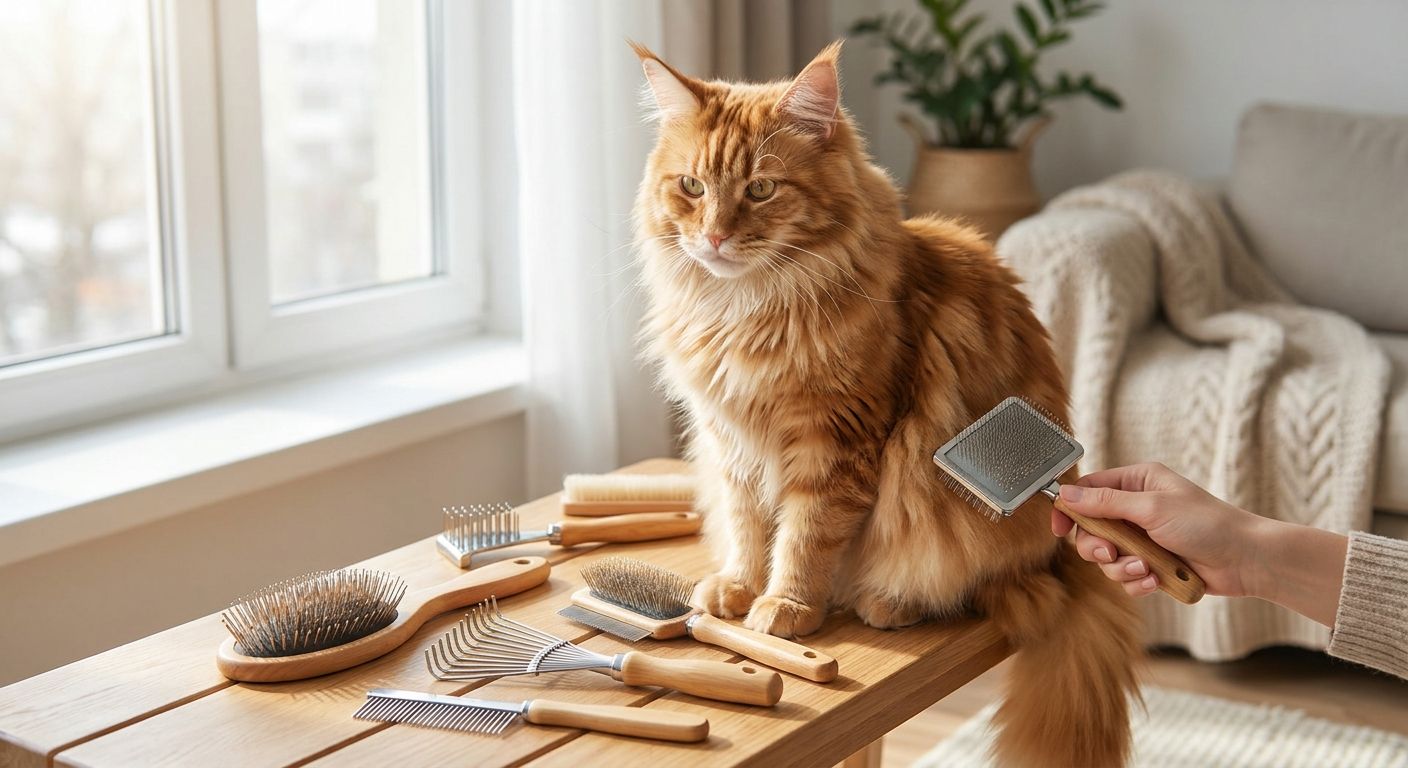
Once the base rotation holds for a few sessions in 2026, layer on structure: note how long each cat takes, which cat needs a longer reset, and what wrap tension suits each body size, so you aren't re-learning fit every month. Setting this up from scratch? A grooming kit for multi-cat households gives you matched tools rather than mismatched pieces. If one cat still bolts at the sight of the wrap, work through how long it takes to desensitize a cat to grooming before folding them back into the full rotation.
FAQ
How do you groom multiple cats without them fighting afterward?
Keep cats in separate rooms before and after their turn, and wipe the wrap between cats so scent doesn't carry over. Cats that smell another cat's stress on shared gear react defensively toward that cat later.
Can one cat wrap work for a whole multi-cat household in 2026?
Yes, one wrap sized to your largest cat works across the household as long as you adjust tension and paw exposure per cat. Snug, not tight, is the standard regardless of which cat is in it.
What order should cats go in during a grooming rotation?
Start with your most tolerant cat and finish with the most anxious or senior one. The easy cat warms up your technique and keeps the room calm before you reach the difficult turn.
How long should you wait between grooming each cat?
Thirty to sixty seconds is enough to wipe the wrap and let scent clear before the next cat enters. Rushing this is the most common reason rotations get harder with every cat.
Is at-home grooming safe for senior cats in a rotation?
Usually yes, but senior cats need shorter sessions and more reset time than younger cats in the same household. Place them last in the order and watch for changes in grip or mobility session to session.
Do kittens need the same grooming rotation as adult cats?
Kittens use the same wrap-based rotation but need turns under 30 seconds. Grooming them early in the order, while your hands are steadiest, works better than saving them for last.
What's the difference between a nail trim rotation and a medication rotation?
The wrap, the order and the reset stay identical — only the middle task changes from clipping to medicating. Medication days run higher stress, so the scent reset matters even more.
Can home grooming tools cause more stress than a professional groomer?
Badly sequenced sessions can, especially when cats wait in sight of each other or share unwiped gear. A structured rotation with resets between cats keeps stress lower than one rushed group session.
One last thing
Rotations rarely fail on the first cat. They fail on cat two or cat three, and it's almost always a skipped scent reset rather than a difficult cat. Wipe the wrap, give it 30 seconds of air, and the order you set in early 2026 will still be working at the end of 2026.