Cat grooming gloves come in five basic builds, and picking the wrong one means a couch full of fur and a cat who bolts the second you reach for it. This guide ranks the best cat grooming gloves in 2026 by design type, tells you which one fits your cat's coat and temperament, and flags where a glove isn't the right tool for the job.
- Silicone bristle gloves win overall for daily shedding control on short-haired cats in 2026.
- Five-finger mesh gloves suit pawrents who want full-body massage and bonding time.
- Mitt-style gloves without finger splits work best for anxious or first-time grooming cats.
- Gloves don't replace nail trims — pair one with proper clippers for full care.
- Double-sided gloves handle long-haired and double-coat cats through shedding season.
Why this matters
A cat sheds year-round, and loose undercoat that isn't brushed out ends up on your clothes, your couch, or swallowed as a hairball. A grooming glove solves the shedding problem without a brush a cat can see coming, which is why so many Purrttie customers ask about gloves alongside nail tools.
But a glove is only calming if the fit matches the cat. A stiff-bristle glove on a nervous cat can backfire the same way the wrong clipper does — worth checking whether grooming tools stress cats more than professional groomers before you assume any glove is automatically gentler than a brush.
What makes the best cat grooming glove
- Nub material and softness — silicone nubs pull loose fur without scratching skin; rubber bristles are stiffer and better for thick coats
- Finger separation — five-finger designs give more hand control; mitt-style trades control for a softer, less "tool-like" feel
- Coat length match — short-haired cats need less bristle depth than long-haired or double-coat breeds
- Hair release — how easily the glove sheds the fur it collects when you rinse or peel it off
- Wet-use rating — some gloves work in the bath, some are dry-only
- Cat tolerance — how a first-time or anxious cat reacts to the texture on contact
Cat grooming gloves at a glance
| Glove type | Best for | Standout feature | Key limitation |
|---|---|---|---|
| Silicone bristle glove | Everyday shedding control | Soft nubs work through short coats | Struggles with mats or thick undercoat |
| Five-finger mesh glove | Full-body massage and bonding | Individual finger control | Bulkier fit, harder for small hands |
| Mitt-style glove | Anxious or first-time cats | No finger split, feels like petting | Less precision on stubborn tangles |
| Double-sided glove | Long-haired, double-coat cats | Bristle one side, nub the other | Takes longer per session |
| Waterproof silicone glove | Bath time and rinse-off shampoo | Works wet without losing grip | Not built for dry-coat detangling |
1. Silicone bristle glove: best cat grooming glove for everyday shedding control
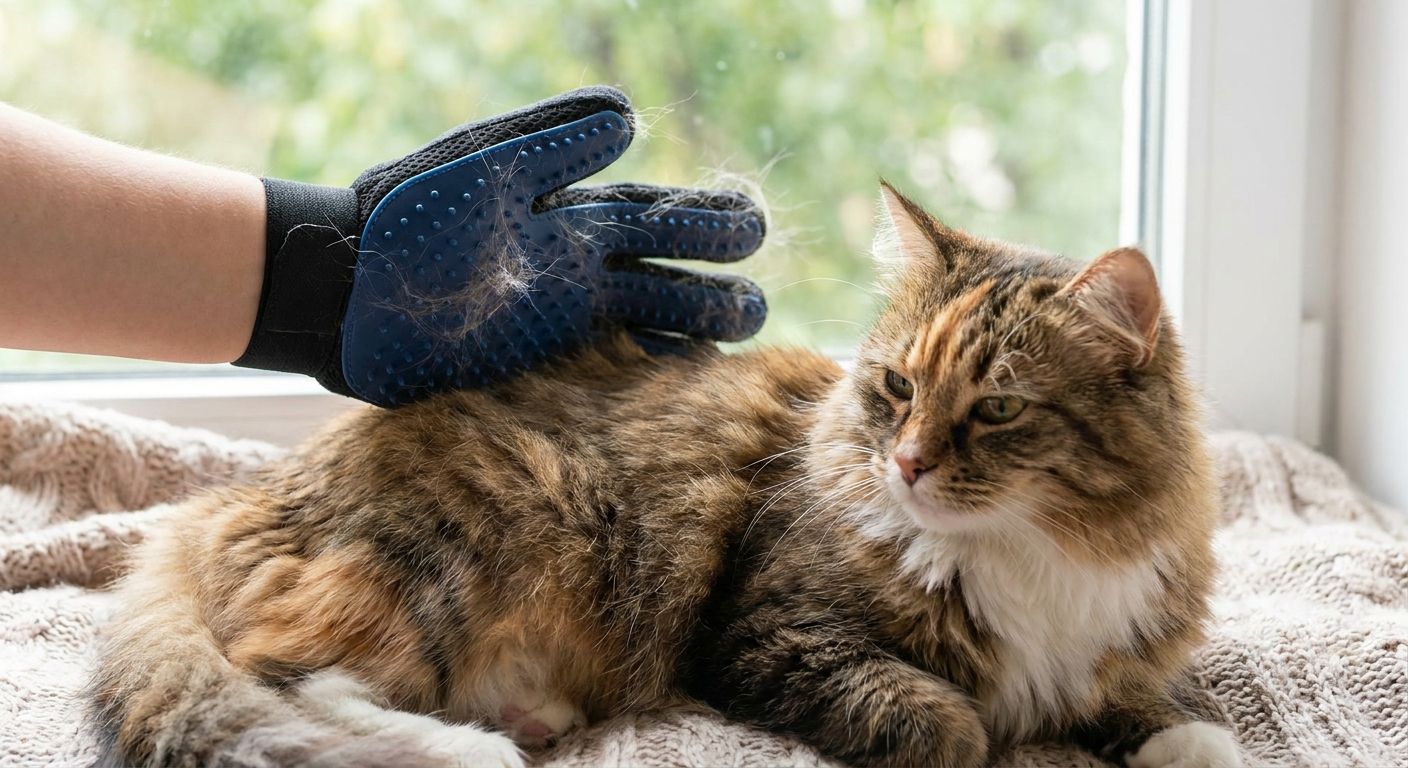
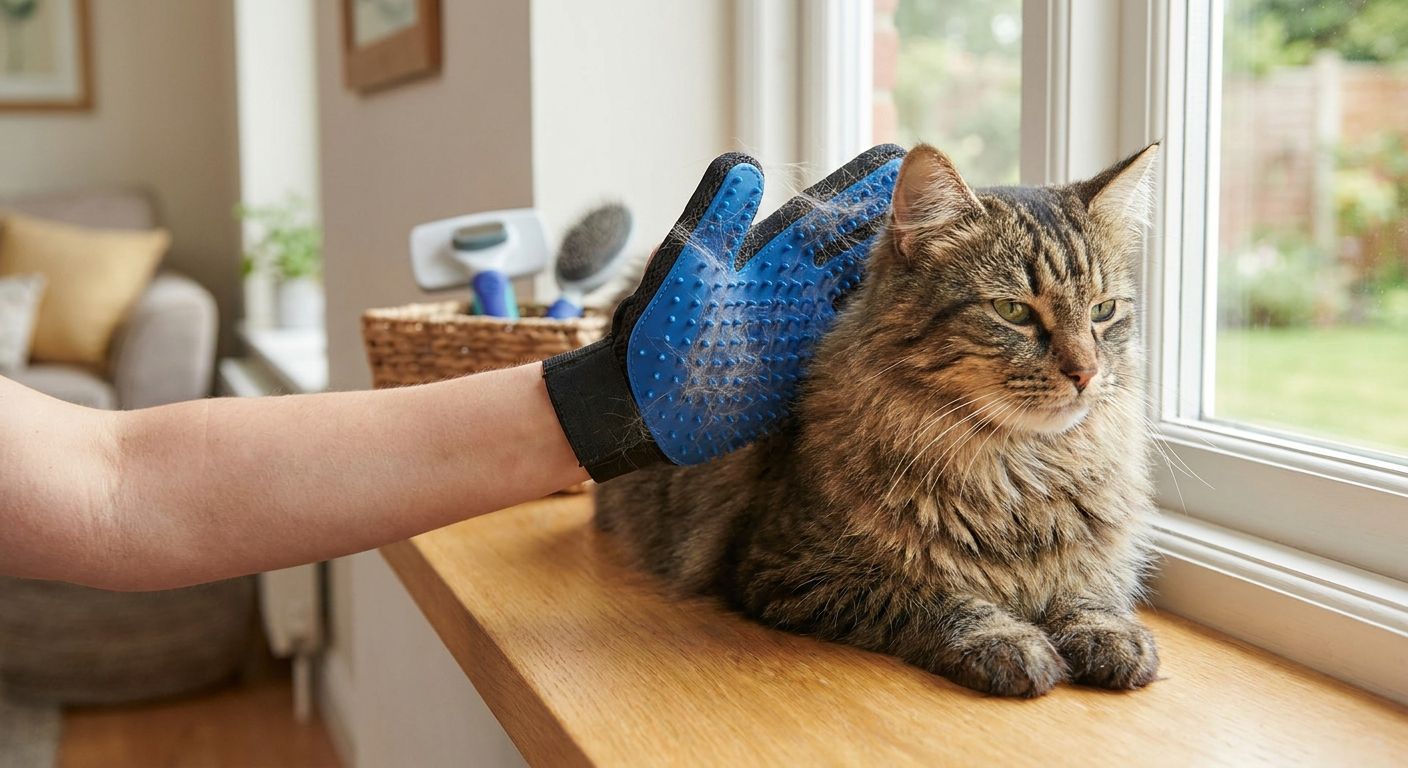
This is the standard rubber-nub design most people picture when they hear "grooming glove." You run your hand over the cat like a normal pet, and the silicone nubs catch loose hair as they go.
Silicone bristle glove pros:
- Feels like petting, so most cats tolerate it without a fight
- Works dry, no water or shampoo needed
- Collects loose fur in the nubs for easy peel-off disposal
Silicone bristle glove cons:
- Doesn't reach mats or tangles in longer coats
- Nubs flatten with use and lose grip over time
Best for: short-haired cats shedding on a normal schedule. Verdict: Buy if your cat has a short coat and tolerates hands-on contact.
2. Five-finger mesh glove: best cat grooming glove for full-body massage and bonding
Instead of a solid mitt, this design keeps each finger separate, closer to a normal glove. It gives you more control to work around the belly, legs, and tail base — areas a flat mitt can't reach as precisely.
Five-finger mesh glove pros:
- Better control for spot-brushing sensitive areas
- Doubles as a massage tool, useful for cats who resist brushes but like touch
- Fits closer to the hand than bulkier mitt designs
Five-finger mesh glove cons:
- Takes longer to put on and adjust than a slip-on mitt
- Small sizing runs tight on larger hands
Best for: cat parents who want grooming time to double as bonding time. Verdict: Buy if your cat enjoys hands-on contact and you want precision over speed.
3. Mitt-style glove: best cat grooming glove for anxious or first-time cats
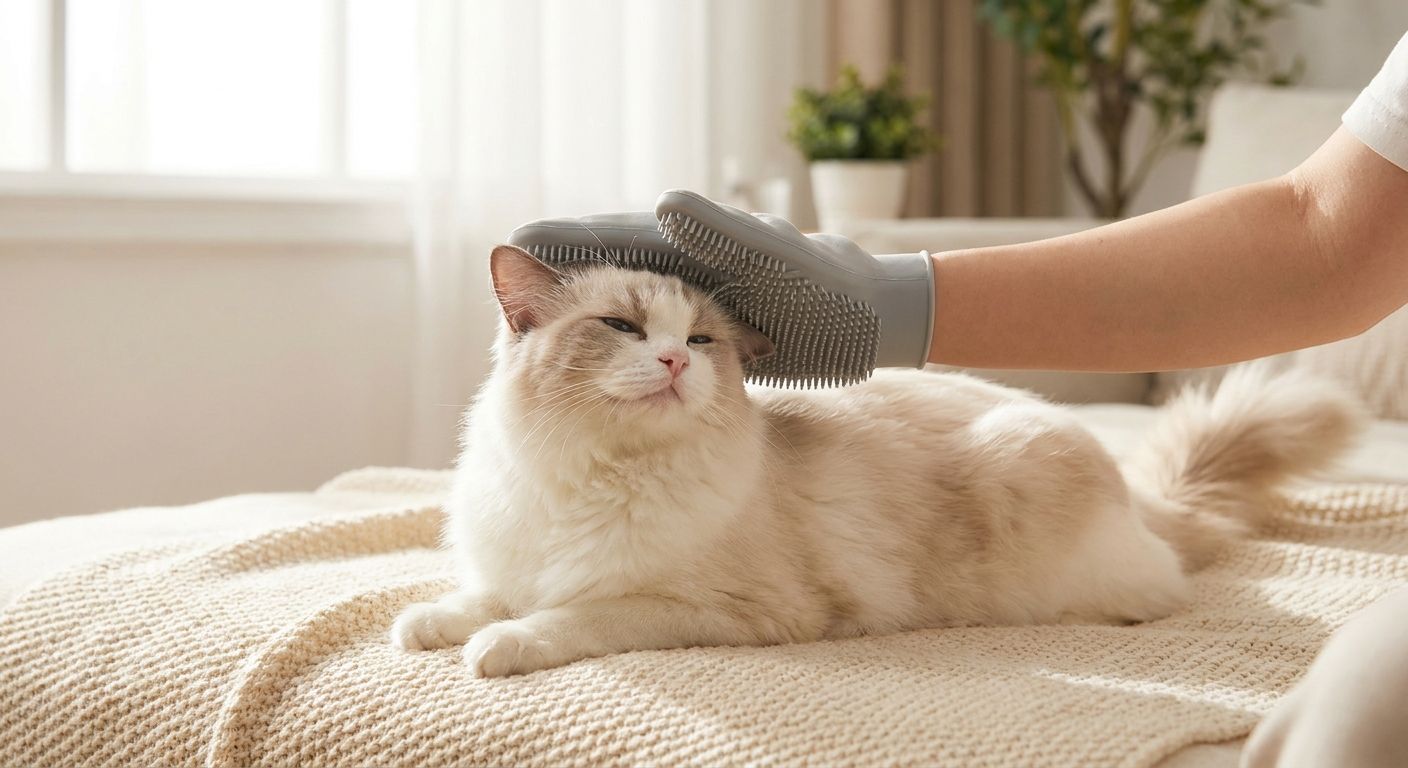
No finger split, just a flat glove shape that slides on and off in seconds. It's the least "tool-like" option, which matters for a cat who associates brushes or clippers with stress.
Mitt-style glove pros:
- Softest first impression for a nervous or new-to-grooming cat
- Fast to put on and take off between short sessions
- Low learning curve for the human holding it
Mitt-style glove cons:
- Less precision than a five-finger design
- Can slip out of position on wriggly cats
Best for: first-time grooming sessions or cats who tense up at anything resembling a brush.
If your cat's real problem isn't fur but full-body panic during handling, the glove alone won't solve that — the Snug Pro Cat Wrap is built specifically to keep a cat gently contained during nail trims, medication, or vet prep, which is a different job than a grooming glove does. Pawrents managing both shedding and handling stress often run the two side by side rather than expecting one tool to cover everything.


Verdict: Buy the mitt-style glove for shedding, and treat handling stress as a separate problem with a separate tool.
4. Double-sided glove: best cat grooming glove for long-haired and double-coat cats
One side carries shorter, denser nubs for surface hair, the other has longer bristles to work through undercoat. Long-haired breeds and double-coat cats blow their coat seasonally, and one texture rarely handles both jobs.
Double-sided glove pros:
- Handles both surface shedding and deeper undercoat in one glove
- Fewer tools to buy compared to a brush-plus-glove combo
- Useful year-round, not just during heavy shedding months
Double-sided glove cons:
- Sessions run longer since you're flipping the glove mid-groom
- Bulkier profile than a single-texture glove
Best for: Maine Coons, Ragdolls, and other long-haired or double-coat cats. Verdict: Buy if your cat's coat sheds in two layers and a single-texture glove leaves undercoat behind.
5. Waterproof silicone glove: best cat grooming glove for bath time
Same silicone-nub concept as the everyday glove, built to keep its grip when wet. Useful during a bath or a rinse-off shampoo session where a dry-only glove would just slide around.
Waterproof silicone glove pros:
- Works with shampoo and running water without losing grip
- Doubles as a gentle scrub during bath time
- Rinses clean in seconds, no trapped fur to pick out later
Waterproof silicone glove cons:
- Not built for dry-coat detangling between baths
- Overkill if your cat is never bathed
Best for: cats who get occasional baths or rinse-off treatments. Verdict: Hold unless bathing is already part of your routine — otherwise a dry glove covers more of your actual grooming needs in 2026.
How we ranked these
Each glove type was scored against the six criteria above: nub material, finger separation, coat length match, hair release, wet-use rating, and cat tolerance. The silicone bristle glove ranked highest because it clears the most criteria for the widest range of cats — short-haired, moderate shedders, average tolerance for handling. The other four fill gaps that a single glove can't cover on its own.
Which cat grooming glove should you choose?
Default pick for most cat parents: the silicone bristle glove, because it works dry, tolerates most coat lengths, and doesn't require training a nervous cat into a new sensation. Switch to a five-finger mesh glove if you want more control for spot-brushing, a mitt-style glove if your cat is new to grooming or easily spooked, a double-sided glove if you're dealing with a long-haired or double-coat breed, and a waterproof silicone glove only if baths are already part of your routine.
None of these gloves trim nails or manage a cat during medication — for that, pair the right glove with the right restraint and clipper setup rather than expecting one tool to do the whole job.
FAQ
What is the best cat grooming glove overall in 2026?
The silicone bristle glove is the best overall pick in 2026 because it works dry, suits most coat lengths, and most cats tolerate it since it feels like normal petting.
Are grooming gloves better than brushes for cats?
Grooming gloves are gentler for cats who resist brushes because the motion feels like petting, but they don't reach mats or deep undercoat the way a slicker brush can.
Do grooming gloves work on long-haired cats?
A single-texture glove often misses undercoat on long-haired breeds. A double-sided glove with both short nubs and longer bristles handles surface fur and undercoat in one session.
Can I use a grooming glove in the bath?
Only if it's rated for wet use. A waterproof silicone glove keeps its grip with shampoo and running water; a standard dry glove will slide around and lose effectiveness.
Will a grooming glove calm an anxious cat?
A mitt-style glove is the least tool-like option and works well for first grooming sessions, but it won't solve full-body handling panic during nail trims or vet prep — that needs a separate restraint tool.
How often should I use a cat grooming glove?
Two to three short sessions a week keeps shedding manageable for most cats; long-haired or double-coat cats often need daily sessions during seasonal shedding.
Do grooming gloves replace nail clippers?
No. Grooming gloves only manage loose fur on the coat — nail trims need a dedicated clipper, not a glove.
Are cheap grooming gloves as good as premium ones?
Nub quality and durability vary more than price alone suggests — check that the silicone or rubber holds its shape after repeated washing rather than judging on price point.
One last thing
A grooming glove only manages what's already loose on the surface — it can't split a mat, and it can't hold a squirming cat still for a nail trim. If your cat fights handling more than it fights the fur removal itself, solve the restraint problem first with something built for that job, then let the glove handle shedding on its own schedule.