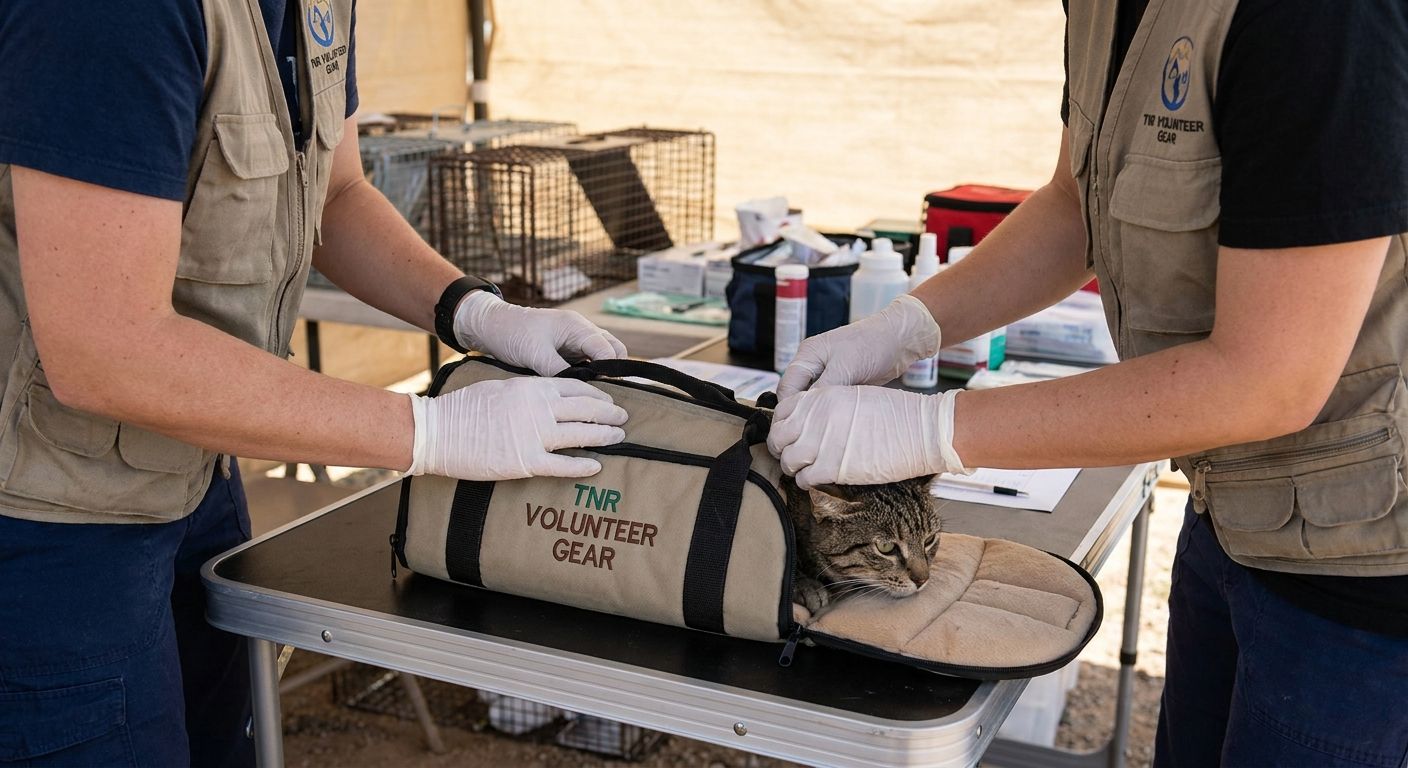
A cat restraint bag for TNR volunteers is a mesh or fabric enclosure that immobilizes a trapped or semi-feral cat's body while leaving one small area exposed, used for wound checks, ear-tip confirmation, or post-op medicating when a humane trap isn't the right tool for the moment. TNR work differs from home grooming in one big way: the cat rarely knows you, often has zero socialization, and every handling window is short and high-stakes.
- Cat restraint bag for TNR volunteers works best as a zip-access mesh bag for unsocialized ferals; leave freshly trapped cats in the trap whenever you can.
- Purrttie's Snug Pro Cat Wrap suits semi-feral or already-tame colony cats needing post-op meds or wound checks, not a fresh feral pull straight off a trap.
- Standard TNR recovery hold is 24-48 hours before release, so build your restraint routine around that window, not just trapping day.
- Disinfect every bag between cats; colony cats carry higher URI and ringworm risk than owned house cats passing through the same clinic.
Why this matters for TNR volunteers
A feral or unsocialized colony cat has no history of being handled, so a restraint tool built for a house cat's nail trim doesn't automatically transfer to clinic day. TNR volunteers deal with bite risk, unknown health status, and a cat that has never felt a human hand before surgery morning.
The cat grooming bags for stress-free nail trims most pet owners buy are built for a cooperative or mildly anxious house cat. TNR restraint calls for something tougher: a bag that survives repeated use across dozens of different cats in a single clinic day, gets disinfected fast, and gives the vet tech a small, controlled access point without the cat ever getting a full range of motion.
Getting the tool wrong costs you time, bites, and stress for a cat that's already having the worst day of its year in 2026.
How TNR volunteers should choose and use a restraint bag
Match the restraint method to the cat's temperament
Not every cat needs a bag. A cat that's already sedated in a trap, or one that's calm enough to hand-scruff safely, doesn't need the extra step.
- Fully feral, never handled: leave in trap until anesthesia takes effect
- Semi-feral, tolerates brief contact: mesh restraint bag or wrap-style tool
- Tame colony cat or foster: wrap-style restraint works fine for meds and wound checks
- Aggressive or defensive under stress: mesh bag with zip access plus a muzzle for the head
Build or buy the right bag for your clinic setup
DIY works in a pinch, but a purpose-built bag saves time on high-volume days.
- Pillowcase or towel burrito: free, but no secure closure and easy for a cat to back out of
- Commercial mesh TNR bag: zip access points for injections and ear checks, built for repeated disinfecting
- Wrap-style restraint: faster to apply on a cooperative cat, less ideal for a fully feral pull
- Muzzle: covers the head only, always paired with a body restraint method
Practice the trap-to-bag transfer before clinic day
The transfer moment is where most bites and escapes happen. Practicing this with a calm cat first builds muscle memory for the chaotic version.
- Cover the trap fully before opening any door
- Line up the bag opening directly against the trap opening, no gap
- Have a second volunteer ready to close the zip the instant the cat moves in
- Never reach into an open trap with bare hands
Set up your restraint station for one-handed access
A good station means the vet tech never has to ask you to reposition mid-procedure.
- Place the bag on a non-slip surface at table height
- Keep the exposed access zone facing the tech, not the wall
- Have a towel ready to drape over the cat's head to reduce visual stimulation
- Keep sedation supplies within arm's reach before you even open the bag
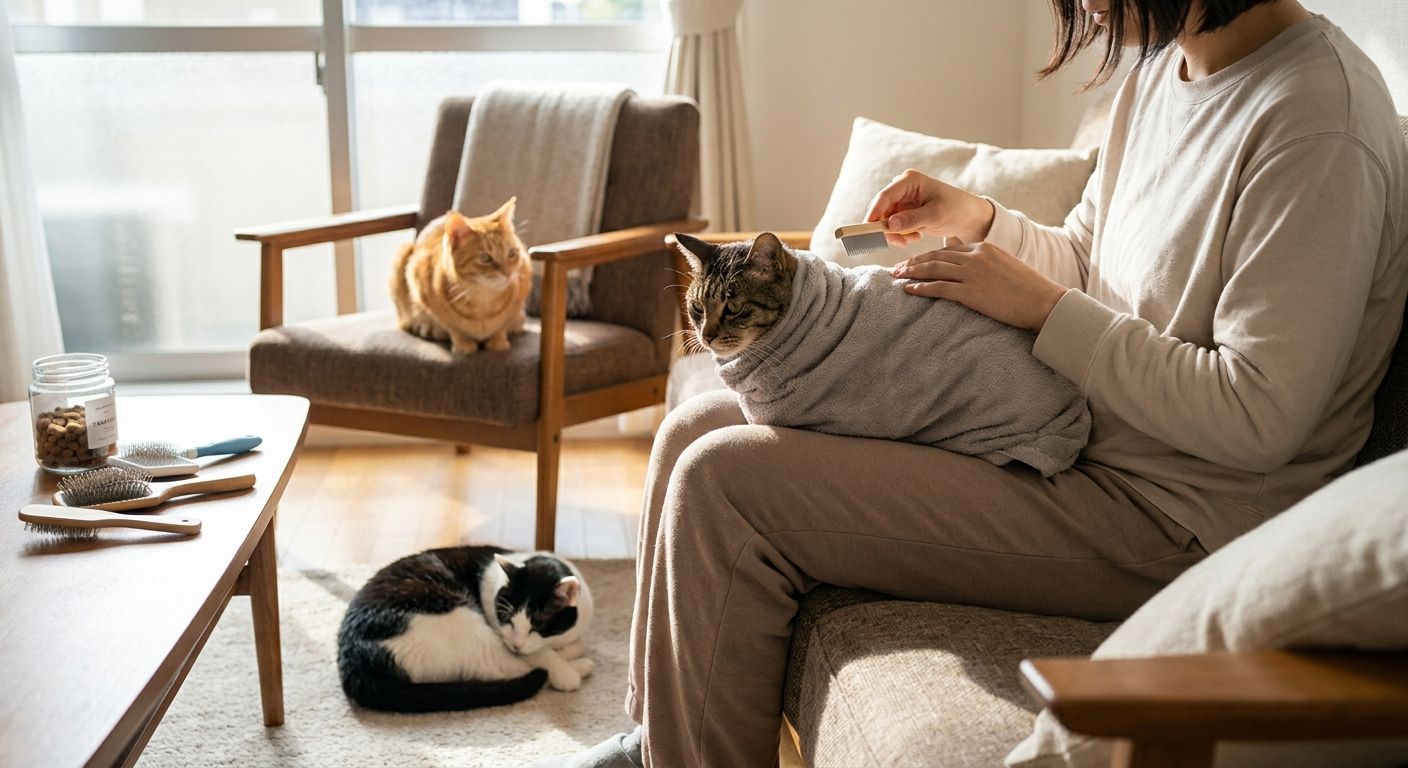
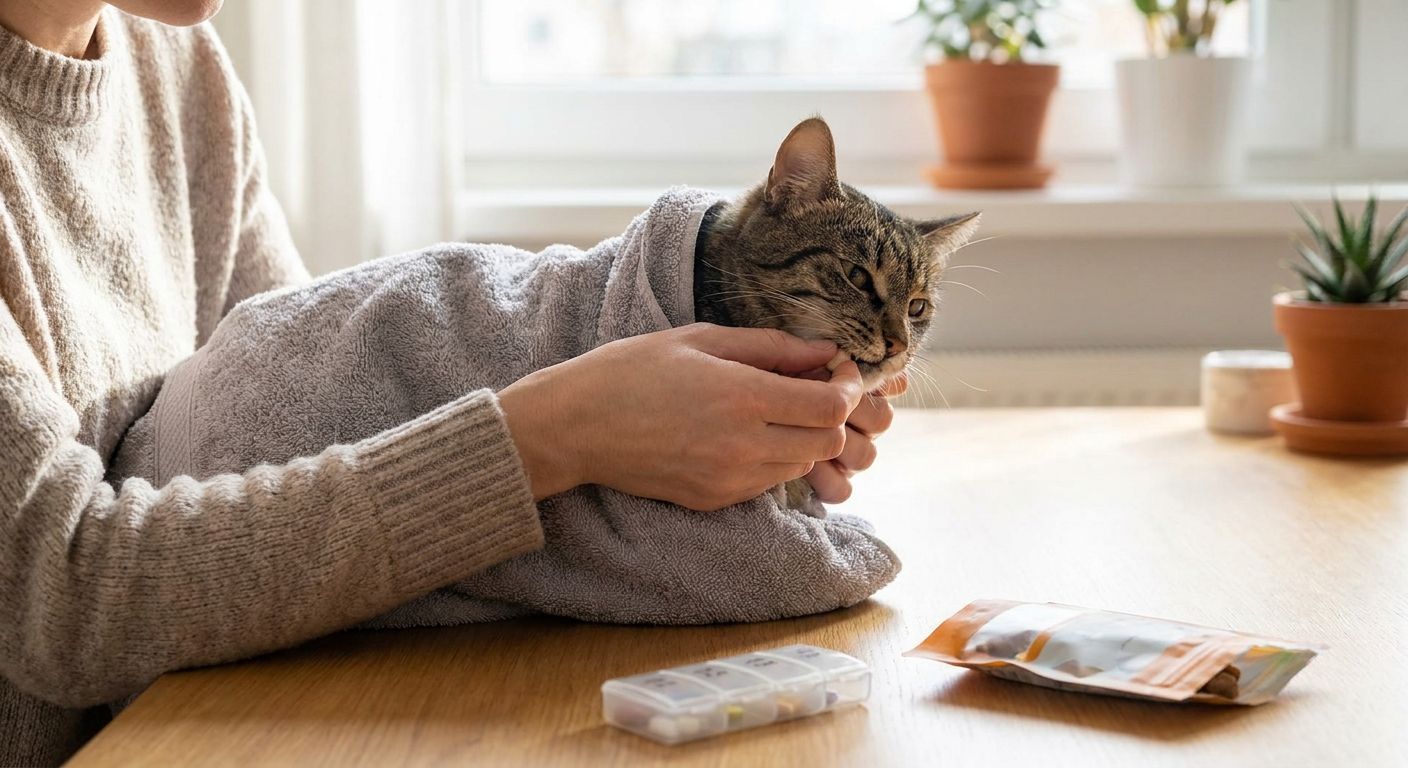
This is the point where a wrap-style tool earns its place for the right cat. Purrttie's Snug Pro Cat Wrap keeps limbs tucked snugly, not tightly, and works well for a colony cat that's already tame enough to tolerate contact, or a foster recovering post-surgery who needs a quick wound check without a full re-trap. It is not a substitute for a mesh bag on a genuinely feral animal that has never been touched.
Handle injections, ear-tips, and wound checks with a second volunteer
Solo handling during the highest-risk moments is how volunteers get hurt.
- One person stabilizes the bag or wrap, the second handles the instrument
- Confirm ear-tip status before the cat goes under, not after
- Keep injection sites exposed only as long as needed, then re-cover
- Log any bite or scratch immediately, even minor ones
Watch the clock on time inside the bag
A cat's normal body temperature runs 100.5°F to 102.5°F, and a stressed cat zipped into a mesh bag too long can overheat or spike cortisol hard enough to complicate recovery.
- Limit continuous bag time to the length of the actual procedure
- Loosen or release the moment the task is done, not five minutes later
- Watch for open-mouth breathing or excessive drooling as overheating signs
- Move recovering cats to a quiet, ventilated crate immediately after
Sanitize and store bags between every cat
Colony cats move between clinics carrying unknown health status, so cross-contamination risk is real.
- Wipe down or launder every bag between individual cats, not just at the end of the day
- Keep a dedicated "dirty" bin separate from clean, ready-to-use bags
- Air-dry fully before reuse; damp mesh holds pathogens longer
- Retire any bag with tears, since a torn access point is an escape point
Restraint options for TNR volunteers compared
| Option | Best for | Restraint level | Key limitation |
|---|---|---|---|
| DIY pillowcase or towel burrito | Emergency, zero-budget handling | Low to moderate, cat can wriggle free | No zip closure, hard to secure solo |
| Commercial mesh TNR bag | High-volume clinic days, unsocialized ferals | High, full-body with zip access points | Overheating risk if left zipped too long |
| Fabric or basket muzzle | Bite risk when body is already controlled | Head only, no body control | Always needs a second restraint method |
| Leave-in-trap transfer | Freshly trapped cats headed to surgery | Highest, cat never touches human hands | Only works while cat stays in original trap |
| Snug Pro Cat Wrap (Purrttie) | Semi-feral or tame colony cats needing meds or wound checks | Moderate to high, limbs tucked snugly | Built for cooperative or recovering cats, not a first feral pull |
Verdict: for a genuinely feral colony cat straight off a trap, a mesh restraint bag or the trap itself wins. For a tame or recovering cat needing a quick medication or wound check, a wrap-style restraint like the nail clippers ranked by safety features guide's grooming setups pairs well with the Snug Pro Cat Wrap.
Common mistakes TNR volunteers make with restraint bags
- Bagging a cat immediately after trapping instead of transporting in the trap. Every extra transfer point is another chance for a bite or an escape.
- Leaving a cat zipped in a mesh bag past the procedure window. Ten extra minutes of zipped time is enough to push a stressed cat toward overheating.
- Reusing the same bag across colony cats without disinfecting. Ringworm and upper respiratory infections spread fast through shared, unwashed gear.
- Skipping a second volunteer during injections or blood draws. Solo handling during the highest-risk task on the whole clinic day is how experienced volunteers still get hurt.
- Using a house-cat wrap on a fully feral cat that's never been touched. A wrap built for a cooperative animal will not hold against a genuinely feral cat fighting to escape.
FAQ
What is a cat restraint bag used for in TNR?
A cat restraint bag immobilizes most of a cat's body while leaving a small area exposed, used for injections, wound checks, and ear-tip confirmation when the cat is out of its trap. TNR volunteers rely on it for the moments between trapping and full anesthesia.
Is a mesh bag or a cat wrap better for feral cats?
A mesh restraint bag with zip access points is better for a fully feral cat that has never been handled, since it holds up against harder resistance. A wrap-style tool like the Snug Pro Cat Wrap suits a tame or recovering colony cat that already tolerates some contact.
How long can a cat safely stay in a restraint bag?
Keep bag time limited to the length of the actual procedure and release immediately after. Cats run a normal body temperature of 100.5°F to 102.5°F, and extended time zipped in a bag under stress can push that up fast.
Can you use a pillowcase instead of a restraint bag for TNR?
A pillowcase works as an emergency, zero-cost option but has no secure closure and lets a determined cat back out. It's a stopgap, not a reliable tool for repeat clinic days.
Do TNR clinics provide restraint bags or do volunteers bring their own?
This varies by clinic and organization, so confirm with your local coordinator before trapping day. Some clinics supply mesh bags on-site; others expect volunteers to bring their own gear.
What's the difference between a restraint bag and a cat muzzle?
A restraint bag controls the whole body, while a muzzle only covers the head and mouth to reduce bite risk. Muzzles get paired with a bag or a scruff hold, never used alone as the sole restraint.
Is the Snug Pro Cat Wrap suitable for feral cats?
The Snug Pro Cat Wrap fits semi-feral or already-tame colony cats needing medications or wound checks post-surgery, not a fully feral cat straight off a trap. For a first feral pull, a mesh restraint bag with zip access is the safer choice.
How do you disinfect a restraint bag between cats?
Wipe down or launder the bag between every individual cat, not just at the end of the clinic day, and let it fully air-dry before reuse. Keep a separate dirty bin so used bags never mix with clean ones.
One last thing
Most new TNR volunteers assume the restraint bag is for the ear-tip itself. It isn't. Ear-tipping happens while the cat is already under anesthesia in surgery; the bag's real job is everything around that moment, the pre-op handling, the post-op wound check, and the medicating during a 24-to-48-hour recovery hold before release. Build your gear choice around those windows, not the surgery itself, and you'll pick the right tool for 2026's clinic season.