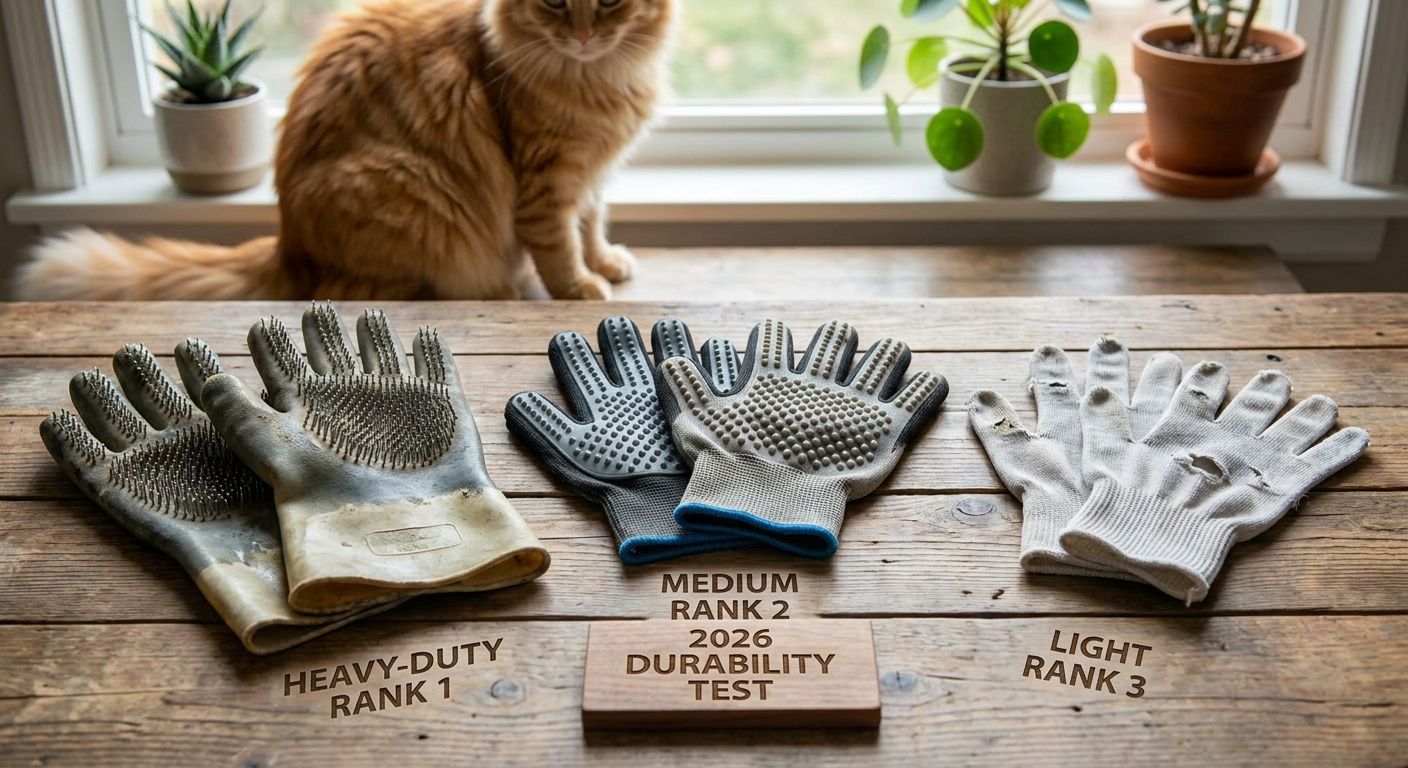
Cat grooming gloves promise a stress-free brushing session, but sensitive-skin cats punish the wrong texture fast — sharp nubs or stiff bristles undo the trust you spent weeks building. This guide ranks the glove types worth trying in 2026 and tells you where a glove stops being the right tool for the job.
- Silicone nub gloves are the safest starting point among the best cat grooming gloves for sensitive skin cats in 2026.
- Rubber bristle gloves pull more loose fur but feel firmer against thin, reactive skin.
- Chenille mitts suit cats that flinch at any rubber texture, though they collect less fur per stroke.
- A grooming glove only handles the coat — nail trims and medication still need separate handling.
- Test any glove against your own forearm first; if it feels sharp to you, it will feel worse to a cat.
Why this matters
Cat skin is thinner and more reactive than dog skin, which is exactly why a glove that works fine on a Labrador can make a cat bolt off the grooming table. Sensitive-skin cats — seniors, cats on medication, cats with allergies or dermatitis flare-ups — feel every seam, every stiff bristle, every hot spot inside a glove that never gets aired out.
Purrttie builds cat handling tools around that reality, which is why this ranking treats glove choice as a fit problem, not a shopping problem. Get the texture wrong once and the cat remembers it for the next ten grooming attempts.
Best overall: silicone nub grooming glove. Best for multi-cat households: adjustable-strap grooming glove. Best for cats who reject any rubber texture: chenille grooming mitt.
What makes the best cat grooming glove for sensitive skin cats
- Nub or bristle softness — density and stiffness against thin, reactive skin
- Seam and stitching quality — rough interior seams irritate more than the nubs themselves
- Cleaning ease — trapped fur against already-sensitive skin invites bacteria
- Breathability — trapped heat inside the glove makes a cat pull away faster
- Secure, adjustable fit — a loose glove slips mid-stroke and startles the cat
At a glance: cat grooming glove types compared
| Glove type | Best for | Standout feature | Key limitation |
|---|---|---|---|
| Silicone nub glove | Everyday sensitive-skin brushing | Nubs flex like a petting hand | Traps loose fur, needs frequent rinsing |
| Rubber bristle glove | Heavy shedding seasons | Denser rows pull more undercoat per stroke | Firmer texture can feel like scratching |
| Chenille grooming mitt | Texture-averse cats | Softest option, closest to a bare hand | Collects the least loose fur |
| Adjustable-strap glove | Multi-cat households | One glove resizes across hands | Strap hardware can snag long fur |
| Two-sided grooming glove | Brushing plus polishing | Bristle side and smooth finishing side in one | Two surfaces mean more cleaning time |
1. Silicone nub grooming glove: best cat grooming glove for everyday sensitive-skin brushing
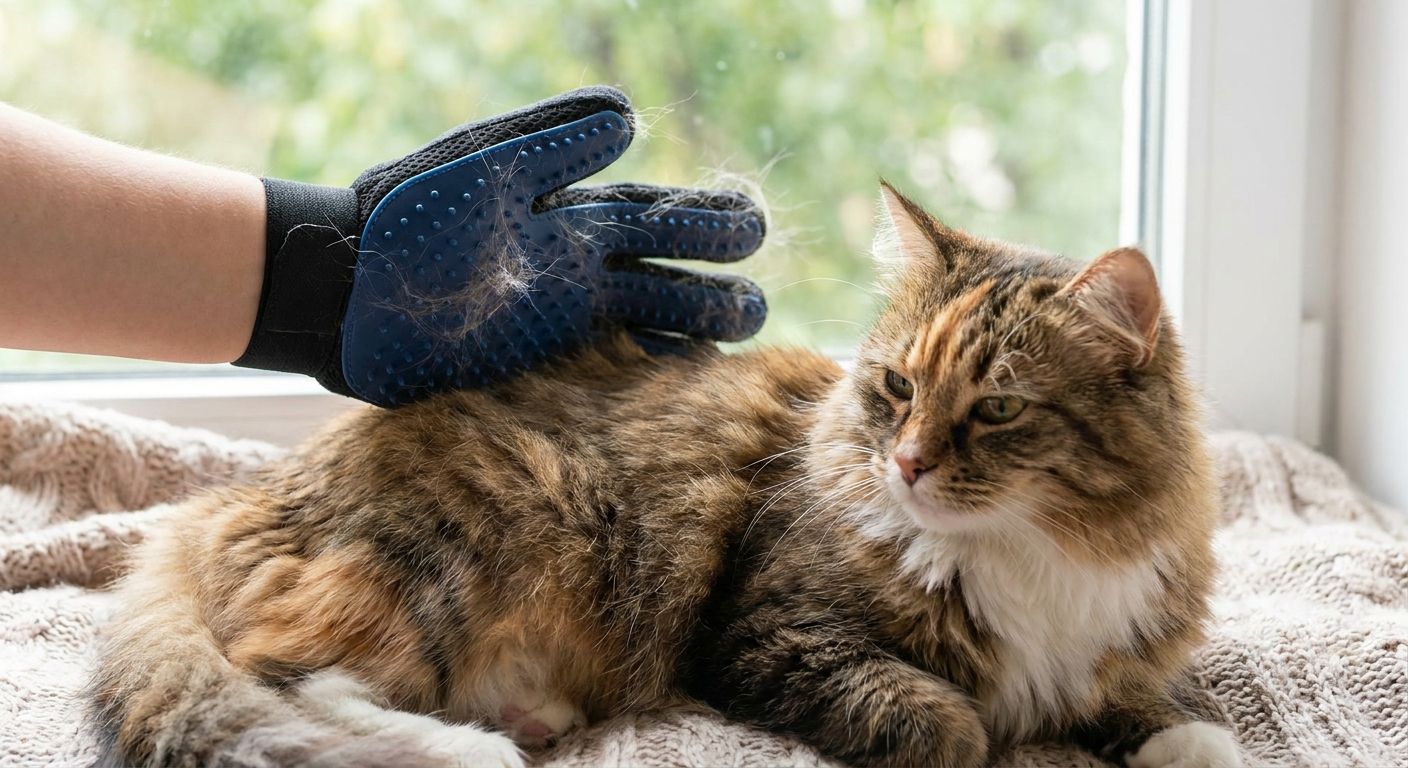
Silicone gloves fit over your hand like a mitt, with soft rubber nubs replacing bristles entirely. You stroke the cat the way you normally would, and the nubs lift loose fur and light debris without pressing into the skin.
Silicone nub glove pros:
- Nubs flex with hand pressure instead of digging in
- Doubles as a bathing tool since silicone dries fast
- Rinses clean in most cases, no separate wash cycle
- Familiar petting motion keeps anxious cats calmer
Silicone nub glove cons:
- Loose fur sticks to the nubs and needs peeling off between strokes
- Less effective than bristles on matted or heavily shedding coats
Best for: sensitive-skin cats being introduced to grooming for the first time in 2026. Verdict: Buy.
2. Rubber bristle grooming glove: best cat grooming glove for heavy shedders
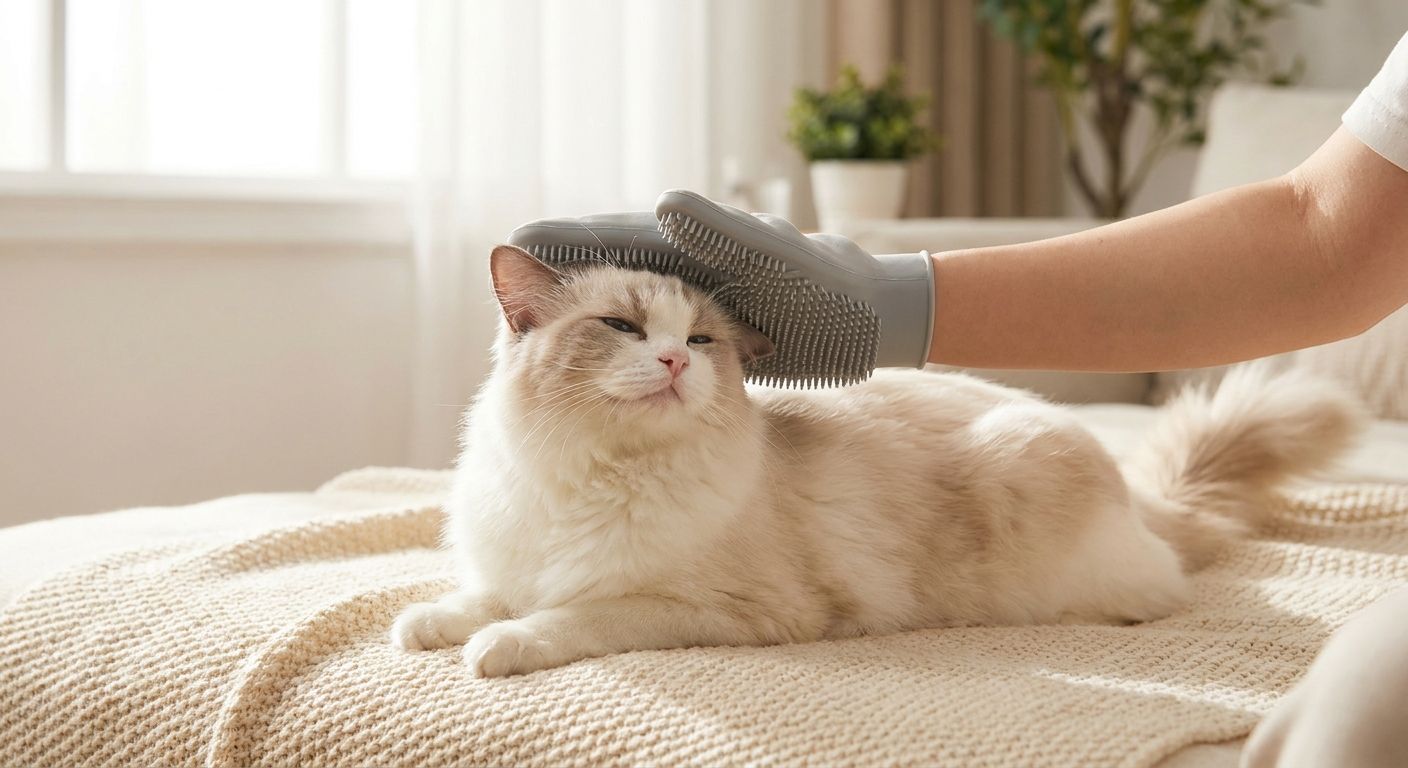
Same mitt shape as the silicone option, but with denser rows of firmer rubber bristles built to pull loose undercoat during shedding season.
Rubber bristle glove pros:
- Pulls more loose hair per stroke than silicone nubs
- Cuts down shedding-season fur on furniture and clothing
- Works through slightly longer coats without snagging
Rubber bristle glove cons:
- Firmer bristles can register as scratching to a touch-sensitive cat
- Not the right first glove for a cat new to grooming
Best for: shedding season on a cat that already tolerates handling well. Verdict: Hold — introduce only after the cat accepts a softer glove first.
3. Chenille grooming mitt: best cat grooming glove for texture-averse cats
A woven fabric mitt, sometimes with looped chenille threads instead of rubber, gets closer to the texture of a bare human palm than any rubber design.
Chenille mitt pros:
- Softest texture of the five options here
- Doubles as a light polish pass after brushing
- Quieter against the coat, less static buildup
Chenille mitt cons:
- Collects the least loose fur of any option in this guide
- Fabric holds moisture and odor longer than silicone or rubber
Best for: a cat already stressed by grooming tools of any kind. Verdict: Buy — as a bridge tool before moving to rubber or silicone.
4. Adjustable-strap grooming glove: best cat grooming glove for multi-cat households
Same nub or bristle interior as the options above, with a strap across the back of the hand that tightens or loosens so one glove fits different hand sizes.
Adjustable-strap glove pros:
- One glove serves multiple people in the household
- Strap keeps the glove from sliding during longer sessions
- Comes in nub or bristle versions depending on coat type
Adjustable-strap glove cons:
- Strap hardware can catch on long fur if not trimmed close
- One more moving part that can loosen mid-session
Best for: households where more than one person handles grooming duty. Verdict: Buy — if consistent fit matters more than a fixed single size.
5. Two-sided grooming glove: best cat grooming glove for combined brushing and polishing
Bristles on the palm side pull loose fur; a smoother panel on the back of the hand finishes the coat and lays it flat.
Two-sided glove pros:
- Covers brushing and finishing in a single glove
- Useful for calm cats who sit through a full session
- Cuts down the number of tools on the grooming table
Two-sided glove cons:
- Takes longer to clean since two surfaces trap fur
- Bristle side carries the same firmness concerns as any rubber bristle glove
Best for: a calm cat that tolerates a longer, two-step grooming routine. Verdict: Wait — start with a single-surface glove until you know how the cat handles rubber bristles.
How this ranking works
Each glove type is scored against the same five criteria from the section above: softness against skin, seam quality, ease of cleaning, breathability, and fit security. Silicone nub gloves rank first because they score well on all five for a first-time or reactive-skin cat; bristle and two-sided gloves trade some of that comfort for more fur removal, which is why they sit lower on the list for sensitive-skin use specifically.
“A grooming glove only earns trust if your cat forgets it is wearing one.”
Which cat grooming glove should you choose?
Start with a silicone nub glove for any sensitive-skin cat in 2026 — it is the lowest-risk texture and the easiest to introduce slowly. Move to a rubber bristle glove only once the cat sits through a full silicone session without pulling away, and reserve chenille mitts for cats that reject rubber outright.
If a cat resists every glove texture you try, the issue usually is not the glove — it is the handling underneath it. Cats that fight brushing often fight nail trims and vet prep the same way, and that calls for a different fix than swapping mitts; the cat nail clippers for anxious cats comparison covers that handling problem directly.
Tools that pair with a grooming glove
A glove only covers the coat. Nail trims, medication and vet prep need a way to hold a cat still without a full-body chase, and that is a separate product category from grooming gloves entirely.


FAQ
What's the best cat grooming glove for sensitive skin cats in 2026?
A silicone nub grooming glove is the safest default in 2026 because the flexible nubs mimic a petting hand instead of pressing into thin skin. Rubber bristle gloves work better for heavy shedding but feel firmer against reactive skin.
Are grooming gloves safer than brushes for sensitive-skin cats?
Grooming gloves are generally gentler than metal-toothed brushes because the glove mimics the cat's own hand-petting experience. Fit and texture still matter more than the glove-versus-brush choice — a stiff bristle glove can irritate skin just as much as a firm brush.
How do I introduce a grooming glove to a cat that resists touch?
Let the cat sniff and sit near the glove without wearing it for a few sessions before you brush at all. Start with short, one-minute strokes on areas the cat already enjoys being touched, like the cheeks or shoulders, before moving to the back and flanks.
Can grooming gloves replace nail trims or vet visits?
No, a grooming glove only addresses the coat and does not help with nail trims, medication, or vet handling. Those tasks need a separate handling approach, since a cat that tolerates a glove can still fight a nail trim.
How often should I use a cat grooming glove?
Two to three short sessions a week is enough for most shorthair cats, increasing to daily during shedding season. Sensitive-skin cats often do better with shorter, more frequent sessions than one long weekly brushing.
Do grooming gloves work on long-haired cats?
Grooming gloves work on long-haired cats for surface fur and light shedding but do not replace a comb for mats and tangles. Adjustable-strap gloves with denser bristles handle longer coats better than silicone nub gloves.
What should I do if my cat won't tolerate any grooming glove?
Stop trying every texture back to back and go back to bare-hand petting for a week before reintroducing a glove. If the cat also resists nail trims or medication handling, the underlying issue is usually restraint, not the glove itself.
Is silicone or rubber better for a cat with skin allergies?
Silicone is generally the better starting point for a cat with skin allergies because the nubs are softer and the surface rinses clean easily. Always watch for redness or scratching after a session and pause use if either shows up, and check with a vet if irritation continues.
One last thing
Most pawrents grab a grooming glove based on marketing photos, not texture. Before buying anything in 2026, press the nubs or bristles firmly against the inside of your own wrist — if that feels sharp or scratchy to you, it will feel worse against a cat's thinner skin, and no amount of gradual introduction fixes a bad texture match.