Cats shed year-round, with heavier sheds in spring and fall, and the right tool cuts loose fur before it ends up on your couch, in your lungs, or in a hairball on the rug. This guide ranks the five deshedding tool types that actually work, tells you which coat and which cat each one suits, and gives you a straight verdict on each.
- Best overall for most cats: the deshedding glove — gentle enough for fur-sensitive cats and easy to control.
- Best cat de-shedding tools for double-coated or long-haired breeds: the undercoat rake or dematting comb.
- Best budget option: the flea comb, useful for detail work even outside flea season.
- Multi-cat homes do better with a vacuum-attachment brush that collects fur as it works.
Best overall: deshedding glove. Best for double-coated and long-haired cats: undercoat rake. Best budget option: flea comb.
Why this matters
A cat that sheds heavily isn't shedding more because something's wrong — most of the time it's coat cycling, season change, or a dry indoor environment cranking the AC. The problem isn't the fur, it's the tool fighting the cat instead of working with the coat. Get the mismatch wrong and you get a cat who bolts at the sight of a brush, which then makes every future grooming session harder.
Purrttie builds cat handling and grooming tools around that exact friction point — calm handling first, tool second. If your cat already tenses up before brushing starts, the fix usually isn't a better brush. It's better handling during the brushing, which is a separate problem from best cat de-shedding tools but one that compounds it. Understanding how often you should de-shed a long-haired cat also changes which tool makes sense — a cat brushed twice weekly needs a different tool than one brushed once a month.
“If your cat bolts the moment brushing starts, the tool isn't the problem — the handling is.”
What makes the best deshedding tool
- Coat-type match — undercoat tools tear through double coats; they shred a single-coat cat's fur unnecessarily.
- Skin safety — no exposed metal teeth that can nick skin on bony areas like the spine or hips.
- Stress tolerance — a tool a cat sits still for beats a technically superior tool that starts a chase.
- Ease of cleaning — fur that clogs a tool after one pass means more handling time, not less.
- Durability across multiple cats — teeth and bristles that hold shape after weekly use for a year or more.
Best cat de-shedding tools at a glance
| Tool | Best for | Standout feature | Key limitation |
|---|---|---|---|
| Deshedding glove | Cats who resist brushes | Feels like petting, not grooming | Slower on thick undercoats |
| Slicker brush | Surface tangles on long hair | Fine wire bristles lift loose top-coat fur | Can catch skin if angled wrong |
| Undercoat rake / dematting comb | Heavy-shedding double coats | Reaches undercoat without cutting hair | Too aggressive for short-haired cats |
| Flea comb | Detail work, budget pick | Fine teeth catch loose fur and debris together | Slow for full-body sessions |
| Vacuum-attachment brush | Multi-cat households | Collects fur while brushing, less airborne dander | Motor noise spooks nervous cats |
1. Deshedding glove: best for cats who won't tolerate a brush
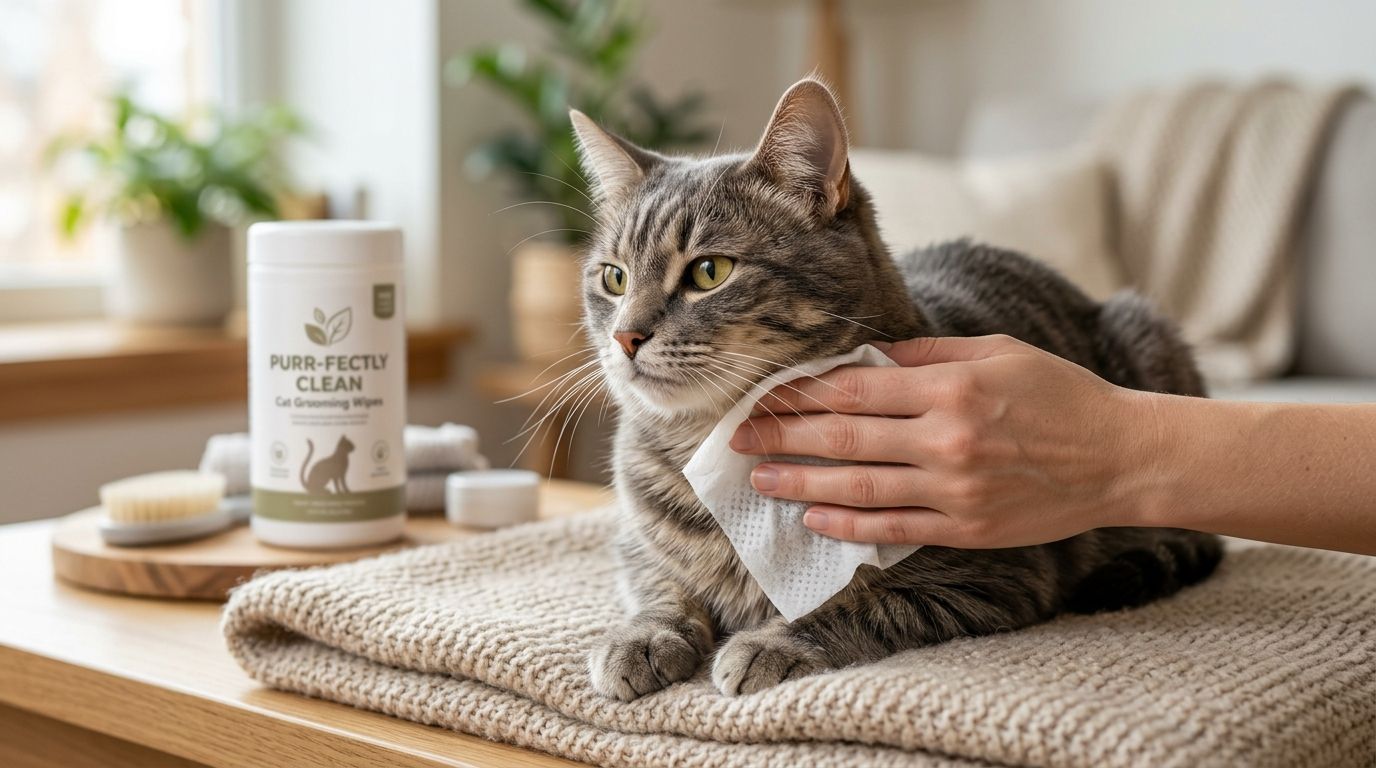
A deshedding glove is worn like a mitt, with short rubber nubs on the palm that lift loose fur as you stroke the cat. Deshedding glove pros:
- Feels close to petting, so anxious cats tolerate longer sessions
- Works on face, chin, and belly areas a brush can't safely reach
- No sharp teeth, so there's minimal skin-nick risk
Deshedding glove cons:
- Slower at pulling out a thick undercoat than a rake
- Traps less fur than tools with a fur-collection reservoir
Best for: cats who tense up or run at the sight of a traditional brush. Verdict: Buy — it's the safest entry point for a cat with no grooming history, and it doubles as a bonding tool because it reads as affection, not a chore.
2. Slicker brush: best for surface tangles on long-haired cats
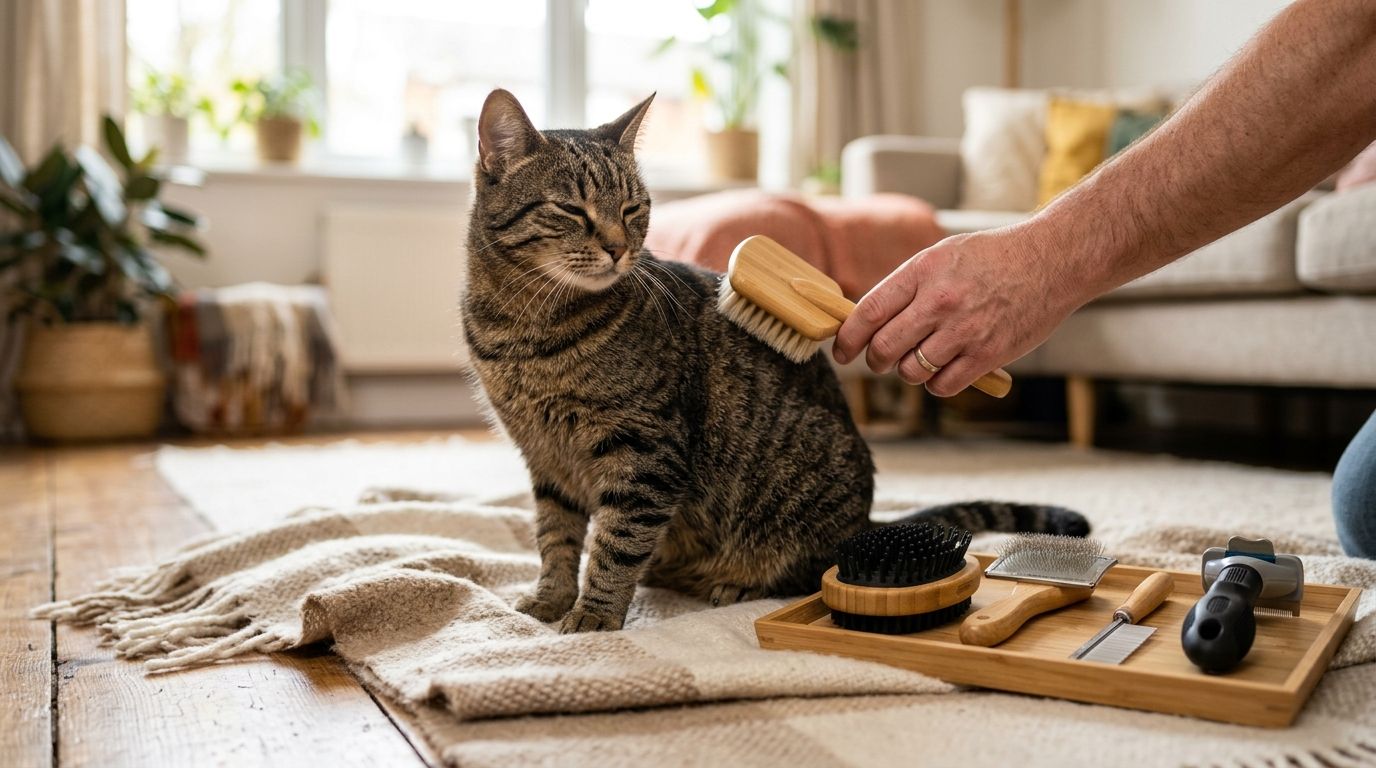
A slicker brush uses fine, closely-packed wire bristles to lift loose top-coat fur and break up light tangles before they mat. It's the standard tool most groomers reach for on long-haired breeds between deeper sessions. Check the grooming brushes for long-haired cats guidance for how often to use one without over-thinning the coat.
Slicker brush pros:
- Fast at clearing loose top-coat fur in a single pass
- Widely available and simple to use one-handed
- Doubles as a light dematting tool on fresh tangles
Slicker brush cons:
- Angled wrong, the fine wires can catch and irritate skin
- Does little for a dense undercoat underneath the top coat
Best for: long-haired cats needing quick, frequent surface maintenance. Verdict: Buy for cats already comfortable with brushing; Hold off if your cat has never been brushed — start with the glove first.
3. Undercoat rake / dematting comb: best for heavy shedders
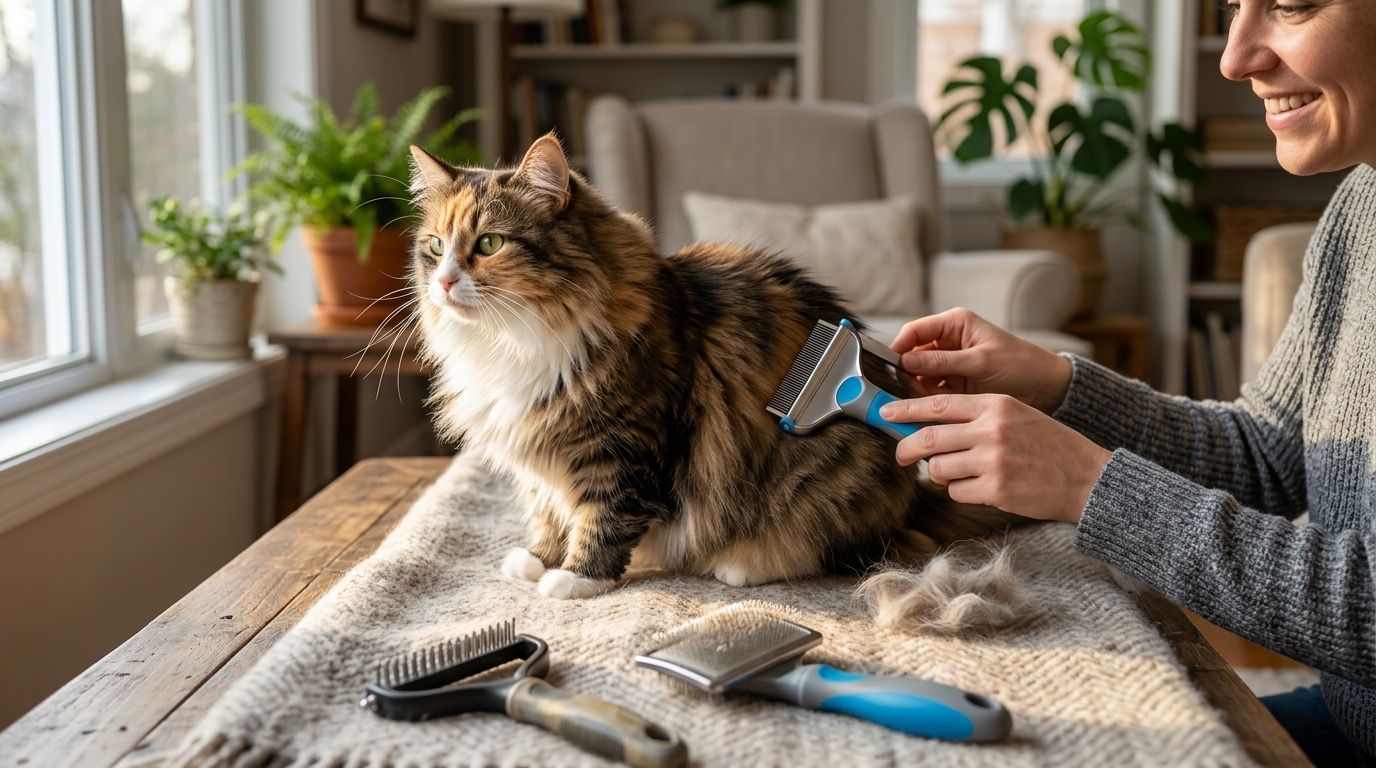
Double-coated breeds — think Maine Coons, Ragdolls, and most long-haired mixes — carry a dense undercoat that a slicker brush barely touches. An undercoat rake has wider, longer teeth built to reach through the top coat and pull the loose undercoat out without cutting the hair itself.
Undercoat rake pros:
- Removes the bulk of seasonal shedding in fewer sessions
- Reduces matting risk at the root, not just the surface
- Cuts down on loose fur that would otherwise turn into hairballs
Undercoat rake cons:
- Too aggressive for short-haired or thin-coated cats — can irritate skin
- Requires a calmer, more cooperative cat since sessions run longer
Best for: double-coated or long-haired cats shedding heavily in spring and fall. Verdict: Buy for the right coat type; Skip entirely for short-haired cats — is de-shedding necessary for short-haired cats covers why a rake is often overkill on a thin coat.
4. Flea comb: best budget option and detail tool
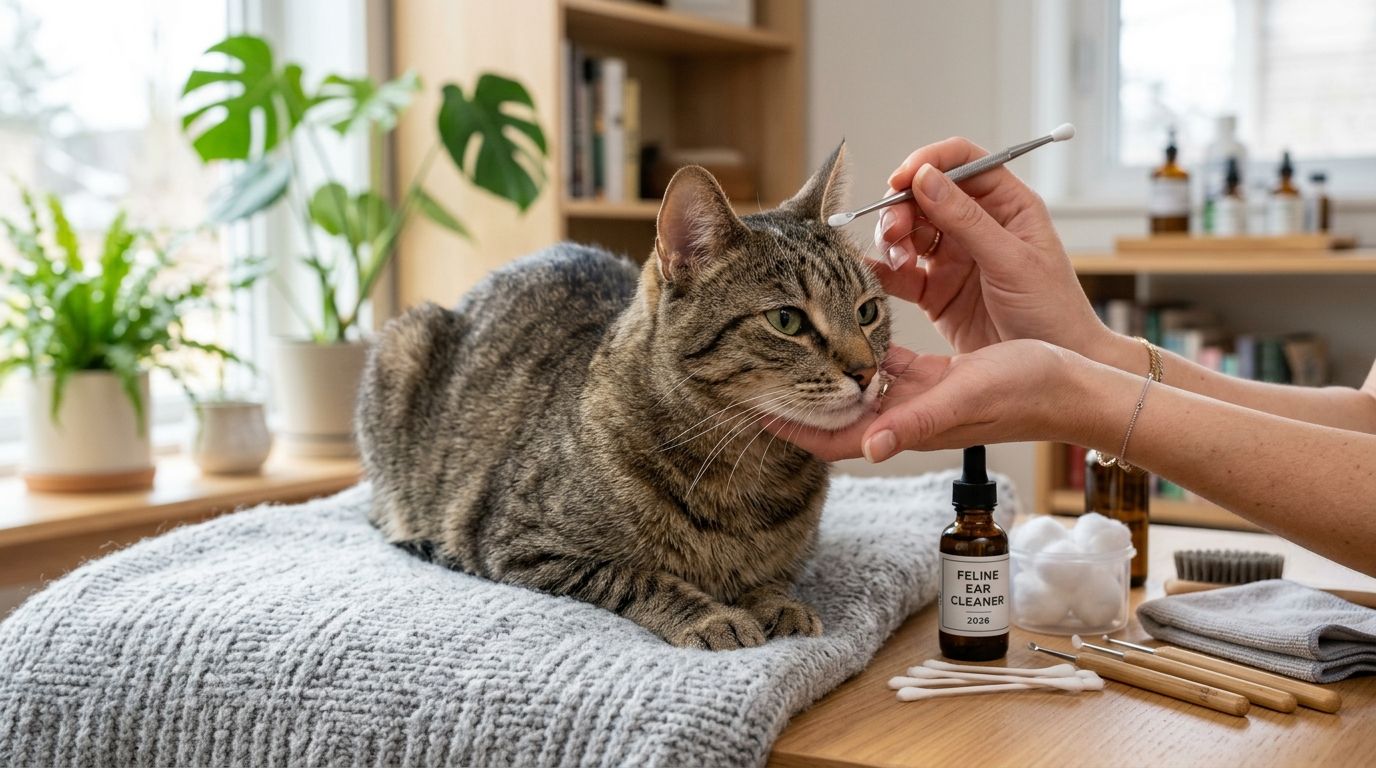
A flea comb has very fine, closely spaced teeth originally designed to catch fleas and flea eggs, but the same fine spacing makes it useful for pulling loose fur from small, precise areas — around the face, ears, and paws where bigger tools don't fit.
Flea comb pros:
- Doubles as a flea and debris check during routine grooming
- Cheapest tool in this category and works on any coat length
- Small enough to use on sensitive areas without stress
Flea comb cons:
- Too slow for full-body shedding on a long-haired cat
- Teeth can bend or splay with heavy use over time
Best for: budget-conscious owners and detail work around the face. Verdict: Buy as a companion tool, not a full replacement for a rake or slicker brush.
5. Vacuum-attachment brush: best for multi-cat households
This tool brushes and vacuums in one motion, pulling loose fur directly into a small chamber or hose instead of leaving it airborne or on the floor. In homes with two or more cats, the fur volume alone makes this worth the extra bulk of the device.
Vacuum-attachment brush pros:
- Cuts cleanup time after grooming multiple cats back to back
- Reduces airborne dander, which helps allergy-sensitive owners
- Collects fur that would otherwise need a separate sweep or vacuum pass
Vacuum-attachment brush cons:
- Motor noise can startle noise-sensitive cats
- Bulkier and less portable than a glove or comb
Best for: multi-cat households managing shedding at scale. Verdict: Buy if your cat already tolerates household appliance noise; Wait if your cat startles at vacuum sounds — introduce the noise separately before combining it with grooming.
How we ranked these
Each tool was scored against the five criteria above — coat-type match, skin safety, stress tolerance, cleaning ease, and multi-cat durability — with stress tolerance weighted highest, since a technically better tool a cat won't sit still for delivers worse results than a simpler one used consistently.
Which deshedding tool should you choose?
If your cat has never been brushed or gets anxious at grooming tools, start with the deshedding glove — it's the lowest-stress entry point in 2026's crowded tool market. If you've got a double-coated or long-haired cat already comfortable with handling, the undercoat rake clears the most fur per session. Everyone else lands somewhere between a slicker brush for maintenance and a flea comb for detail work — pick based on coat, not on what's trending.
FAQ
What are the best cat de-shedding tools in 2026?
The deshedding glove, slicker brush, undercoat rake, flea comb, and vacuum-attachment brush each solve a different shedding problem in 2026. Glove for anxious cats, rake for double coats, comb for budget and detail work.
Is a deshedding glove as effective as a rake?
No — a glove is gentler but slower at clearing a dense undercoat than a rake. It's the better starting tool for cats new to grooming, not a full replacement once a cat tolerates more.
How often should you de-shed a long-haired cat?
Most long-haired cats benefit from two to three short brushing sessions a week, more during spring and fall shedding seasons. Short-haired cats generally need far less frequent sessions.
Do de-shedding tools reduce hairballs?
Removing loose fur before a cat swallows it during self-grooming reduces the raw material for hairballs. Regular sessions with the right tool for the coat type cut down on hairball frequency over time.
Can de-shedding tools hurt a cat's skin?
Yes, if the tool is mismatched to the coat — an undercoat rake used on a thin, short coat can irritate skin. Matching the tool to coat type and watching the cat's reaction avoids this.
Is a flea comb worth buying if my cat doesn't have fleas?
Yes — the same fine teeth that catch fleas also pull loose fur from small areas like the face and paws. It's a useful detail tool even without a flea problem.
Why does my cat run away from the brush but not from petting?
Brushes introduce a new sensation and sometimes discomfort your cat hasn't consented to yet. Gloves that mimic petting motions tend to get more cooperation from cats with no grooming history.
One last thing
The tool matters less than the sequence: cats who get brushed the same time, same spot, same short duration every session build tolerance faster than cats brushed randomly whenever fur becomes visible. Consistency beats a better brush almost every time.