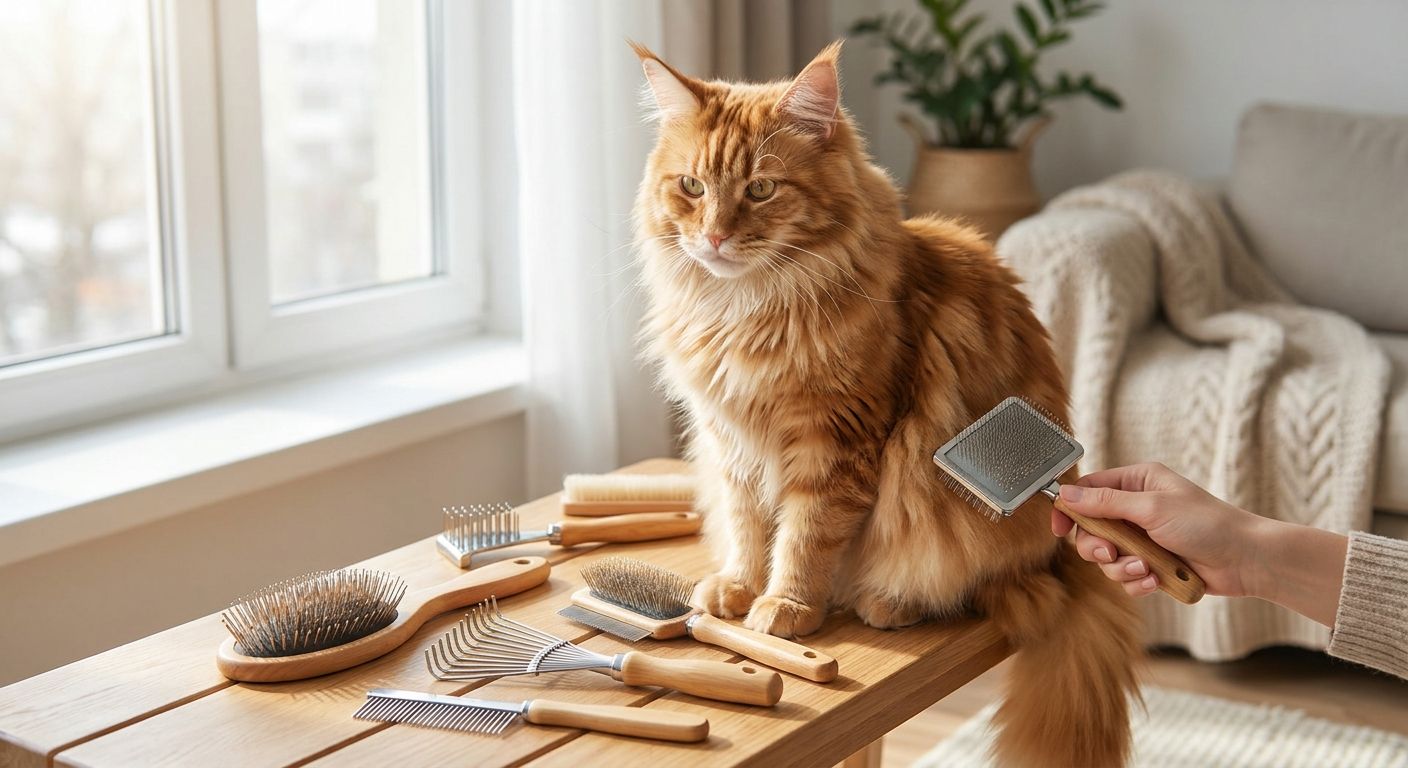
Long-haired cats need a different brushing strategy than short-haired breeds, and picking the wrong tool leaves mats hiding under a coat that looks fine on the surface. Best overall: the slicker brush for daily coat maintenance. Best for mats: the wide-tooth detangling comb. Best for shedding season: the undercoat deshedding rake. Best for sensitive-skin cats: the pin brush. Best for first-time long-hair owners: a dual-sided brush-comb combo.
- A slicker brush is the best cat grooming brush for long-haired cats' daily maintenance in 2026.
- Wide-tooth combs remove mats without the pulling that makes cats hate grooming sessions.
- Deshedding rakes only earn a spot during spring and autumn shed cycles, not year-round.
- Pin brushes are gentle finishing tools, not mat removers, for sensitive-skin cats.
- Brushing type matters less than technique when a cat already dreads being handled.
Why this matters
A Persian, Ragdoll, or Maine Coon coat mats fast once the undercoat sheds and tangles with the topcoat. Skip a week of brushing on a long-haired cat and you're often looking at scissors instead of a comb.
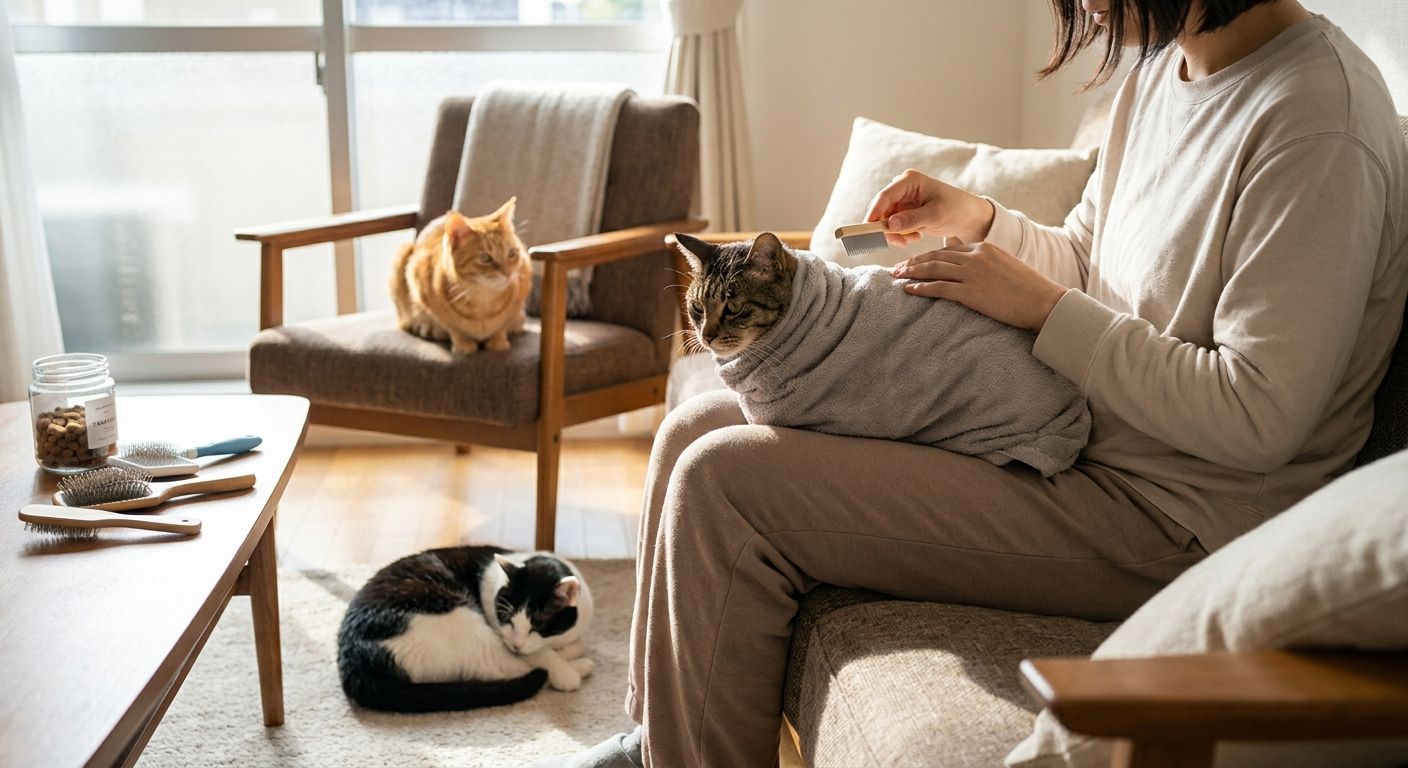
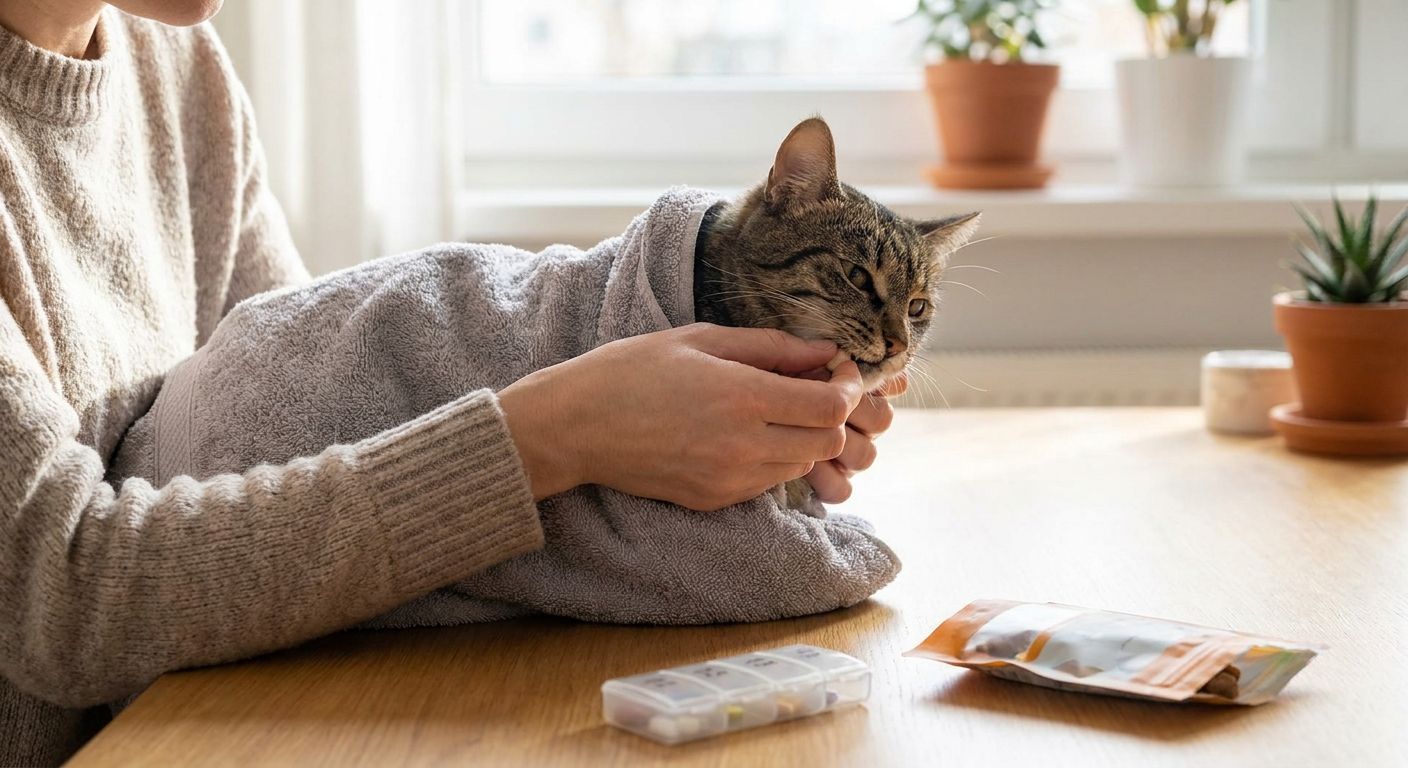
Purrttie builds cat handling and grooming tools for the parts of the routine cats fight hardest — nail trims, medication, vet visits — and the same principle applies to brushing: the right tool matters, but so does keeping the cat calm enough to sit through it. A brush that's technically correct for the coat type still fails if the cat bolts at first contact.
This guide ranks brush types by what they actually solve, not by brand hype. Each one owns a distinct job so you're not guessing which tool to reach for on a given week.
What makes the best cat grooming brush for long-haired cats
- Pin or tooth spacing matched to coat density — tight undercoats need wider gaps to avoid snagging
- Rounded, blunt tips — sharp pins scrape skin on cats with thin coats or sensitive bellies
- Mat pass-through without pulling — the tool should glide through tangles, not yank at the root
- Easy fur removal from the brush itself — a tool that's a hassle to clean gets used less often
- Low noise and light pressure — long-haired cats already dislike full-body handling, and a scratchy or heavy tool adds resistance
- Coverage across body zones — belly, armpits, and behind the ears mat first and need a gentler pass than the back
Cat grooming brushes for long-haired cats, at a glance
| Brush type | Best for | Standout feature | Key limitation |
|---|---|---|---|
| Slicker brush | Daily coat maintenance | Fine bent wire lifts loose undercoat in one pass | Doesn't break up existing mats |
| Wide-tooth detangling comb | Removing mats without pulling | Teeth glide through tangles before they tighten | Slow on a fully matted coat |
| Undercoat deshedding rake | Heavy seasonal shedding | Rows of rounded teeth reach past the topcoat | Overuse can thin a healthy coat |
| Pin brush | Sensitive-skin cats | Soft rounded pins add shine with light pressure | Barely touches loose undercoat |
| Dual-sided combo | First-time long-hair owners | Comb and slicker sides in one handle | Neither side matches a dedicated tool |
1. Slicker brush: best cat grooming brush for long-haired cats' daily coat maintenance
A slicker brush uses fine, slightly bent wire pins set close together to catch loose undercoat before it tangles with the topcoat. It's the closest thing to a default tool for breeds like Ragdolls and Maine Coons that shed year-round.
Slicker brush pros:
- Lifts loose undercoat in a single pass over most of the body
- Works on the majority of long-hair breeds without adjustment
- Keeps daily shedding manageable so mats have less material to form from
Slicker brush cons:
- Pressing too hard scratches skin, especially on the belly and legs
- Doesn't cut through mats that have already set
- Trapped fur needs clearing out of the pins after every session
Best for: daily maintenance on a coat that isn't matted yet. Verdict: Buy as the everyday tool in a 2026 grooming routine.
2. Wide-tooth detangling comb: best cat grooming brush for removing mats without pulling
A wide-tooth comb is the tool for coats that already have tangles, running through knots before they compact into mats close to the skin. It's usually the first pass on a coat that hasn't been brushed in a week or more.
Wide-tooth comb pros:
- Glides through tangles without yanking at the skin
- A good first-pass tool before switching to a slicker brush
- Simple enough for cats new to being handled during desensitize a cat to grooming sessions
Wide-tooth comb cons:
- Slow going on a coat that's fully matted rather than just tangled
- Doesn't pull loose undercoat as efficiently as a slicker brush
- Some cats dislike the tugging sensation on the belly or armpits
Best for: breaking up early tangles before they turn into mats. Verdict: Buy if the coat sees mats more than once a season.
3. Undercoat deshedding rake: best cat grooming brush for heavy seasonal shedding
A deshedding rake has rows of rounded teeth designed to reach past the topcoat into the undercoat, pulling out the dense layer that sheds hardest twice a year. It's a seasonal tool, not a daily one.
Deshedding rake pros:
- Removes more loose undercoat in one pass than a slicker brush during shed season
- Reduces the volume of loose hair that ends up swallowed and turned into hairballs
- Cuts down on daily brushing time when the shed is heaviest
Deshedding rake cons:
- Overuse thins a coat that's already healthy, not just shedding
- Poor technique or too much pressure irritates skin fast
- Unnecessary outside spring and autumn shed cycles
Best for: the two to three weeks a year when shedding spikes. Verdict: Hold — bring it out seasonally, not year-round.
4. Pin brush: best cat grooming brush for sensitive-skin cats
A pin brush uses soft, rounded-tip pins spaced for a light finishing pass rather than deep undercoat work. It's the gentlest option on this list and suits cats with thin coats or skin that reacts to firmer tools.
Pin brush pros:
- Rounded pins are the lowest-irritation option for sensitive skin
- Adds shine and smooths the topcoat after a slicker or comb pass
- Quiet and light, which matters for cats already wary of handling
Pin brush cons:
- Too soft to break up mats or dense tangles
- Limited undercoat removal compared to a slicker brush or rake
- Mostly cosmetic on its own without a heavier tool in rotation
Best for: finishing touches or cats that can't tolerate firmer bristles. Verdict: Buy as a supplement, not a standalone routine.
5. Dual-sided brush-comb combo: best cat grooming brush for first-time long-hair owners
A dual-sided tool puts a comb on one side and a slicker or bristle pad on the other, letting a new owner switch functions without buying two separate brushes. It's a starter tool more than a long-term specialist tool.
Dual-sided combo pros:
- Covers detangling and undercoat removal without introducing two new objects to a nervous cat
- Simplifies the decision for owners building a grooming kit from zero in 2026
- Fewer tools to store, clean, and remember to use
Dual-sided combo cons:
- Neither side performs as well as a dedicated slicker brush or comb
- Bulkier handle can be harder to control on smaller cats
- Cleaning fur out of both sides takes longer than a single-purpose tool
Best for: owners who haven't settled into a routine yet. Verdict: Buy as a bridge tool, then upgrade to specialists once you know what the coat needs.
How we ranked these
Each brush type is scored against the six criteria above: tooth spacing, tip safety, mat pass-through, ease of cleaning, noise and pressure, and coverage across body zones. Items are ordered by how often a long-haired cat actually needs that specific function across a normal 2026 grooming calendar, not by how premium the tool looks.
“If the comb catches every third stroke, the coat already has mats forming underneath the topcoat.”
Which cat grooming brush should you choose?
For most long-haired cats in 2026, start with a slicker brush for daily maintenance and add a wide-tooth comb for the tangles it misses. Bring in a deshedding rake only during the heavy shed weeks in spring and autumn, and keep a pin brush on hand for cats whose skin reacts to firmer tools. If you're building a routine from scratch, a dual-sided combo is the reasonable starting point before you commit to specialist tools.
Brushing solves the coat. It doesn't solve a cat that won't sit still for it — that's a handling problem, and pairing the right brush with calmer restraint during the session (a wrap like Purrttie's Snug Pro Cat Wrap line for nail trims and vet prep works on the same principle) makes the actual brushing faster. A well-maintained coat also cuts down on how much loose fur gets swallowed, which ties directly into whether regular grooming reduces hairballs.
One last thing
Most long-haired cat owners skip the belly and armpits because that's where cats resist handling hardest — and that's exactly where mats form first. Rotate your grooming session to hit those zones early, before the cat's patience runs out, rather than saving them for last.
FAQ
What is the best cat grooming brush for long-haired cats in 2026?
A slicker brush is the best all-around option for long-haired cats in 2026 because it lifts loose undercoat before it mats. Pair it with a wide-tooth comb for existing tangles.
How often should I brush a long-haired cat?
Most long-haired cats need brushing three to four times a week, and daily during shedding season. Skipping more than a week usually lets mats start forming near the skin.
Do deshedding rakes damage a cat's coat?
Overusing a deshedding rake or applying too much pressure can thin a healthy coat over time. Reserve it for the two to three heaviest shedding weeks each year rather than daily use.
Can I use a slicker brush on a matted cat?
A slicker brush isn't built to break up mats that have already set close to the skin. Work through mats with a wide-tooth comb first, then use the slicker brush for maintenance.
Are grooming gloves a substitute for brushes on long-haired cats?
Grooming gloves work for light surface fur removal but don't reach the dense undercoat long-haired breeds carry. A dedicated slicker brush or comb still handles that layer better.
Does regular brushing reduce hairballs in long-haired cats?
Yes, removing loose fur before a cat swallows it during self-grooming lowers how much hair ends up in the digestive tract. Consistent brushing is one of the more direct ways to cut down on hairballs.
What brush is gentlest for a cat with sensitive skin?
A pin brush with soft, rounded tips is the gentlest option for sensitive-skin cats. It won't remove much undercoat on its own, so use it as a finishing tool rather than the only brush in rotation.
Is one brush enough for a long-haired cat's full routine?
One brush rarely covers everything a long-haired coat needs across the year. A slicker brush plus a wide-tooth comb covers daily maintenance and mat removal, with a rake added only during shed season.