The best cat grooming wipes in 2026 aren't one single product — they split by what your cat actually needs, from unscented formulas for sensitive skin to tearless wipes safe around a kitten's eyes. This guide ranks six wipe categories by use case, tells you what each one fixes and what it doesn't, and shows where a nail clipper or restraint wrap picks up the job wipes can't do.
- Unscented, alcohol-free wipes are the best cat grooming wipes for most households in 2026 — no sting near the eyes, no fragrance overload.
- Waterless bathing wipes stand in between full baths but won't cut it on a greasy or matted coat.
- Tearless kitten formulas matter more than brand name — check the label before wiping near a kitten's face.
- Wipes handle surface dirt and odor; they don't manage nail length or matting, so pair them with a clipper and a wrap.
Why this matters
Cats carry roughly 200 million scent receptors compared to a human's 5 million, which is why a heavily fragranced wipe that smells pleasant to you can send a cat bolting under the bed. Most complaints about grooming wipes trace back to one of three things: alcohol that dries the skin, fragrance that overwhelms a cat's nose, or a texture too rough for a face wipe-down.
Wipes are also frequently mis-sold as a bath replacement. They're not — a proper answer to can grooming wipes replace bathing a cat is that wipes manage surface dirt and light odor between baths; they don't lift oil or break up mats the way water and shampoo do. Knowing which wipe category solves which problem saves you from buying the wrong one twice.
Best overall: unscented hypoallergenic wipes. Best for kittens: tearless kitten wipes. Best for senior cats: low-friction senior wipes.
What makes the best cat grooming wipes
- No alcohol, no added fragrance — both dry out skin and irritate a cat's sense of smell
- Soft, low-friction texture that doesn't drag on skin folds or tender areas
- Ophthalmologist-safe formula for any wipe marketed for use near the eyes
- Moisture that doesn't evaporate fast — a wipe that dries out mid-pack is a wasted pack
- Size and thickness matched to the job — a full-body wipe should be bigger than a face wipe
- Clear labeling stating whether the product is safe for kittens, pregnant cats, or cats on medication
Cat grooming wipes at a glance
| Wipe type | Best for | Standout feature | Key limitation |
|---|---|---|---|
| Unscented hypoallergenic wipes | Sensitive-skin cats | No fragrance or alcohol | Won't cut through heavy grease |
| Waterless bathing wipes | Skipping a full bath | Full-body coverage in one pack | Doesn't replace shampoo on matted coats |
| Deodorizing wipes | Multi-cat households | Targets odor, not just dirt | Some scent formulas still bother cats |
| Tearless kitten wipes | Kittens under 6 months | Mild formula, small wipe size | Limited to light surface cleaning |
| Senior/low-mobility wipes | Arthritic or stiff cats | Reaches spots a cat can no longer self-groom | Needs a calm, gentle hand to apply |
| Eye and tear-stain wipes | Long-haired, flat-faced breeds | Formulated for the eye area specifically | Not a substitute for vet-checked eye issues |
1. Unscented hypoallergenic wipes: best cat grooming wipes for sensitive skin
These are formulated without added fragrance or alcohol, which matters more for cats than for any other pet — a cat's nose is built to detect what humans can't, and a scented product left on the coat gets licked off and ingested during self-grooming. Unscented formulas are the safest default when you're not sure what your cat's skin can tolerate.
Unscented hypoallergenic wipes pros:
- Safe as a daily wipe-down without skin reaction risk
- Works on cats with known fragrance sensitivities or mild dermatitis
- Doubles as a paw and belly wipe after outdoor access
Unscented hypoallergenic wipes cons:
- Doesn't address strong odor on its own
- Some formulas feel thinner and dry out faster once the pack is opened
Best for: everyday use on cats with no known coat or skin issues. Verdict: Buy.
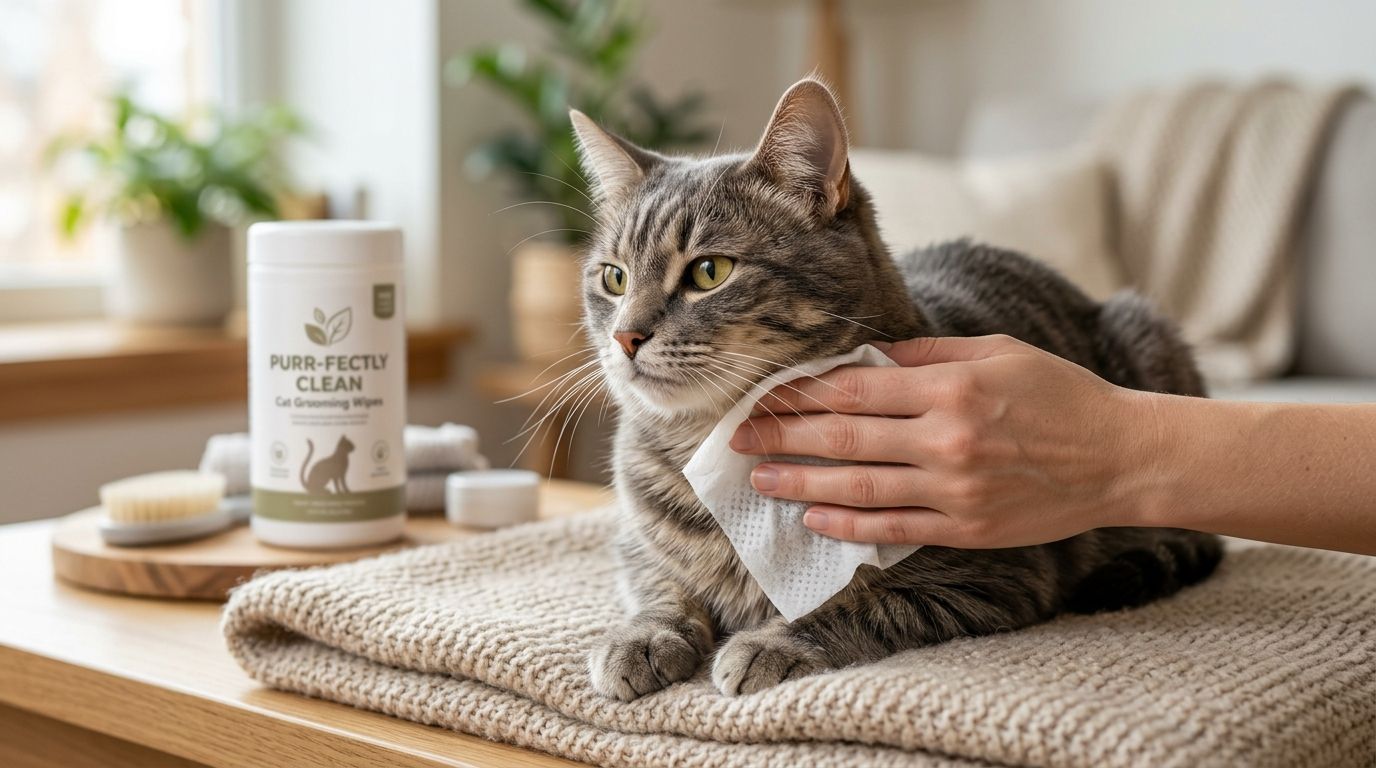
2. Waterless bathing wipes: best cat grooming wipes for skipping a bath
Waterless bathing wipes are sized and saturated to cover more surface area per wipe, built for a full-body pass rather than a spot clean. They work well between scheduled baths or when a bath isn't practical — a sick cat, a cat recovering from a vet visit, or a household without a safe bathing setup.
Waterless bathing wipes pros:
- Covers the whole coat in one session, not just paws and face
- Useful after vet visits when a full bath isn't advised yet
- Faster and lower-stress than a water bath for most cats
Waterless bathing wipes cons:
- Doesn't remove built-up oil the way shampoo does
- Not enough on its own for a heavily matted or greasy coat
Best for: cats that need freshening between baths, not a deep clean. Verdict: Buy.
3. Deodorizing wipes: best cat grooming wipes for multi-cat households
Deodorizing formulas target odor-causing bacteria rather than just wiping away visible dirt, which matters more in homes with three or more cats where litter box smell and coat odor compound. The better formulas neutralize odor rather than mask it with a stronger scent.
Deodorizing wipes pros:
- Cuts litter-box and coat odor between baths
- Useful in multi-cat homes where smell builds up faster
- Works as a quick spot-clean after a messy litter session
Deodorizing wipes cons:
- Some deodorizing formulas still use scent to mask odor, which can bother cats
- Not a fix for an underlying skin or urinary issue causing the smell
Best for: households with multiple cats managing shared odor. Verdict: Hold — check the ingredient label for hidden fragrance before buying.
4. Tearless kitten wipes: best cat grooming wipes for kittens
Kittens have thinner skin and are still building tolerance to handling, so a wipe marketed for adult cats can be too harsh. Tearless kitten formulas are milder, smaller in size, and designed for the shorter, gentler wipe-downs a young kitten needs, which matters if you're also working through a grooming kit for kittens as part of early handling.
Tearless kitten wipes pros:
- Mild enough for skin that hasn't fully matured
- Smaller wipe size suits a kitten's smaller body
- Good for building positive early associations with grooming
Tearless kitten wipes cons:
- Limited to light surface cleaning, not deep odor control
- Kittens still need a slow, calm introduction regardless of formula
Best for: kittens under 6 months starting their first grooming routine. Verdict: Buy.
5. Senior and low-mobility wipes: best cat grooming wipes for arthritic cats
Older cats and cats with joint stiffness often stop self-grooming spots they used to reach easily — the lower back, the base of the tail, the hind legs. A gentle, low-friction wipe reaches those areas without asking a stiff cat to twist or stretch, and pairs well with the guidance in at-home grooming for senior cats.
Senior/low-mobility wipes pros:
- Reaches spots a cat can no longer self-groom
- Lower friction reduces discomfort on thinning senior skin
- Short sessions suit a cat with limited stamina
Senior/low-mobility wipes cons:
- Requires a patient, unhurried approach — rushing causes stress
- Doesn't address underlying joint pain driving the grooming gap
Best for: senior cats or cats with reduced mobility. Verdict: Buy, applied slowly and in short sessions.
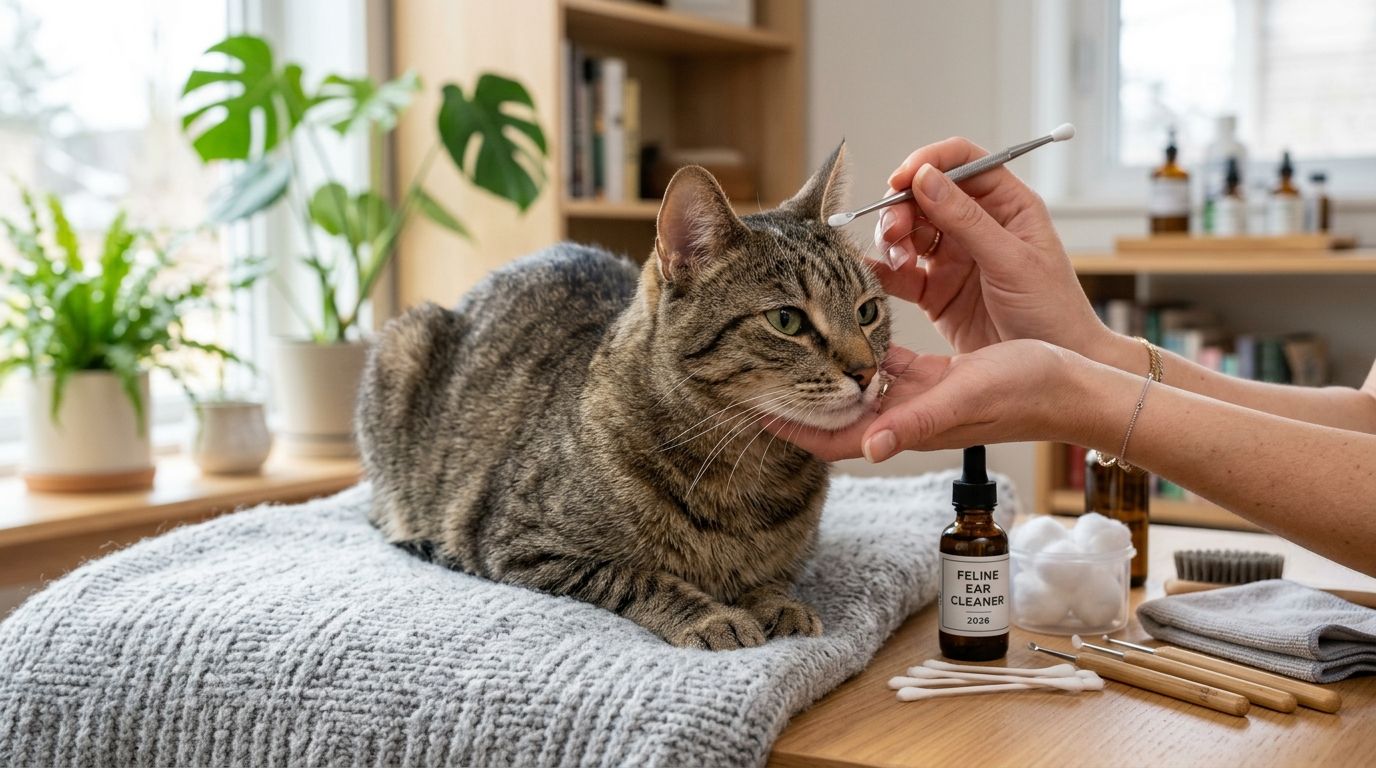
6. Eye and tear-stain wipes: best cat grooming wipes for facial cleanup
Flat-faced and long-haired breeds tend to collect tear staining and crust around the eyes that a general-purpose wipe isn't formulated to touch safely. Eye-specific wipes are the only category on this list built and tested for that exact area.
Eye and tear-stain wipes pros:
- Formulated specifically for the eye area, not repurposed from a body wipe
- Reduces visible tear staining with regular use
- Small size suits precise, controlled application
Eye and tear-stain wipes cons:
- Not a treatment for infection or a blocked tear duct — that needs a vet
- Limited to the face; won't do anything for the rest of the coat
Best for: long-haired or flat-faced cats prone to tear staining. Verdict: Buy, but see a vet first if staining is new or heavy.
How we ranked these
Each category was scored against the six criteria above — ingredient safety, texture, moisture retention, eye-area suitability, sizing, and label clarity — then matched to the use case where it performs best rather than forced into a single leaderboard. That's why this list reads as six distinct jobs, not six competitors for the same job.
Which cat grooming wipes should you choose?
If you only buy one, unscented hypoallergenic wipes cover the widest range of cats safely. Add waterless bathing wipes if baths are hard to manage, tearless kitten wipes if you're raising a kitten, and eye wipes specifically if you own a long-haired or flat-faced breed. None of these replace nail care or safe handling during the wipe-down itself — that's where a restraint wrap earns its place in the routine.


FAQ
What are the best cat grooming wipes in 2026?
Unscented, alcohol-free wipes are the safest default for most cats in 2026 because they avoid the fragrance and drying agents that irritate feline skin and a cat's sensitive sense of smell. Kittens, seniors, and long-haired breeds each do better with a wipe formulated for that specific use case.
Can grooming wipes replace a bath for a cat?
No — waterless bathing wipes manage surface dirt and light odor between baths but don't remove built-up oil or break up mats the way shampoo and water do. Use wipes to extend the gap between baths, not to skip bathing altogether.
Are scented cat wipes safe to use?
Scented wipes aren't dangerous outright, but cats detect fragrance far more strongly than humans do and can find it overwhelming or off-putting. Unscented or lightly scented formulas are the safer choice for daily use.
Can I use baby wipes on a cat instead of cat-specific wipes?
Baby wipes are formulated for human skin pH and often contain fragrance or preservatives not tested for feline skin. Cat-specific wipes are formulated to match a cat's skin pH and are the safer choice.
How often should you wipe down a cat?
Most healthy adult cats need a wipe-down only when visibly dirty or between scheduled baths, not on a fixed daily schedule. Senior cats or those with mobility issues may need more frequent spot wipes on areas they can no longer self-groom.
Are grooming wipes safe for kittens?
Only wipes labeled tearless and alcohol-free are appropriate for kittens under 6 months, since kitten skin is thinner and more reactive than an adult cat's. Always check the label before using an adult-formulated wipe on a kitten.
Do grooming wipes help with hairballs?
Wipes remove surface dirt and some loose fur picked up during application, but they aren't a substitute for regular brushing when it comes to reducing hairballs. Brushing removes far more loose undercoat than a wipe-down does.
One last thing
The wipe category most people skip — eye and tear-stain wipes — is also the one where using the wrong general-purpose wipe does the most damage, since the eye area has almost no tolerance for alcohol or fragrance. If your cat has any tear staining in 2026, reach for a formula built specifically for that area before reaching for whatever's already in the cabinet.