Short fur still sheds, still mats around the collar line, and still needs a brush that matches the coat, not a hand-me-down tool built for a long-haired cat. This guide ranks the five brush types that actually work on short coats in 2026, with the honest limits of each.
- Rubber curry brush is the best overall pick for best cat grooming brushes for short-haired cats in 2026 — grabs loose hair without scratching skin.
- Grooming glove wins for cats that bolt at the sight of a brush; it feels like petting, not grooming.
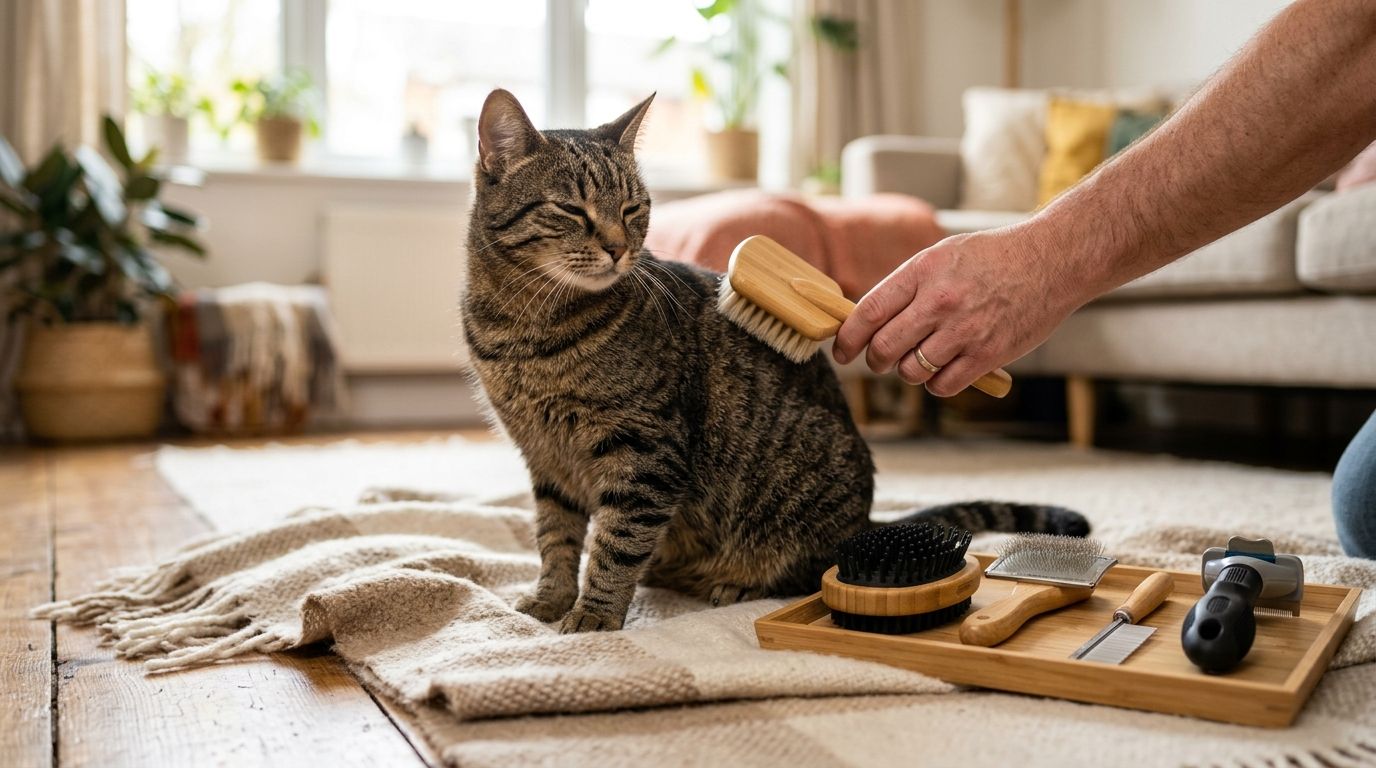
- Bristle brush is the budget-friendly finishing tool for shine, not deshedding.
- Fine-tooth metal comb is the pick for heavy shedders during the two annual coat-blow seasons.
- Silicone massage brush suits kittens and sensitive-skin cats needing the gentlest contact.
Why this matters
Short-haired breeds like the British Shorthair, Domestic Shorthair, and Siamese still shed daily, and loose fur that isn't brushed out ends up on your couch, in your cat's stomach, or matted at the armpits. A short coat holds less hair per brush stroke than a long coat, so the wrong tool either does nothing or irritates skin that has almost no fur to buffer it.
At Purrttie, grooming sessions are built around calm handling first, tool second — a cat that tenses up under a brush won't sit still for nail trims or medication either. Picking a brush your cat tolerates is the first domino in a grooming routine that doesn't end in scratches.
What makes the best cat grooming brush for short-haired cats
- Bristle length matched to coat depth — short coats need short, dense bristles, not the long tines built for undercoats
- Static control — short fur flies and clings; rubber and silicone surfaces reduce static buildup
- Skin contact pressure — the brush should glide, never drag, across a coat with less padding than a long-haired cat's
- Ease of cleaning — short hair clogs bristles fast; tools that rinse or peel clean in seconds get used more often
- Cat tolerance — a brush that triggers flinching gets abandoned within a week, no matter how well it performs on paper
- Session length fit — short coats need frequent, brief sessions (1-2 times a week), so lightweight tools win over heavy multi-attachment kits
Cat grooming brushes for short-haired cats: at a glance
| Tool | Best for | Standout feature | Key limitation |
|---|---|---|---|
| Rubber curry brush | Best overall | Massage-like grip lifts loose hair | Less effective on dense undercoat mats |
| Grooming glove | Cats that resist brushes | Feels like a hand, not a tool | Traps less hair per stroke than a curry brush |
| Bristle brush | Finishing shine | Distributes natural oils evenly | Does little for actual shedding |
| Fine-tooth metal comb | Heavy shedders, coat-blow season | Pulls out fine loose undercoat fuzz | Can catch and tug on tender skin if rushed |
| Silicone massage brush | Kittens, sensitive-skin cats | Softest possible bristle contact | Slower deshedding on adult coats |
1. Rubber curry brush: best cat grooming brush for everyday short-hair maintenance
A rubber curry brush uses short, blunt rubber nubs instead of bristles, working in small circular motions that lift loose hair while doubling as a light massage. It's the closest thing to a one-tool solution for short coats because it handles both the deshedding job and the bonding job in a single 5-10 minute session.
Rubber curry brush pros:
- Removes loose hair without scratching thin short-hair skin
- Rinses clean under a tap in seconds
- Doubles as a calming massage tool most cats tolerate well
Rubber curry brush cons:
- Struggles with any matting around the collar or armpits
- Less precise for spot-cleaning a single tangled patch
Best for: cat parents who want one brush for twice-weekly maintenance sessions. Verdict: Buy.
2. Grooming glove: best cat grooming brush for cats that hate being brushed
A grooming glove fits over your hand with small rubber tips on the palm, so brushing looks and feels like petting. Cats that associate a handheld brush with stress often accept a glove without the same flinch response, which makes it the better entry point for skittish or newly adopted cats.
Grooming glove pros:
- Lower stress entry point for cats new to grooming
- Works well for quick daily 2-3 minute pass-throughs
- Doubles as a way to check for lumps, ticks, or skin issues while petting
Grooming glove cons:
- Traps less loose hair per stroke than a dedicated curry brush
- Not built for cats already shedding heavily
Browse Purrttie's grooming glove picks for shedding cats if this is the entry point your cat needs.
Best for: anxious cats or first-time grooming routines. Verdict: Buy.
3. Bristle brush: best cat grooming brush for shine, not shedding
A soft bristle brush distributes natural coat oils across the fur, giving short hair a glossier finish after the deshedding work is already done. It's a finishing tool, not a primary one, and works best as the last 60 seconds of a grooming session rather than the whole routine.
Bristle brush pros:
- Lightweight and gentle for daily light passes
- Smooths and adds shine after a deshedding tool has done the heavy lifting
- Widely available and simple to use
Bristle brush cons:
- Pulls very little loose undercoat compared to rubber or metal tools
- Not enough on its own during shedding season
Best for: cat parents adding a quick shine step to an existing routine. Verdict: Hold — pair it with a curry brush or comb rather than relying on it alone.
4. Fine-tooth metal comb: best cat grooming brush for coat-blow season
A fine-tooth metal comb reaches past the topcoat to catch the fine, fluffy undercoat hair that builds up during the two seasonal shedding peaks most short-haired cats go through each year. It's the most aggressive tool on this list, which makes it the most effective during heavy shedding and the easiest to misuse the rest of the year.
Fine-tooth comb pros:
- Removes undercoat volume other tools leave behind
- Reduces the amount of loose hair your cat ingests during self-grooming
- Small enough to target problem spots like the belly or hindquarters
Fine-tooth comb cons:
- Can tug uncomfortably if used with too much pressure
- Overkill for daily maintenance outside shedding season
Check whether your cat's coat actually needs this level of intervention in is de-shedding necessary for short-haired cats before adding it to a weekly rotation.
Best for: multi-cat households during spring and autumn coat blow. Verdict: Buy — seasonally, not year-round.
5. Silicone massage brush: best cat grooming brush for kittens and sensitive skin
A silicone massage brush uses soft, flexible nubs similar to a curry brush but with a gentler touch, designed for coats and skin that can't tolerate firmer contact. It's the slowest deshedder on this list, but the safest option for a kitten's first grooming introduction or a senior cat with thin, fragile skin.
Silicone brush pros:
- Gentlest contact pressure of any tool here
- Good for introducing grooming to kittens under a few months old
- Doubles as a bath-time scrubber for some models
Silicone brush cons:
- Removes noticeably less hair per session than rubber curry brushes
- Not enough on its own for adult cats shedding heavily
Best for: kittens, seniors, and cats with sensitive or thinning skin. Verdict: Buy — as a starter tool, then graduate to a curry brush.
How this list was ranked
Each tool was scored against the six criteria above: bristle-to-coat match, static control, skin pressure, cleanability, cat tolerance, and session-length fit. No single tool won on every criterion, which is why the list reads as a decision tree by use case rather than one brush beating the rest outright.


Which cat grooming brush should you choose?
If you want one brush for weekly maintenance in 2026, get the rubber curry brush. If your cat won't tolerate a handheld tool yet, start with a grooming glove and work up. Save the fine-tooth comb for the two shedding peaks each year, and treat the bristle brush and silicone brush as supporting tools, not standalone solutions.
“A brush your cat tolerates for 60 seconds beats a brush that removes more hair but gets abandoned after one session.”
Regular brushing does more than keep fur off the couch — see how it connects to digestive health in can regular grooming reduce hairballs.
FAQ
What is the best cat grooming brush for short-haired cats in 2026?
A rubber curry brush is the best overall pick for short-haired cats in 2026 because it lifts loose hair without scratching thin skin and rinses clean in seconds. Cats that resist handheld brushes often do better starting with a grooming glove.
Do short-haired cats need brushing if they groom themselves?
Yes — self-grooming redistributes loose hair rather than removing it, and swallowed fur contributes to hairballs. Brushing 1-2 times a week clears out what self-grooming leaves behind.
Is a deshedding comb better than a regular brush for short hair?
A fine-tooth metal comb removes more undercoat volume than a standard bristle brush, but it's best used seasonally during the two annual shedding peaks rather than every day. Daily use risks over-brushing sensitive skin.
Can I use a long-haired cat brush on a short-haired cat?
Long-haired tools often have bristles too long or spaced too far apart to catch short fur effectively. Matching bristle length to coat depth matters more than brand for short-haired cats.
How often should you brush a short-haired cat?
Most short-haired cats do well with 1-2 brushing sessions a week outside shedding season, increasing to short daily sessions during the spring and autumn coat blow. Kittens and seniors may need shorter, gentler sessions with a silicone brush.
Are grooming gloves as effective as brushes?
Grooming gloves remove less loose hair per stroke than a rubber curry brush, but they're far more likely to be tolerated by anxious or newly adopted cats. They work best as an entry point before moving to a firmer tool.
What brush reduces cat hairballs the most?
Tools that remove loose undercoat before a cat swallows it during self-grooming — rubber curry brushes and fine-tooth combs — do the most to reduce hairball frequency. Consistency matters more than which single tool you pick.
One last thing
Most cat parents reach for a bristle brush first because it's the most familiar shape, then wonder why shedding hasn't improved — bristle brushes are a finishing step, not a deshedding tool, and swapping in a rubber curry brush for the first pass of each session changes the outcome more than buying a second bristle brush ever will.