De-shedding matters for short-haired cats too, not just the fluffy breeds people assume need brushing. The coat looks tidy, but the shedding cycle underneath runs on the same schedule as a Persian's, it just doesn't tangle the same way.
- Short-haired cats shed year-round with heavier peaks in spring and autumn, same as long-haired cats.
- Skipping brushing doesn't stop shedding, it just moves loose fur into hairballs, mats and furniture.
- Most short-haired cats only need 1-2x/week brushing; double-coated breeds need more during shedding season.
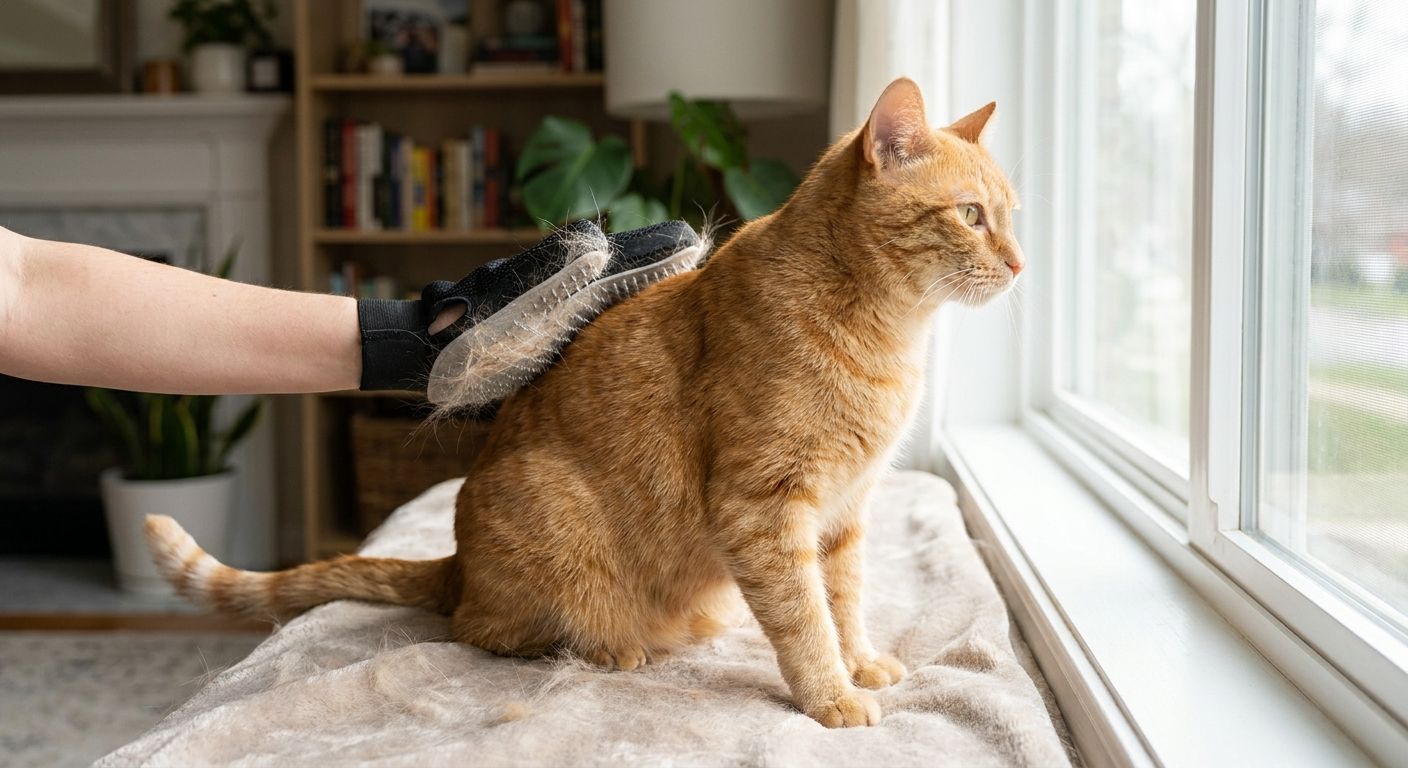
- Grooming gloves outperform slicker brushes on short, thin coats because they don't scratch bare skin.
- Purrttie's grooming picks for shedding cats target this exact gap between coat length and coat density.
Why this matters
Owners skip de-shedding on short-haired cats because there's no visible tangle to fix. That's the mistake. British Shorthairs, American Shorthairs and other double-coated short breeds carry a dense undercoat that sheds constantly, with the heaviest turnover in spring and autumn as daylight hours shift, the same seasonal trigger that drives long-haired shedding.
Skip the brush and that fur doesn't vanish. It collects in small mats around the armpits and groin where owners rarely check, and it gets swallowed during your cat's own grooming, which is where hairballs come from. Heading into 2026 with a two-minute weekly brushing habit costs less time than cleaning fur off a couch or dealing with a vomiting cat.
Is de-shedding necessary for short-haired cats?
Yes, but the routine looks nothing like what a Persian or Maine Coon needs. What matters isn't hair length, it's coat density. The table below breaks down what each coat type actually requires in 2026.
| Coat type | Shedding pattern | Recommended brushing | Best tool |
|---|---|---|---|
| Short single coat (Siamese, Oriental) | Light, steady, year-round | Once a week | Soft rubber grooming glove |
| Short double coat (British Shorthair, American Shorthair) | Heavy seasonal sheds, spring and autumn | 1-2x a week, daily in shedding season | Grooming glove or deshedding comb |
| Long-haired (Persian, Maine Coon, Ragdoll) | Heavy, constant, mats fast | Daily | Slicker brush and wide-tooth comb |
Best for short single coats: a soft rubber glove, it pulls loose hair without pressing hard on fur that offers almost no cushioning over the skin. Best for short double coats: a firmer glove or comb that can reach the undercoat during the spring and autumn sheds. Skip the metal slicker brush on thin single coats, the pins can nick skin that a thicker coat would normally protect.
If your household already leans on Purrttie for nail trims and vet-visit prep, the same logic applies to shedding: the right tool depends on coat density, not hair length. The dedicated guide on grooming gloves for shedding cats breaks down which glove fits which coat type if your short-haired cat is dropping fur by the handful.
Why shedding varies in short-haired cats
Shedding volume isn't fixed, even within a single short-haired cat's year. The main drivers:
- Season — most cats shed more heavily in spring and autumn as daylight hours shift, regardless of coat length.
- Indoor climate control — cats living under constant air conditioning or heating often shed on a flatter, more year-round curve instead of two sharp seasonal peaks.
- Diet and hydration — a coat fed on poor-quality food or a cat that drinks too little water sheds more and looks duller doing it.
- Underlying health issues — thyroid problems, allergies and parasites all show up as excess shedding before other symptoms appear.
- Breed and coat density — double-coated short-haired breeds shed noticeably more than single-coated breeds like the Siamese.
- Age — kittens and senior cats often shed on a less predictable pattern than cats in their middle years.
If shedding spikes suddenly and doesn't line up with the season, that's worth a vet visit before it gets written off as normal.
Does regular grooming actually reduce hairballs in short-haired cats?
Yes, regular grooming reduces hairballs by removing loose fur before your cat swallows it during self-grooming. Short-haired cats groom themselves just as often as long-haired ones, so the fur they ingest between your brushing sessions has to pass through their gut regardless of how short that fur looks. For the full breakdown on how brushing frequency ties to hairball frequency, see how regular grooming affects hairballs.
How often should you brush a short-haired cat?
Once or twice a week covers most short-haired cats through 2026's normal months, moving up to every other day during the spring and autumn shedding peaks. Cats with a heavier double coat, like the American Shorthair, need the higher end of that range. Single-coated breeds like the Siamese can often get away with a weekly pass and nothing more.
Do short-haired cats need professional grooming?
Most short-haired cats don't need professional grooming, a home routine with the right glove or comb covers what they need. Professional grooming is worth considering only when a cat is severely matted around the armpits or groin, is elderly and can no longer self-groom well, or actively fights being handled at home.
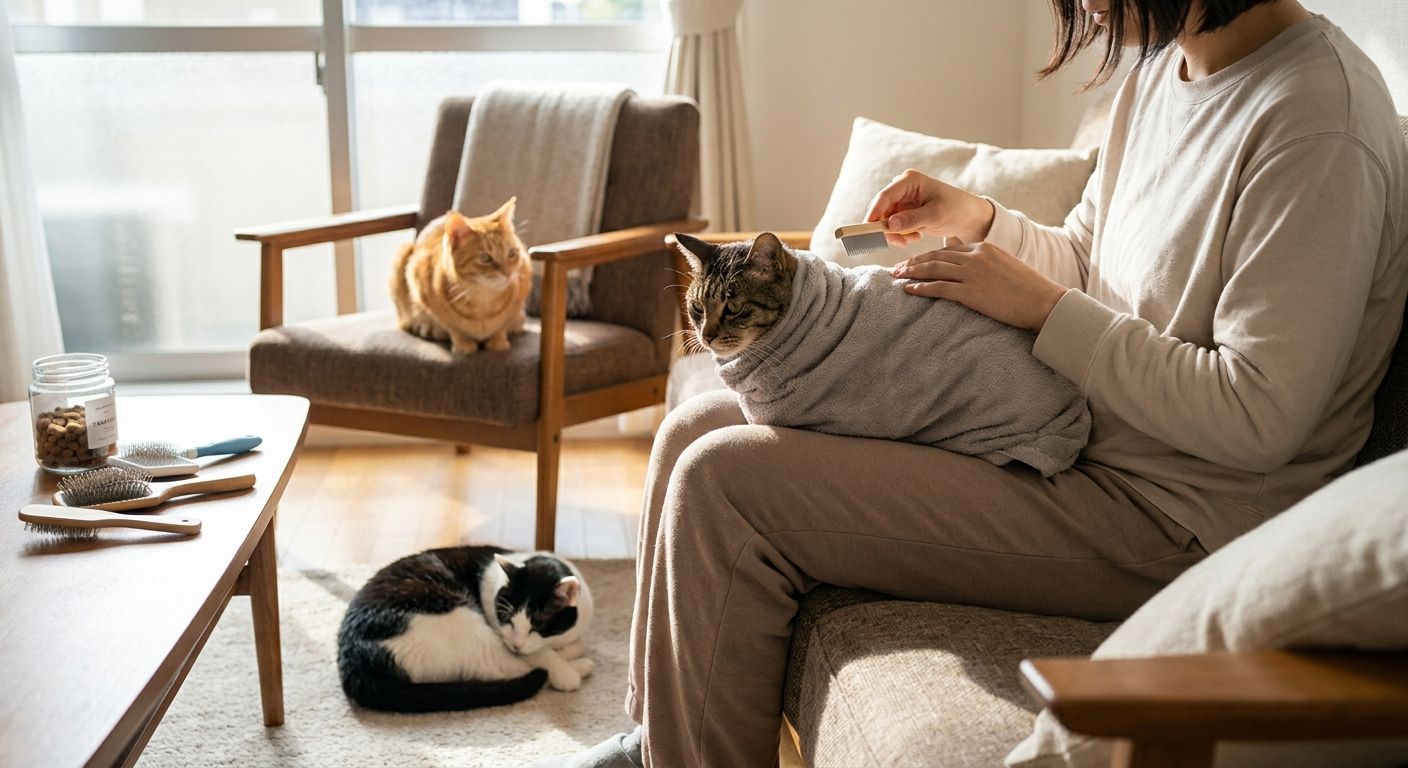
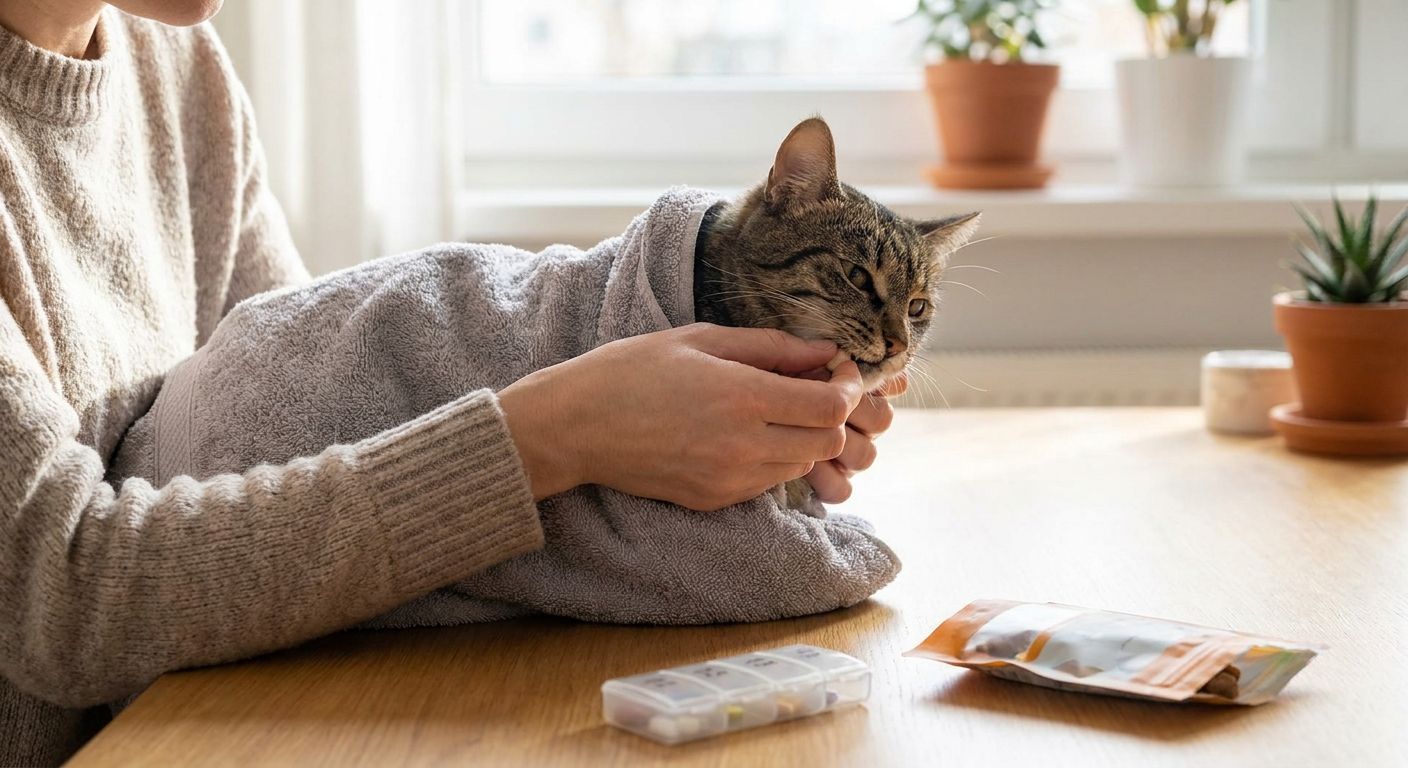
Some short-haired cats fight the brush harder than they fight the shedding itself. If your cat bolts at the sight of a comb, a wrap-style tool that holds them snugly during a short session, like Purrttie's Snug Pro Cat Wrap, can turn a two-minute brushing fight into something closer to a routine nail trim.
“A wrap that holds a cat snugly during brushing turns a two-minute fight into something closer to a nail trim: quick, calm, and over before they notice.”
FAQ
Do short-haired cats really need to be brushed?
Yes, short-haired cats need brushing because their coat sheds on the same growth cycle as a long-haired cat's, just without the tangling. Skipping it lets loose fur build up in hairballs and around the armpits and groin instead of coming off on a brush.
How often should you brush a short-haired cat in 2026?
Brush a short-haired cat once or twice a week in 2026, increasing to every other day during the spring and autumn shedding peaks. Double-coated short-haired breeds like the American Shorthair need the higher end of that range.
Can regular grooming reduce hairballs in short-haired cats?
Yes, regular grooming reduces hairballs by removing loose fur before a cat swallows it during self-grooming. Coat length doesn't change how much fur a cat ingests between brushing sessions, only how visible the shedding is.
Is a deshedding tool different from a regular cat brush?
A deshedding tool pulls loose undercoat fur out in one pass, while a regular brush mostly smooths the top coat. Short double-coated cats benefit more from a dedicated deshedding comb or grooming glove than from a standard bristle brush.
Do short-haired cats get mats?
Short-haired cats can still mat in the armpits, groin and behind the ears, even when the rest of the coat looks smooth. Checking those three spots weekly catches mats before they need to be cut out.
Is professional grooming necessary for short-haired cats?
Most short-haired cats don't need professional grooming since a weekly brush at home covers their needs. Professional help is worth it mainly for severe matting, senior cats that can't self-groom well, or cats that won't tolerate handling at all.
What's the best tool for a short-haired cat that sheds heavily?
A grooming glove or a dedicated deshedding comb works best for a heavily shedding short-haired cat because it reaches the undercoat without the scratch risk of a metal slicker brush. Single-coated short-haired breeds do fine with a softer rubber glove instead.
Why does my short-haired cat shed more in spring?
Short-haired cats shed more in spring because changing daylight hours trigger the seasonal coat turnover, regardless of how short the fur looks. Indoor cats under constant heating or air conditioning sometimes shed on a flatter, less seasonal pattern instead.
One last thing
Check the armpits, groin and behind the ears before you decide a short-haired cat doesn't need grooming. Those three spots mat from friction and moisture even on a cat whose body coat looks completely smooth, and they're the places owners skip because the rest of the coat looks fine. Run your fingers through them once a week going into 2026, and de-shedding stops being guesswork.