Best overall: a vet-formulated cat ear cleaning solution used with cotton pads. Best for quick touch-ups: pre-moistened ear wipes. Best for anxious or head-shy cats: a silicone finger sleeve paired with a restraint wrap. Best budget option: plain cotton pads used with solution you already have at home.
- Vet-formulated ear cleaning solution with cotton pads wins overall for best cat ear cleaning tools in 2026.
- Pre-moistened wipes are the fastest option for a 30-second touch-up between full cleans.
- Silicone finger sleeves suit head-shy cats but work best paired with a restraint wrap.
- Cotton swabs are the one tool this guide rules out entirely — they push debris deeper instead of removing it.
- Most vets recommend checking a cat's ears every 2 to 4 weeks, not on a strict weekly schedule.
Why this matters
Most cat parents only think about ear cleaning when they spot dark buildup or notice a smell, and by then the cat has already learned that ears getting touched means something unpleasant is coming. The tool you reach for in that first session sets the tone for every one after it.
Purrttie built its grooming line around the idea that the handling matters as much as the product, and that principle applies directly to ears: a good solution or wipe is only half the job if the cat is squirming the entire time. The other half is whether the cat stays still enough for the tool to actually work.
This guide ranks the five tool types Malaysian, Singaporean, Thai and Australian cat parents rely on in 2026, with honest limitations for each — including the one tool that shows up in almost every household bathroom and shouldn't be anywhere near a cat's ear canal.
What makes the best cat ear cleaning tools
- Vet-safe formulation — pH-balanced, alcohol-free, no risk of stinging inflamed skin
- Depth control — reaches the visible fold and outer canal only, never blind insertion
- Cat tolerance — how a nervous or head-shy cat typically responds to the sensation
- Reusability and value — how many sessions one purchase realistically covers
- Pairs with restraint — whether the tool works for a solo pawrent without a second pair of hands
At a glance
| Tool | Best for | Standout feature | Key limitation |
|---|---|---|---|
| Ear cleaning solution + cotton pads | Regular monthly maintenance | Loosens wax before wiping, so nothing gets dragged out dry | Needs a few minutes of dwell time before wiping |
| Pre-moistened ear wipes | Quick touch-ups and travel | No bottle, no mess, works one-handed | Less effective on heavier wax buildup |
| Plain cotton balls or pads | Budget-conscious pawrents | Works with any solution you already own | Requires a separate cleaner — not standalone |
| Silicone finger sleeve | Sensitive or head-shy cats | Textured tip feels less clinical than a swab | Slower per ear, needs both hands free |
| Restraint wrap (supporting tool) | Solo pawrents and anxious cats | Keeps the cat still without pinning them down | Not an ear tool on its own — pairs with one above |
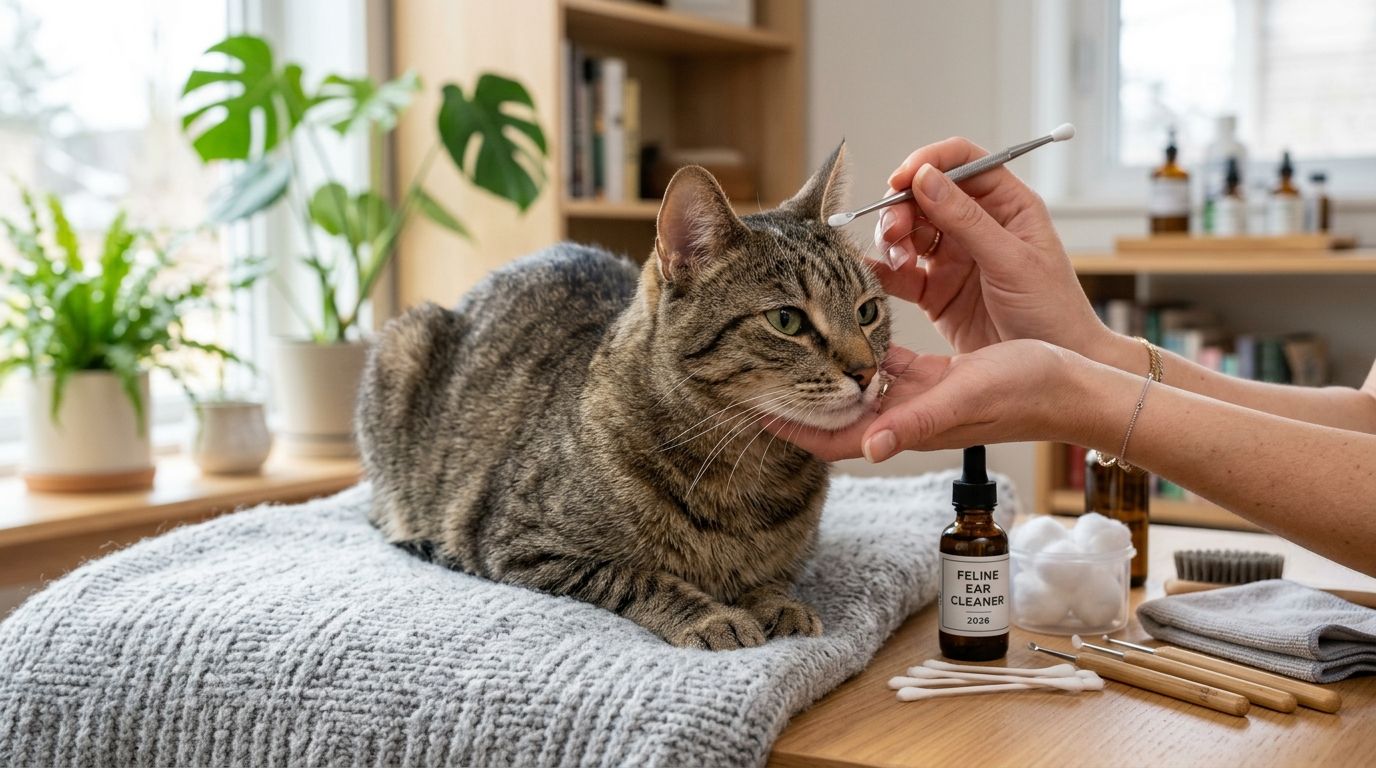
1. Cat-specific ear cleaning solution: best cat ear cleaning tool for regular maintenance
A liquid cleaner formulated for cats — not a human product, not diluted alcohol — is what most vets recommend as the base of a monthly ear routine. You apply a small amount to a cotton pad, let it sit against the visible fold for about 30 seconds, then wipe rather than dig.
Solution + pads pros:
- Loosens dried wax and debris before you touch anything
- Formulated to be gentle on inflamed or sensitive skin
- One bottle covers many sessions across multiple cats
Solution + pads cons:
- Takes longer than a wipe — not a 10-second job
- Cats unfamiliar with the sensation may shake their head and flick solution everywhere the first few times
Best for: pawrents doing scheduled ear checks every 2 to 4 weeks. Verdict: Buy.
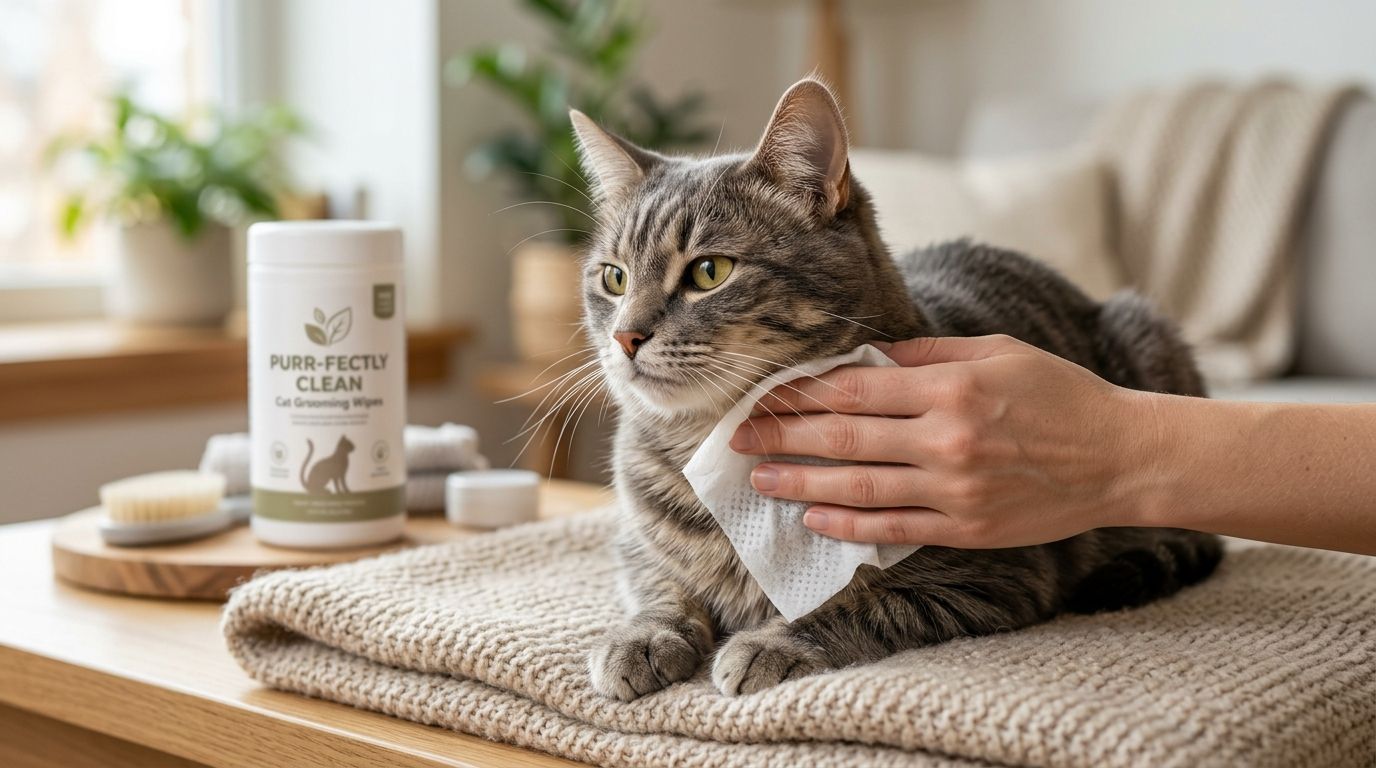
2. Pre-moistened ear wipes: best cat ear cleaning tool for quick touch-ups
Wipes skip the bottle-and-pad step entirely. You unfold one, wipe the visible ear fold, and you're done — useful between full cleans or when you're traveling and don't want to pack liquid.
Ear wipes pros:
- Fastest option on this list, genuinely a 30-second job
- No spills, no measuring, works one-handed
- Easy to keep in a grooming bag or carrier
Ear wipes cons:
- Doesn't loosen heavier wax the way a solution with dwell time does
- Not a substitute for a full clean if a cat has visible buildup or odor
Best for: maintenance between deeper cleans, not as the only tool in the routine. Verdict: Buy as a supplement, not a replacement.
3. Plain cotton balls or pads: best budget cat ear cleaning tool
These aren't a standalone tool — they're the delivery method for whatever solution you're already using. If cost is the deciding factor, a bag of cotton pads paired with a bottle of vet-approved solution covers the same ground as a pre-packaged wipe for less per session.
Cotton pads pros:
- Works with any solution, no brand lock-in
- Bulk packs last through many sessions
- Soft edge reduces irritation compared to rougher cloths
Cotton pads cons:
- Useless without a separate liquid cleaner
- Easy to overuse — wrapping a pad too tightly around a finger and pressing too hard is a common mistake
Best for: pawrents who already have a solution and just need the applicator. Verdict: Buy.
4. Silicone finger sleeve: best cat ear cleaning tool for sensitive or head-shy cats
A silicone sleeve fits over one finger and gives you a soft, textured tip instead of a bare finger or a swab. Cats who tense up at anything rigid near their ear tend to tolerate the give of silicone better, especially once solution is applied to the tip.
Silicone sleeve pros:
- Softer, more controllable pressure than a cotton pad wrapped around a fingertip
- Reusable — wash and reuse instead of buying pads repeatedly
- Good option for cats recovering from an ear infection and still touch-sensitive
Silicone sleeve cons:
- Slower per ear than a wipe or pad
- Needs both hands free, which is difficult without help holding the cat
Best for: cats that flinch at cotton pads but tolerate a softer texture. Verdict: Buy if your cat is head-shy.
5. Restraint wrap: the tool that makes the other four actually work
A restraint wrap isn't an ear cleaning tool by itself, but it belongs on this list because most failed ear cleaning sessions fail on handling, not on product choice. Wrapping a cat snugly — not tightly — keeps their paws contained and their body still, so whichever tool you picked from above actually gets a fair shot.
For solo pawrents without a second set of hands, this is the difference between a calm two-minute session and chasing a cat around the bathroom. Purrttie's approach to this is covered in more detail in the guide on restraint wraps for giving medication, since the same handling principle applies to ears, eyes, and pilling.
Restraint wrap pros:
- Turns a two-person job into a solo one
- Reduces stress by containing paws without pinning the cat down
- Reusable across every grooming task, not just ears
Restraint wrap cons:
- Cats need a short adjustment period before they tolerate it calmly
- Not needed for cats who already sit still for handling
Best for: anxious cats and pawrents doing this alone. Verdict: Buy if solo grooming is a struggle.
“If the swab goes past the visible fold, stop — you're guessing, not cleaning.”
How we ranked these
Each tool was scored against the five criteria above: formulation safety, depth control, cat tolerance, value across repeat sessions, and whether it works for a pawrent grooming alone. Cotton swabs didn't make the ranked list at all — they fail the depth control test outright, since the human ear canal shape they're designed for doesn't match a cat's, and pushing one in blind risks packing debris against the eardrum instead of removing it.
Tying ear cleaning to a fixed schedule rather than doing it only when ears look dirty is what separates cats who tolerate the routine from cats who fight it every time. The guide on connecting ear cleaning to a monthly grooming schedule walks through building that habit alongside nail trims and brushing.
Which cat ear cleaning tool should you choose?
For most pawrents in 2026, a vet-formulated solution with cotton pads is the default — it's the only option on this list that actually loosens buildup rather than just wiping the surface. Layer in wipes for the weeks between full cleans, and if your cat is anxious, head-shy, or you're doing this without a second pair of hands, add a silicone sleeve or a restraint wrap to the routine before you add another product to the cart.
Skip cotton swabs entirely, regardless of how deep the buildup looks — that's a vet visit, not a home fix.
FAQ
What is the best cat ear cleaning tool in 2026?
A vet-formulated cat ear cleaning solution applied with cotton pads is the best overall choice in 2026 because it loosens wax before you wipe, unlike dry wipes or bare cotton. Pre-moistened wipes are the better pick for quick touch-ups between full cleans.
Are cotton swabs safe for cleaning cat ears?
No, cotton swabs are not recommended for cleaning cat ears because they're shaped for the human ear canal and risk pushing debris deeper instead of removing it. Stick to the visible fold and outer canal with a pad or wipe instead.
How often should you clean a cat's ears?
Most vets recommend checking a cat's ears every 2 to 4 weeks rather than on a strict weekly schedule. Cats prone to wax buildup or with floppier ear shapes may need more frequent checks.
Can you clean a cat's ears without solution?
A dry cotton pad or wipe can handle light surface debris, but it won't loosen dried or heavier wax the way a liquid solution does. For anything beyond light maintenance, solution with dwell time works better than a dry wipe alone.
Is a restraint wrap necessary for ear cleaning?
A restraint wrap isn't required if your cat already sits still for handling, but it makes a real difference for anxious cats or pawrents grooming alone without a second pair of hands. It keeps paws contained without pinning the cat down.
What signs mean a cat needs a vet visit instead of home cleaning?
Dark, coffee-ground-like debris, a strong odor, redness, or a cat that flinches severely at any ear contact are signs to book a vet visit rather than continue home cleaning. Home tools address maintenance, not infections or mites.
Do silicone ear cleaners work on cats?
Yes, silicone finger sleeves work well for cats who tense up at rigid cotton pads, since the softer texture is easier to control against sensitive skin. They're slower per ear than a wipe, so they suit sensitive cats more than quick daily touch-ups.
How much solution should you use per ear?
A small amount applied to a cotton pad — enough to dampen it, not soak it — is sufficient per ear. Pouring solution directly into the ear canal isn't necessary for routine home maintenance and can startle a cat unnecessarily.
One last thing
The instinct to go deeper when an ear looks dirty is the single most common mistake home groomers make, and it's usually driven by good intentions, not carelessness. Wipe only what you can see, let the solution do the loosening work before you touch anything, and if the ear still looks waxy after two sessions two weeks apart, that's a signal for a vet check, not a harder clean. Less hisses, more kisses starts with knowing where to stop.