Being indoors doesn't stop plaque from forming on a cat's teeth, and a basic dental kit — toothbrush, enzymatic paste, maybe wipes as a backup — is still the cheapest defense against the gum disease and tooth loss vets diagnose in cats every day, indoor or not.
- A cat dental kit is necessary for indoor cats in 2026 because plaque forms regardless of lifestyle.
- Toothbrushing with enzymatic paste is the only home method proven to slow tartar buildup.
- Dental wipes and water additives help but don't replace brushing or annual vet checks.
- The Snug Pro Cat Wrap makes brushing sessions calmer by keeping a cat's paws tucked in, not pinned down.
Why this matters
Most pawrents assume indoor cats are lower-risk for dental problems because they're not scavenging outside or fighting other cats. That logic doesn't hold up in the mouth. Plaque bacteria colonize teeth the same way whether a cat spends its life on a windowsill or roaming a yard, and left alone it mineralizes into tartar within days.
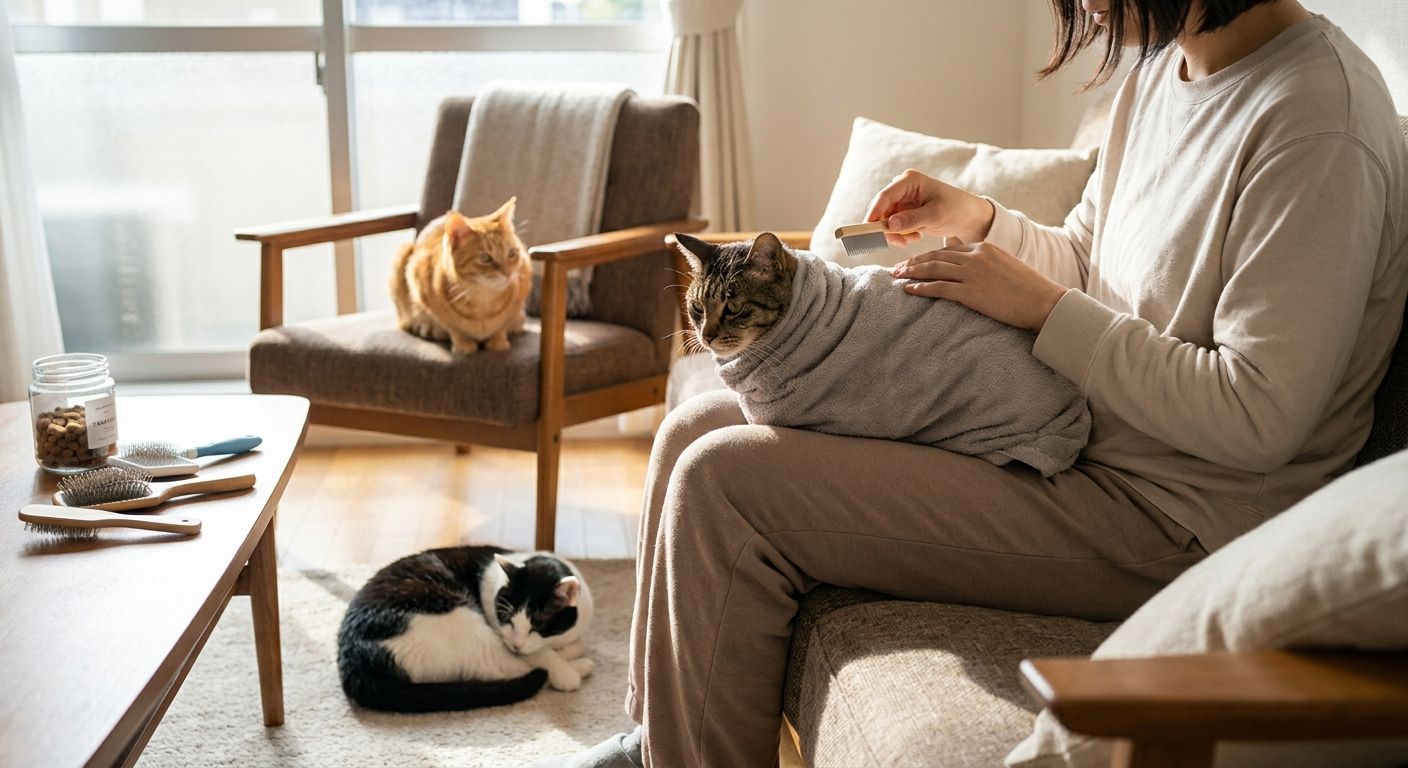
Indoor cats also tend to live longer than outdoor cats, which sounds like good news until you realize it gives dental disease more years to progress. A cat that lives to 15 or 18 indoors has far more time for untreated plaque to turn into periodontal disease. Purrttie, the Malaysian cat grooming brand behind tools like the Full Stainless Steel Cat Nail Clipper, sees the same pattern with nail and coat care in 2026: indoor-only cats still need the maintenance, they just get skipped more often because owners assume indoor means low maintenance.
Is a cat dental kit necessary for indoor cats?
Yes — and the components that matter are limited. A real dental kit for a cat isn't a novelty item; it's built around one method that actually works and a few backups for cats that won't tolerate it.
| Component | What it does | How often |
|---|---|---|
| Toothbrush or finger brush | Mechanically removes plaque before it hardens | Daily |
| Enzymatic cat toothpaste | Breaks down plaque chemically; never use human toothpaste (fluoride, xylitol) | Daily, with brushing |
| Dental wipes | Wipes surface plaque off teeth and gumline for cats that reject a brush | 3-5x per week if not brushing |
| Water additive | Reduces bacterial load in the water bowl | Daily, added to water |
| Dental treats or dental diet | Mild abrasion while chewing; supplemental only | Daily, alongside brushing |
Brushing is the only method with real evidence behind it. Everything else in the kit is a supplement, not a substitute.
Toothbrushing: the core of any kit
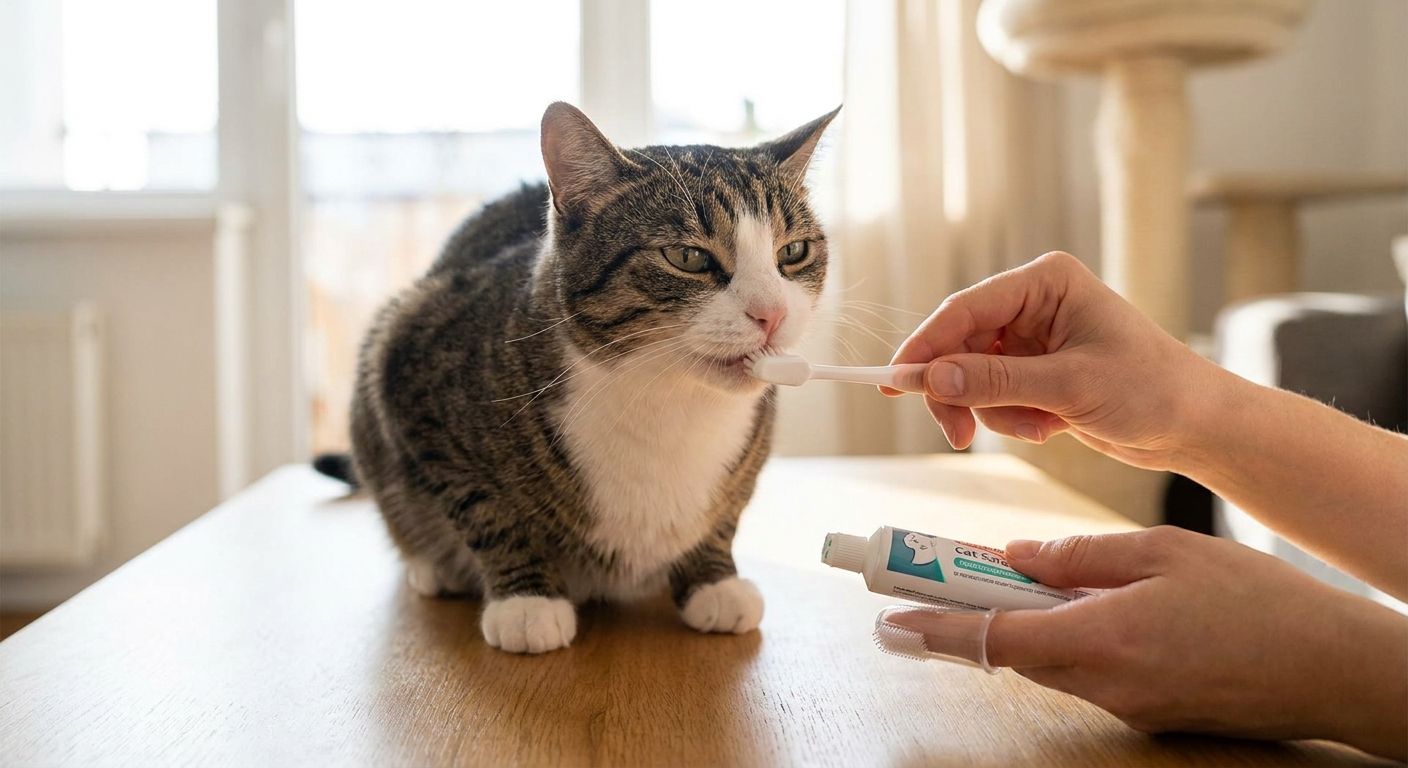
A cat toothbrush or silicone finger brush paired with enzymatic paste is what actually disrupts plaque before it mineralizes. Most cats resist the first several sessions, which is where technique matters more than the brush itself.
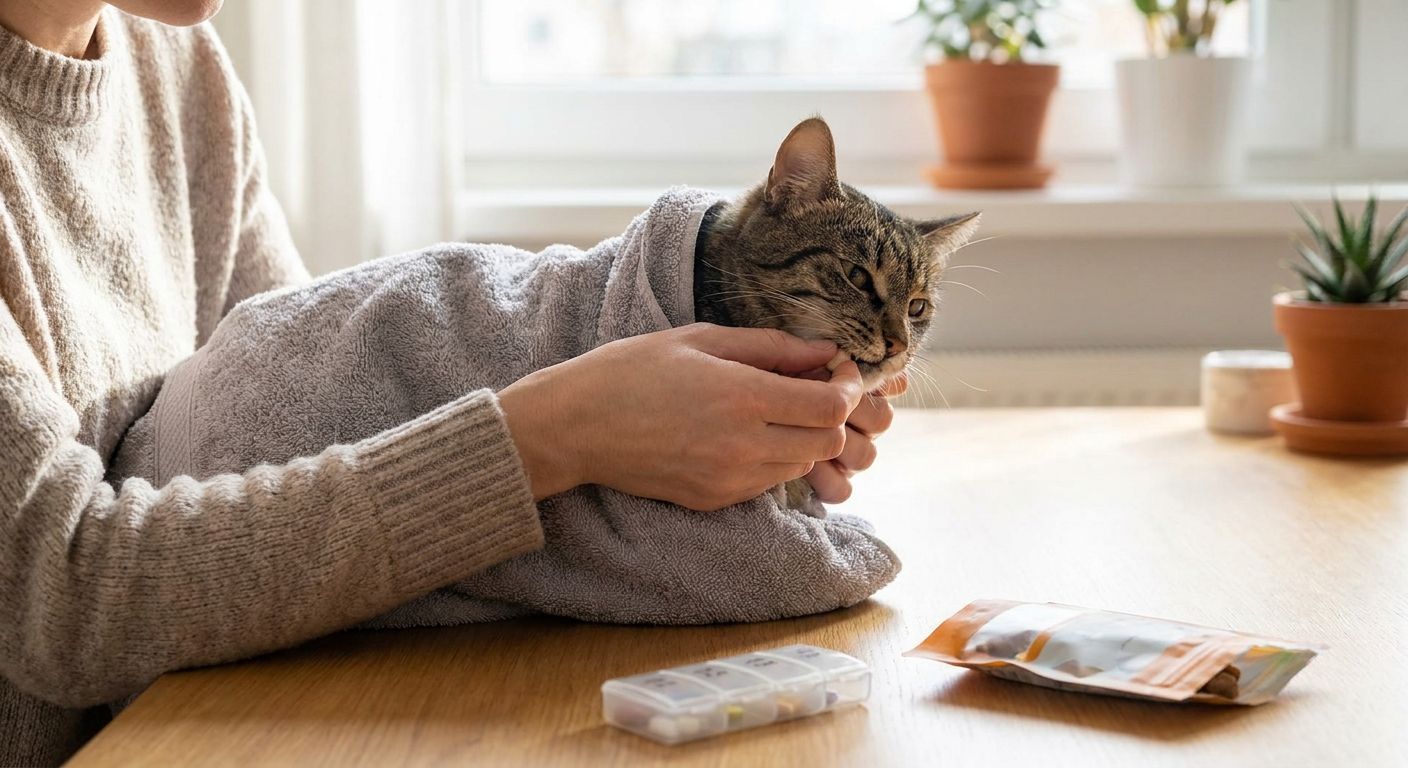
Cats that hate having their mouths handled tend to do better held snugly than pinned down with one hand while you fumble the brush with the other. A wrap-style hold — the Snug Pro Cat Wrap works this way — tucks the paws in so you have two free hands for the brush instead of one hand wrestling and one brushing. That single change turns a 30-second struggle into a manageable routine for a lot of cats.
Dental wipes: the compromise
For cats that won't accept a brush at all, textured dental wipes wrapped around a finger remove some surface plaque along the gumline. They're not as effective as brushing, but they beat doing nothing, and they're a reasonable bridge while desensitising a cat to grooming and handling toward eventually accepting a brush.
Water additives and dental treats: supporting cast, not a replacement
Water additives and dental treats get marketed hard, but neither one reaches the gumline or the back molars the way mechanical brushing does. Treat the kibble bag or the water bottle as a small assist, not the plan.
“If your cat won't tolerate a toothbrush yet, wipes are better than nothing — and nothing is what most indoor cats get.”
Why dental disease develops in indoor cats
- Plaque re-forms within 24 to 36 hours of a clean tooth surface, regardless of whether a cat goes outside
- Indoor cats often live longer, giving untreated plaque more years to progress into periodontal disease
- Dry kibble doesn't meaningfully scrape teeth clean despite what the packaging implies
- Some breeds, Siamese and Abyssinian among them, show higher rates of tooth resorption
- Indoor cats get less jaw exercise than cats that hunt, tear and chew prey outdoors
- Delayed vet checkups let tartar harden past the point wipes or brushing can remove


Do indoor cats need their teeth brushed?
Yes, indoor cats need their teeth brushed — plaque doesn't check a cat's lifestyle before it forms, and daily brushing remains the single most effective home method for slowing tartar buildup in 2026. Being indoors changes the risk of injury and parasites, not the chemistry inside the mouth.
What age should you start brushing a cat's teeth?
Start brushing as early as kitten age, ideally by 6 months once the adult teeth are in, when habits are easiest to build and mouths are least sensitive. Older cats can still be trained gradually — a wrap-style hold limits the squirming that usually derails the first few sessions.
Can dental treats replace brushing for cats?
No, dental treats can't replace brushing — they provide mild abrasion while a cat chews but don't touch the gumline or back molars the way a toothbrush does. Use them alongside a kit, never instead of one.
A cat won't ask for a checkup, and by the time bad breath or drooling shows up, the tartar has usually already hardened into something a wipe or brush can't shift. That's the real argument for checking whether at-home grooming tools cause more stress than a professional session before assuming a struggling cat means the kit isn't working — sometimes it just means the hold needs fixing, not the toothpaste.
FAQ
Is a cat dental kit necessary for indoor cats in 2026?
Yes, a cat dental kit is necessary for indoor cats because plaque forms regardless of whether a cat goes outside. Indoor cats also tend to live longer, giving untreated dental disease more time to progress.
What's in a basic cat dental kit?
A basic cat dental kit includes a toothbrush or finger brush, enzymatic cat toothpaste, and often dental wipes as a backup for cats that resist brushing. Water additives and dental treats round it out as supplements, not replacements.
How often should you brush a cat's teeth?
Brush a cat's teeth daily for the best plaque control, since plaque begins re-forming within 24 to 36 hours of a clean surface. Three or four times a week is still far better than skipping brushing entirely.
Can I use human toothpaste on my cat?
No, never use human toothpaste on a cat. It often contains fluoride or xylitol, both unsafe for cats, so stick to enzymatic toothpaste made specifically for pets.
Do dental treats actually clean cats teeth?
Dental treats provide mild abrasion while a cat chews but don't reach the gumline or back molars the way brushing does. They work best as a supplement to a daily brushing routine, not a substitute for one.
Why does my indoor cat have bad breath?
Bad breath in an indoor cat usually signals plaque or tartar buildup along the gumline, sometimes early gum disease. It's worth a vet check rather than masking it with treats or additives alone.
How do I get a cat used to having its teeth brushed?
Start slow by letting a cat lick enzymatic toothpaste off a finger for a few days before introducing the brush itself. A snug, secure hold reduces the squirming that usually stops brushing sessions before they start.
Are water additives enough for cat dental care?
No, water additives alone aren't enough for cat dental care. They reduce bacteria in the water bowl but don't remove plaque already on the teeth, so they work best paired with brushing.
One last thing
Most cats refuse the toothbrush cold. Running dental wipes for the first two weeks, then switching to a brush once the cat tolerates having its mouth handled, works far better than starting with bristles on day one — the mouth-handling is the actual hurdle, not the brush. Build that tolerance the same way you'd build tolerance for nail trims: short sessions, calm hold, and let your cat leave on their own terms.