Desensitizing a cat to grooming isn't a weekend project, but it isn't a lifelong campaign either — most cats get there faster than pawrents expect once the sessions are short and consistent.
It takes about 6 weeks on average to desensitize a cat to grooming, ranging from 2 weeks for young kittens to 3 months or more for cats with a history of forceful restraint, following the same gradual desensitization principles vets recommend for nail trims, brushing, and handling in 2026. That timeline assumes daily 5 to 10 minute sessions — skip several days in a row and a cat with fear-based reactions often needs to restart from an earlier step, which is the hidden cost most timelines don't mention.
- Desensitizing a cat to grooming takes 2 to 12+ weeks depending on age and history — average around 6 weeks.
- Daily 5-10 minute sessions beat one long weekly session; consistency matters more than duration.
- Kittens habituate in 2-3 weeks; cats with prior forceful handling can take 3 months or longer.
- A restraint tool like the Snug Pro Cat Wrap can shorten the tool-introduction phase by removing the chase.
Why this matters
Owners who rush grooming desensitization usually make it worse. A cat that gets scruffed, wrapped in a towel and clipped in 90 seconds once a month never actually learns that grooming is safe — it just learns to brace and bolt. Real desensitization works because the sessions are short enough that the cat never hits full-blown stress, and frequent enough that the brain files the routine as normal rather than threatening.
The payoff isn't just a calmer clipping session. A cat that tolerates paw handling and gentle restraint also tolerates vet exams, medication, and the occasional emergency vet visit with far less drama. That's the actual goal — not one good nail trim, but a cat that stays manageable for the next ten years of care.
How long does it take to desensitize a cat to grooming?
The process moves in stages, and each stage has its own rough duration. This isn't a rigid script — some cats fly through touch tolerance in three days and stall for weeks on the clipper itself — but it's the order that works for most cats.
| Stage | Typical duration | What happens |
|---|---|---|
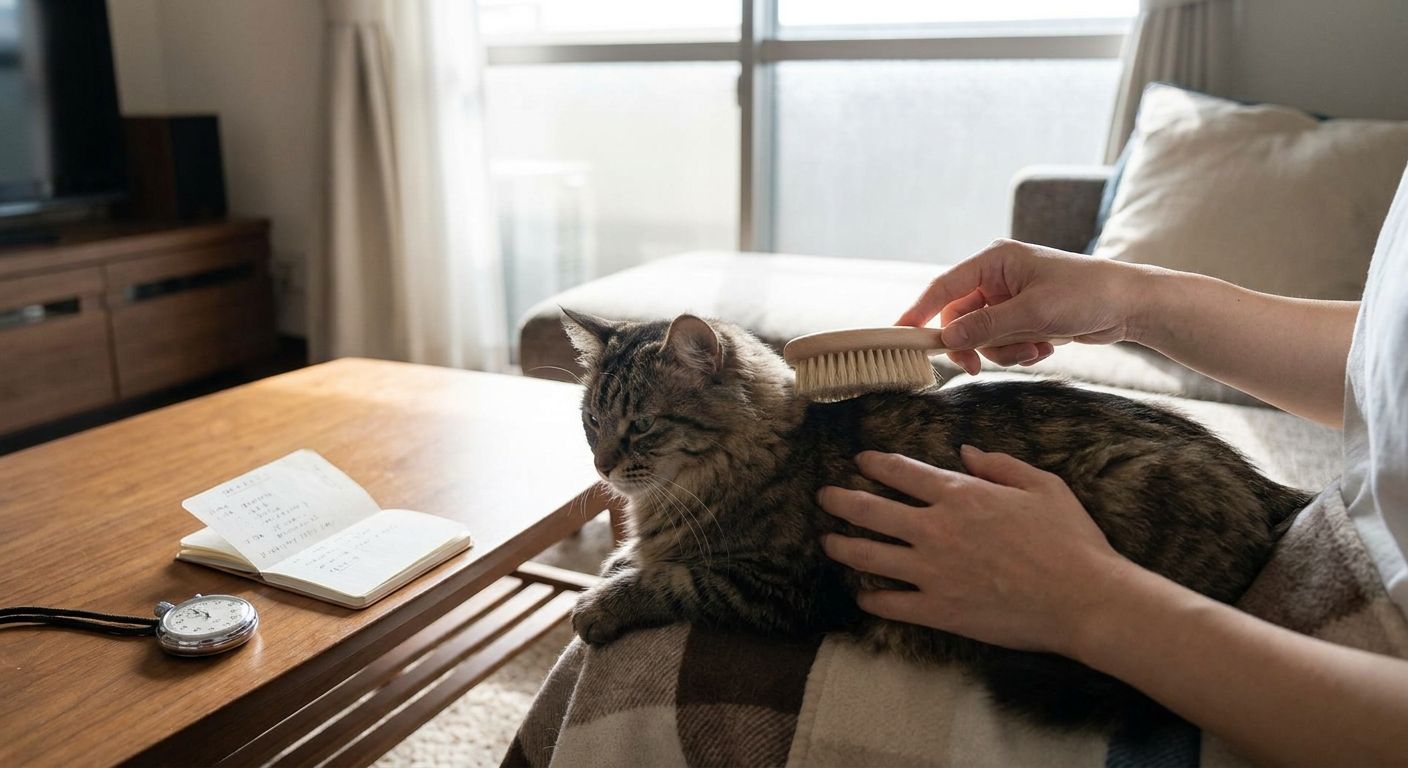
| Touch tolerance | Week 1-2 | Handle paws, ears, and belly with no tool present, reward calmly |
| Tool introduction | Week 2-4 | Clipper or wrap is visible and touched to the cat, but not used |
| First real trims | Week 4-6 | 1-2 nails clipped per session, session ends on a calm note |
| Full session | Week 6-8+ | All nails or a full brushing pass in one sitting |
Each row only moves forward once the cat is relaxed at the previous stage — body loose, tail still, no ears pinned. Pushing to the next stage while a cat is tense is the single most common reason desensitization stalls past 3 months.
Kittens: 2 to 3 weeks
Kittens under six months old desensitize the fastest because they haven't built a negative association with clippers or restraint yet. Daily short sessions during the socialization window (roughly 2-9 weeks old, then continuing through the first year) usually get a kitten comfortable with full nail trims inside 2 to 3 weeks. Best for: new kittens still forming handling habits. Verdict: start now — this is the cheapest window you'll ever get.
Adult cats with no trauma history: 4 to 6 weeks
An adult cat that's never been forcefully restrained but simply avoids handling out of unfamiliarity typically needs 4 to 6 weeks of daily practice. The pace is slower than a kitten's because adult cats have stronger, more fixed avoidance habits to unlearn, not because they're incapable of learning. Verdict: workable timeline — stick to the daily schedule and don't skip the touch-tolerance stage even if the cat seems fine with tools already.
Cats with a history of forceful restraint: 8 to 12+ weeks
A cat that's been scruffed, pinned, or muzzled during past grooming attempts carries a stronger fear memory, and unlearning that takes longer — often 8 to 12 weeks, sometimes longer for severely fearful cats. Progress here is rarely linear; expect good weeks and setback weeks. Verdict: go slower than feels necessary — rushing this group is what turns a 3-month process into a 6-month one.
Why the timeline varies
- Age — kittens learn faster than adult or senior cats because avoidance habits aren't yet fixed.
- Prior handling history — a cat scruffed or restrained forcefully in the past needs longer to unlearn the fear response.
- Session frequency — daily 5-10 minute sessions beat one 30-minute session per week, every time.
- Consistency of tools and routine — using the same clipper, the same wrap, and the same spot in the house speeds recognition and comfort.
- Number of handlers — a cat groomed by one consistent person progresses faster than one passed between multiple people.
- Whether restraint feels like a chase — a cat that has to be cornered or chased before handling starts every session already stressed; a wrap that lets the cat settle first changes that starting point.
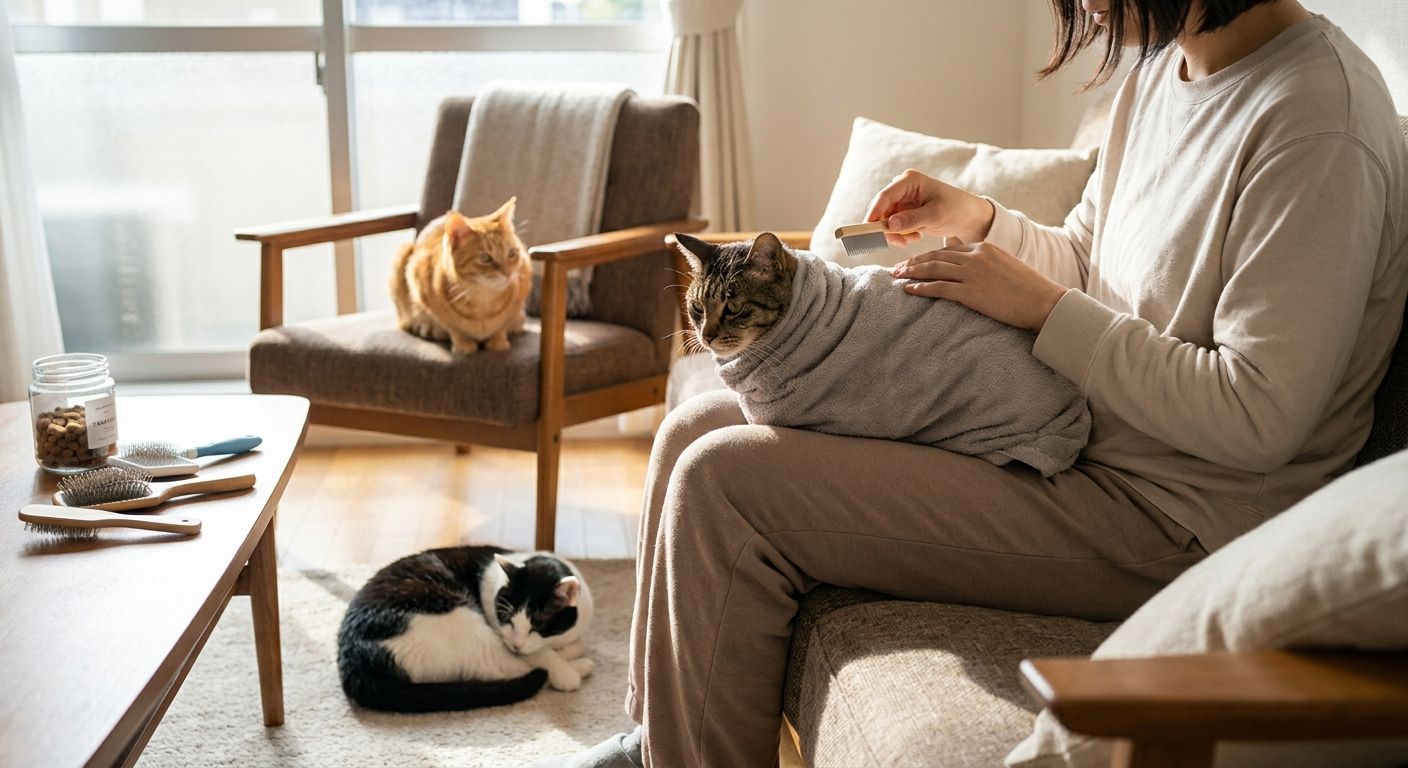
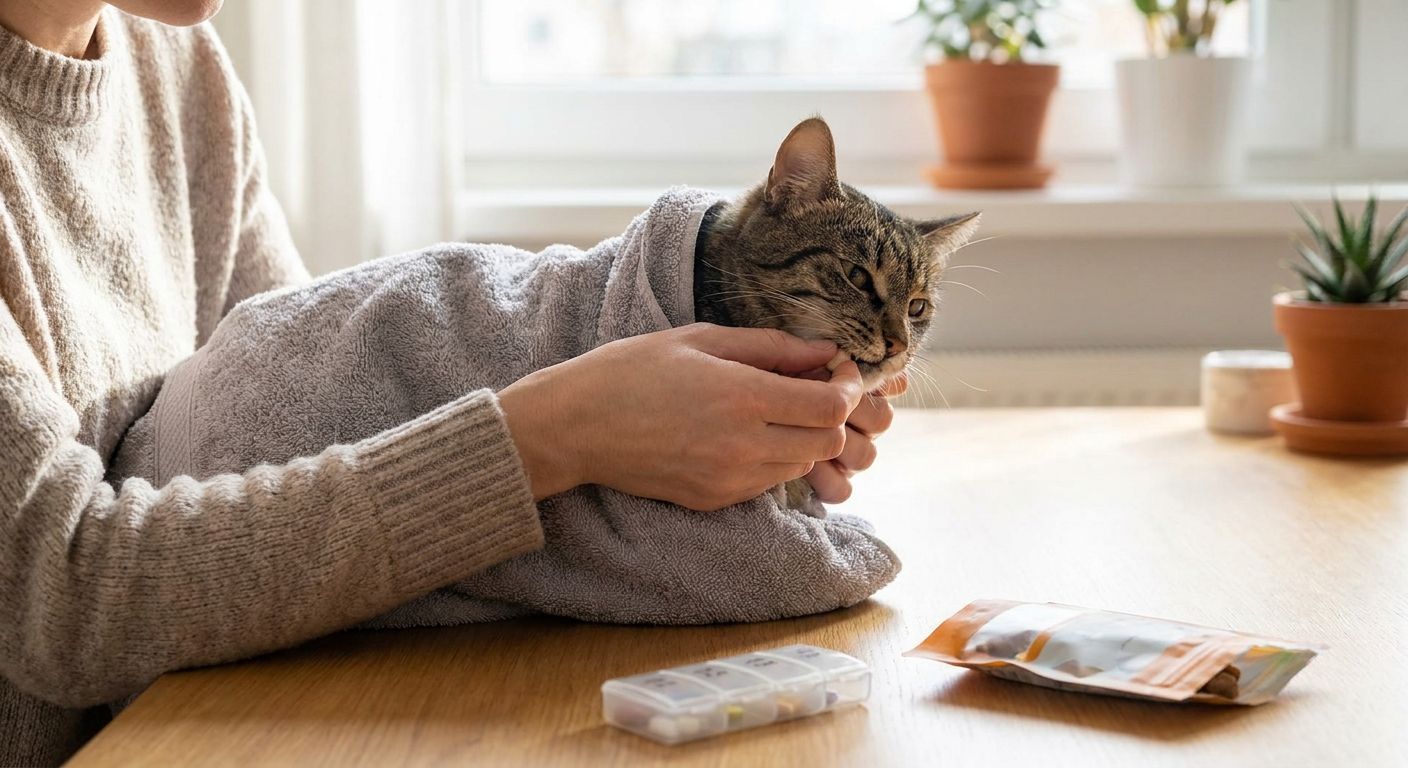
A restraint tool matters here because it changes what the first 30 seconds of every session feel like. The Snug Pro Cat Wrap is designed for calmer nail trims, medication, and vet visits by keeping a cat snugly — not tightly — supported, so sessions can start from a calm baseline instead of a chase. That doesn't shortcut the weeks of practice, but it removes one of the biggest stressors from every single session, which is often what turns a stalled 12-week timeline back into a moving one.


Related questions
How often should you practice grooming desensitization?
Daily practice, 5 to 10 minutes per session, gets results faster than any weekly schedule. Cats build tolerance through repetition, not duration — a single long session that ends in stress can undo several days of short, calm ones. If daily isn't realistic, aim for at least 4-5 sessions a week rather than letting gaps stretch past 2-3 days.
Can you speed up cat desensitization to nail clipping?
You can shave weeks off the timeline by keeping every session under the cat's stress threshold and using the same tool and location each time. Ending each session while the cat is still relaxed — rather than pushing for "one more nail" — teaches the brain that grooming sessions reliably end calmly, which is what actually accelerates habituation.
What happens if a cat's progress backslides mid-process?
Backslides are normal and don't mean the process failed — they usually mean the last stage moved too fast. Drop back to the previous stage for 3-5 sessions before advancing again; most cats recover the lost ground faster the second time through because some familiarity remains.
FAQ
How long does it take to desensitize a cat to grooming?
Desensitizing a cat to grooming takes 2 to 12+ weeks on average, with kittens on the fast end and cats with a forceful-handling history on the slow end. Daily 5-10 minute sessions are what drive the timeline down, not any single trick or tool.
Is it too late to desensitize an older cat to grooming?
No — adult and senior cats can still be desensitized, it simply takes longer than it does for kittens, often 8 to 12 weeks instead of 2 to 6. The process itself doesn't change with age, only the pace.
What's the best way to hold a cat still for nail trims?
A wrap-style restraint like the Snug Pro Cat Wrap holds a cat snugly rather than tightly, which reduces the panic response that comes from scruffing or pinning. Gentle, predictable restraint is what makes repeat sessions tolerable enough to build habituation.
How many sessions does it take before a cat tolerates nail clipping?
Most cats need somewhere between 15 and 40 short sessions spread across several weeks before they tolerate a full nail trim calmly. That range maps to roughly 4 to 8 weeks of daily practice for an average adult cat.
Can you desensitize a cat to grooming without treats?
Treats speed the process considerably because they give the cat an immediate, positive reason to stay calm during handling. Without them, desensitization still works but typically takes longer since the cat has less incentive to associate the session with something good.
Should grooming sessions happen at the same time every day?
Consistent timing helps but consistent tools and location matter more for building comfort quickly. A cat that sees the same clipper in the same spot every session recognizes the routine faster than one groomed at a fixed hour but with varying setups.
What's a sign that desensitization is working?
A loose, relaxed body and a still tail during handling are the clearest signs progress is real, not just tolerated. A cat that stops trying to pull its paw away mid-session, even briefly, has crossed into genuine habituation rather than forced compliance.
One last thing
The single biggest predictor of how long desensitization takes isn't the cat's personality — it's whether the same tool, same restraint method, and same location get used every session. Cats generalize slowly; a clipper that looks different or a session that happens in a new spot each time resets some of the recognition that took weeks to build. Pick one setup in 2026 and stay boring about it — boring is what gets a cat to full-groom tolerance in 6 weeks instead of 6 months.