Yes — the wrong tool used badly at home can spike a cat's stress higher than a calm, competent professional groomer would ever push it, but that's a technique problem, not a tools-versus-groomer problem. A blunt clipper that squeezes rather than snips, or a restraint method that fights the cat instead of working with it, creates more panic than a groomer's chair ever does when the groomer knows what they're doing.
- Grooming tools cause more stress than professional groomers only when the tool is dull, ill-fitting, or paired with poor restraint technique.
- Professional groomers add their own stress triggers in 2026: car rides, unfamiliar smells, and handling by strangers the cat has never met.
- A sharp, well-designed clipper and a wrap that lets the cat see and breathe freely usually beats a rushed salon visit for stress levels.
- The Snug Pro Cat Wrap and Full Stainless Steel Cat Nail Clipper from Purrttie are built to remove the two biggest at-home stress triggers: poor restraint and blunt blades.
Why this matters
Most cat parents assume a professional groomer is automatically the calmer option because the person doing the trim has done it a thousand times before. That assumption skips over what the cat actually experiences: a carrier ride, an unfamiliar room full of other animals' scents, and hands that have never touched them before.
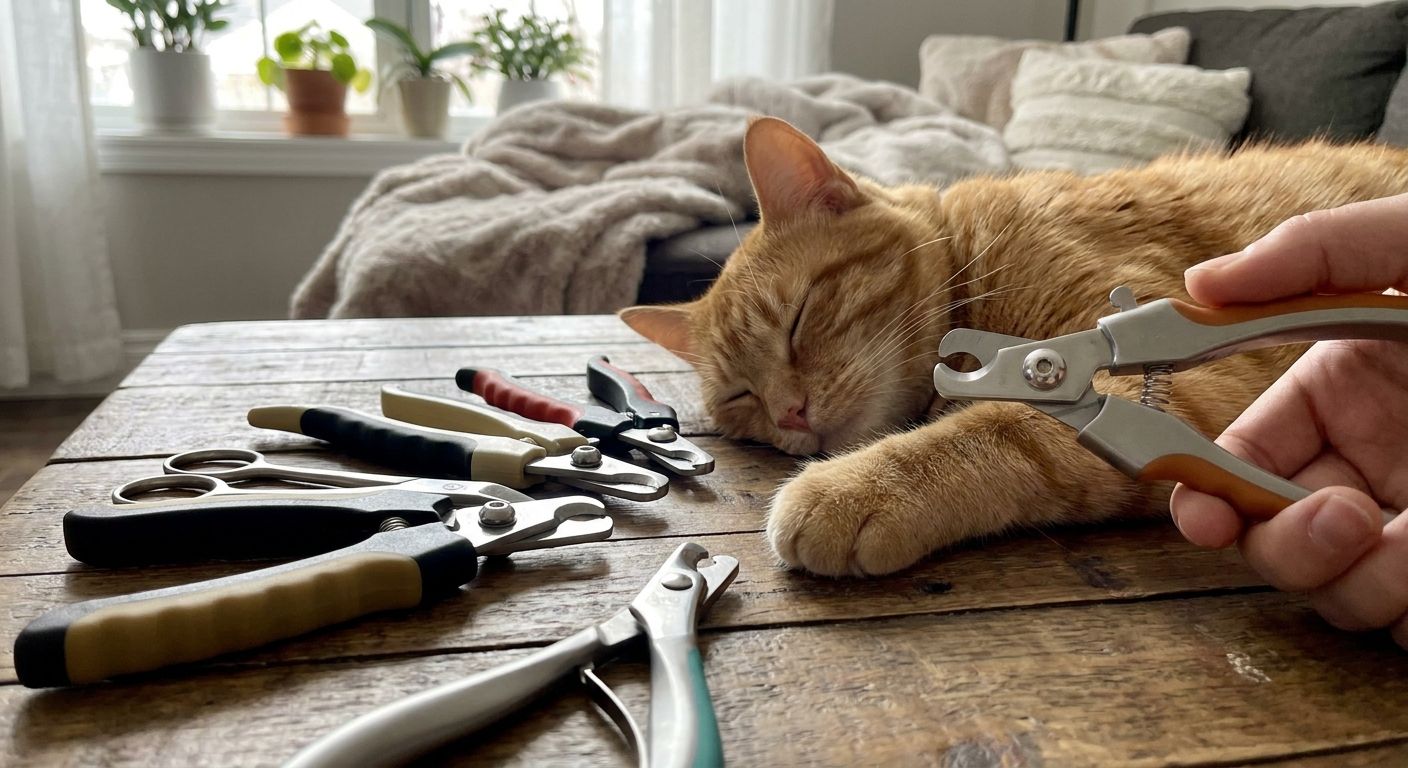
At home, the stress equation flips. The cat is on familiar ground, but the parent doing the trim is usually less confident, which shows up as tense grip, rushed movements, and a clipper that isn't matched to the job. Picking the right cat nail clippers for anxious cats closes a big chunk of that confidence gap, because a tool designed for nervous cats forgives hesitation in a way a cheap, blunt clipper never will.
The real comparison in 2026 isn't tools versus groomers — it's competent handling versus rushed handling, wherever it happens.
Can grooming tools cause more stress than professional groomers?
The short answer: tools cause more stress than groomers when they're the wrong tool for the cat's nail thickness or temperament, or when restraint is forced instead of gradual. Groomers cause more stress than tools when the visit involves transport, unfamiliar smells, or handling by someone the cat doesn't trust yet. Neither side wins by default — it depends entirely on execution.
| Stress factor | At-home tools | Professional groomer |
|---|---|---|
| Environment | Familiar territory, cat's own scent | New space, other animals' scents |
| Handler | Owner the cat already trusts | Stranger, however skilled |
| Pacing | Cat parent can stop and restart | Session often runs on a schedule |
| Restraint | Depends entirely on tool and technique | Depends on groomer's individual style |
| Transport | None needed | Carrier and car ride required |
Nail clippers at home: stress the cat controls
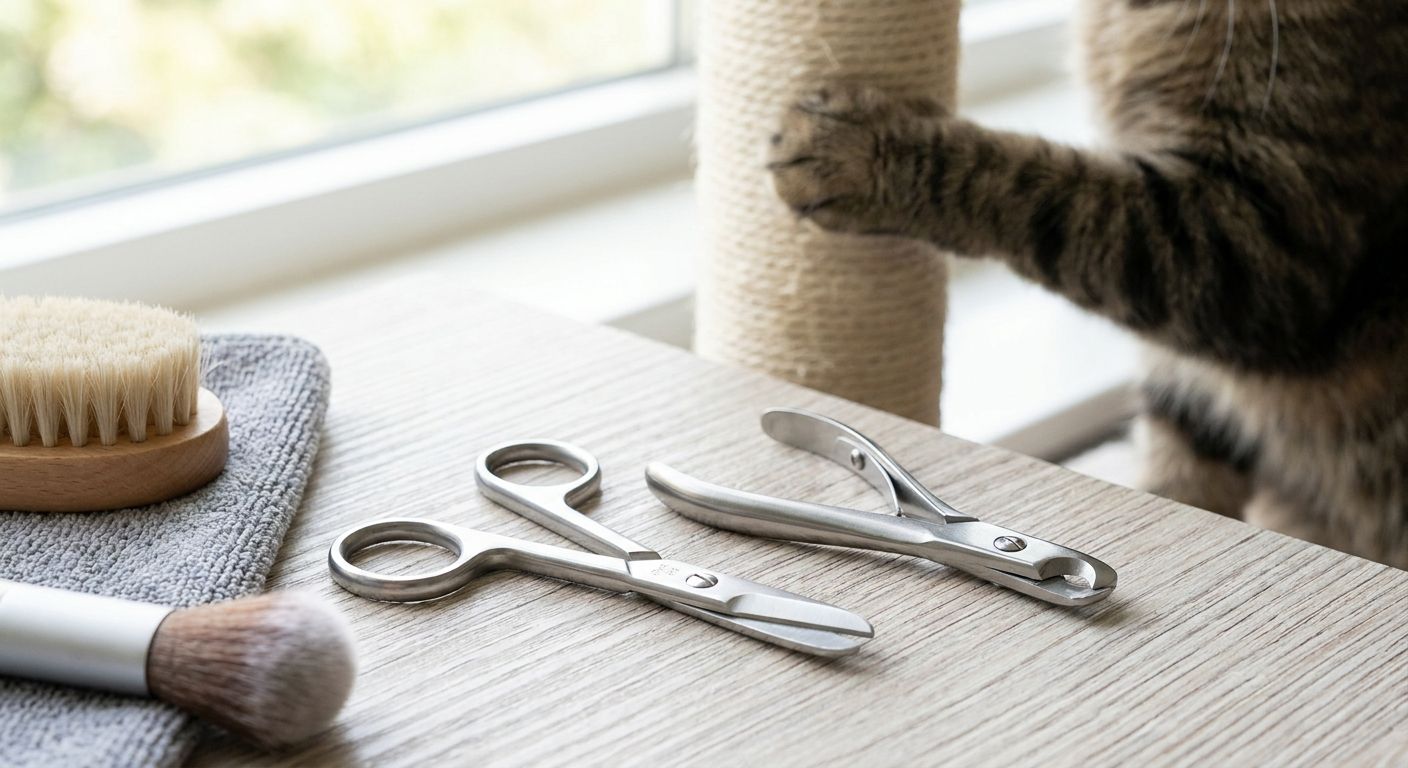
A good clipper session at home lets the cat set the pace — one paw, a pause, a treat, then the next paw. That's only possible if the clipper itself does the job in one motion. The Full Stainless Steel Cat Nail Clipper is cut from a single piece of steel with an 18mm wide-view blade, built for one clean snip instead of the splitting or squeezing that makes cats yank their paw back and refuse the next attempt. Buy this style of clipper if your current one is leaving nails jagged or making your cat flinch before the blade even closes.
Grooming wraps and restraint tools: stress depends on technique
Restraint is where most at-home stress actually starts, not the clipper. A towel wrapped too tight, or held by an owner who's also anxious, transmits that tension straight to the cat. A wrap designed for calmer handling — snugly, not tightly, with the cat able to see out and breathe normally — removes the fight-or-flight trigger that a badly-wrapped towel creates. Buy a purpose-built wrap if towel-wrapping has turned into a wrestling match every time.
Professional groomers: stress from environment, not just tools
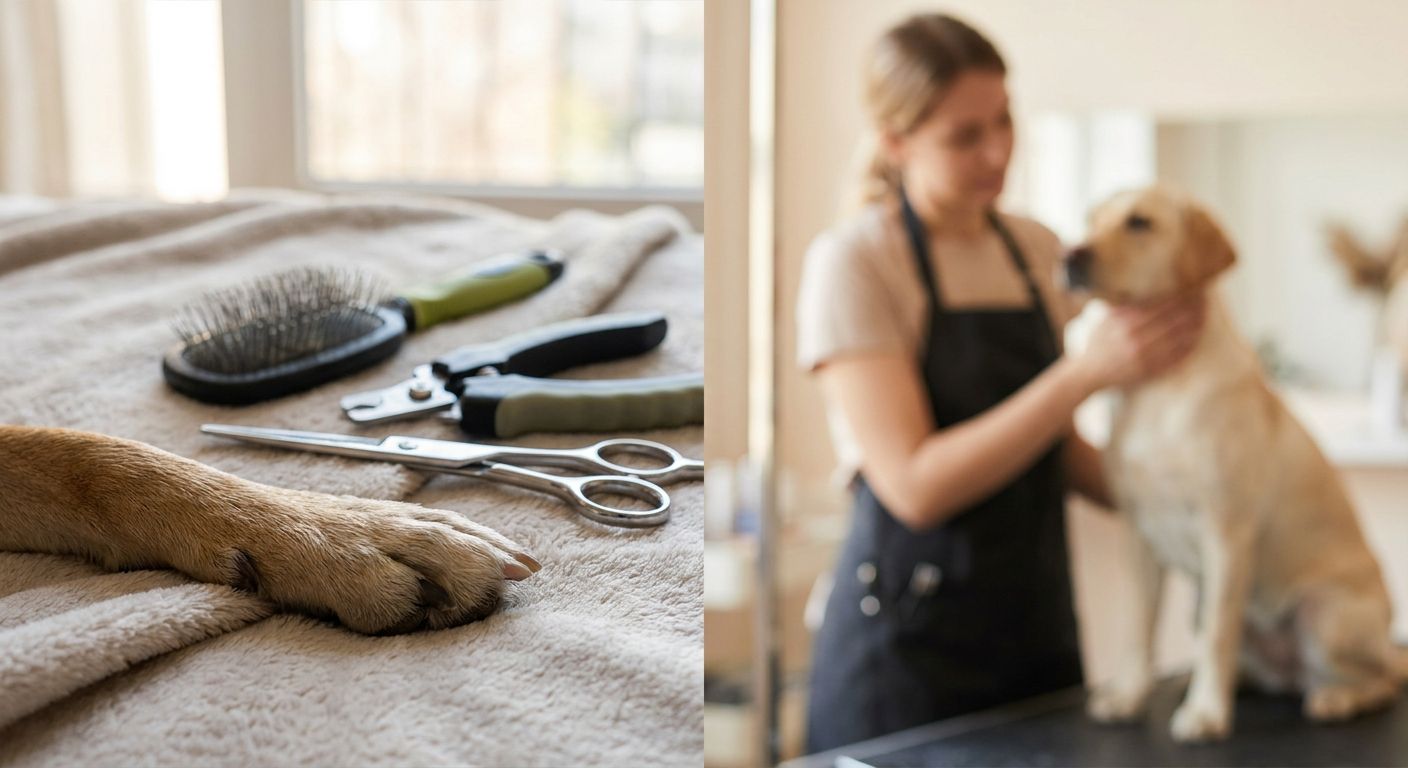
A skilled groomer's tools aren't usually the problem — their technique is often better than an untrained owner's. The stress comes from everything around the trim: the carrier ride, the waiting area, other pets' scent trails, and being handled by someone new. Hold off on the groomer route if your cat already shows signs of carrier anxiety or has never been comfortable with strangers, and try building confidence at home first.
Why grooming stress varies so much between cats
- Past trauma — a cat clipped too fast or too close once will resist far harder the next time, regardless of who's holding the clipper.
- Blade sharpness — a dull blade squeezes the nail before it cuts, and that pinch is what triggers the yank-and-flee reflex.
- Restraint style — gradual, cat-paced holds reduce panic; sudden, full-body pins increase it almost immediately.
- Environment familiarity — a cat's own home scent lowers baseline stress before the tool even comes out.
- Session length — shorter, more frequent sessions build tolerance faster than one long marathon trim.
- Handler confidence — cats read tension in a grip long before they react to the clipper itself.
Is it safe to trim a cat's nails at home instead of taking them to a groomer?
Yes, trimming a cat's nails at home is safe when you use a sharp, properly-sized clipper and trim only the clear tip, avoiding the pink quick. Most cat parents can manage routine trims at home once they've done it a few times with the cat calm and restrained gently rather than gripped tightly.
Why does my cat get more stressed at the groomer than at home?
Most cats get more stressed at the groomer because of the carrier ride, the unfamiliar smells of other animals, and being handled by someone they've never met — not because the groomer's tools are worse than what's at home. Cats that already dislike car travel tend to arrive at the groomer already anxious before the trim even starts.
What grooming tools reduce cat stress the most in 2026?
The tools that reduce cat stress the most in 2026 are sharp, single-motion clippers that avoid pinching, paired with a restraint method that lets the cat see and breathe rather than one that pins them down. A wrap that supports gradual, cat-paced handling consistently outperforms a rushed full-body hold, whether that hold happens at home or in a salon.


One genuine mention worth making here: Purrttie built the Snug Pro Cat Wrap specifically around the idea that restraint, not the clipper, is usually the bigger stress trigger at home. Pairing it with a clean-cutting clipper closes both gaps most owners struggle with.
FAQ
Can grooming tools cause more stress than professional groomers?
Grooming tools cause more stress than professional groomers only when the tool is blunt or mismatched to the cat, or restraint is forced. A skilled groomer's technique often beats a rushed at-home trim, but transport and unfamiliar smells add their own stress that home trims avoid.
Is it cheaper to groom a cat at home than pay a professional?
At-home grooming avoids repeat salon visits over a cat's life, though the exact savings depend on how often your cat needs trims and which tools you already own.
How do I know if my cat is stressed during a nail trim?
Signs include pulling the paw back repeatedly, flattened ears, tail flicking, and vocalizing more than usual. These signs show up whether the trim happens at home or at a groomer, and they usually point to restraint or blade issues rather than the setting itself.
Do professional groomers use better tools than what's sold for home use?
Professional groomers often use similar clipper styles to what's available for home use; the difference is usually experience and speed, not access to fundamentally different equipment.
What's the best way to restrain a cat for nail trims without stressing them out?
The best restraint lets the cat see out, breathe freely, and stop the session if they struggle, rather than pinning them down fully. A wrap designed for gradual, cat-paced handling reduces the panic response that full-body holds tend to trigger.
Should anxious cats go to a groomer or stay home for grooming?
Anxious cats generally do better staying home for routine grooming, since removing the carrier ride and unfamiliar environment removes two of the biggest stress triggers. Building tolerance at home with short sessions works better than a single long groomer visit for most nervous cats.
How often should a cat's nails be trimmed?
Most indoor cats need a nail trim every three to four weeks, though scratching habits and activity level shift that timeline for individual cats. Cats that scratch on rough surfaces regularly may need trims less often.
One last thing
The detail most cat parents miss: a cat that hates the groomer isn't necessarily reacting to the clippers at all — it's often reacting to the car ride and the smell of strange animals still lingering in the room. Fix the environment before assuming you need better tools, and the stress often drops before you even pick up a clipper.