Grooming a senior cat at home is safe for most cats when you shorten sessions, support their joints, and swap firm restraint for gentle, cat-led handling. The real risk isn't the brushing or the nail clipper — it's grooming around an undiagnosed condition like arthritis, hyperthyroidism, or kidney disease that makes certain holds or positions genuinely painful. Skip any technique that requires stretching, flipping, or pinning a senior cat, and get a vet's sign-off first if your cat has known joint, heart, or kidney issues.
- At-home grooming is safe for senior cats when sessions are short and restraint is gentle — not when it mimics younger-cat handling.
- Arthritis and kidney disease are the two conditions most likely to turn a routine trim into a painful one.
- A supportive wrap like the Snug Pro Cat Wrap reduces struggle-related injury risk during nail trims and medicating.
- Stop immediately if a senior cat cries, goes limp, or pulls a paw away sharply — that's a vet-visit signal, not a grooming failure.
Why this matters
Cats over 11 are considered senior, and by that age most are carrying at least one age-related condition — even if it hasn't been diagnosed yet. Arthritis in cats is famously under-detected because cats hide pain well; a cat who tolerated a firm nail-trim hold at age 4 may genuinely hurt at age 14 doing the exact same thing. Grooming at home in 2026 isn't riskier than it was a decade ago, but the technique that worked on a young cat doesn't automatically transfer to a senior one.
The goal isn't to stop grooming a senior cat at home — it's to change how you do it. Purrttie builds tools around that shift: less force, more support, shorter sessions.
Is at-home grooming safe for senior cats?
Yes, with adjustments. The table below breaks down the grooming tasks pawrents do most at home and what changes for a senior cat.
| Grooming task | Senior cat consideration | Safer approach |
|---|---|---|
| Nail trims | Nails often thicken and grow more curved with age | Trim little and often rather than all four paws at once |
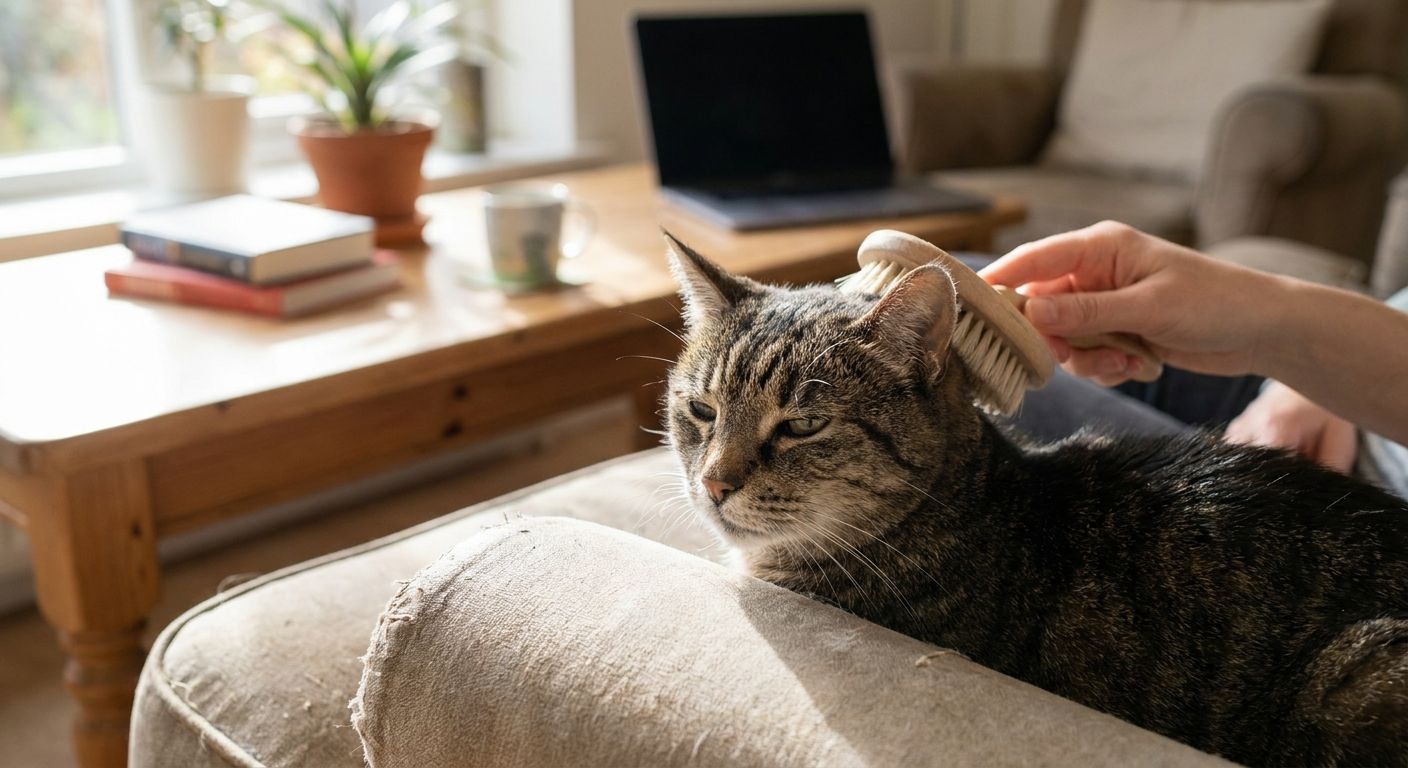
| Brushing | Skin thins and bruises more easily | Use soft-bristle brushes, avoid pressing near the spine |
| Bathing | Cold and wet stress the heart and joints faster | Keep sessions under 5 minutes, warm room, warm water |
| Ear cleaning | Balance issues make head-tilting uncomfortable | Support the jaw, never tip the head back sharply |
| Restraint/holding | Joint pain makes stretching or flipping painful | Wrap or scruff-free hold with the body in neutral position |
None of these tasks are off-limits for a senior cat. What changes is the amount of force and the length of the session — both should go down as the cat gets older.
Why safety varies from cat to cat
A 12-year-old cat with no diagnosed conditions tolerates grooming very differently than a 12-year-old cat with early-stage kidney disease. The factors that actually move the needle:
- Arthritis or joint stiffness — makes stretched-out holds and flipped-over bellies painful, even if the cat doesn't vocalize
- Kidney disease — common in senior cats and can cause nausea or lethargy that lowers grooming tolerance on a given day
- Thinning, fragile skin — bruises and tears more easily under brushes or clipper pressure than it did at age 5
- Dental disease — makes face and mouth handling (for medicating or cleaning) more sensitive
- Reduced vision or hearing — increases the startle response, so sudden touches feel more threatening
- Lower stress tolerance overall — senior cats recover from a stressful event more slowly than kittens or adults
A cat showing two or more of these is a candidate for shorter, more frequent sessions rather than one long grooming block.
Restraint matters more than the tool
Most injury risk during at-home grooming doesn't come from the clipper or brush — it comes from the struggle. A cat that twists hard against a scruff hold or a tight towel wrap can strain a joint that's already inflamed. A supportive wrap that keeps the body in a neutral, snug-not-tight position — the approach behind the Snug Pro Cat Wrap — reduces how much force is needed to hold a senior cat still for a trim or medication.
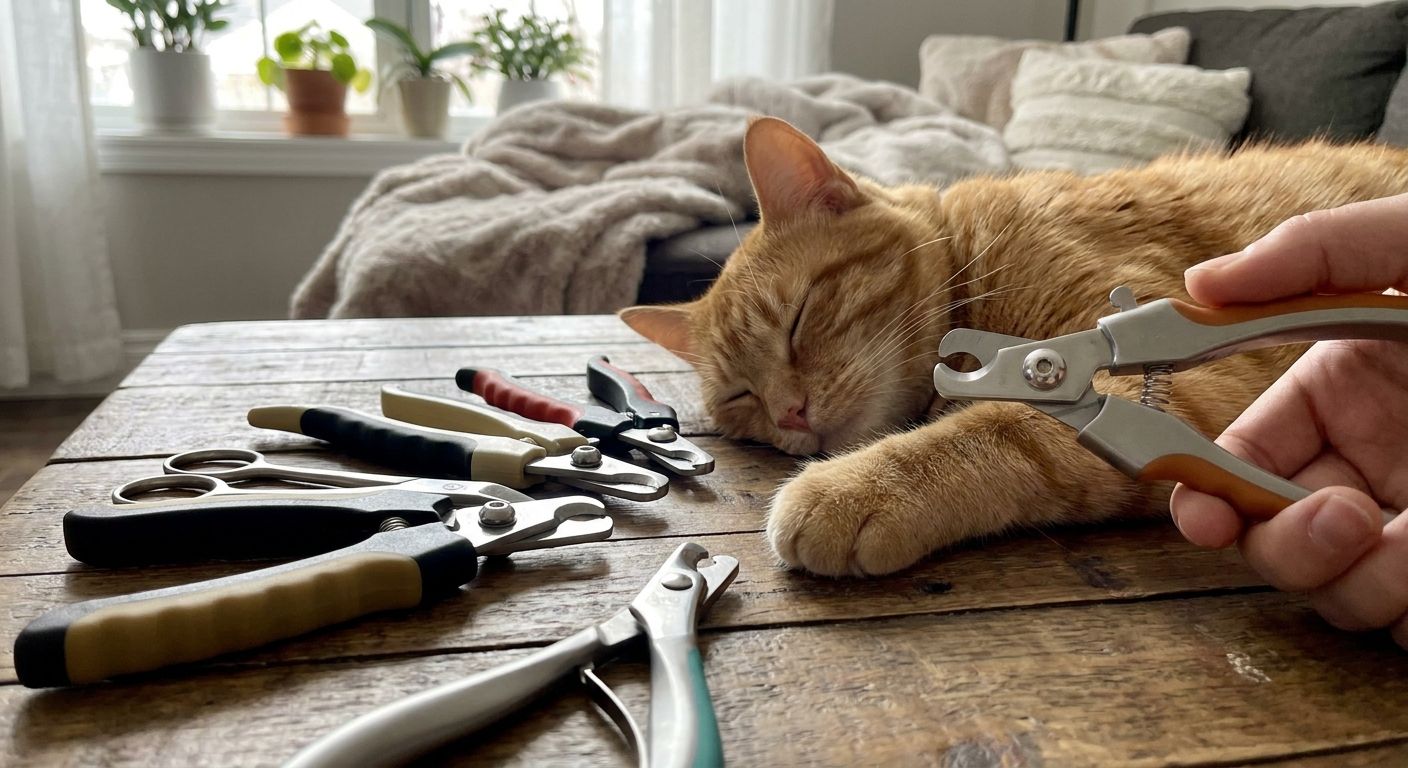
For cats who get anxious specifically around the clipper rather than the hold, tools built for anxious cats tend to work faster and with less stress for a senior cat than a standard clipper.


“If your cat flinches at a hold that never bothered them before, that's a vet visit, not a grooming problem.”
How often should you groom a senior cat at home?
More often, in shorter bursts, works better than one long session for most senior cats in 2026. Nail checks every 2-3 weeks catch overgrown or ingrown nails before they need a longer, more invasive trim, and brief brushing sessions of 2-3 minutes a few times a week keep mats from forming without asking for extended stillness from a stiff cat.
Should senior cats be professionally groomed instead of at home?
Professional grooming isn't required for most senior cats, but it becomes worth considering once a cat has severe matting, mobility loss, or a condition that makes handling unpredictable. At-home grooming remains the calmer option for cats who find travel and unfamiliar hands more stressful than the grooming task itself — which describes most senior cats.
What are the signs a senior cat should stop a grooming session?
Stop immediately if a senior cat cries out, goes limp, pulls a paw or leg away sharply, or starts open-mouth breathing during a session. These are pain or acute stress signals, not stubbornness, and pushing through them at home risks reinforcing fear around future grooming attempts.
FAQ
Is at-home grooming safe for senior cats?
At-home grooming is safe for most senior cats when sessions are shortened and restraint is gentler than what's used on a younger cat. The main risk comes from grooming around an undiagnosed condition like arthritis or kidney disease, not from the grooming itself.
At what age is a cat considered senior for grooming purposes?
Cats are generally considered senior from around 11 years old. Grooming technique should start adjusting earlier than that if a cat shows any stiffness or reduced tolerance for handling.
Can arthritis make nail trims painful for senior cats?
Arthritis can make nail trims painful for senior cats, particularly when paws are stretched or held at an angle they can't hold comfortably. Trimming fewer nails per session reduces how long the paw needs to stay in that position.
Is bathing safe for a senior cat at home?
Bathing is safe for a senior cat at home when sessions stay short, the water and room are warm, and the cat isn't left wet in a cold room afterward. Cold and prolonged wetness stress the heart and joints faster in older cats than in younger ones.
Do senior cats need a vet check before at-home grooming?
A vet check isn't required for routine grooming, but it's worth doing if a senior cat has known joint, heart, or kidney issues before starting a new grooming routine. This flags any holds or positions to avoid.
What's the safest way to restrain a senior cat for a nail trim?
The safest restraint for a senior cat keeps the body in a neutral, unstretched position rather than a tight scruff hold or a flipped-over belly-up hold. A supportive wrap reduces the force needed and lowers the chance of a joint strain during a struggle.
How long should a grooming session be for a senior cat?
A grooming session for a senior cat should generally stay under 5-10 minutes, shorter than what a younger, more flexible cat can tolerate. Breaking nail trims into two paws at a time rather than all four is a common adjustment.
Can thick or brittle nails in senior cats be trimmed at home?
Thick or brittle senior cat nails can be trimmed at home with a clipper built for that nail type rather than a standard kitten-sized clipper. A wide, sharp single-piece blade reduces the splitting risk that thicker nails are prone to.
One last thing
The detail most pawrents miss with senior cats isn't the clipper or the brush — it's the floor. A senior cat with mild arthritis often refuses a grooming hold not because of pain in the paw being touched, but because their other three legs are bearing weight on a slippery surface. Grooming on a textured mat or towel instead of a smooth counter often solves a "suddenly difficult" senior cat before any restraint change does.