Anxious cats need a nail clipper that finishes the job in one clean motion, because every extra second of fumbling is another chance for your cat to pull away, scratch, or shut down completely. The best cat nail clippers for anxious cats in 2026 pair a sharp, single-snip blade with a way to keep your cat still enough to use it safely.
- Full Stainless Steel Cat Nail Clipper wins for anxious cats needing a fast, one-snip trim in 2026.
- Pair any clipper with the Snug Pro Cat Wrap when your cat pulls away or scratches mid-trim.
- Guillotine-style clippers suit cats who tolerate paw handling but startle at scissor motion.
- Nail grinders work for noise-tolerant cats willing to accept filing instead of a snip.
- Skip human nail clippers for anything beyond a one-off emergency trim.
Why this matters
A cat that associates nail trims with panic will fight harder every time you try again, and a botched cut into the quick makes that fear worse. The tool matters less than most owners think going into their first trim — the technique and the restraint matter more, and a huge range of grooming essentials exists specifically to close that gap between a sharp clipper and a cooperative cat.
Anxious cats don't need the fanciest clipper on the shelf. They need one that cuts cleanly on the first try, because a second attempt on the same claw is usually where the session falls apart. That's the lens every pick below gets judged through.
What makes the best cat nail clippers for anxious cats
- Single-snip blade sharpness — no crushing, no squeezing, no second bite at the same claw
- A wide viewing window — you need to see the quick before you cut, not guess
- Quiet operation — no motor whir or grinding sound that spikes a nervous cat mid-session
- Restraint compatibility — the clipper should work one-handed while a wrap or towel holds the cat still
- Ergonomic, non-slip grip — shaky first attempts need a handle that doesn't twist in your hand
- Claw-appropriate blade size — small, curved cat claws don't behave like dog nails
Cat nail clippers for anxious cats: at a glance
| Tool | Best for | Standout feature | Key limitation |
|---|---|---|---|
| Full Stainless Steel Cat Nail Clipper | Overall pick for anxious cats | 18mm wide-view blade, single-piece steel | Cat still needs to hold still for the snip |
| Snug Pro Cat Wrap | Cats who bolt or scratch mid-trim | Frees both hands, calmer restraint | Not a clipper — needs pairing with one |
| Guillotine-style clippers | Cats tolerant of paw handling | Familiar single-motion action | Hole size can crush slim or curved claws |
| Nail grinders | Cats scared of the snip sound | Gradual filing, no cutting motion | Motor noise/vibration spooks some cats |
| Human nail clippers | One-off emergency trims only | Already in every household | Flat blade crushes curved cat claws |
1. Full Stainless Steel Cat Nail Clipper: best overall for anxious cats
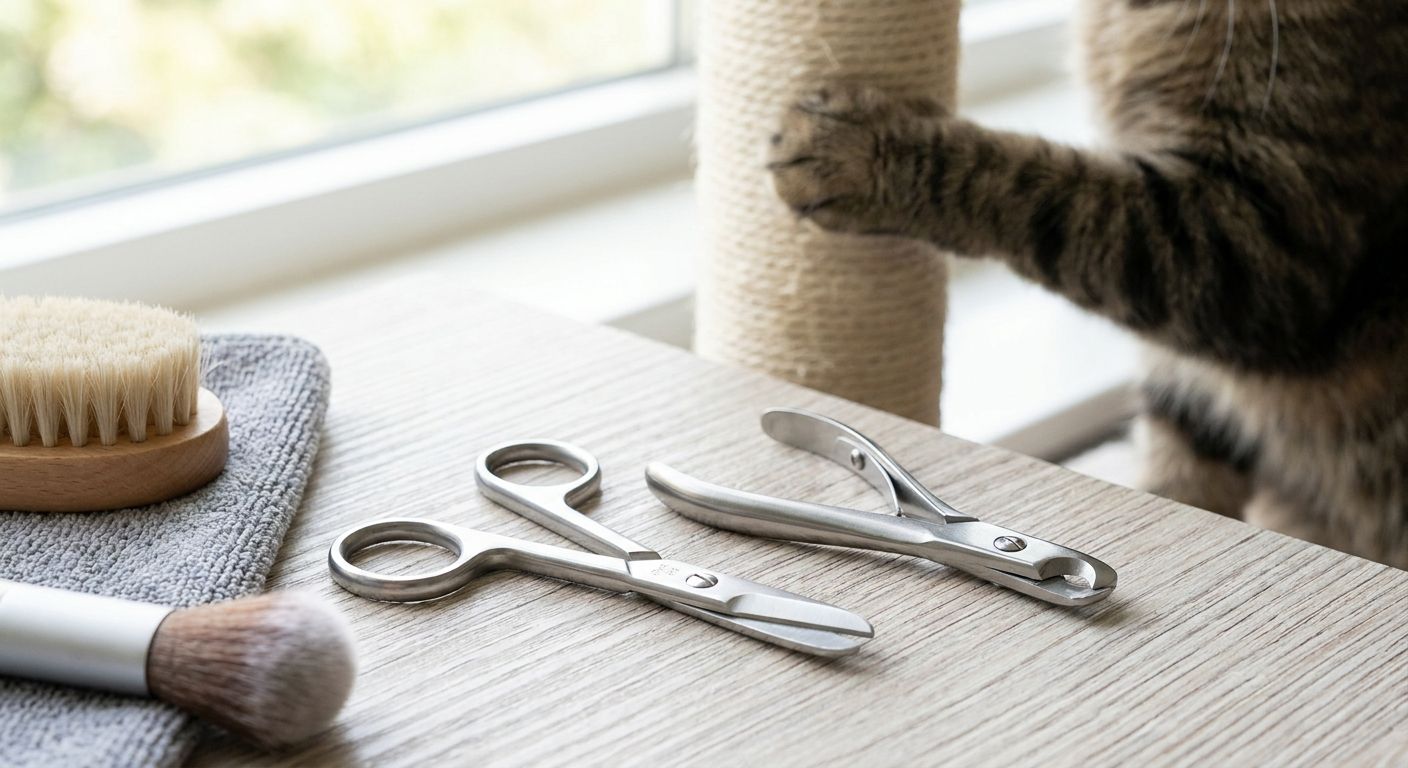
The Full Stainless Steel Cat Nail Clipper is cut from a single piece of steel with an 18mm wide-view blade, built for one clean snip rather than the squeeze-and-recut motion that spooks a nervous cat. That wide window matters most in the first three seconds of a trim, when you're trying to spot the quick before your cat notices what's happening.
Full Stainless Steel Cat Nail Clipper pros:
- Single-piece steel construction resists wobble mid-cut
- Wide viewing window lets you judge the quick before you commit
- Compact enough to operate one-handed while a wrap or helper holds the cat
- No splitting or squeezing on repeat use
Full Stainless Steel Cat Nail Clipper cons:
- No gradual filing option for cats who prefer a slower approach
- The mechanical click can startle a first-time cat until they get used to it
- Still assumes the cat holds still for a second or two — restraint is separate
Best for: anxious cats who need the fastest, cleanest single cut. Verdict: Buy.
2. Snug Pro Cat Wrap: best for cats who bolt or scratch mid-trim
The Snug Pro Cat Wrap isn't a clipper — it's the tool that makes any clipper usable on a cat who won't hold still. It's built for calmer nail trims, medications and vet visits, keeping your cat snugly (not tightly) wrapped so the paw stays accessible while the rest of the body stays contained.
Snug Pro Cat Wrap pros:
- Frees both hands so you can focus entirely on the clipper
- Reduces scratching risk if your cat startles mid-snip
- Lets your cat leave on their own terms once the trim is done
- Works with any nail clipper, not only a Purrttie one
Snug Pro Cat Wrap cons:
- It solves restraint, not the cutting itself — you still need a separate clipper
- Some cats need one or two sessions to accept the wrap before it helps
- Not a fix for cats who are fearful of any handling at all
Best for: anxious cats who fight, scratch, or pull away the moment you touch a paw. Verdict: Buy, as a pairing tool.


3. Guillotine-style clippers: best for cats who tolerate paw handling
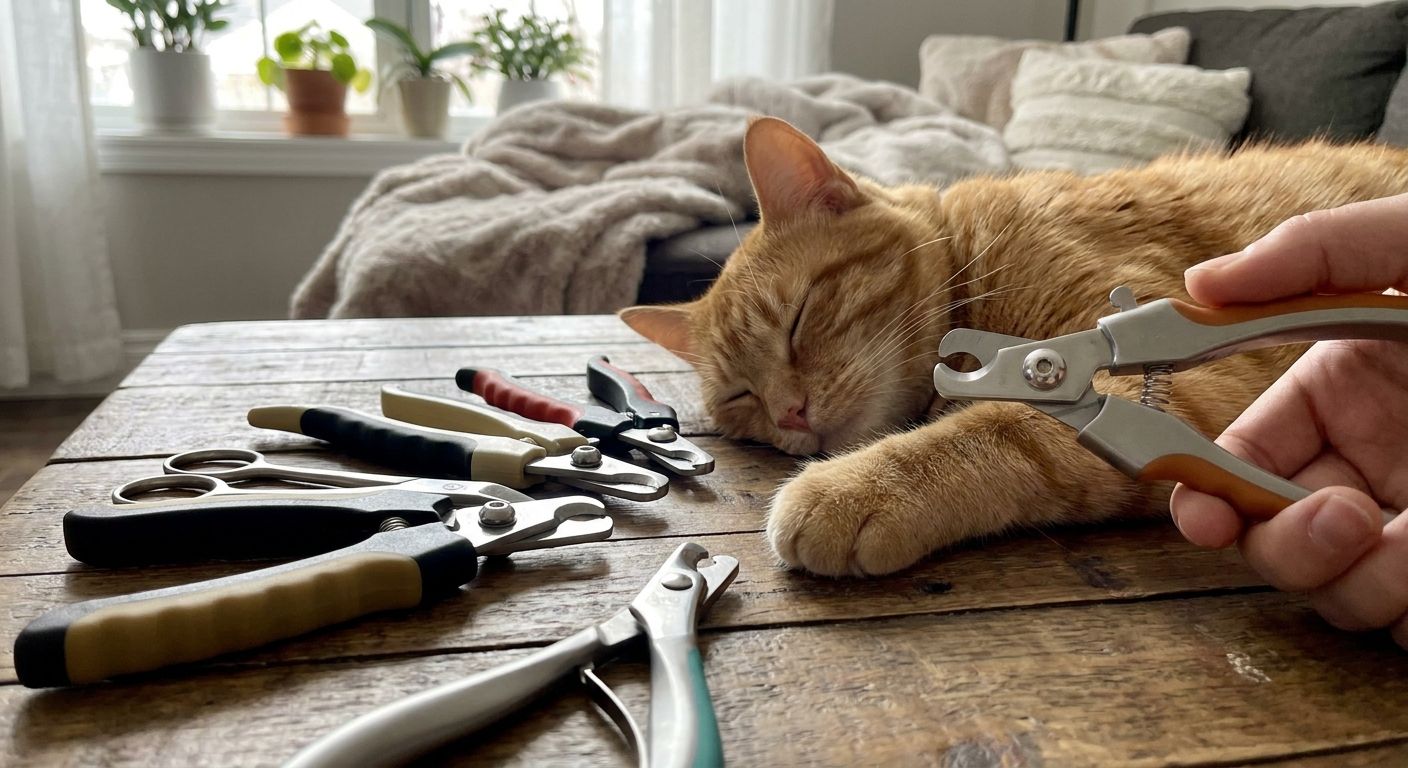
Guillotine-style clippers thread the claw through a hole and drop a single blade down in one motion. They work well on cats that already let you hold a paw steady for a couple of seconds without a fight.
Guillotine clipper pros:
- Quick, familiar single-motion action many owners have used before
- Widely available and simple to learn
Guillotine clipper cons:
- Hole size doesn't always suit slim or sharply curved claws
- A cat that pulls back mid-drop risks a partial or crushed cut
- Blade dulls faster than a single-piece steel design over repeated use
Best for: cats who already tolerate paw handling well. Verdict: Hold — try a wrap-and-snip combo first if your cat still pulls away.
4. Nail grinders: best for cats who startle at the snip sound
A rotary nail grinder files the claw down gradually instead of cutting it, which removes the sharp snapping sound some cats associate with fear. It's a slower process — several seconds of held paw per claw instead of one clean second.
Nail grinder pros:
- No cutting sound to trigger a sound-sensitive cat
- Gradual filing lowers the risk of catching the quick
- Smooths sharp edges after a trim
Nail grinder cons:
- Motor noise and vibration can spook cats just as much as a snip
- Takes noticeably longer per nail than a single-snip clipper
- Needs sustained stillness per claw, which is hard for a genuinely anxious cat
Best for: noise-sensitive cats who tolerate vibration better than sound. Verdict: Wait — test it during a calm moment before relying on it for a fully anxious cat.
5. Human nail clippers: best as an emergency backup only
Human nail clippers are flat and built for a straight nail edge, not the curved shape of a cat claw. They're fine in a pinch for one overgrown or broken nail, and that's the limit of what they're good for.
Human clipper pros:
- Already in most households, zero extra cost to try once
- Workable for a single emergency nail
Human clipper cons:
- Flat blade crushes rather than cleanly shears a curved claw
- No viewing window to judge where the quick sits
- Higher risk of splitting on thicker claws
Best for: a one-off emergency, never a regular routine. Verdict: Skip for anything beyond that.
How this list was ranked
Each tool was measured against the same six criteria set out above: blade sharpness, viewing window, noise level, restraint compatibility, grip, and claw-appropriate sizing. Tools that score well on cutting but fail on restraint — like a standalone clipper with no way to keep an anxious cat still — rank lower than a pairing that solves both halves of the problem.
“Snugly, not tightly - that's the whole idea behind trimming an anxious cat's nails.”
Which cat nail clipper should you choose?
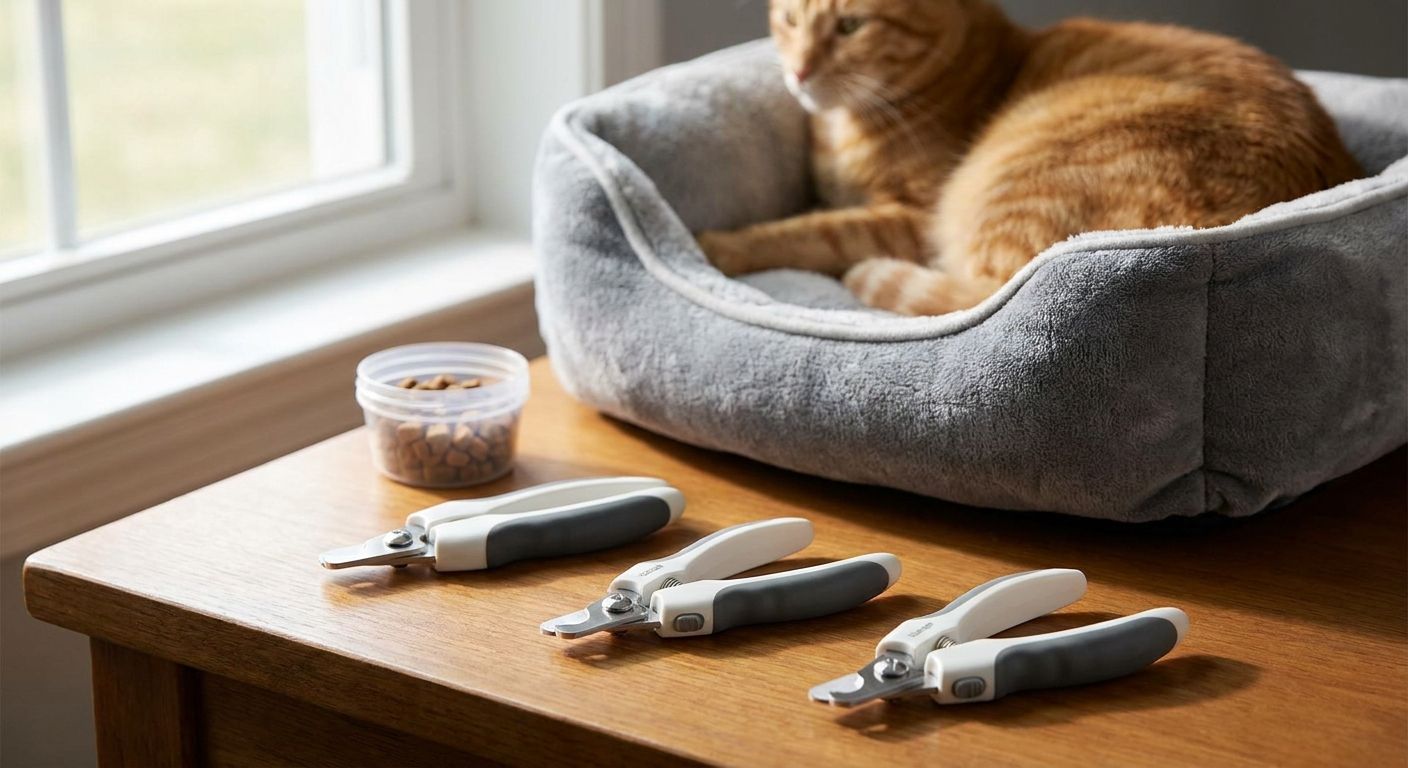
For most anxious cats in 2026, the Full Stainless Steel Cat Nail Clipper paired with the Snug Pro Cat Wrap is the safest default — one solves the cut, the other solves the fight. If your cat already tolerates paw handling calmly, a guillotine-style clipper is a reasonable step down. If the sound of a snip is what sets your cat off rather than the handling itself, try a nail grinder during a calm window before committing to it as your main tool. Reach for human nail clippers only when you're stuck with one broken nail and nothing else in the house.
If your cat also fights the towel-wrap step of a trim, a dedicated grooming bag built for stress-free nail trims is worth comparing against a wrap before you settle on your setup for 2026.
FAQ
What's the best cat nail clippers for anxious cats in 2026?
The Full Stainless Steel Cat Nail Clipper is the strongest all-round pick for 2026 because its 18mm wide-view blade allows a single clean snip. Pairing it with a restraint tool like the Snug Pro Cat Wrap solves the second half of the problem: keeping the cat still enough to use it.
Are guillotine or scissor-style clippers better for a nervous cat?
Scissor-style, single-piece steel clippers generally cut cleaner and faster, which matters more for anxious cats than clipper style alone. Guillotine clippers work fine once a cat already tolerates paw handling, but they crush more easily on slim or curved claws if the cat pulls back mid-cut.
How do I trim an anxious cat's nails without a fight?
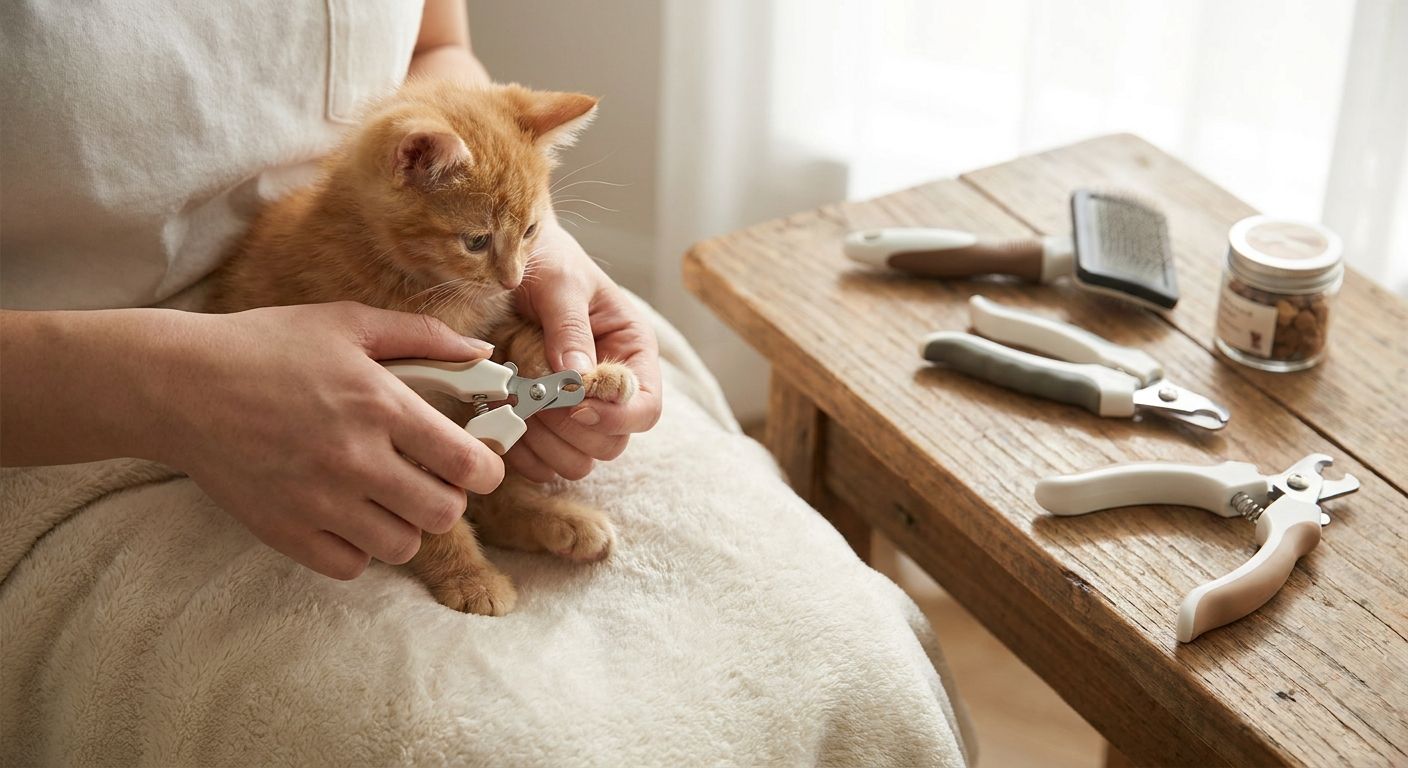
Restrain the body first with a wrap or towel so your hands are free to focus only on the paw and the clipper. Trim one or two claws per session rather than all ten, and stop the moment your cat starts struggling instead of pushing through.
Is a nail grinder less stressful than clippers for cats?
It depends on what specifically scares your cat. A grinder removes the snipping sound but introduces motor noise and vibration, which some cats find equally or more stressful than a quick clip.
Can I use human nail clippers on my cat?
Only as a one-off emergency for a single broken or overgrown nail. The flat blade shape crushes a cat's curved claw rather than shearing it cleanly, and there's no viewing window to judge the quick.
How often should an anxious cat's nails be trimmed?
Most indoor cats need a trim every three to four weeks, though anxious cats often do better with more frequent, shorter sessions covering fewer claws each time. Watch the claws themselves rather than the calendar — overly curved or clicking-on-the-floor nails mean it's time.
Does a cat wrap really help during nail trims?
Yes, for cats whose main issue is bolting or scratching rather than the cut itself. A wrap like the Snug Pro Cat Wrap frees both your hands for the clipper and lowers the chance of a scratch if the cat startles mid-snip.
What's the safest clipper for a kitten's first trim?
A single-piece steel clipper with a wide viewing window is safest for a first trim, since kitten claws are thin and the quick sits close to the surface. Trim one claw only in the first session and stop there, regardless of how the kitten reacts.
One last thing
Most anxious cats decide within their first two or three trims whether a tool is safe or scary, so the session where you get the first cut right matters more than the brand printed on the handle. A single-piece steel blade with a wide viewing window, used alongside a wrap that lets the cat leave on their own terms once you're done, gives you the best odds of that first session going well in 2026 and every one after it.