Brushing a cat's teeth every day is the frequency veterinary dentists point to for real plaque control, and three times a week is the floor below which brushing stops making much difference at all in 2026. The catch most guides skip: plaque hardens into tartar in roughly 3-5 days, so a toothbrush that only shows up once a week is cleaning teeth that already have tartar it can't remove.
- Daily brushing is the gold standard for cats in 2026, but 3x a week is the minimum that actually slows plaque.
- Plaque mineralizes into tartar in about 3-5 days, so a toothbrush can't undo buildup once it hardens.
- Kittens and cooperative cats tolerate daily brushing fastest; anxious or senior cats often need a slower build-up.
- How often should you brush a cat's teeth depends more on your cat's tolerance than on a fixed schedule.
- A calm hold matters as much as the brush itself when a cat resists having its mouth touched.
Why this matters
Cats don't get cavities the way people do, but they do get gingivitis, periodontal disease, and resorptive lesions that go undetected until a cat stops eating dry food or starts drooling. Brushing is the only home routine that physically removes plaque before it mineralizes, and frequency is the whole game here. A toothbrush used once a week is mostly cosmetic. A toothbrush used daily, or at minimum three times a week, actually interrupts the plaque cycle before it becomes tartar a vet has to scale off under anesthesia.
Most pawrents don't fail at brushing because of technique. They fail because the cat won't hold still long enough for the brush to touch more than two teeth, and the whole routine gets abandoned after a week. Frequency only works if the session itself is short and calm enough to repeat daily, not a wrestling match you dread.
How often should you brush a cat's teeth?
The honest answer scales with what you can realistically keep up, not with a single number pasted across every pet blog. Here's how the frequencies stack up against plaque control:
| Frequency | Plaque control | Realistic for most cats |
|---|---|---|
| Daily | Best possible outcome | Yes, once the cat is desensitized |
| 3-4x a week | Meaningful, minimum effective | Yes, good fallback goal |
| 1-2x a week | Minimal, close to no benefit | Common but under-effective |
| Wipes only, no brush | Removes surface debris, not plaque under the gumline | Fine as a bridge, not a replacement |
If daily brushing isn't happening yet, three to four times a week is the number worth building toward before you worry about anything else. Grooming wipes can wipe visible debris off a cat's face and coat, but they don't reach under the gumline where plaque actually starts, so they're a helper, not a substitute for the brush.
Daily brushing: the gold standard
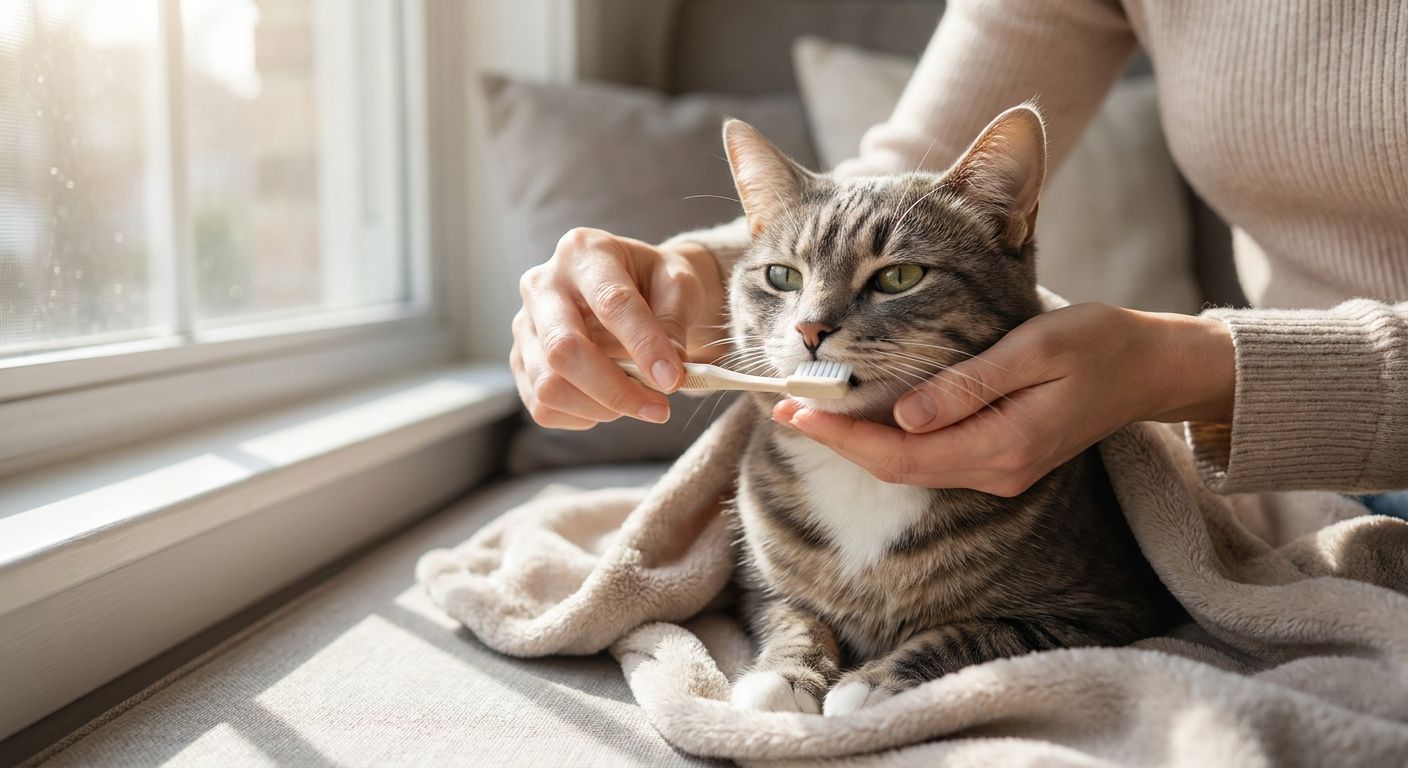
Daily is what veterinary dental guidance points to because plaque is soft and easy to remove for roughly the first day or two before it starts hardening. A cat brushed every day rarely builds enough tartar to need a professional scale between annual checkups. This is the frequency to aim for, but almost no cat starts here. Getting a cat to daily brushing usually takes a slow build from a finger rub on the gums to a few seconds with a finger brush, then a proper toothbrush, spread over several weeks of gradual desensitization. Rushing straight to a daily brush on a cat that's never had its mouth touched almost always ends the habit within a week.
3 times a week: the minimum effective frequency
Three times a week is the number worth remembering if daily feels unrealistic with your schedule or your cat's patience. Below this frequency, plaque has time to fully harden into tartar between sessions, and a brush can't scrape tartar off. Three sessions a week, spaced out rather than clustered on consecutive days, keeps most of the plaque cycle interrupted without demanding a perfect daily ritual. This is the floor, not the target — treat it as the minimum you're willing to accept, not the goal you're aiming for.
Once a week or less: not enough to stop tartar
Brushing once a week or less gives a cat's mouth roughly six days of untouched plaque buildup between sessions, more than enough time for it to mineralize into tartar the brush can no longer remove. This frequency still has value for a cat that tolerates nothing more, since any contact with the teeth and gums is better than none, and it keeps the cat used to having its mouth handled for the next vet visit. But don't expect it to meaningfully slow periodontal disease. If this is where a cat currently sits, the goal is climbing toward three times a week, not staying here indefinitely.
Why brushing frequency varies
The right frequency for one cat isn't the right frequency for another, and a few real factors decide where a specific cat lands:
- Age — kittens introduced early tolerate frequent brushing faster than adult cats meeting a toothbrush for the first time
- Existing dental disease — a cat with gingivitis already needs more frequent, gentler sessions, ideally alongside a vet's guidance
- Diet — wet-food-only cats tend to build plaque faster than cats on a dry-food component, which affects how forgiving a lower frequency is
- Temperament — an anxious or defensive cat needs shorter, more frequent micro-sessions rather than one long weekly attempt
- Handling history — cats used to being picked up, wrapped, or restrained for nail trims and vet visits generally accept mouth handling faster
- Owner consistency — the best frequency on paper is worthless if it isn't the one that actually happens week after week
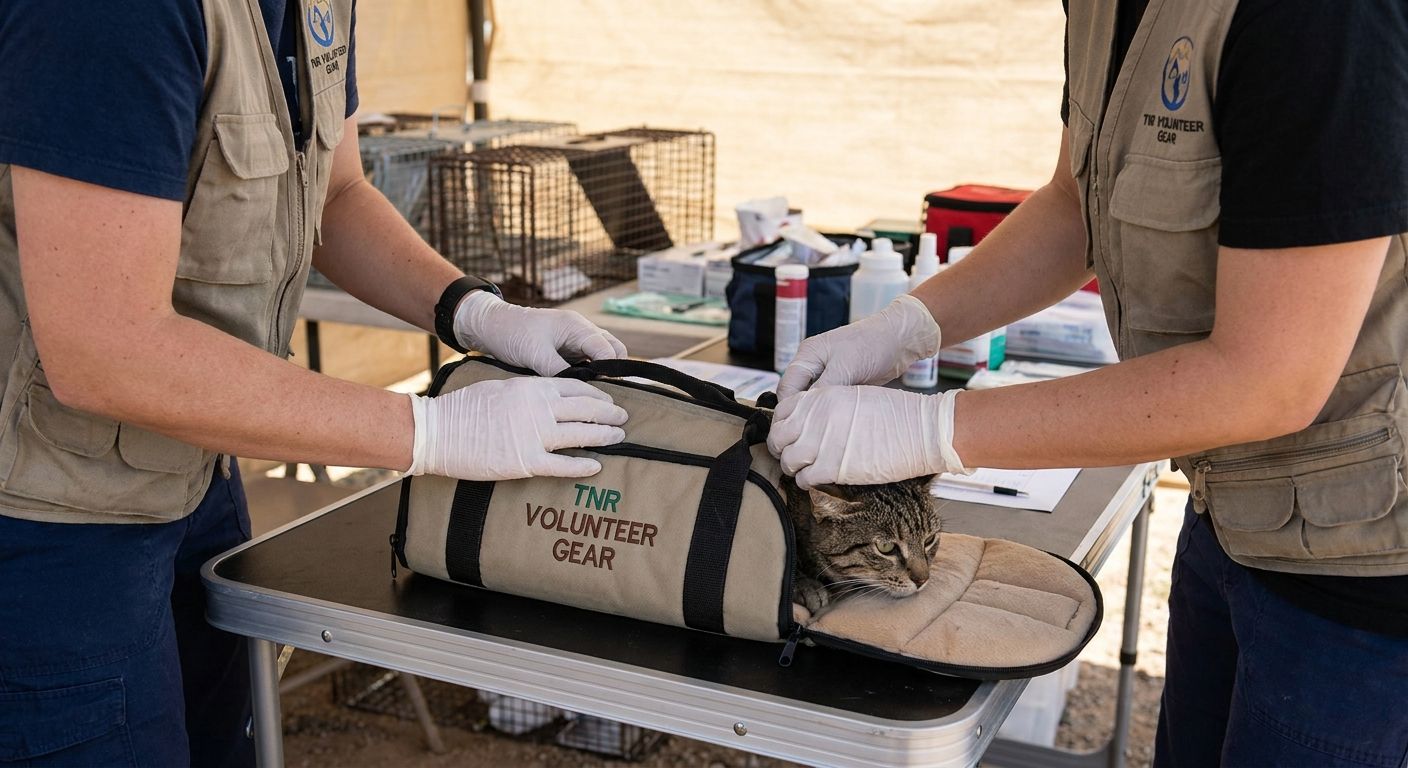
A cat that fights every attempt to open its mouth often isn't reacting to the brush itself — it's reacting to being pinned down. Some pawrents find a calmer hold, like a wrap that keeps paws snug without restricting the head, makes the difference between a cat that tolerates a quick brush and one that bolts the second the toothbrush appears. Grooming tools causing more stress than expected is a common reason cats resist brushing specifically, not because the routine itself is wrong.
If the cat needs more than 30 seconds of chasing before you get the brush near its mouth, the frequency you're aiming for is too ambitious for where the cat currently is.
Related questions
Can I brush my cat's teeth less than daily and still see benefits?
Three times a week is the lowest frequency that shows a real, measurable slowdown in plaque buildup, based on standard veterinary dental guidance followed in 2026. Below that, plaque has enough uninterrupted time to harden into tartar between sessions, so the benefit drops off sharply rather than gradually.
What happens if I never brush my cat's teeth?
A cat that never has its teeth brushed relies entirely on diet, chew toys, and annual vet cleanings to manage plaque, which usually isn't enough on its own. Most cats without any home dental routine develop tartar and gum inflammation by middle age, and some need professional dental cleanings more than once a year to catch up.
Is brushing better than dental treats or water additives?
Brushing is more effective than dental treats or water additives because it physically removes plaque rather than relying on chewing action or additives to reduce it chemically. Treats and additives work best as a supplement alongside brushing, not as a replacement for it, especially for cats prone to fast plaque buildup.
Is my senior cat too old to start brushing?
A senior cat is rarely too old to start, though at-home grooming for senior cats needs a gentler pace and shorter sessions if arthritis or existing dental disease is involved. Starting later just means the desensitization phase takes longer, not that brushing is off the table.
FAQ
How often should you brush a cat's teeth?
Daily is the vet-recommended frequency for the best plaque control in 2026, with three times a week as the realistic minimum that still slows tartar buildup. Anything less than three sessions a week gives plaque enough time to harden before the next brushing.
Is it OK to brush a cat's teeth once a week?
Once a week is better than never but sits below the frequency needed to meaningfully control plaque, since plaque hardens into tartar within about 3-5 days. It's a reasonable starting point while working up to three or more sessions a week.
How long does it take to get a cat used to tooth brushing?
Most cats need several weeks of gradual desensitization before accepting a full toothbrush, starting with a finger rub on the gums and building up slowly. Rushing this phase is the main reason brushing routines get abandoned early.
Can dental treats replace brushing?
Dental treats reduce plaque somewhat through mechanical chewing action but don't remove it the way a toothbrush does, so they work best alongside brushing rather than instead of it. Cats prone to fast tartar buildup usually need both.
Do kittens need their teeth brushed?
Kittens benefit from early exposure to mouth handling even before all their adult teeth come in, since it makes daily brushing far easier to establish later. Starting the habit young is the single biggest factor in whether a cat tolerates lifelong brushing.
What signs mean a cat needs a vet dental check instead of just brushing more?
Bad breath, drooling, pawing at the mouth, or dropping food while eating are signs that go beyond what home brushing can fix and need a vet dental check. Brushing prevents future buildup; it doesn't treat existing gum disease or resorptive lesions.
One last thing
The frequency debate matters less than most guides make it sound — a cat brushed three calm times a week beats a cat brushed daily through a fight, because the fighting cat's owner quits within a month. If a cat won't stay still long enough for a brush near its mouth, the fix usually isn't a better toothbrush, it's a calmer hold; a snug wrap that keeps paws and body still without restricting the head is what turns a wrestling match into a routine. Purrttie's Snug Pro Cat Wrap was built for exactly that kind of restraint-free handling during nail trims and vet visits, and the same calm-hold principle carries over to teeth brushing sessions.