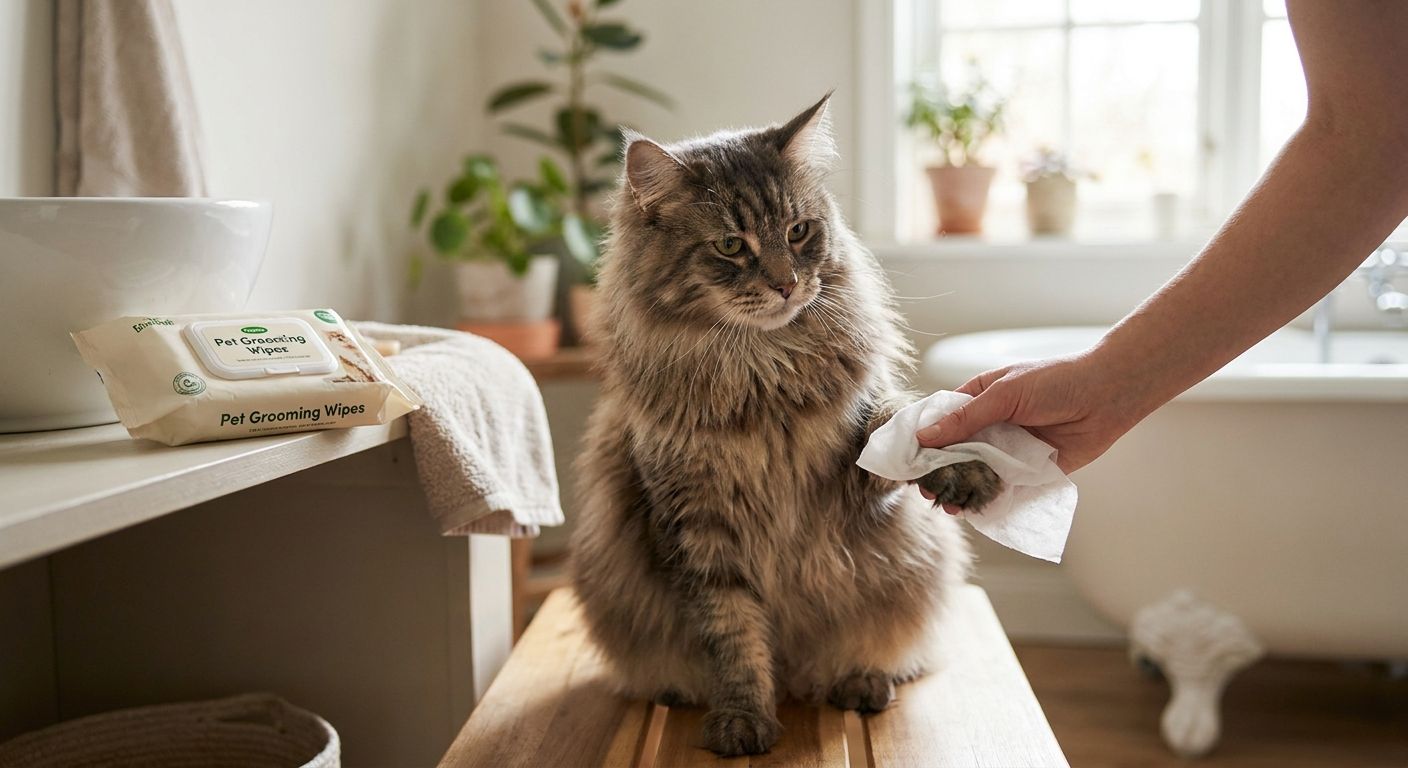
Grooming wipes handle most of the coat upkeep a healthy cat needs between full baths, but they cannot replace bathing entirely. Wipes lift surface dirt, litter dust and light odor; they do not cut through matted fur, oily coats or flea dirt the way water and shampoo do. Cats already manage a large share of their own coat care through self-grooming, spending roughly 30 to 50% of their waking hours licking and smoothing fur, so wipes are topping up a job the cat is mostly already doing. Reach for Purrttie grooming basics for the daily wipe-downs and save the tub for the situations wipes genuinely can't handle.
- Grooming wipes cannot replace bathing a cat, but they cover 80-90% of routine coat maintenance between baths.
- Wipes remove surface dirt and odor; only water and shampoo lift oil, matting and flea dirt.
- Cats self-groom for 30-50% of their waking hours, which is why full baths stay rare for most healthy cats in 2026.
- Senior, arthritic or medically compromised cats often do better with wipes than with the stress of a bath.
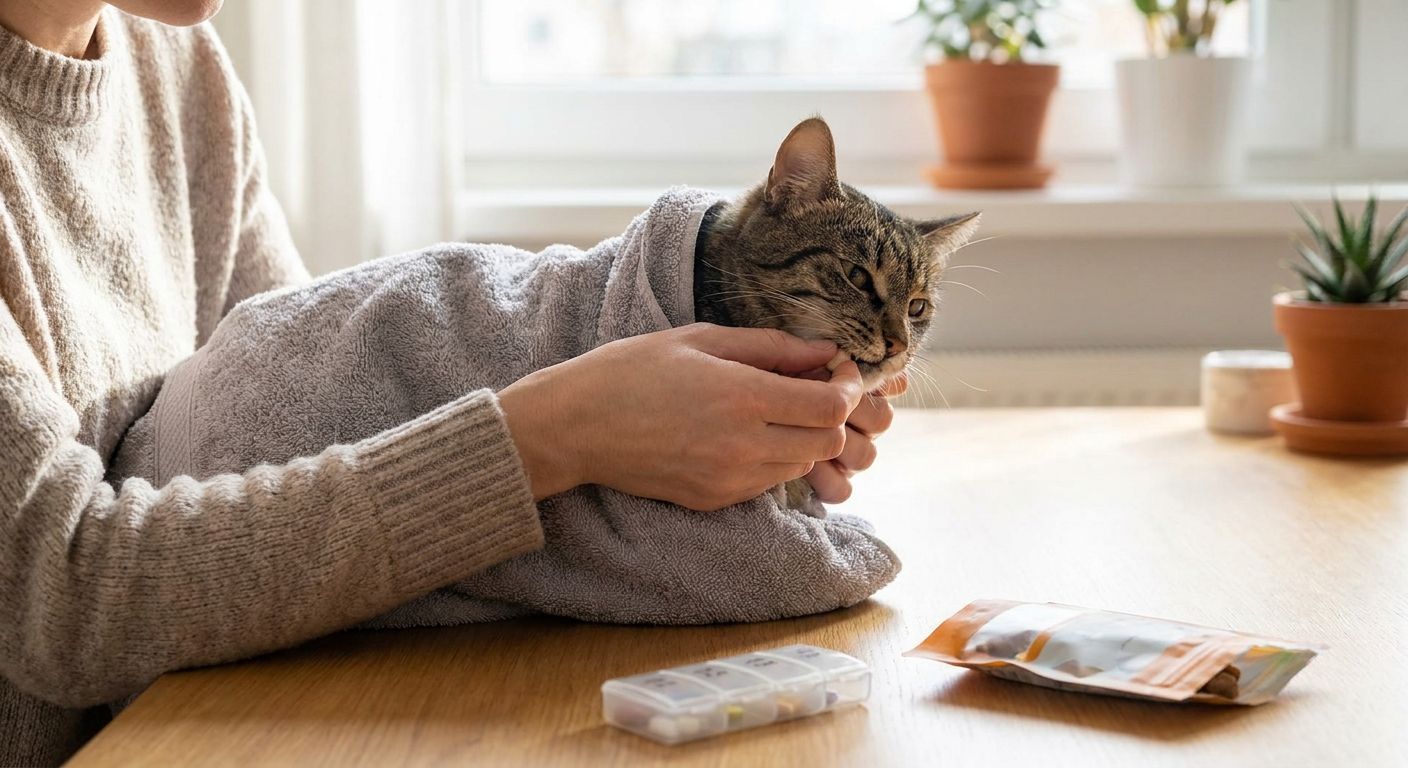
- Anxious cats groom more calmly when handled correctly, which is where a cat wrap earns its keep.
Why this matters
Most pawrents don't ask this question out of curiosity. They ask it because their cat hates the bath, or because a groomer suggested wipes as an easier alternative, or because they're trying to figure out if they can skip an unpleasant chore entirely. The honest answer is: sometimes yes, sometimes no, and getting it wrong in either direction causes real problems. Over-bathing strips a cat's natural oils and dries the skin; under-bathing when a cat genuinely needs water leaves grease, allergens or flea dirt sitting in the coat for weeks.
Can grooming wipes replace bathing a cat?
No, not for every scenario. Here's how the two methods stack up against the jobs a cat's coat actually needs done.
| Task | Grooming wipes | Full bath |
|---|---|---|
| Surface dirt and dust | Handles it well | Overkill for this alone |
| Litter tracking on paws/belly | Handles it well | Not necessary |
| Light odor control | Handles it well | Effective but excessive |
| Matted or tangled fur | Cannot fix | Required, often with a comb first |
| Flea dirt or active infestation | Cannot fix | Required with a flea-safe shampoo |
| Oily or greasy coat (common in senior cats) | Cannot fix | Required |
| Skin conditions needing medicated shampoo | Cannot fix | Required, vet-directed |
Verdict: grooming wipes are the right daily and weekly tool for most cats in 2026, and a full bath is the right tool only when the coat has a problem wipes physically cannot solve.
When wipes are genuinely enough
A cat that's indoor-only, short-haired, and in good health rarely needs a bath at all. Self-grooming plus the occasional wipe-down covers nearly everything that coat will encounter. Wipes are also the better call for:
- Cats recovering from surgery or illness who can't tolerate the stress of standing water
- Senior cats with joint pain who struggle to balance in a tub
- Kittens too young for a full bath but still tracking litter or formula residue
- Quick clean-ups before vet visits or guests, where a full bath isn't practical on short notice
When only a bath will do
Wipes stop being useful the moment the coat problem is structural rather than surface-level. Matting needs to be worked out with water and a comb, not wiped over. Fleas need a shampoo formulated to kill them, not a scented cloth. Anything oily enough that it clings after a wipe pass, usually seen in older cats who've slowed down on self-grooming, needs actual washing to fully lift.
Why the need for a bath varies from cat to cat
- Coat length and density: long-haired breeds trap more debris and mat faster than short-haired cats, pushing them toward more frequent baths
- Age and mobility: senior cats often self-groom less effectively and build up oil faster, but also tolerate baths worse
- Health status: skin conditions, flea infestations or post-surgical care can require medicated bathing regardless of coat type
- Indoor vs outdoor access: outdoor cats pick up dirt, parasites and odors that wipes were never designed to fully remove
- Anxiety level: a cat that panics in water may do better with more frequent wipe-downs and less frequent, carefully managed baths
- Existing grooming routine: cats used to regular brushing and wiping build up less debris between baths than cats groomed rarely
For cats where the anxiety factor is the real barrier, the handling matters as much as the method. A Snug Pro Cat Wrap keeps the cat gently held during a wipe-down or the rare bath, which cuts down the struggle that makes both pawrents and cats dread grooming day. Products like this don't change whether a cat needs water, but they change how much of a fight it takes to get there.
Is bathing a cat safe for senior or arthritic cats?
Bathing can be safe for senior cats in 2026, but it needs adjustments most pawrents skip: non-slip surfaces, lukewarm water only, and a shorter session than you'd give a younger cat. Wipes are frequently the safer default for arthritic cats since standing and balancing in a tub puts direct strain on painful joints. Read the full breakdown on at-home grooming for senior cats before deciding which method fits your cat's mobility.
Do grooming tools cause more stress than a professional groomer would?
Grooming tools cause more stress than a groomer mainly when the handling is rushed or the cat is restrained too tightly, not because the tools themselves are the problem. A calm, slow approach at home with the right equipment produces less stress than transporting an anxious cat to a stranger's table. The full comparison of grooming tools versus professional groomers walks through where each option actually wins.
How often should a cat get a full bath if wipes are used regularly?
Most healthy indoor cats using wipes regularly need a full bath only occasionally, and some healthy adult cats may never need one outside of a medical reason. Outdoor cats, long-haired breeds, and cats with skin conditions need baths more often regardless of how consistently wipes are used in between.
FAQ
Can grooming wipes replace bathing a cat entirely?
No, grooming wipes cannot replace bathing a cat entirely. Wipes handle surface dirt and odor between baths, but matting, fleas and greasy coats still need water and shampoo.
How often should you bathe a cat if you use wipes regularly?
Cats using wipes regularly usually need a full bath only occasionally, and healthy short-haired indoor cats may go long stretches without one. Long-haired, outdoor, or medically compromised cats need baths more often regardless of wipe use.
Are grooming wipes safe for kittens?
Grooming wipes are generally gentler than a full bath for young kittens, since kittens can lose body heat quickly in water. Check the wipe's ingredient list for anything scented or alcohol-based before using it on a kitten.
Do grooming wipes work on cats with fleas?
Grooming wipes do not treat fleas or flea dirt effectively. A flea infestation needs a shampoo or treatment formulated to kill fleas, not a surface wipe.
Can you use baby wipes instead of cat grooming wipes?
Baby wipes are not recommended for cats because many contain fragrances, alcohol or ingredients that irritate feline skin. Cat-specific wipes are formulated without the ingredients that cause reactions in cats.
Is bathing a cat more stressful than wiping?
Bathing is generally more stressful than wiping for most cats, since standing water and restraint trigger a stronger anxiety response than a quick wipe-down. Gentle handling and gradual introduction reduce that stress for both methods.
Do long-haired cats need more baths than wipes can handle?
Long-haired cats need more full baths than wipes alone can handle, because dense coats mat and trap debris faster than wipes can clear. Regular brushing between baths reduces how often the bath is actually needed.
What's the difference between grooming wipes and dry shampoo for cats?
Grooming wipes physically remove dirt and debris from the coat surface, while dry shampoo absorbs oil without water. Neither replaces a full bath when the coat needs a deep clean rather than surface maintenance.
One last thing
The detail most pawrents miss: the fight isn't usually about water, it's about restraint. Cats that tolerate wipes calmly often panic at a bath purely because of how they're held, not because of the water itself. Fixing the handling before the next bath attempt, rather than avoiding baths altogether, solves more grooming problems than switching products ever will.