A cat takes 7 to 14 days of short, positive sessions to get used to a restraint wrap for nail trims, medication, or vet visits, though a naturally calm cat can accept it in a single sitting and a fearful or senior cat can take 4 to 6 weeks in 2026. The number that matters more than the calendar is session count, not days passed — three brief 60-second sessions a day get a cat comfortable faster than one wrap attempt a week for a month straight.
- Most cats adjust to a restraint wrap within 7 to 14 days of short, positive sessions in 2026.
- Session frequency beats calendar time — three 60-second reps a day work faster than one weekly attempt.
- Kittens often accept a wrap like the Snug Pro Cat Wrap in under a week; fearful or senior cats can take 4 to 6 weeks.
- Letting the cat exit on their own terms during early sessions cuts struggle time and speeds acceptance.
Why this matters
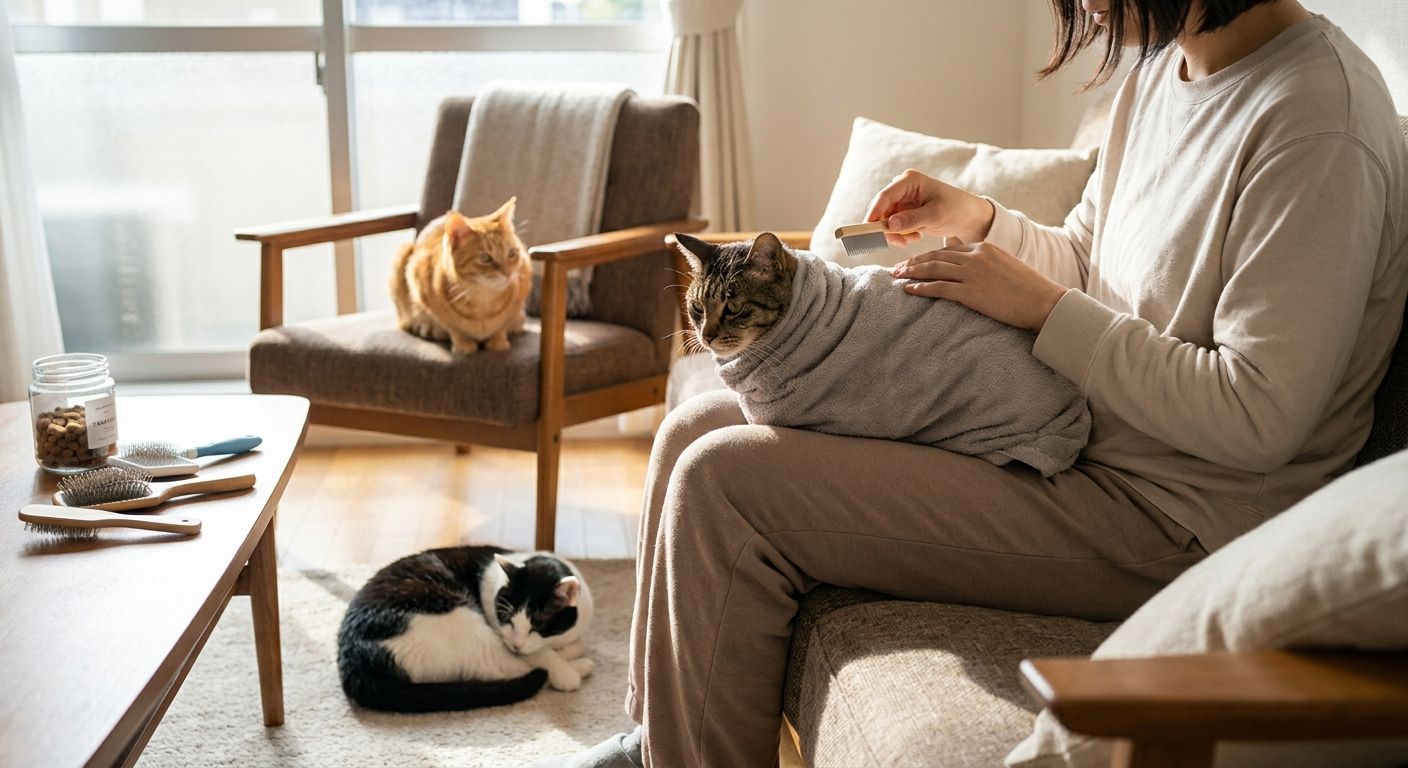
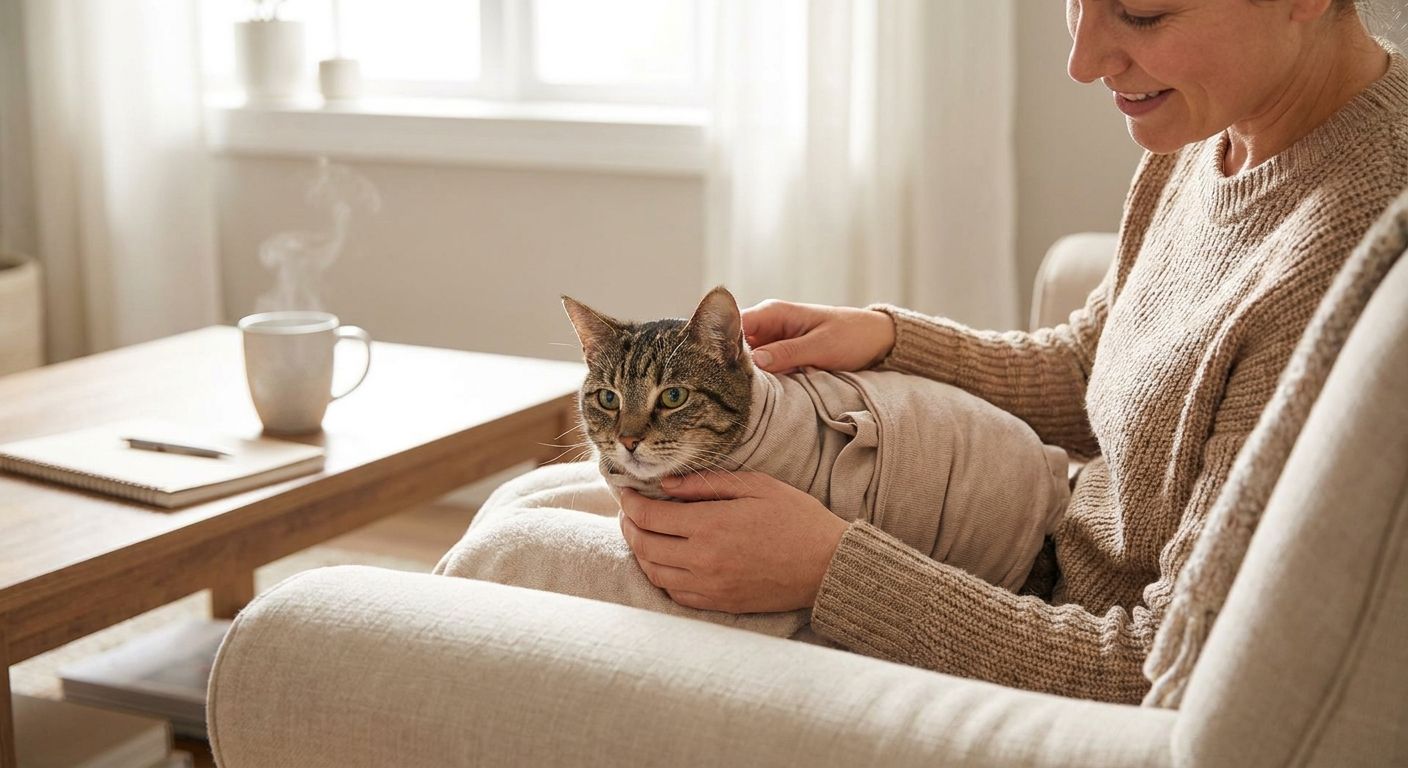
A cat that fights the wrap every time is a cat that gets harder to grab for nail trims, meds, or the carrier before a vet visit — the stress compounds instead of fading. The goal of a restraint wrap in 2026 isn't to overpower a cat, it's to give them a predictable, snug (not tight) space they stop associating with a chase. That distinction is the same one covered in detail on desensitizing a cat to grooming — wraps follow the same behavior-science timeline as clippers, brushes, and grooming gloves. Less hisses, more kisses starts with how the first ten sessions go, not how strong the fabric is.
How long does it take for a cat to get used to a restraint wrap?
Most cats move through five stages, and rushing any of them adds days back onto the total timeline:
- Days 1-2: sniff and rub, zero pressure. Leave the folded wrap near the food bowl or bed and reward any voluntary contact with a treat.
- Days 2-4: drape, don't wrap. Lay the open wrap loosely over the cat's back for 10-20 seconds, then remove it and reward immediately.
- Days 4-7: loose wrap, short hold. Wrap around the body for under a minute with the head free, then release before the cat struggles.
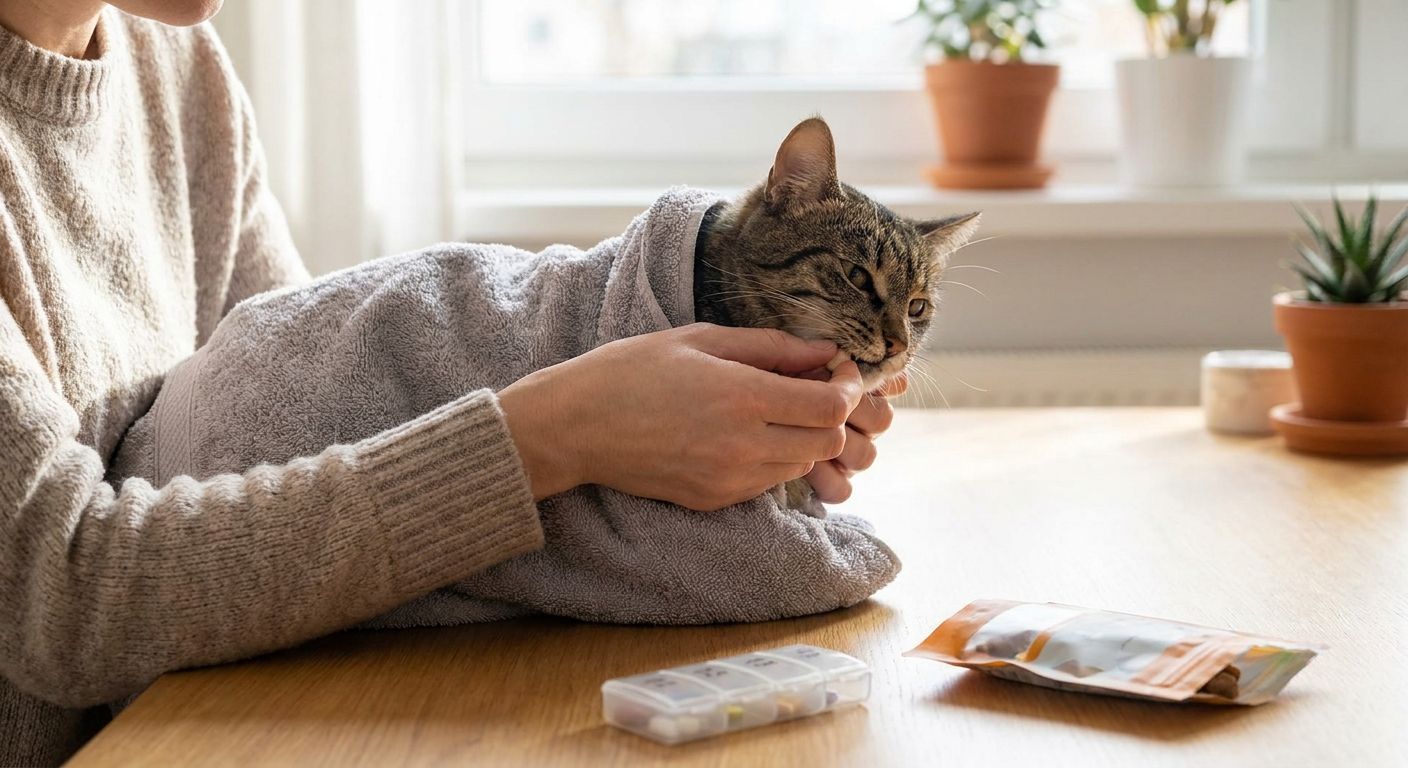
- Days 7-10: full snug hold. Wrap it fully for one real nail trim or medication attempt, staying under two minutes.
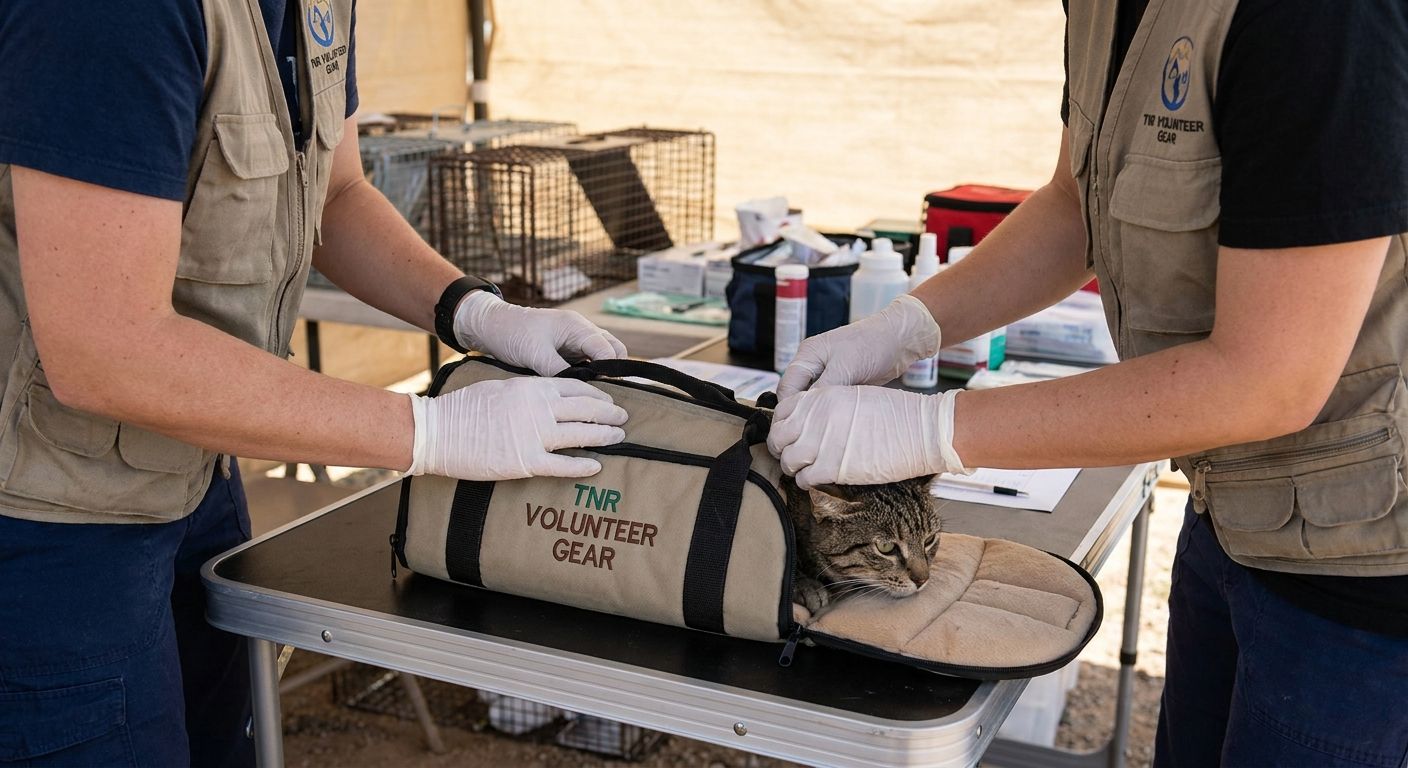
- Days 10-14: repeat and lock in. Run the full routine 2-3 more times before the actual vet visit or grooming day so the cat isn't meeting the wrap and the stressful task at the same time.
Skipping straight to step 4 on day one is the single biggest reason owners report a cat "never gets used to it" — the cat never had a chance to file the wrap under safe.
Calm or food-motivated cats: 3 to 5 days
A cat that already tolerates being picked up and takes treats readily can move through steps 1-4 in 3 to 5 days. Best for: food-driven cats with no history of grooming trauma.
Average adult cats: 7 to 14 days
Most adult cats without strong prior fear of handling land in the 7 to 14 day range described above. Best for: the typical household cat with routine but not frequent grooming needs.
Fearful, reactive, or senior cats: 4 to 6 weeks
Cats with a history of bad vet trips, or seniors with joint pain who dislike being held, often need 4 to 6 weeks, moving through each step in smaller increments and repeating steps rather than advancing. Best for: cats already flagged as high-stress by a vet — check is at-home grooming safe for senior cats before starting the wrap routine with an older cat.
Kittens under 6 months: 2 to 5 days
Kittens with less handling history to unlearn generally accept a wrap in 2 to 5 days if sessions start before 4 months of age. Best for: new kitten owners building nail-trim habits early rather than fixing fear later.
Why the timeline varies
- Prior handling history — a cat previously scruffed or restrained hard at a vet clinic starts from a fear baseline, not a neutral one.
- Session consistency — daily short reps beat sporadic long ones every time.
- Fit of the wrap — snugly, not tightly; a wrap that's too loose lets the cat slip a paw free and escalate the struggle, which resets progress.
- Reward quality — a treat the cat only gets during wrap sessions works faster than kibble available all day.
- Household stress load — multi-cat homes with territorial tension often need longer sessions spaced further apart.
- Whether the cat is allowed to leave — ending a session the moment the cat wants out, even before the task is done, builds trust faster than finishing the trim at the cost of a fight.
Can a cat get used to a restraint wrap after a bad first experience?
Yes — a cat can recover from a bad first wrap session, but expect the timeline to stretch to the 4 to 6 week range even if the cat is otherwise calm. Go back to step 1 (sniff and rub, zero pressure) for at least three days before attempting any hold, and skip the actual nail trim or medication until the cat is relaxed with a 60-second wrap and release.
Does age affect how fast a cat adjusts to a wrap?
Age affects the timeline directly: kittens often adjust in 2 to 5 days while senior cats can take 4 to 6 weeks. Older cats frequently carry more handling history (good or bad) and may have joint pain that makes any hold feel worse, so sessions should run shorter and slower for seniors than the standard 14-day plan.
How many sessions does it take before a cat stops struggling?
Most cats stop actively struggling within 10 to 15 total sessions when those sessions run daily and stay under two minutes each. A cat still fighting after 20+ sessions usually needs the process restarted at step 1 with smaller increments rather than more repetitions of the same failing step.
For the actual nail-trim and medication moments the wrap is built for, the Snug Pro Cat Wrap is designed around this same gradual-hold philosophy — snug, not tight, with the cat able to leave on their own terms once a session ends.


FAQ
How long does it take for a cat to get used to a restraint wrap?
Most cats take 7 to 14 days of short, daily sessions in 2026, though calm cats may adjust in 3 to 5 days and fearful or senior cats can take 4 to 6 weeks. Session frequency matters more than total elapsed days.
Is it cruel to use a restraint wrap on a cat?
A wrap used snugly, not tightly, with the cat free to leave once a session ends is a handling tool, not a punishment. Skipping the gradual introduction and wrapping a struggling cat tightly for a full task on day one is what causes the negative association owners worry about.
Can kittens use a restraint wrap?
Kittens under 6 months often accept a wrap in 2 to 5 days because they carry less handling history to unlearn. Starting the routine before 4 months of age builds a habit that makes adult nail trims far easier.
What if my cat still struggles after two weeks?
A cat still fighting past the standard 7 to 14 day window usually needs smaller steps, not more repetitions of the same one. Go back to a shorter, looser hold and rebuild from there rather than pushing through to the full task.
Should I use the wrap for every vet visit?
Yes, once a cat is used to the wrap, using it consistently for every vet visit, nail trim, or medication keeps the association stable instead of resetting it each time. Inconsistent use is one of the factors that stretches the adjustment timeline.
Does the size or fit of the wrap change how fast a cat adjusts?
Fit matters directly: a wrap that's too loose lets a paw slip free and restarts the struggle cycle, while one that's snug and correctly sized shortens the adjustment window. Snug, not tight, is the standard to aim for at every stage.
Can two people speed up the process?
A second person can help with treats or distraction during early sessions, but the core timeline of 7 to 14 days is driven by repetition and consistency, not extra hands. Rushing steps with more people involved usually adds stress rather than removing it.
One last thing
The cats that adjust fastest aren't the calmest ones — they're the ones whose owners stop the session the moment the cat wants out, even mid-task. That single habit, more than treat type or wrap brand, is what separates a 7-day adjustment from a 6-week one.