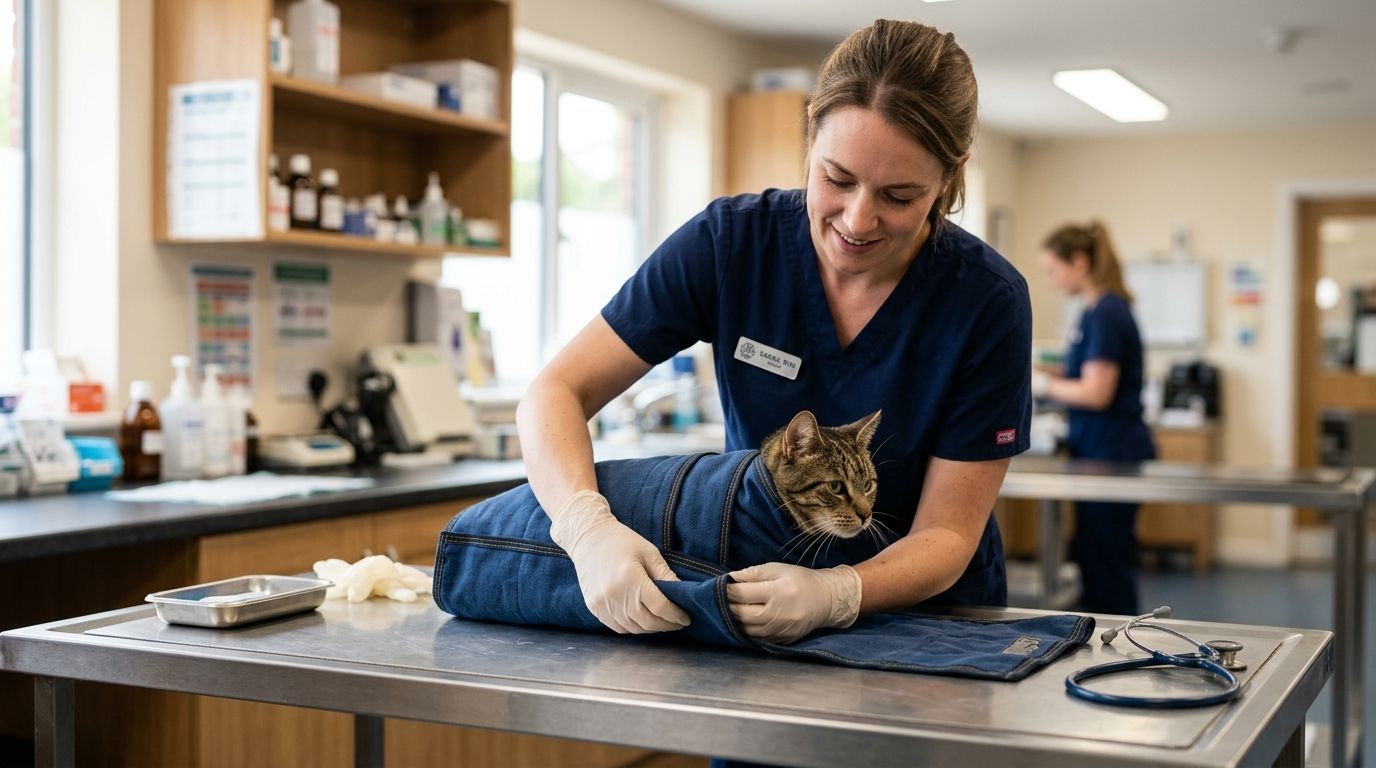
Veterinary nurse cat restraint wraps are fabric or vinyl wraps that immobilize a cat's body and legs while leaving the head free, with the aim of cutting exam, blood draw and treatment time without adding stress for the patient or the team. A clinic wrap has to survive back-to-back appointments, different cat sizes, and staff who didn't do the fold themselves — that's a different bar than a wrap bought for one cat at home.
- A cat restraint wrap for veterinary nurses should fold in under 15 seconds and expose one limb without releasing the whole cat.
- The Snug Pro Cat Wrap uses a flexible fabric build suited to nail trims, injections and short exams in 2026 clinic settings.
- Restraint bags give firmer full-body hold for x-rays; wraps give faster access for quick procedures — pick by task, not habit.
- Reading stress signals during the wrap matters more than the wrap itself for repeat visits and staff safety.
Why cat restraint wraps matter for veterinary nurses
Nurses handle more cats per shift than any groomer or pet parent ever will, and each cat arrives with a different temperament, pain tolerance and prior handling history. A wrap that takes 40 seconds to apply correctly adds up fast across a full appointment book in 2026, and a wrap that lets a limb slip loose mid-injection turns into a bite risk.
The best cat restraint bags for vet visits solve a different problem than a wrap — full-body containment for imaging or sedation — while a wrap is built for quick, targeted access during routine handling. Knowing which tool fits which task is the actual skill; the fabric is secondary.
Assess the cat before reaching for a wrap
Not every cat needs full restraint, and reaching for a wrap on a calm cat can trigger the exact stress response you're trying to avoid.
- Watch ear position and pupil dilation before touching the cat
- Note if the cat is already tense from carrier transport or a long waiting room stay
- Check the chart for prior restraint notes from earlier visits
- Try the least restrictive method first — a towel drape or gentle scruff hold
- Reserve the wrap for procedures needing limb isolation, not as a default first step
Match the wrap style to the procedure
A nail trim needs one paw exposed. A blood draw needs a foreleg free with the rest of the body still. A vaccine needs a scruff and shoulder area accessible. These are not the same wrap technique.
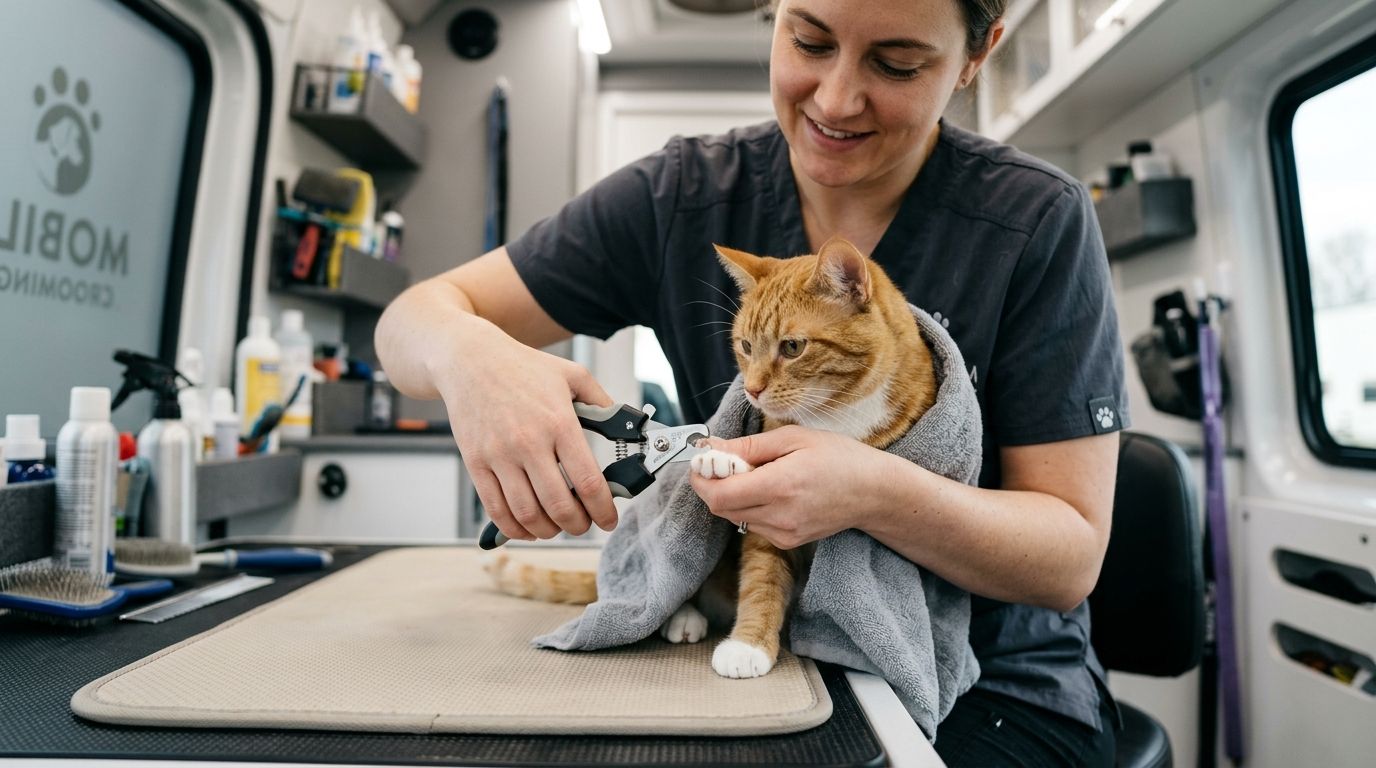
- Use a loose partial fold for quick paw or ear access
- Use a fuller wrap with the front legs tucked for injections
- Leave the head and neck completely uncovered at all times
- Adjust fold tightness by cat size — a kitten needs less fabric tension than an adult
- Cross-check technique against the complete guide to giving a cat medication alone using a restraint wrap if oral meds are part of the visit
Practice the fold outside of appointments
The fold that looks simple in a photo falls apart in real time with a cat actively resisting. Muscle memory matters more than reading a diagram once.
- Run the fold on a stuffed toy or willing staff volunteer during a slow shift
- Time yourself — under 15 seconds is the workable benchmark for a busy clinic day
- Practice both a left-limb and right-limb exposure fold, not just one direction
- Train every new hire on the fold before their first solo appointment
- Repeat the fold monthly even for experienced staff — technique drifts without practice
Expose only the area you need
The entire point of a restraint wrap over a full-body bag is partial exposure. Wrapping a cat fully when you only need one paw defeats the purpose and adds unnecessary stress.
- Confirm which limb or area the procedure needs before you fold
- Leave the non-working side snug but not restrictive
- Reposition rather than re-wrap when you need a second limb
- Keep the head and chest free for breathing comfort and visual monitoring
- Loosen immediately once the procedure step is done, even mid-appointment
Watch for stress signals mid-wrap
A wrap that's correctly applied can still turn into a struggle if the cat's stress escalates and nobody catches it early.
- Flattened ears and a stiff tail are early warning signs, not late ones
- Vocalizing changes — a low growl before a hiss — mean stop and reassess
- A cat that goes suddenly still and quiet can be shutting down, not calming down
- Loosen the wrap and pause rather than pushing through resistance
- Log the cat's response in the chart so the next nurse knows what worked
Clean, dry and rotate wraps between patients
Clinic wraps see far more use than a home wrap, and hygiene failures here are a real infection-control issue, not a cosmetic one.
- Wipe or wash the wrap between every patient, not just visibly soiled ones
- Keep at least two wraps in rotation so one is always dry and ready
- Check fabric and closures for wear monthly — fraying velcro loses grip fast
- Store wraps flat, not folded tight, to preserve elasticity long-term
Comparing restraint options for clinic use
| Option | Best for | Key limitation |
|---|---|---|
| Snug Pro Cat Wrap | Nail trims, injections, short exams needing one limb free | Not built for full sedation-level containment |
| Full-body restraint bag | X-rays, blood draws needing total immobilization | Slower to apply than a partial wrap |
| Bath towel burrito | Quick, low-stress cats with minimal handling history | Loosens easily under real resistance |
| Muzzle (paired with wrap) | Bite-prone cats during any of the above | Adds a second handling step, not standalone |
The cat grooming kits for veterinary clinics guide breaks down how wraps fit into a broader clinic toolkit alongside clippers and grinders, which matters if nail trims are bundled into the same visit.


The Snug Pro Cat Wrap is built for the exam-room pace veterinary nurses actually work at in 2026 — quick fold, one limb exposed, head always free.
Common mistakes veterinary nurses make with restraint wraps
- Wrapping tighter when a cat resists, which raises panic instead of calming it — loosen and pause instead
- Using the same fold for every procedure, ignoring that a blood draw and a nail trim need different exposure
- Skipping the temperament check and defaulting straight to full restraint on a cat that only needed a towel drape
- Letting velcro or fabric wear go unchecked until it fails mid-procedure, which is a safety issue, not just a maintenance one
- Not logging what worked in the chart, forcing the next nurse to re-learn the same cat's handling preferences from scratch
FAQ
What's the best cat restraint wrap for veterinary nurses in 2026?
The Snug Pro Cat Wrap works well for nail trims, injections and short exams because it exposes one limb while keeping the head free. For full-body containment during imaging, a dedicated restraint bag is the better tool.
Is a cat restraint wrap the same as a towel burrito?
No — a towel burrito is an improvised version of the same idea but loosens faster under real resistance. A purpose-built wrap holds its fold longer during active procedures.
How long does it take to learn the wrap technique?
Most staff get comfortable with the fold within a few practice sessions, with under 15 seconds being the workable benchmark for a busy clinic day in 2026. Regular practice on non-patient subjects speeds this up.
Can one wrap be used across multiple cats in a shift?
Yes, but it needs cleaning between every patient, not just visibly soiled ones. Clinics running high patient volume should keep at least two wraps rotating so one is always dry.
Do restraint wraps work on anxious or bite-prone cats?
A wrap alone may not be enough for a bite-prone cat — pairing it with a muzzle is standard practice for that risk level. For simply anxious cats, a wrap combined with a slower approach usually works without a muzzle.
What's the difference between a restraint wrap and a restraint bag?
A wrap exposes a specific limb or area while keeping most of the cat's body loosely secured, ideal for quick procedures. A restraint bag fully contains the cat for higher-risk handling like x-rays or sedation prep.
Do kittens need the same wrap technique as adult cats?
Kittens need less fabric tension and a lighter fold since their bodies are smaller and more flexible. Using an adult-strength fold on a kitten risks over-restricting a body that doesn't need it.
One last thing
The fold matters less than the pause. Clinics that build in a five-second check — ears, tail, breathing — before tightening any wrap report fewer struggle incidents than clinics that focus purely on technique speed. Speed matters for appointment volume in 2026, but the read on the cat is what actually prevents the bite.