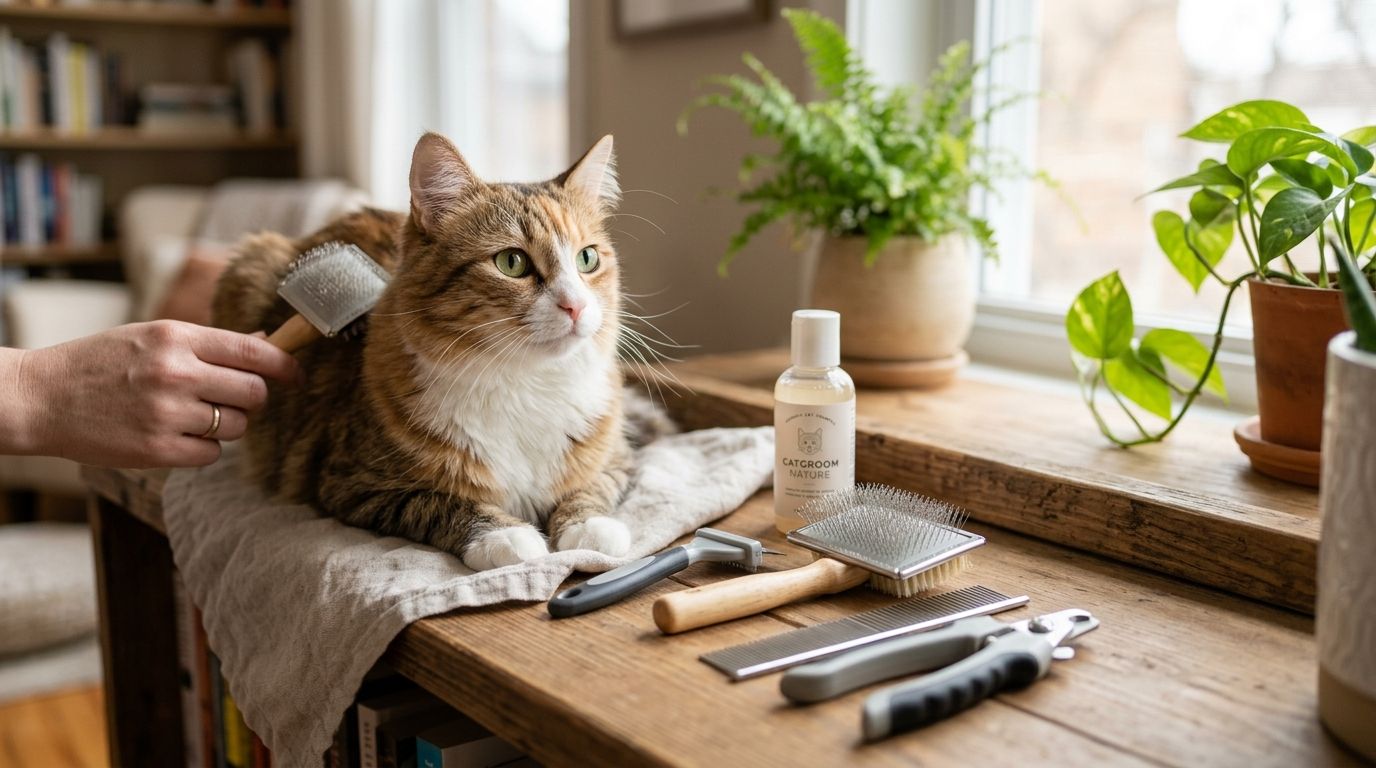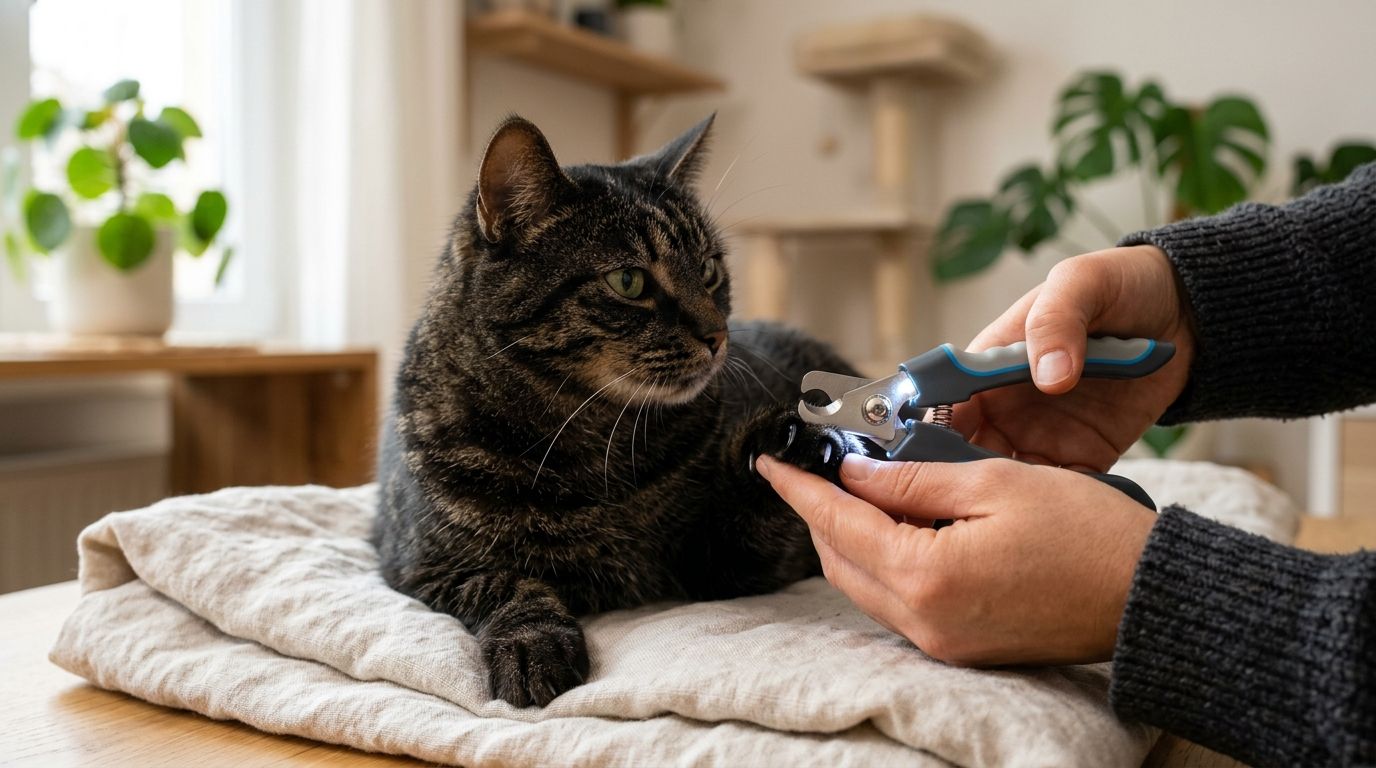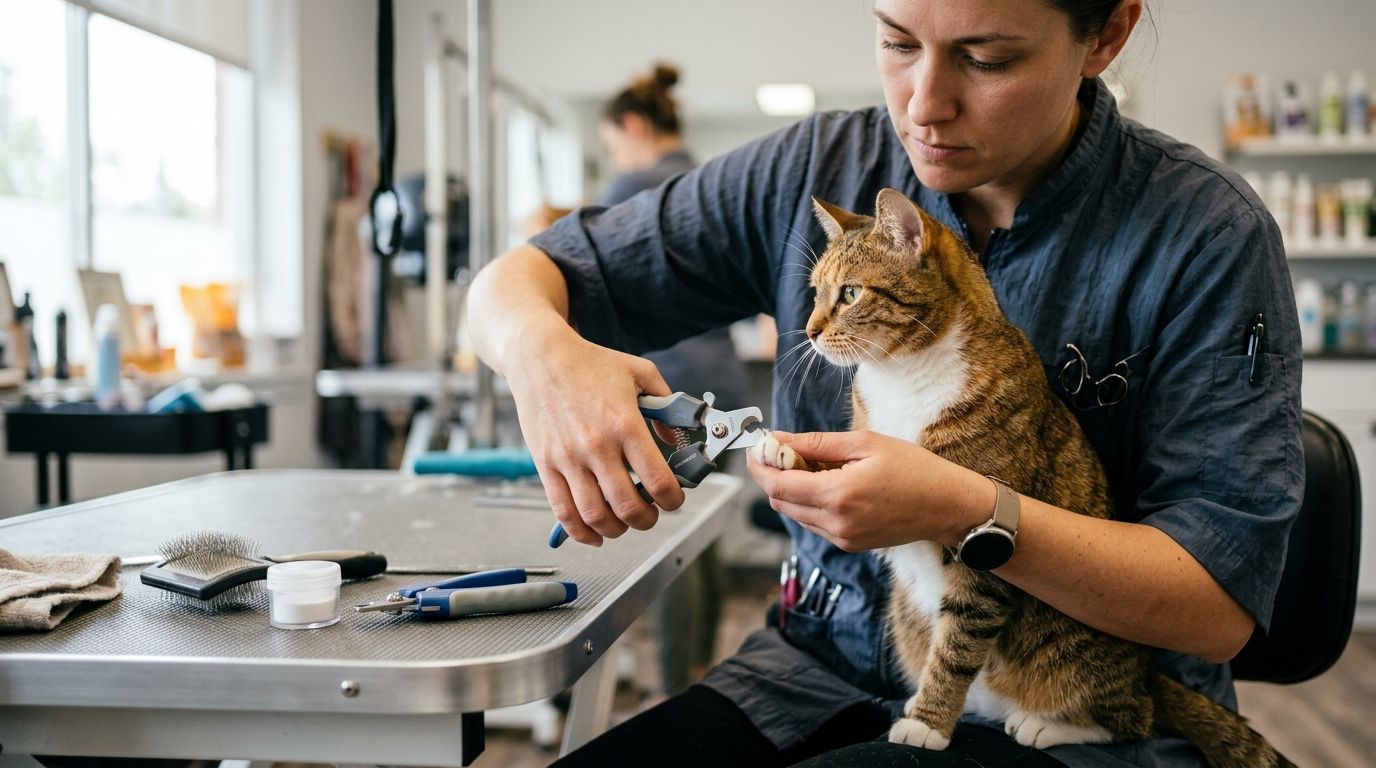
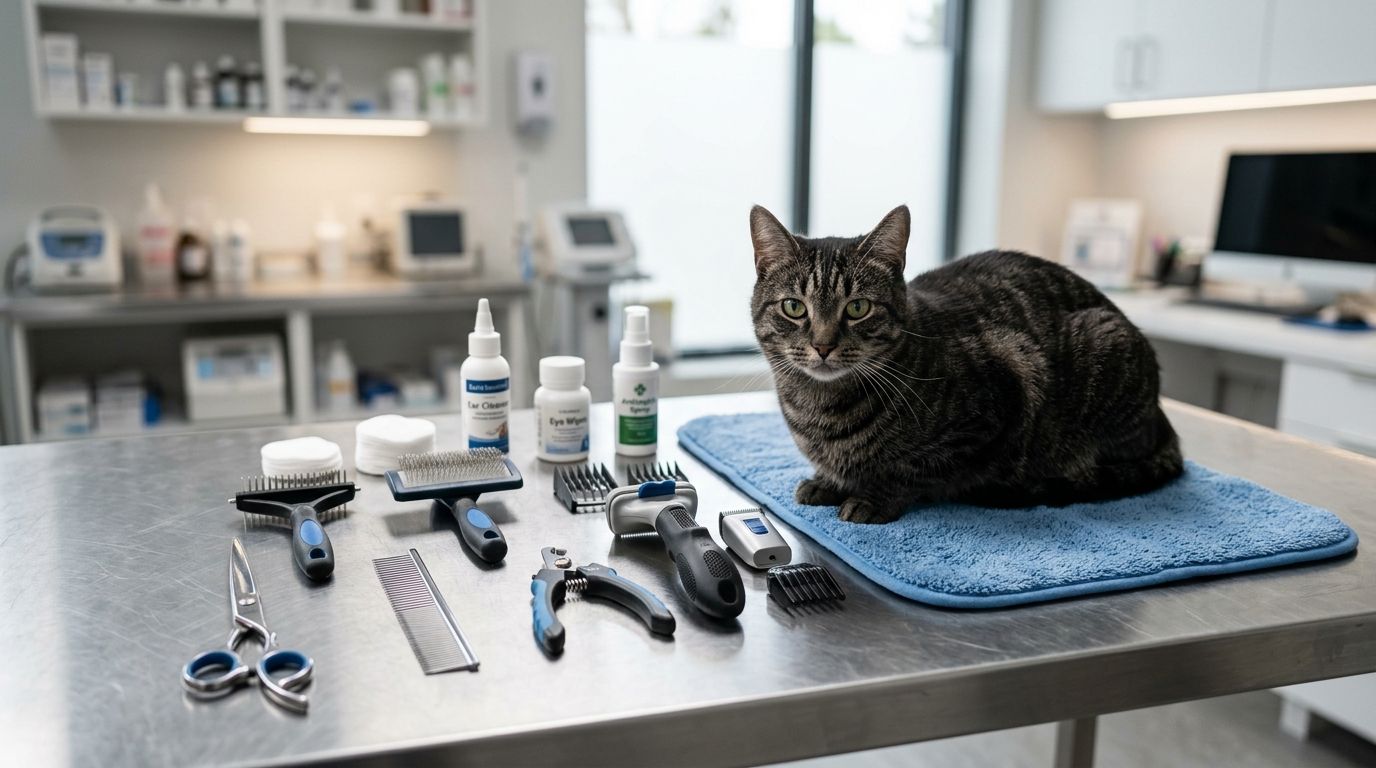
Cat grooming kits for veterinary clinics are curated restraint, nail-trim, and handling toolsets that keep feline patients calm and staff scratch-free across back-to-back appointments. A clinic kit has to survive multiple cats a day, not one cat at home, so both the tools and the protocol behind them need to hold up under volume in 2026.
- A cat grooming kit for veterinary clinics needs a restraint wrap, stainless clippers and a muzzle fallback, not just nail scissors.
- The Snug Pro Cat Wrap is best for fractious cats needing nail trims, medication or blood draws without a full-body chase.
- The free towel-burrito method works for calm cats but needs two staff and unwraps on fractious ones.
- Assign one kit per exam room in 2026 to cut cross-patient handling time and staff scratches.
- A muzzle alone doesn't replace limb restraint — pair it with a wrap for nail trims.
Why cat grooming kits matter for veterinary clinics
Feline patients get handled by two or three staff members in a single visit: front desk, vet tech, veterinarian. Any one of those handoffs can turn into a scratch or a bite if the cat has already escalated before it reaches the exam table. The American Association of Feline Practitioners built its Cat Friendly Practice program around exactly this problem — reducing fear and stress from the parking lot to the exam table lowers both patient risk and staff injury risk.
A cat grooming kit for veterinary clinics isn't a home nail-trim set scaled up. It has to work on a cat the tech has never met, in under ten minutes, without a chase around the room. That's a different design brief than a kit built for one cat and one owner who already knows the cat's temperament.
Clinics that keep dedicated cat restraint bags for vet visits and a wrap system within reach skip the mid-appointment improvising that turns a five-minute nail trim into a wrestling match. Purrttie builds its grooming line around exactly this handoff problem — wrap, clipper, and muzzle-compatible restraint that a tech who's never met the cat can still use correctly on the first try.
Build a cat grooming kit for veterinary clinics in 7 steps
1. Standardize your restraint protocol before you standardize your kit
The kit only works if every tech uses it the same way. Write the protocol down before you buy anything.
- Decide the order of operations — scruff-and-hold, towel wrap, or full-body wrap — before the cat is on the table, not mid-appointment
- Assign a primary handler and a secondary handler for every exam room shift
- Set a hard stop: if restraint isn't working within a minute, pause and reassess instead of escalating force
- Log which method worked in the chart so a repeat patient's next visit doesn't start from zero
2. Stock nail-trim tools that survive high patient turnover
A clinic clipper gets sterilized and used dozens of times a week. Home-grade tools crack under that pace.
- Full stainless steel clippers over spring-loaded plastic ones — plastic housings split under repeated sterilizing
- A wide-view blade (18mm or similar) so the tech can see the quick on dark nails without extra lighting
- Styptic powder at every station, not just the supply closet
- A grip glove or spare hand towel for cats that pull back mid-clip
- Spare blades on a weekly restock schedule, not an "order when someone remembers" basis
3. Add a wrap or burrito-style restraint for fractious and needle-shy cats
Start free, then upgrade for the patients that need it.
- A bath towel burrito works for calm-to-moderate cats and costs nothing beyond linen you already stock
- Move to a purpose-built wrap like the Snug Pro Cat Wrap for cats that need nail trims, medication, or blood draws without a full-body chase
- Keep it snug, not tight — check the cat's chest can still expand fully with each breath
- Leave the head and one paw visible so the vet can work the procedure without unwrapping the whole restraint
4. Build a muzzle and towel fallback for high-arousal patients
A muzzle solves one problem — biting — and creates none of the others on its own.
- Fit-test cat muzzles for grooming on low-stress patients first, not the first fractious walk-in of the day
- Reach for the muzzle only after limb restraint is in place — a muzzle alone doesn't stop scratching
- Keep at least three sizes on hand; a loose muzzle slides toward the eyes and adds panic instead of calm
- Retire any muzzle with visible bite marks or stretched elastic straps immediately
5. Keep carrier-side comfort tools stocked for the waiting room
Escalation usually starts before the exam room door opens.
- Cover carriers with a plain towel in the waiting room to cut visual stress from other patients
- Offer a loaner cat carrier for stress-free vet visits for clients who arrive with a cardboard box or no carrier at all
- Apply pheromone spray to exam table surfaces between patients, not only inside carriers
- Keep the exam room door closed during restraint setup so a spooked cat can't bolt into the hallway
6. Assign one kit per exam room and write the cleaning protocol
A shared cart is where restraint protocols quietly fall apart.
- Give each exam room its own clipper, wrap, and muzzle set instead of one cart that gets left wherever it was last used
- Wipe wraps and muzzles with a pet-safe disinfectant between patients, then air dry fully before the next appointment
- Replace foam or fabric muzzle padding on a fixed schedule instead of waiting for someone to flag it
- Restock styptic powder and spare blades weekly rather than reactively
7. Train every staff tier on de-escalation, not just tool mechanics
The best kit in the clinic still fails in untrained hands.
- Run a short onboarding session on feline body language — flattened ears, tail flick, dilated pupils — before any new hire handles a cat
- Practice wrap technique on a stuffed cat or a willing staff cat before the first live patient
- Rotate who leads restraint so the skill doesn't live with one person who might be out sick
- Debrief after a rough appointment: what escalated the cat, and what the team would change next time


Restraint and grooming options for veterinary clinics
| Option | Best for | Key limitation |
|---|---|---|
| Towel burrito (free) | Calm-to-moderate cats, quick nail trims | Needs two staff and unwraps easily on fractious cats |
| Snug Pro Cat Wrap | Fractious cats needing nail trims, medication or blood draws | Staff need a short training pass before first live use |
| Muzzle-only restraint | Cats already desensitized to touch, short procedures | Doesn't restrain limbs — unsuitable for nail trims alone |
| Two-person scruff hold | One-off restraint when no tools are on hand | Highest injury risk to staff; not sustainable at daily volume |
For clinics running five or more nail trims a day, the Snug Pro Cat Wrap paired with a stainless steel clipper is the fastest combination that doesn't require two staff members holding a cat down.
Common mistakes veterinary clinics make with grooming kits
- Buying one kit size for the whole clinic. A wrap sized for a 4kg cat won't secure a 7kg Maine Coon, and the tech improvises with a bath towel anyway
- Skipping staff training and defaulting to brute-force scruffing. This trains the cat to fight harder at the next visit, not less
- No cleaning protocol between patients. A wrap that smells like the last stressed cat raises cortisol in the next one before restraint even starts
- Treating the kit as optional supply-closet gear instead of a documented protocol, so handling quality swings by whichever tech is on shift
- Waiting until a cat is already escalated in the exam room to reach for comfort tools, instead of covering the carrier in the waiting room first
FAQ
What's the best cat grooming kit for veterinary clinics in 2026?
A stainless steel nail clipper paired with a restraint wrap like the Snug Pro Cat Wrap covers most routine appointments in 2026. Add a sized muzzle and styptic powder for fractious or needle-shy patients.
Is a restraint wrap better than the towel burrito method for clinics?
A purpose-built wrap holds its shape through a full nail trim or blood draw, while a towel burrito tends to loosen once a fractious cat starts pulling. The towel method still works fine for calm patients and costs nothing extra.
Can a clinic reuse the same wrap across multiple cats in one day?
Yes, as long as it's wiped down with a pet-safe disinfectant and fully air-dried between patients. Skipping the cleaning step carries scent and stress from the last cat into the next appointment.
Do kittens need a different nail-trim kit than adult cats?
Kittens need a smaller clipper blade and a much gentler restraint pass, since their nails are thinner and their tolerance for handling is still being built. A kit sized for an adult cat can pinch or over-restrain a kitten.
Are cat muzzles cruel to use in a clinic setting?
Muzzles used correctly, after limb restraint is in place and sized to fit, are a standard short-procedure tool rather than a cruelty issue. Problems start when a muzzle is used alone, too loose, or left on longer than the procedure requires.
How long does it take to train staff on a new restraint protocol?
Most clinics can run a working onboarding pass in a single short session covering body language cues and wrap technique. Full comfort with a new wrap or muzzle system typically builds over the following weeks of live patients.
Do indoor cats still need nail trims at the vet?
Yes — indoor cats still overgrow their nails without a scratching surface that wears them down naturally. Vet clinics often catch overgrown or ingrown nails during routine wellness visits rather than owners noticing at home.
One last thing
The fastest fix most clinics skip in 2026 isn't a new tool — it's assigning a kit per exam room instead of one shared cart. A shared cart means the clipper and wrap end up wherever the last appointment left them, and the tech loses time hunting for tools while a stressed cat sits on the table. Fix the kit assignment before you fix anything else on this list.