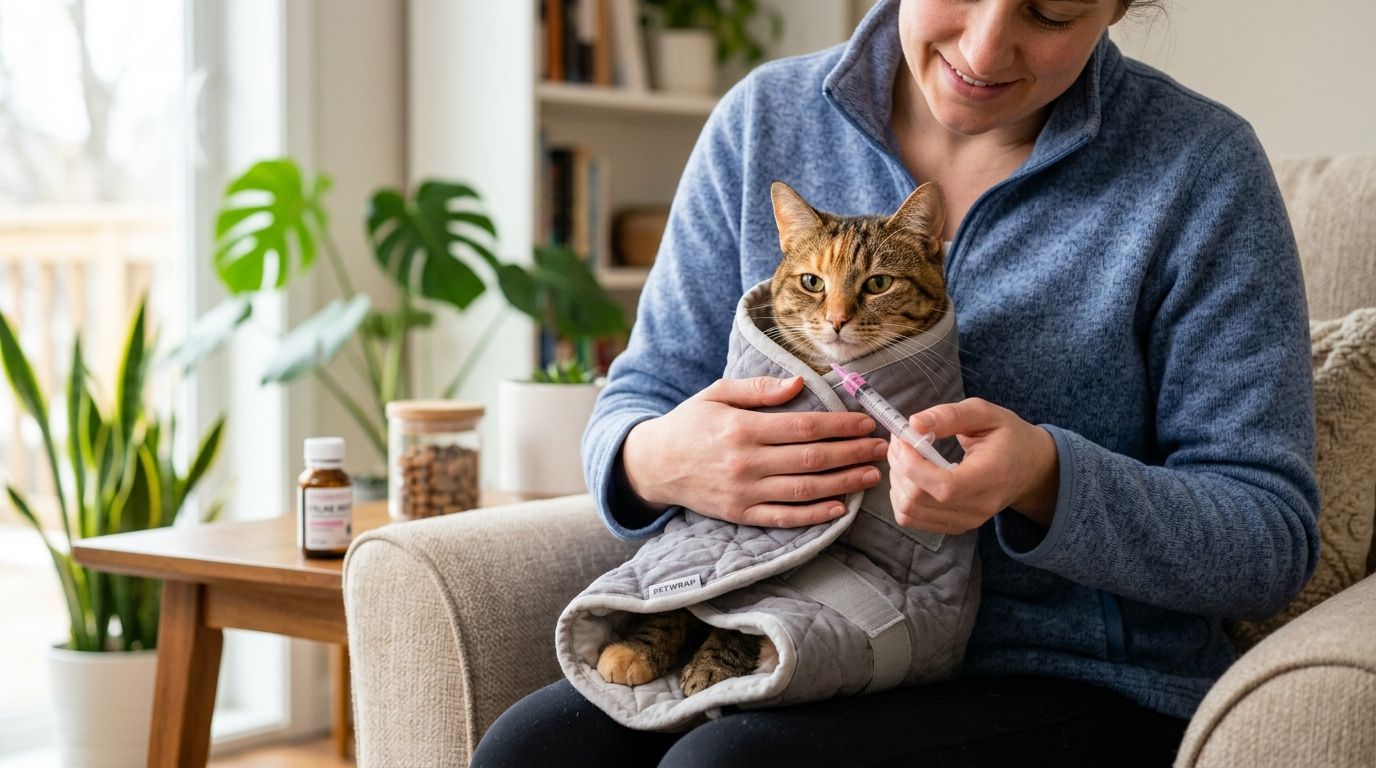

Vet visits go sideways the moment your cat spots the carrier — but the carrier itself is usually the fixable part. The best cat carrier for stress-free vet visits in 2026 is a top-loading, hard-sided carrier, because the vet lifts the top off instead of dragging a cat out through a front door. Anxious cats do better in a soft-sided sling that keeps them pressed against your body, cats who like to hide do better in an expandable soft carrier, and multi-cat households need a hybrid hard-shell with a removable top.
- Top-loading hard-sided carriers win for most stress-free vet visits in 2026 — no dragging a cat out.
- Soft-sided sling carriers calm anxious cats by keeping them pressed against the handler's body.
- Expandable soft carriers let cats hide before an exam, but zippers wear out faster than hard shells.
- Pair any carrier with a restraint wrap for nail trims or handling once you're at the clinic.
- Wheeled carriers ease strain for senior pawrents; hybrids fit multi-cat households best.
Why this matters
A cat carrier only shows up a handful of times a year, and every one of those times usually ends at a clinic. That pattern is exactly why cats treat the carrier like a trap instead of a travel box — it predicts something unpleasant, every single time.
The fix isn't a fancier carrier alone. It's picking a shape that matches how your specific cat copes with stress, then keeping the carrier out in the open between visits so it stops being a surprise. Purrttie builds the handling tools that pick up where the carrier leaves off — once your cat is out of the box and on the exam table.
For 2026, the carrier market has settled into six distinct shapes. Each one solves a different problem, and none of them solves all of them.
What makes the best cat carrier for vet visits
- Top or front access — a lid that lifts off beats a door your cat can brace against
- Removable top panel — lets the vet examine a nervous cat without fully extracting it
- Ventilation without draftiness — mesh panels that don't turn into a wind tunnel in an air-conditioned car
- Weight when loaded — carrier plus cat shouldn't strain your wrists on the walk from the car
- Cleanability — accidents happen under stress; hard plastic wipes down, some soft fabric doesn't
- Scent retention — fabric carriers hold onto home smells longer, which matters for anxious cats
Cat carriers at a glance
| Carrier type | Best for | Standout feature | Key limitation |
|---|---|---|---|
| Top-loading hard-sided | Overall stress-free vet visits | Vet lifts the top off instead of pulling the cat through a door | Bulkier to store between visits |
| Soft-sided sling | Anxious or fearful cats | Keeps the cat pressed against the handler's body heat | Little structure if the cat leans hard on one side |
| Expandable soft carrier | Cats who like to hide and nest | Opens into a small hideout before the exam starts | Zippers wear out faster than hard shells |
| Backpack-style | Errands or multi-stop days after the vet | Frees both hands, weight sits on the shoulders | Ventilation can trap heat on hot car rides |
| Wheeled carrier | Senior pawrents or heavier cats | Rolls instead of being carried | Wheels struggle on gravel or clinic stairs |
| Hybrid hard-shell, removable top | Multi-cat households | Doubles as a carrier and an in-clinic exam surface | Heavier, awkward for one person alone |
1. Top-loading hard-sided carrier: best overall for stress-free vet visits
The cat goes in from the top, the vet lifts the lid off, and nobody has to reach into a dark tunnel and pull a bracing cat toward them. That single design choice is why veterinary behaviorists have pushed this shape for years — it turns the worst part of the exam into a non-event.
Top-loading hard-sided carrier pros:
- Removable top means the exam happens with minimal handling
- Hard plastic wipes clean after an accident in seconds
- Sturdy enough to sit flat on a scale or exam table
Top-loading hard-sided carrier cons:
- Doesn't fold flat, so storage takes real closet space
- Heavier than soft alternatives once the cat is inside
Best for: any cat, any visit, especially first-time kittens or cats with no strong carrier association yet. Verdict: Buy.
2. Soft-sided sling carrier: best for anxious cats
A sling sits close to the body, so the cat feels a handler's heartbeat and warmth instead of hanging in open space. For cats who spiral the moment they lose ground contact, that closeness does more calming than any pheromone spray.
Soft-sided sling carrier pros:
- Body contact reduces panic in cats who dislike open carriers
- Lightweight, easy for one hand while managing paperwork
- Folds flat for storage between visits
Soft-sided sling carrier cons:
- Offers little resistance if a large cat pushes against one wall
- Not ideal for cats who prefer to hide rather than be held close
Best for: small to medium cats who calm down when held, not caged. Verdict: Buy if your cat already tolerates being carried against your chest.
3. Expandable soft carrier: best for cats who like to hide
Some cats don't want closeness — they want to disappear. An expandable soft carrier unzips into a small tent-like space, giving a cat somewhere to retreat before the vet even opens the door.
Expandable soft carrier pros:
- Extra space lets a cat turn around and pick a corner
- Mesh windows on multiple sides instead of just the front
- Works double duty as a car seat cover on the drive
Expandable soft carrier cons:
- Zippers and seams wear out faster than a hard shell
- Harder to disinfect after a stress-related accident
Best for: cats who freeze and hide rather than actively resist. Verdict: Hold — good pick, but check zipper quality before buying if you travel often.
4. Backpack-style carrier: best for errands after the vet
A backpack carrier isn't really designed to reduce vet-visit stress on its own — it's designed to make the day around the visit easier. Both hands stay free for a leash, a second cat, or the car door.
Backpack-style carrier pros:
- Distributes weight across the shoulders instead of one arm
- Useful when the vet trip is one stop among several
- Some models double as a bubble-window carrier for curious cats
Backpack-style carrier cons:
- Ventilation panels can trap heat in a warm car
- Awkward to set down flat on a clinic floor
Best for: pawrents running errands before or after the appointment. Verdict: Wait — only worth it if your routine actually needs the extra mobility.
5. Wheeled carrier: best for senior cat parents
A carrier with wheels solves a problem that has nothing to do with the cat: the strain on the person carrying it. For a heavier cat or a pawrent managing wrist or back pain, rolling beats lifting every time.
Wheeled carrier pros:
- Removes the physical strain of carrying a loaded carrier
- Handles well on smooth clinic floors and parking lots
- Often built with a larger interior for bigger cats
Wheeled carrier cons:
- Wheels struggle on gravel, grass, or stairs
- Bulkier overall than a comparable hard-sided carrier
Best for: senior pawrents or anyone managing a cat over the typical carrier weight limit. Verdict: Buy if mobility is the deciding factor.
6. Hybrid hard-shell with removable top: best for multi-cat households
This style borrows the top-loading advantage and adds a second use: the lid comes off entirely, so the base can double as an exam surface for a nervous cat that won't come out on its own.
Hybrid hard-shell carrier pros:
- Base doubles as an in-clinic exam platform
- Handles multiple trips a year without wearing out
- Removable top keeps handling minimal for skittish cats
Hybrid hard-shell carrier cons:
- Heavier than single-cat carriers
- Awkward to manage solo with more than one cat inside
Best for: households running two or more cats through the same vet visit. Verdict: Buy for multi-cat routines, Skip if you only ever transport one cat.
Make any carrier calmer once you're at the clinic
The carrier gets your cat through the door. What happens after — the nail trim, the injection, the exam table — is where most of the actual stress lives, and that's a separate problem from carrier shape.
A restraint wrap keeps a cat snugly, not tightly, held so a vet or groomer can work without a full-body struggle. It's worth reading how a cat wrap compares to the classic towel burrito method before your next appointment, especially if your cat has ever needed medication given alone using a restraint wrap.


Trimming nails at home with the Snug Pro Cat Wrap and a Full Stainless Steel Cat Nail Clipper before the visit means the vet isn't the one dealing with sharp claws on top of an already stressed cat. Less hisses at the clinic, more kisses on the drive home.
How this list was ranked
Every carrier type above was judged against the six criteria listed earlier: access point, removable top, ventilation, loaded weight, cleanability, and scent retention. No single shape scores well on all six — that's the honest reason this is six picks instead of one.
Which cat carrier should you choose?
If you're not sure where to start in 2026, buy a top-loading hard-sided carrier — it's the safest default for cats with no strong carrier association yet. Switch to a soft-sided sling only if your cat already calms down when held close, and reach for the hybrid hard-shell if you're managing more than one cat through the same appointment.
FAQ
What's the best cat carrier for a stressed cat?
A top-loading, hard-sided carrier is the best cat carrier for a stressed cat because the vet lifts the top off instead of pulling the cat out through a front door. Soft-sided slings work well too, but only for cats who already calm down when held close.
Should I use a soft or hard carrier for vet visits?
Hard carriers with a removable top handle most vet visits better because the exam happens without fully extracting the cat. Soft carriers suit cats who calm down from body contact or want a hiding spot, but they don't clean up as easily after an accident.
How do I get my cat used to a carrier before a vet visit?
Leave the carrier out in a regular living space between visits so it stops predicting something unpleasant every time it appears. Feeding treats or meals near or inside the carrier builds a neutral, then positive, association over weeks rather than days.
Is a top-loading carrier really better than a front-door carrier?
Yes, for most cats a top-loading carrier is better because it removes the struggle of pulling a bracing cat through a narrow front door. Vets can lift the lid and work with minimal handling instead.
Can I use a wrap instead of a carrier for vet visits?
A wrap is not a substitute for a carrier during transport, but it does the job a carrier can't once you're inside the clinic: keeping the cat still for a nail trim, injection, or exam. Carrier and wrap solve two different parts of the same trip.
How much space does a cat carrier need?
A cat carrier needs enough room for the cat to stand, turn around, and lie down comfortably, without so much extra space that the cat slides during transport. Oversized carriers can actually increase stress because the cat has nothing stable to brace against.
What carrier is best for senior or arthritic cats?
A wheeled carrier is best for senior cats because it removes the strain of lifting a loaded carrier, and a low, wide entry point matters more than carrier weight for cats with joint stiffness. Hard-sided models with a removable top also make it easier to lift a stiff cat out gently.
Do multi-cat households need a different carrier?
Multi-cat households generally do better with a hybrid hard-shell carrier that has a removable top, since it can double as an exam surface for whichever cat won't come out on its own. Running two cats through one small soft carrier usually increases stress for both.
One last thing
The biggest lever most pawrents skip isn't the carrier at all — it's leaving it out, zipped open, somewhere the cat already naps, for weeks before the next vet trip instead of pulling it from storage the morning of. A carrier that only appears on vet days will always read as a trap, no matter how well it's designed; a carrier that's just furniture stops being one.