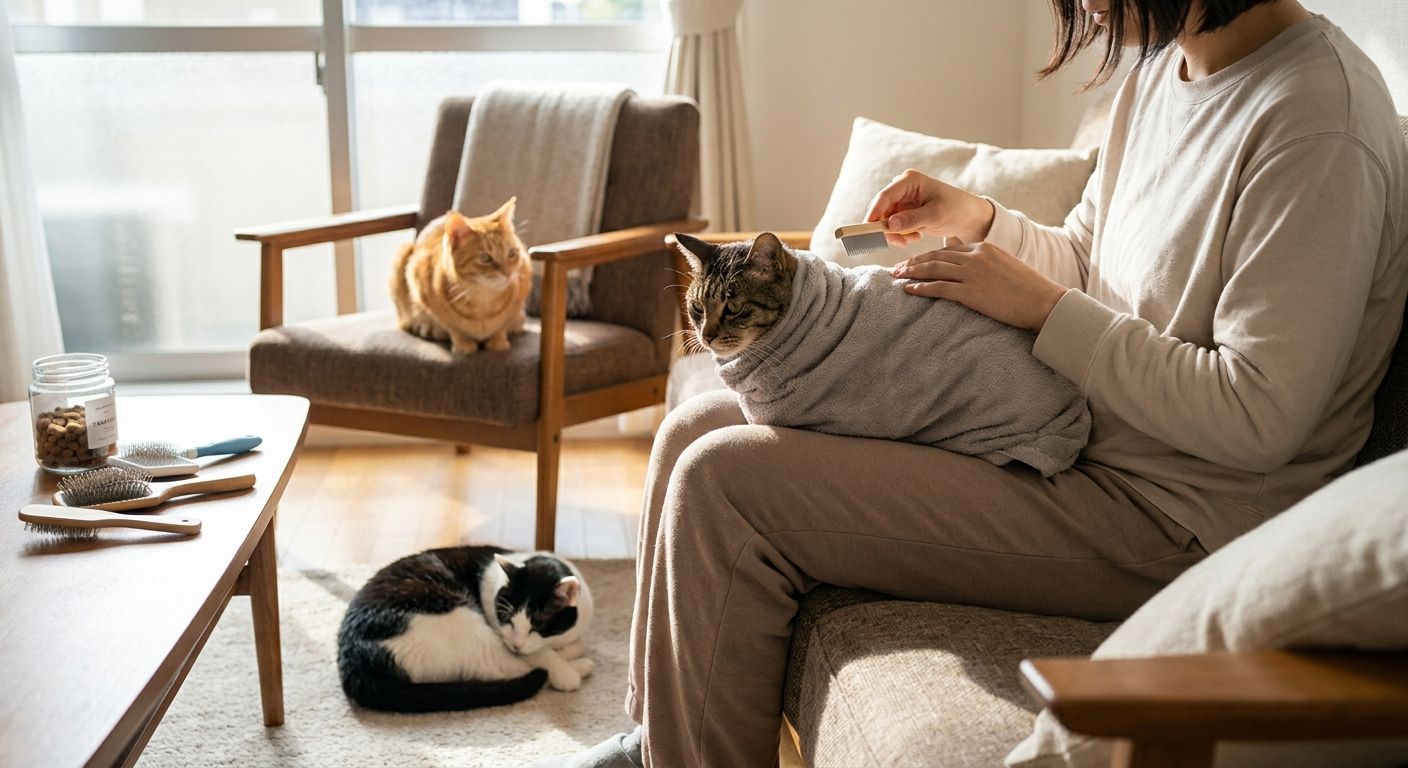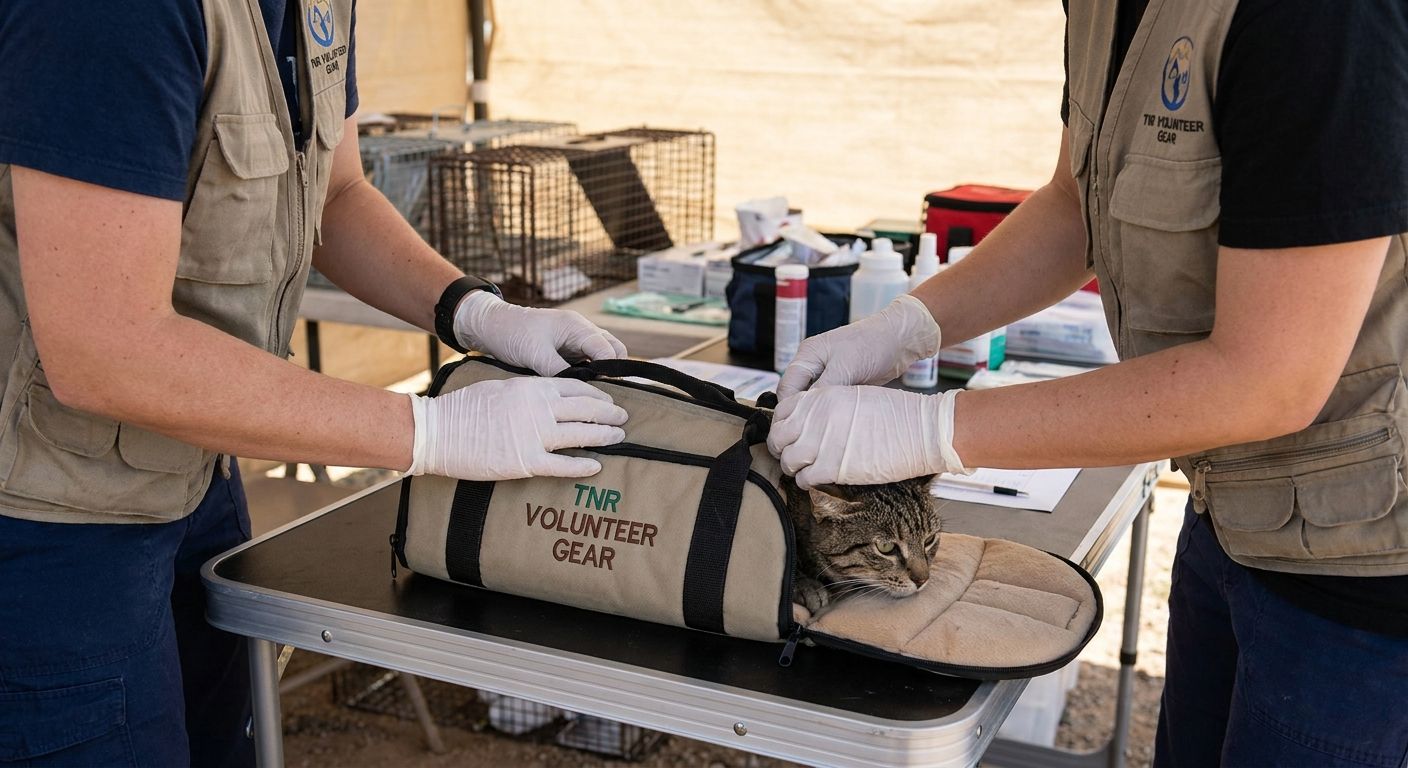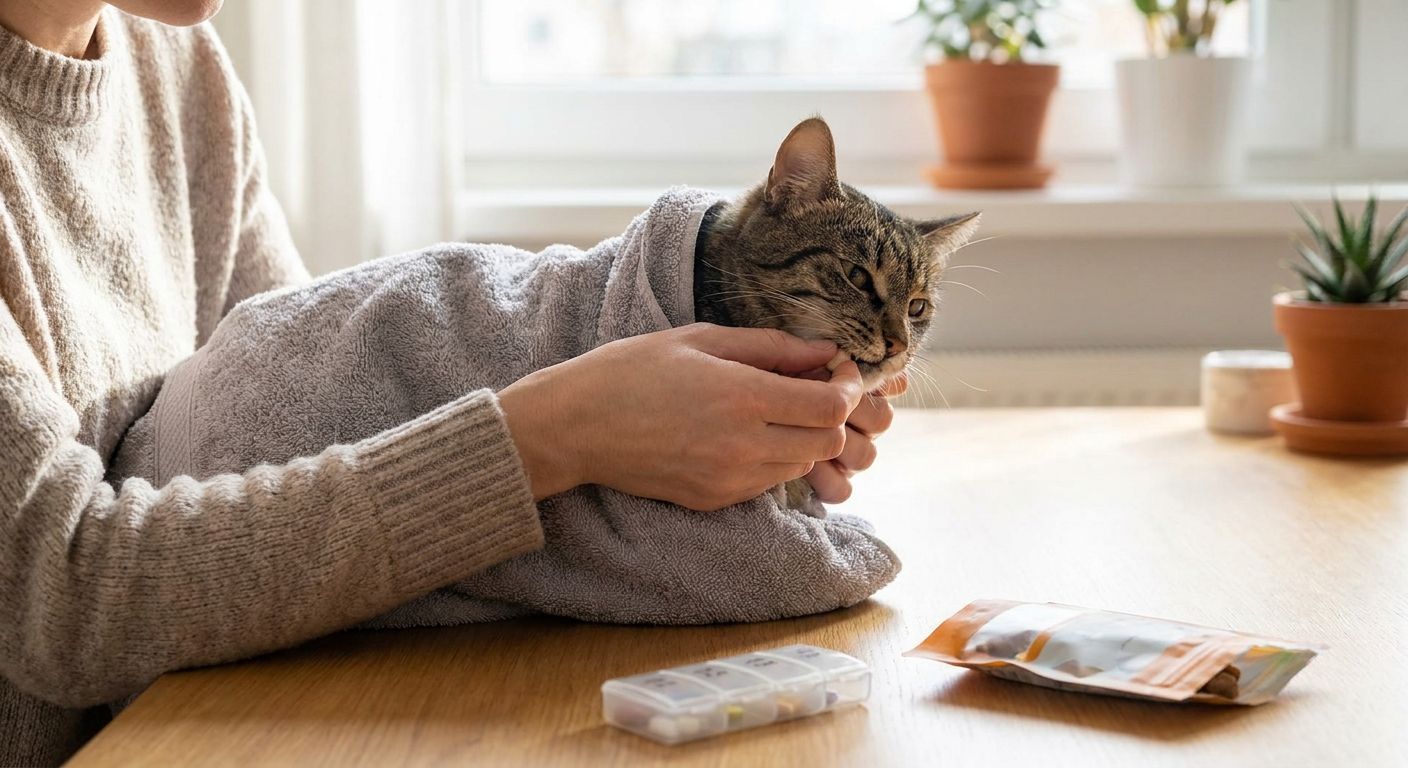
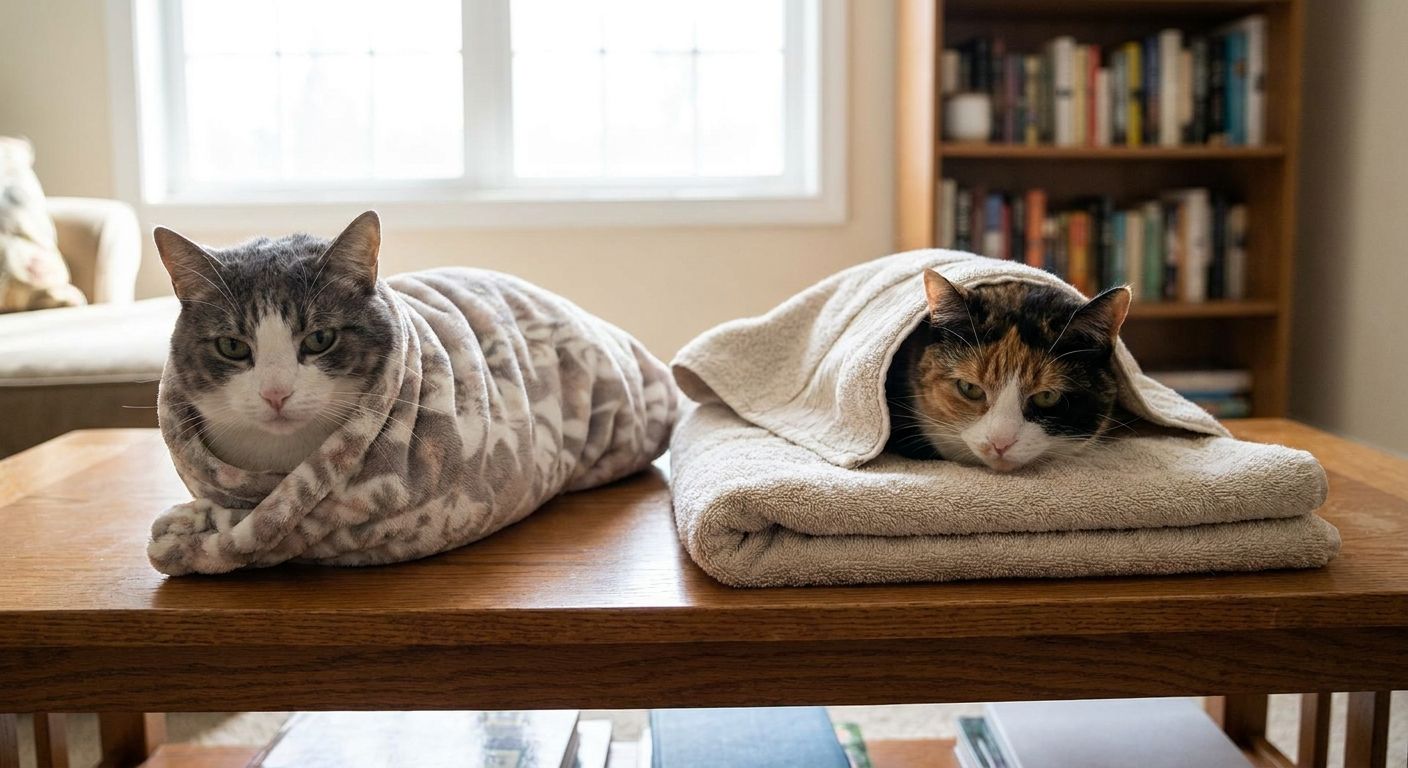
A cat wrap and the towel burrito method solve the same problem, restraining a cat for a nail trim, a pill, or a vet exam, but they are not the same tool. The towel burrito is a free-form technique: you take a regular bath towel and re-wrap your cat by hand every single time, guessing at tension and tuck points as you go. A cat wrap, like the Snug Pro Cat Wrap, is a purpose-built garment with fixed openings, hook-and-loop closures, and a shape that holds once fastened, so it doesn't loosen mid-trim the way a hand-tucked towel often does.
- A cat wrap and the towel burrito method are not the same: one is a fitted garment, the other is a hand-wrapped towel technique.
- The Snug Pro Cat Wrap holds its shape with closures, while a towel burrito can loosen mid-trim and needs re-tucking.
- Towels work in a pinch but require practice each time; a cat wrap is consistent from the first use.
- Both aim to calm a cat during nail trims, medication, or vet visits in 2026, but comfort and consistency differ.
Why this matters
A loose towel burrito is the number one reason cat parents give up on at-home nail trims. The cat wriggles one paw free, panics, and the whole session turns into a chase. That's not a failure of the technique itself, it's a structural limitation: a towel has no fixed shape, so every wrap depends on how well you tucked it that particular time.
A cat wrap removes that variable. Because the closures are fixed, the fit is the same every session, which matters more than most pawrents expect once they've tried both methods back to back in 2026.
Is a cat wrap the same as a towel burrito method?
No. They share a goal, gentle restraint, but differ in structure, consistency, and how much practice they demand. Here's the side-by-side:
| Factor | Towel Burrito Method | Cat Wrap (Snug Pro) |
|---|---|---|
| Setup each use | Re-wrap by hand, no fixed shape | Fasten closures, same fit every time |
| Escape risk | Higher, paws can work loose | Lower, structured openings hold |
| Learning curve | Takes practice to get tension right | Minimal, shape does the work |
| Reusable across sizes | Depends on towel size on hand | Adjustable within the wrap's fit range |
| Portability | Any towel works, no cost | One dedicated product to store |
| Best for | Occasional, low-stress cats | Cats that fidget, resist, or need nail trims/meds regularly |
Verdict: the towel burrito method is fine for a calm cat who tolerates a quick, occasional wrap. For cats that squirm, bite, or need repeat handling for medication, a fitted cat wrap like the Snug Pro Cat Wrap is the more reliable pick.
If your cat is already anxious about handling, the desensitization timeline for grooming is worth reading alongside this comparison, since restraint method and desensitization pace work together.
Why the two methods differ
- Structure vs improvisation. A towel has no built-in shape; a cat wrap is cut and closed to hold a specific position.
- Closure type. Towels rely on tucking and your own grip strength. A cat wrap uses fasteners that don't slip once secured.
- Consistency across sessions. A towel burrito depends on how well you wrapped it that day. A cat wrap fits the same way every time you use it.
- Stress signals during handling. A loose towel invites more wriggling because the cat can feel where the gaps are. A snug, evenly-fitted wrap gives fewer places to push against.
- Learning curve. New pawrents often need several attempts to get a towel burrito tight enough without being restrictive. A wrap shortens that learning curve because the fit is built in.
- Vet and clinical use. Vet techs commonly use towel wraps because towels are always on hand, but at home, where you're not trained daily in the technique, a fitted wrap closes the gap in skill.
When the towel method is enough, and when it isn't
A towel burrito can work for a mellow cat getting a one-off nail trim. It falls short for cats that already associate handling with stress, for multi-step routines like applying medication twice a day, or for anyone who hasn't practiced the wrap enough to do it quickly under a squirming cat.
That's the gap the Snug Pro Cat Wrap is built for: the same fit every session, so the cat isn't relearning a new level of tightness each time and you're not troubleshooting a slipping towel mid-trim. If nail trims specifically are the trigger, the comparison of cat grooming bags for stress-free nail trims covers the adjacent option worth knowing about too.


Can I use a regular towel instead of a cat wrap?
Yes, a regular towel can substitute for a cat wrap for a quick, low-stakes trim on a calm cat, but it won't hold as consistently as a fitted wrap once the cat starts resisting. Towels are free and always available, which makes them a reasonable fallback, just expect more re-wrapping mid-session.
Does the towel burrito method work for nail trims specifically?
Yes, the towel burrito method works for nail trims on cats that tolerate brief handling, but it tends to loosen exactly when you need the paw still, mid-clip. A structured wrap avoids that slip because the closure doesn't depend on how tightly you tucked the fabric.
Is a cat wrap safe for anxious cats?
Yes, a cat wrap is generally considered gentler for anxious cats than a hand-wrapped towel because the fit is even and doesn't tighten unpredictably as the cat moves. Pair it with a slow introduction, letting the cat sniff and step in on their own terms before any trim starts, rather than forcing a fast wrap.
FAQ
Is a cat wrap the same as a towel burrito method?
No, a cat wrap is a fitted product with fixed closures while a towel burrito is a hand-wrapped technique using a regular towel. Both restrain a cat for grooming or medication, but the wrap holds its shape consistently and the towel method depends on how well you tuck it each time.
Which is better for nail trims, a towel or a cat wrap?
A cat wrap is better for nail trims on cats that squirm or resist, since the closure stays snug through the whole trim. A towel works fine for a calm cat and a quick, one-off trim.
Do vets use the towel burrito method?
Yes, vet techs often use towel wraps because a towel is always on hand in a clinic. At home, without daily practice, a fitted wrap closes the skill gap most pawrents face.
Can a towel burrito hurt my cat?
A towel burrito done too tightly can restrict a cat's breathing or movement, and done too loosely it fails to restrain at all. A fitted wrap is built to avoid both extremes with a consistent fit.
How long does it take to learn the towel burrito method?
Most pawrents need several attempts to get the tension right on a towel burrito, since every wrap starts from scratch. A cat wrap skips that learning curve because the shape is already built in.
Is the Snug Pro Cat Wrap reusable across nail trims and vet visits?
Yes, the Snug Pro Cat Wrap is designed for repeat use across nail trims, medications, and vet visits, holding the same fit each session rather than needing to be re-wrapped from scratch like a towel.
What if my cat fights both the towel and the wrap?
If a cat resists both methods, slow desensitization to handling matters more than the tool itself. Building tolerance gradually before attempting a full wrap reduces the fight in both cases.
One last thing
The biggest difference between the two methods only shows up under stress: a towel burrito loosens exactly when your cat starts fighting it, which is the worst possible moment. A fitted cat wrap holds its shape through that same moment, which is the entire reason it exists. If you're still deciding whether at-home handling is even the right call for your cat's temperament, the piece on whether grooming tools cause more stress than professional groomers is a useful next read before you commit to either method in 2026.