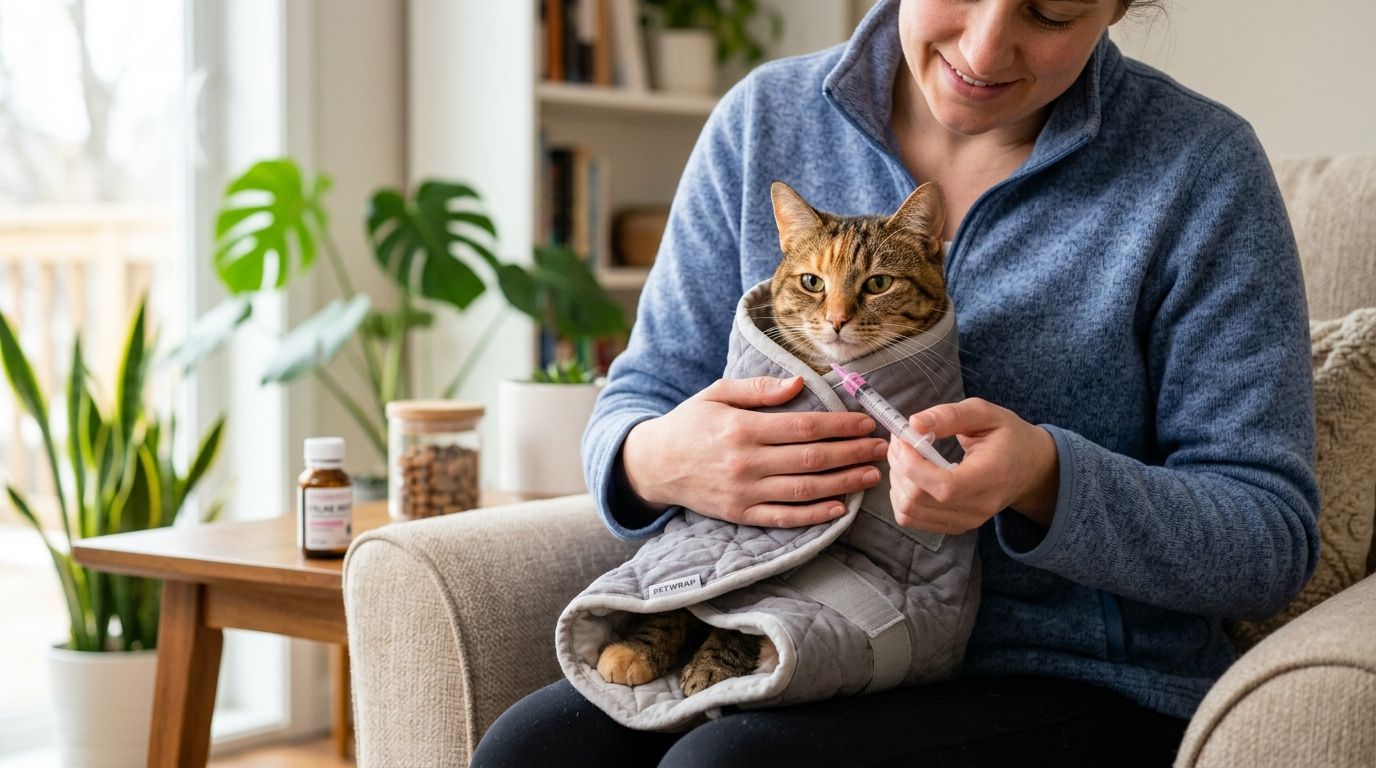

Choosing among the best cat restraint bags for vet visits in 2026 comes down to one question: does the bag hold your cat still without turning a nail trim or a vet exam into a fight? The right pick depends on whether you're handling medication solo at home, prepping for a full-body vet exam, or working TNR shifts with feral cats.
- Snug Pro Cat Wrap wins best cat restraint bags for vet visits 2026 for solo medication and at-home vet prep — buy it.
- Mesh zip-up restraint bags handle full-body exams needing paw access; skip for daily solo meds.
- Adjustable Velcro wrap bags are the budget upgrade from the towel-burrito method — hold if you already own towels that work.
- Heavy-duty canvas TNR bags are built for feral cat handling, not everyday grooming.
- Padded grooming restraint bags reduce struggle during nail trims but restrict movement less than a full wrap.
Why this matters
A cat restraint bag isn't a punishment tool — it's the difference between a vet tech getting a blood draw in under a minute and a 20-minute chase around the exam room. Purrttie designs its wraps around vet-informed handling, which means snug but never tight, so the cat can still breathe normally and settle instead of thrashing.
The wrong bag makes things worse. A restraint bag that's too loose lets a paw slip free mid-injection. One that's too rigid raises a cat's heart rate before the vet even touches them. Getting the fit and fabric right in 2026 matters more than brand names.
What makes the best cat restraint bag
- Breathable fabric that doesn't trap heat during a 10-15 minute exam
- Quick-release fasteners so a vet or pawrent can free a paw fast without unwrapping the whole cat
- Snug, not tight, restriction that limits scratching without restricting breathing or circulation
- Washable material since restraint bags see fur, drool, and the occasional accident
- A size range that fits kittens through large adult cats without gaps at the neck or tail
- One-person application, since most vet visits and medication rounds happen without a second set of hands
Best cat restraint bags for vet visits 2026 — at a glance
| Item | Best for | Standout feature | Key limitation |
|---|---|---|---|
| Snug Pro Cat Wrap | Solo medication and at-home vet prep | One-person wrap-and-go design | Not built for full-body physical exams |
| Mesh Zip-Up Restraint Bag | Full-body vet exams needing paw access | Zippered panels expose one limb at a time | Bulkier to store than a wrap |
| Adjustable Velcro Wrap Bag | Budget upgrade from towel-burrito method | Reusable Velcro closures replace towels | Less snug fit on wriggly cats |
| Heavy-Duty Canvas TNR Bag | Feral cat handling and TNR volunteers | Reinforced canvas resists claws and bites | Overkill for a calm house cat |
| Padded Grooming Restraint Bag | Nail trims and brushing on anxious cats | Extra padding softens paw pressure | Limits full-body mobility less than a wrap |
1. Snug Pro Cat Wrap: best cat restraint bag for solo medication and vet prep
The Snug Pro Cat Wrap is built for pawrents handling nail trims, oral medication, and pre-vet-visit prep alone, without a second person pinning the cat down. It wraps snugly around the body while leaving the head and tail free, so the cat can still see and breathe normally while limbs stay contained.
It's designed around the idea that a cat should be able to leave the wrap on their own terms once the task is done, rather than being forced out of it. That matters for repeat use — a cat that associates the wrap with panic will fight it every time.
Snug Pro Cat Wrap pros:
- One-person application, no second pair of hands needed
- Works for giving medication alone using a restraint wrap as well as nail trims
- Snug fit reduces struggle without restricting breathing
- Washable for repeat use across multiple grooming sessions
Snug Pro Cat Wrap cons:
- Not designed for full-body physical exams that need chest or belly access
- Long-haired cats may need an extra minute to settle fur before wrapping
Snug Pro Cat Wrap pricing: check current pricing on the Purrttie site.
Best for: solo pawrents handling medication, nail trims, or pre-vet prep without help. Verdict: Buy.
2. Mesh Zip-Up Restraint Bag: best for full-body vet exams needing paw access
A mesh zip-up restraint bag encloses the body in a breathable mesh shell with zippered panels along the sides. Vets use this style when they need to isolate one paw at a time for a blood draw or IV catheter while keeping the rest of the cat contained.
The mesh keeps the cat visible and ventilated, which helps during longer exams. It's a common style in clinic settings rather than home use.
Mesh zip-up restraint bag pros:
- Zippered access lets a vet isolate one limb without unwrapping the whole cat
- Mesh fabric ventilates well during a 15+ minute exam
- Fully visible cat reduces anxiety for both the cat and the handler
Mesh zip-up restraint bag cons:
- Bulkier to store and less practical for daily home use
- Zippers can snag long fur if not handled carefully
Best for: full-body vet exams that need repeated paw or limb access. Verdict: Buy for clinic-style use, Hold for daily home use.
3. Adjustable Velcro Wrap Bag: best budget option over the towel-burrito method
The adjustable Velcro wrap bag is the reusable step up from the classic towel-burrito method. Instead of tucking and re-tucking a towel every time, Velcro straps hold the wrap in place, cutting down on the fumbling that lets a determined cat slip a paw free.
It's a reasonable middle ground for pawrents who already improvise with towels but want something that stays put.
Adjustable Velcro wrap bag pros:
- Reusable straps replace towel-tucking
- Adjustable sizing fits a range of cat builds
- Lower learning curve than a full restraint wrap
Adjustable Velcro wrap bag cons:
- Velcro fit loosens faster than a snug wrap on a strong cat
- Less breathable than mesh styles during long sessions
Best for: pawrents currently using the towel-burrito method who want a reusable upgrade. Verdict: Hold — fine if towels already work, upgrade if they don't.
4. Heavy-Duty Canvas TNR Bag: best for feral cat handling and TNR volunteers
Canvas TNR bags are built thicker and tougher than home-grooming wraps, made to withstand claws and bites from unsocialized cats during trap-neuter-return work. Reinforced seams and heavier fabric hold up to repeated use across dozens of cats a season.
This is a specialist tool. It's not meant for a calm house cat's monthly nail trim.
Heavy-duty canvas TNR bag pros:
- Reinforced material withstands scratching and biting
- Built for repeated use across many different cats
- Reduces injury risk for volunteers handling unfamiliar, frightened animals
Heavy-duty canvas TNR bag cons:
- Too rigid and heavy for routine home grooming
- Overkill and uncomfortable for a socialized house cat
Best for: TNR volunteers and shelter workers handling feral or unfamiliar cats. Verdict: Buy if you volunteer regularly, Skip for home use.
5. Padded Grooming Restraint Bag: best for nail trims and brushing on anxious cats
Padded grooming restraint bags add foam lining around the paw and body area, softening pressure points during nail trims and brushing. The padding helps cats that flinch at contact but doesn't restrict the body as fully as a wrap-style bag.
It suits shorter grooming tasks better than medication or vet prep, since the looser fit gives a determined cat more room to wriggle.
Padded grooming restraint bag pros:
- Extra padding reduces paw sensitivity during trims
- Softer contact points suit touch-sensitive cats
- Lighter and easier to store than canvas or mesh styles
Padded grooming restraint bag cons:
- Less full-body restriction than a wrap or mesh bag
- Not ideal for injections or blood draws needing a still torso
Best for: nail trims and brushing sessions on cats sensitive to paw handling. Verdict: Buy for grooming-only use.
How we ranked these
Each restraint bag was weighed against the six criteria above: breathability, quick-release access, snug-not-tight fit, washability, size range, and one-person usability. Items that solve a genuinely distinct use case made the list — none of these five compete for the same job, so the ranking works as a decision tree rather than a leaderboard.
“A restraint bag should feel like a hug, not a headlock.”
Which cat restraint bag should you choose in 2026?
If you're handling nail trims, oral medication, or vet-visit prep alone at home, the Snug Pro Cat Wrap is the default pick for 2026 — it's built for exactly that one-person scenario. If your vet needs repeated paw access during a longer physical exam, a mesh zip-up bag does that job better. TNR volunteers should stick with heavy-duty canvas, and anyone still relying on the towel-burrito method should treat a Velcro wrap bag as the next logical upgrade.
FAQ
What's the best cat restraint bag for vet visits in 2026?
The Snug Pro Cat Wrap is the best overall pick for 2026 for solo pawrents handling medication, nail trims, and pre-vet prep at home. Clinics needing repeated paw access during full-body exams tend to use mesh zip-up bags instead.
Is a cat restraint bag the same as the towel-burrito method?
No — a restraint bag uses fitted fabric and fasteners, while the towel-burrito method improvises with a folded towel. A wrap-style bag holds its shape better and doesn't need re-tucking mid-task.
Is it cruel to use a cat restraint bag?
A properly fitted restraint bag is snug, not tight, and lets the cat breathe and see normally, which vets consider a standard low-stress handling tool. Problems arise only when a bag is oversized, too rigid, or left on longer than the task requires.
How much does a cat restraint bag cost?
Prices vary by material and brand, so check current listings on the seller's site before buying. Canvas TNR bags and padded grooming bags tend to differ in cost based on reinforcement and lining.
Can one restraint bag work for multiple cats in a household?
Adjustable wraps and Velcro-style bags can fit a range of body sizes, making them workable across a multi-cat household. Washing between uses is recommended if cats aren't from the same household group.
How long does it take for a cat to get used to a restraint wrap?
Most cats need a handful of short, low-pressure sessions before they stop resisting a restraint wrap. Pairing the wrap with treats or calm handling in 2026-style desensitization routines speeds up acceptance.
Do vets recommend restraint bags for nail trims?
Many vets recommend a snug wrap or padded restraint bag for nail trims on cats that flinch or thrash during paw handling. It reduces injury risk to both the cat and the person holding the clippers.
What's the difference between a restraint bag and a cat muzzle?
A restraint bag contains the body and limbs, while a muzzle only covers the mouth to prevent biting. Some vet visits use both together for cats that scratch and bite under stress.
One last thing
The detail most pawrents miss in 2026: a restraint bag only works if the cat gets to come out of it calmly, not the moment it's yanked off. Let your cat leave the wrap on their own terms after the task is done, and the next session gets easier every time — that's the difference between a tool your cat tolerates and one they actively fight.