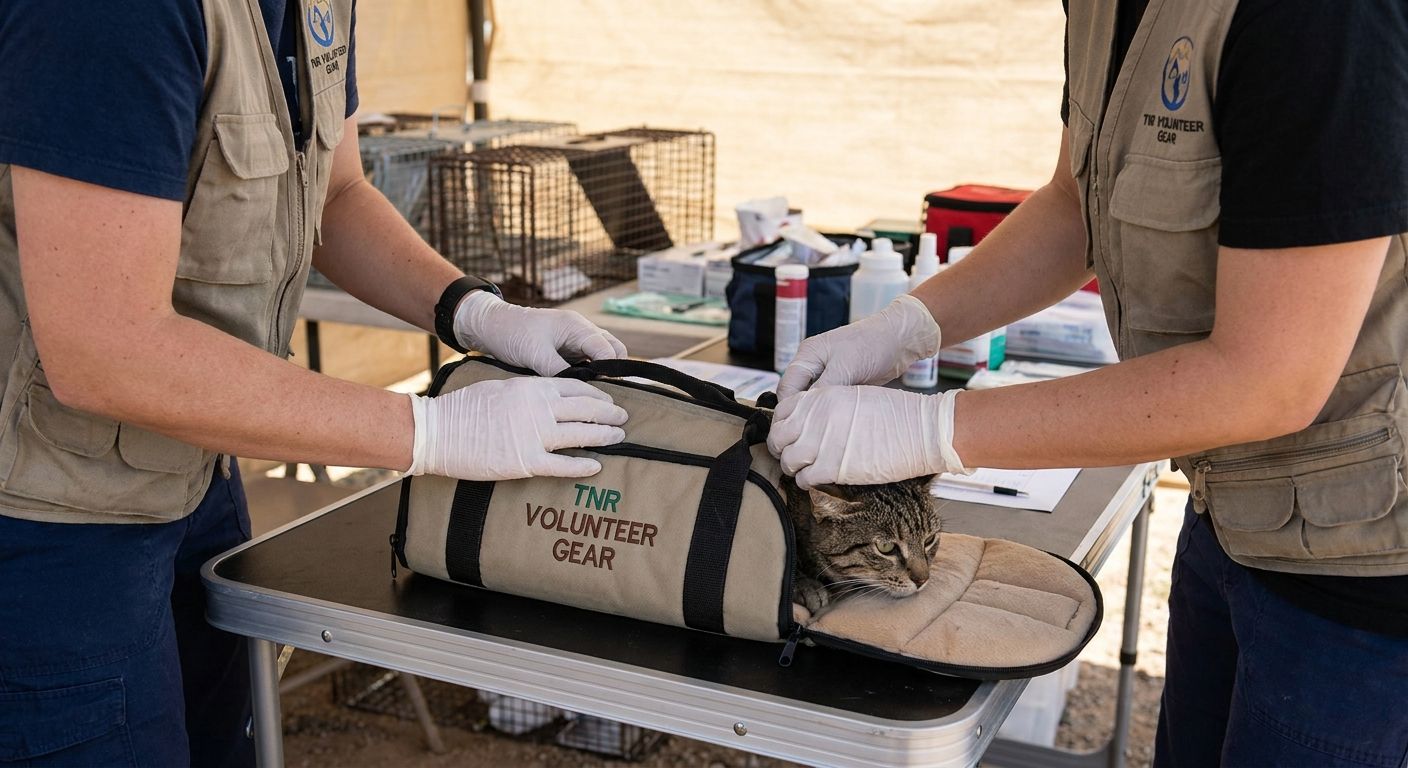
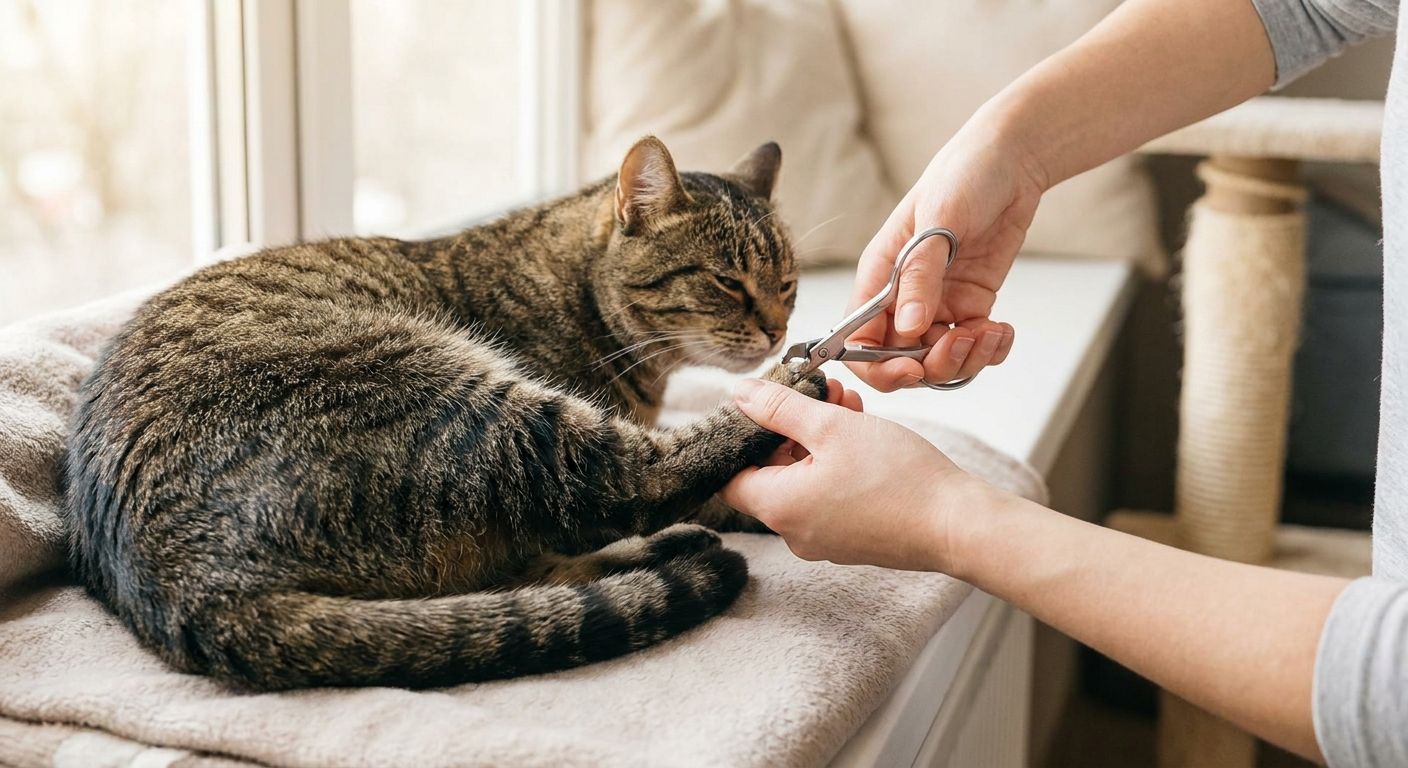
Yes — indoor cats still need nail trims, usually every 2 to 4 weeks in 2026, because staying indoors removes the concrete, bark, and dirt that naturally file claws down outdoors. The catch most pawrents miss: overgrown nails curl back into the paw pad before you ever see a snag in the carpet, causing limping or infection that looks like an injury but is really a grooming gap.
- Indoor cats still need nail trims every 2-4 weeks in 2026 — a scratching post alone does not replace them.
- Scratching posts file down the outer nail sheath, not the nail underneath, so growth continues untouched.
- Overgrown claws curl into the paw pad and can cause limping or infection before it looks like a nail problem.
- Dewclaws never touch the ground indoors or outdoors, so they need the most frequent checking.
- A one-piece stainless steel clipper with a wide blade view makes trims faster and reduces splitting.
Why this matters
Most pawrents assume an indoor cat's lifestyle protects its claws. It doesn't — it just changes what damages them.
Outdoor cats wear nails down through climbing, digging, and hunting on rough terrain. Indoor cats spend most of their day on carpet, tile, or wood, surfaces too smooth to file a claw naturally. That's why an indoor-only cat in Purrttie's customer base in Malaysia, Singapore, Thailand, and Australia can still need the same trim schedule as a cat that goes outside.
Skip trims long enough and the nail keeps curving in a circle. Eventually it pierces the pad from the inside, which is a vet visit, not a grooming session.
Do indoor cats really need nail trims?
Yes. The difference between indoor and outdoor cats isn't whether nails grow — it's what wears them down naturally.
| Factor | Outdoor cats | Indoor cats |
|---|---|---|
| Surface contact | Concrete, bark, and dirt file nails during normal movement | Carpet, tile, and wood floors barely wear nails at all |
| Activity level | Climbing and hunting keep claws worked down | Lower daily activity means less natural filing |
| Dewclaws | Still never touch the ground | Never touch the ground, so they curl fastest of all |
| Recommended trim frequency | Roughly every 4-6 weeks | Every 2-4 weeks in 2026 |
A scratching post helps with the outer sheath — the dead husk your cat sheds when it scratches — but it doesn't shorten the nail growing underneath. That's a common misread: owners see shed sheaths on the post and assume the job's done.
Why nail growth varies from cat to cat
A handful of factors decide how fast your indoor cat's nails grow past a comfortable length:
- Age — kittens and senior cats often need more frequent checks; kittens because nails grow fast, seniors because thicker, brittle nails curl sooner.
- Activity level — a cat that scratches its post daily wears the outer sheath faster than a cat that rarely uses one.
- Dewclaw position — the dewclaw sits higher on the leg and never contacts any surface, so it grows unchecked regardless of lifestyle.
- Multi-cat households — cats competing for the same scratching post may use it less consistently, leaving nails longer between wear cycles.
- Health conditions — reduced mobility from arthritis or joint pain cuts down on scratching and climbing, which slows natural wear.
- Nail thickness — older cats develop thicker, more brittle nails that split rather than wear evenly, making trims more urgent, not less.
A clipper that gives a clean, single cut matters here. The Full Stainless Steel Cat Nail Clipper style — cut from one piece of steel with an 18mm wide-view blade — is built to avoid the squeeze-and-split most owners struggle with on thick or brittle nails.
Nervous cat, same nail problem
An indoor cat that hates being handled doesn't need trims less — it needs a calmer way to get them done. That's the actual barrier for most owners, not the nail itself.
Holding a cat firmly for a trim often triggers the exact struggle that makes owners give up and skip weeks, sometimes months. A wrap-style hold that keeps a cat snugly, not tightly, contained lets you get to one paw at a time without a wrestling match. Less hisses, more kisses, more actual trims finished.


How often should indoor cats get nail trims?
Every 2 to 4 weeks in 2026 is the general range for indoor cats, tightening toward 2 weeks for kittens and seniors with fast-growing or brittle nails. Check the dewclaw on the inside of the front leg separately — it's the nail most likely to be overlooked because it never touches any surface indoors or out.
Do scratching posts replace nail trims?
No, scratching posts remove the dead outer sheath but don't shorten the nail growing underneath it. You'll still see the nail lengthen week over week even with heavy post use, which is why a visual and physical nail check stays part of the routine regardless of how often your cat scratches.
Can overgrown nails actually hurt an indoor cat?
Yes, overgrown nails can curl back into the paw pad and cause pain, a visible limp, or infection if left unchecked. This tends to happen gradually enough that owners mistake the limp for an injury rather than a missed trim, especially in cats that hide discomfort well.
FAQ
Can indoor cats still need nail trims in 2026?
Yes, indoor cats still need nail trims roughly every 2 to 4 weeks in 2026 because indoor surfaces don't file nails the way outdoor terrain does. Skipping trims lets nails curl toward the pad over several weeks.
How do I know if my indoor cat's nails are too long?
Nails are too long when they extend visibly past the paw pad or you hear clicking on hard floors. A curved, hook-shaped tip means the trim is overdue.
Do all four paws grow nails at the same rate?
No, front paw nails and dewclaws generally grow faster and need more frequent checks than back paw nails. Back paws see slightly more natural wear even indoors.
Is it safe to trim an indoor cat's nails at home?
Yes, home nail trims are safe with a proper clipper and a calm hold, and many owners find it easier than a vet or groomer visit once the cat is used to it. A single-piece steel clipper reduces the risk of splitting the nail.
What happens if you never trim an indoor cat's nails?
Nails keep growing in a circular pattern and eventually pierce the paw pad, causing pain and risk of infection. This is more common in senior indoor cats with reduced activity.
Do kittens need nail trims even if they stay indoors?
Yes, kittens often need trims more often than adult cats because their nails grow quickly during this stage. Sharp kitten nails also cause more accidental scratches during play.
Can a scratching post alone keep nails short enough?
No, a scratching post only removes the dead outer sheath and does not shorten the nail underneath. Regular trims are still needed alongside post use.
One last thing
The dewclaw is the nail most indoor cats' owners forget entirely, since it sits higher on the leg and never touches carpet, tile, or a scratching post. Left untrimmed long enough, it grows in a full circle and can grow into the leg itself. Check it every time you check the other nails, not as an afterthought.