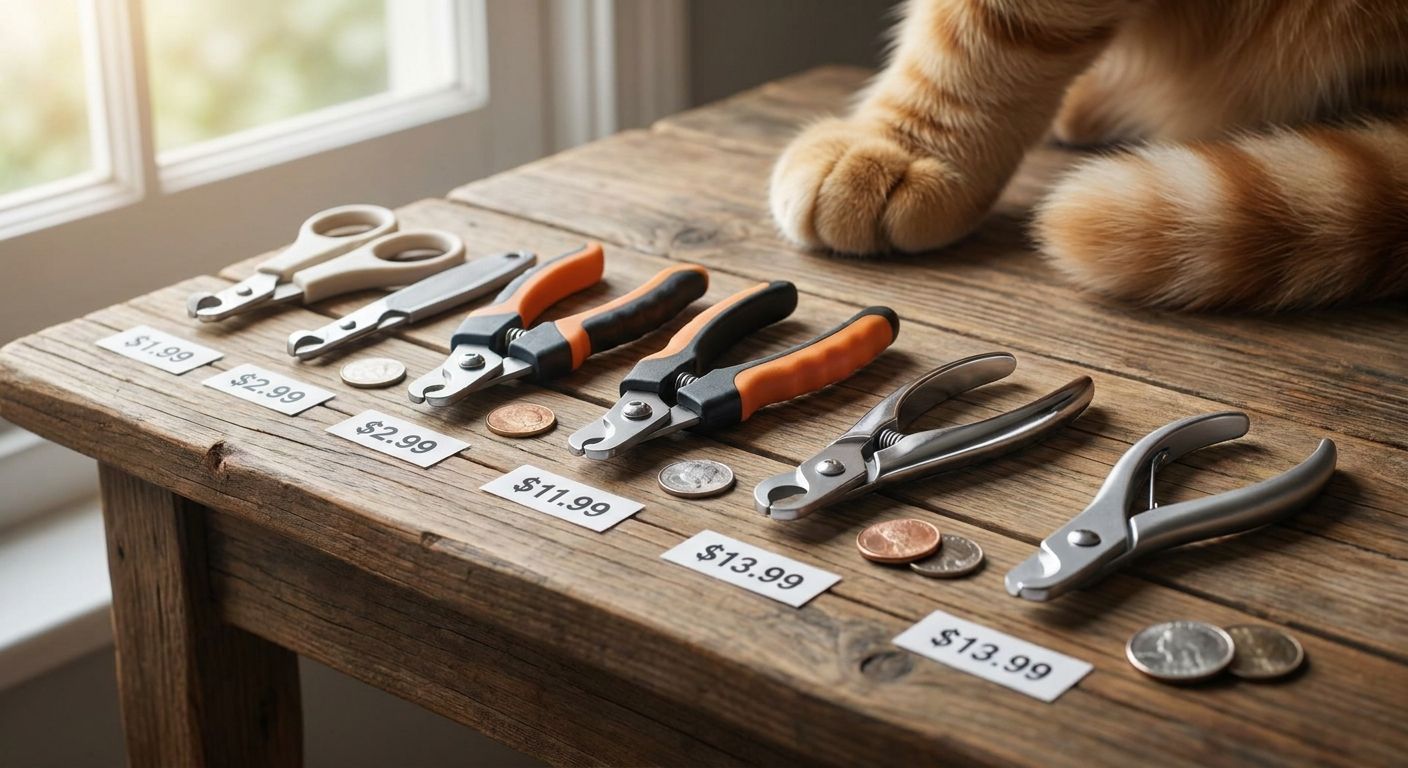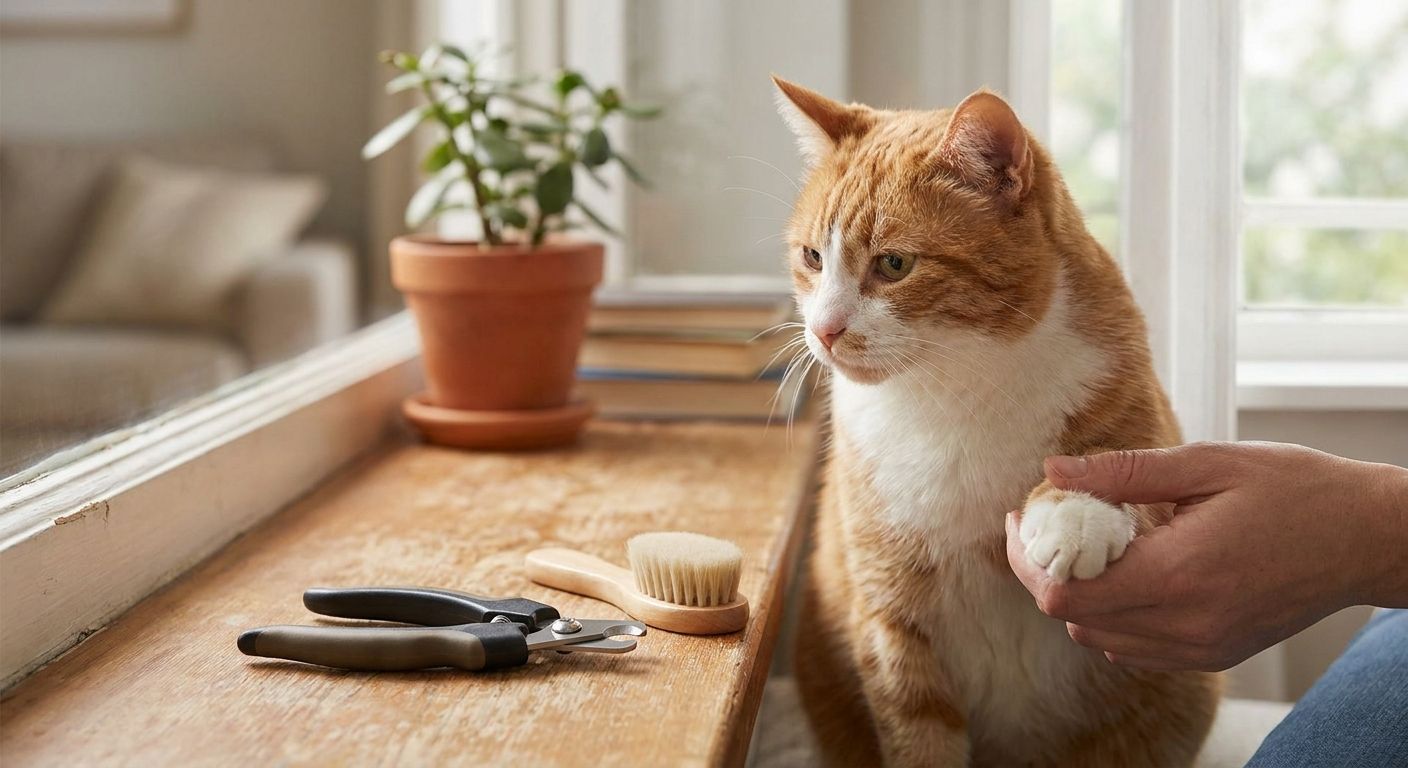
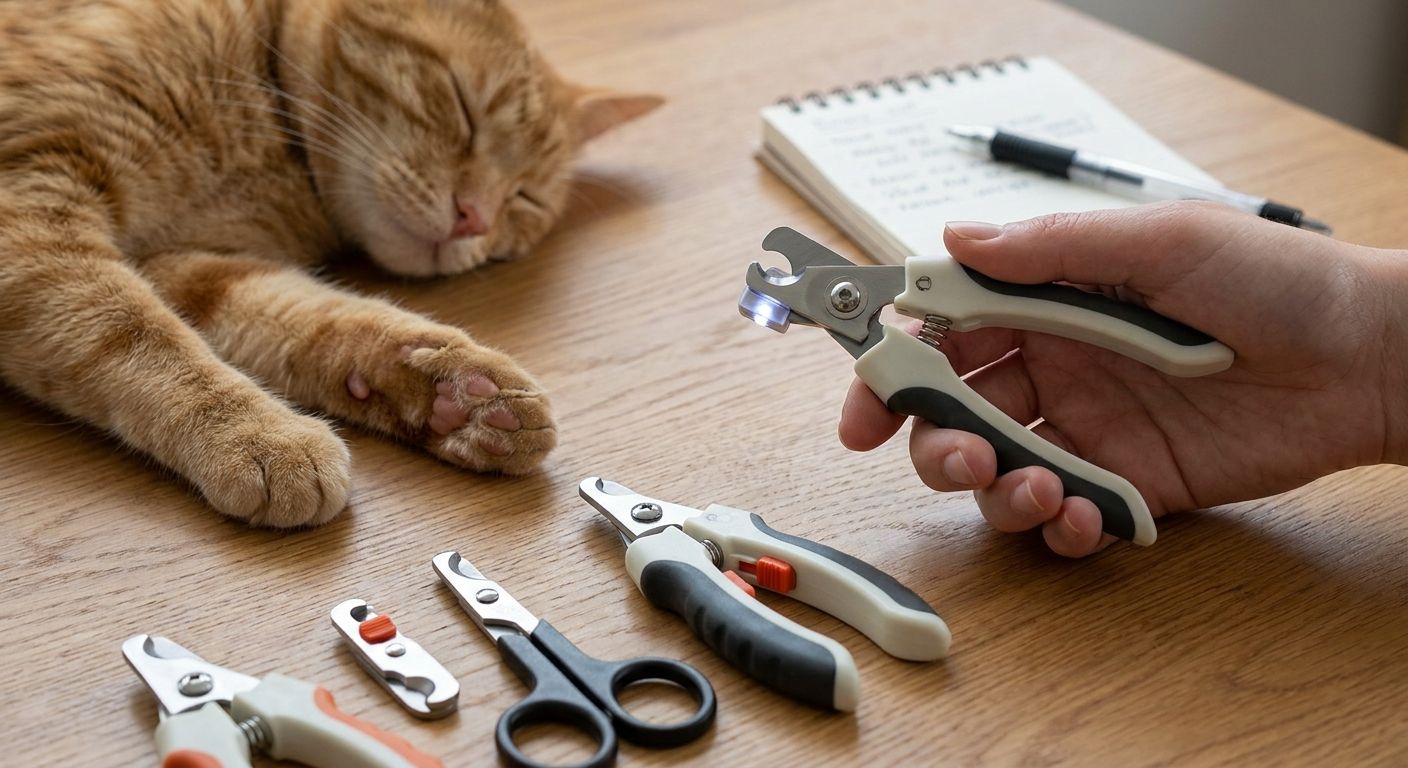
Not all cat nail clippers protect your cat's quick the same way — the blade design decides whether a trim ends in a treat or a trip to the vet. This guide breaks down cat nail clippers ranked by safety features so you know exactly which design fits your cat's age, temperament, and nail thickness before you buy.
- The Full Stainless Steel Cat Nail Clipper wins for its single-cut motion that avoids splitting or crushing the nail.
- Scissor-style spring clippers suit kittens with thin, soft nails but struggle once nails thicken.
- Guillotine clippers cut thick adult and senior nails fast but hide the quick until the nail is already inside the hole.
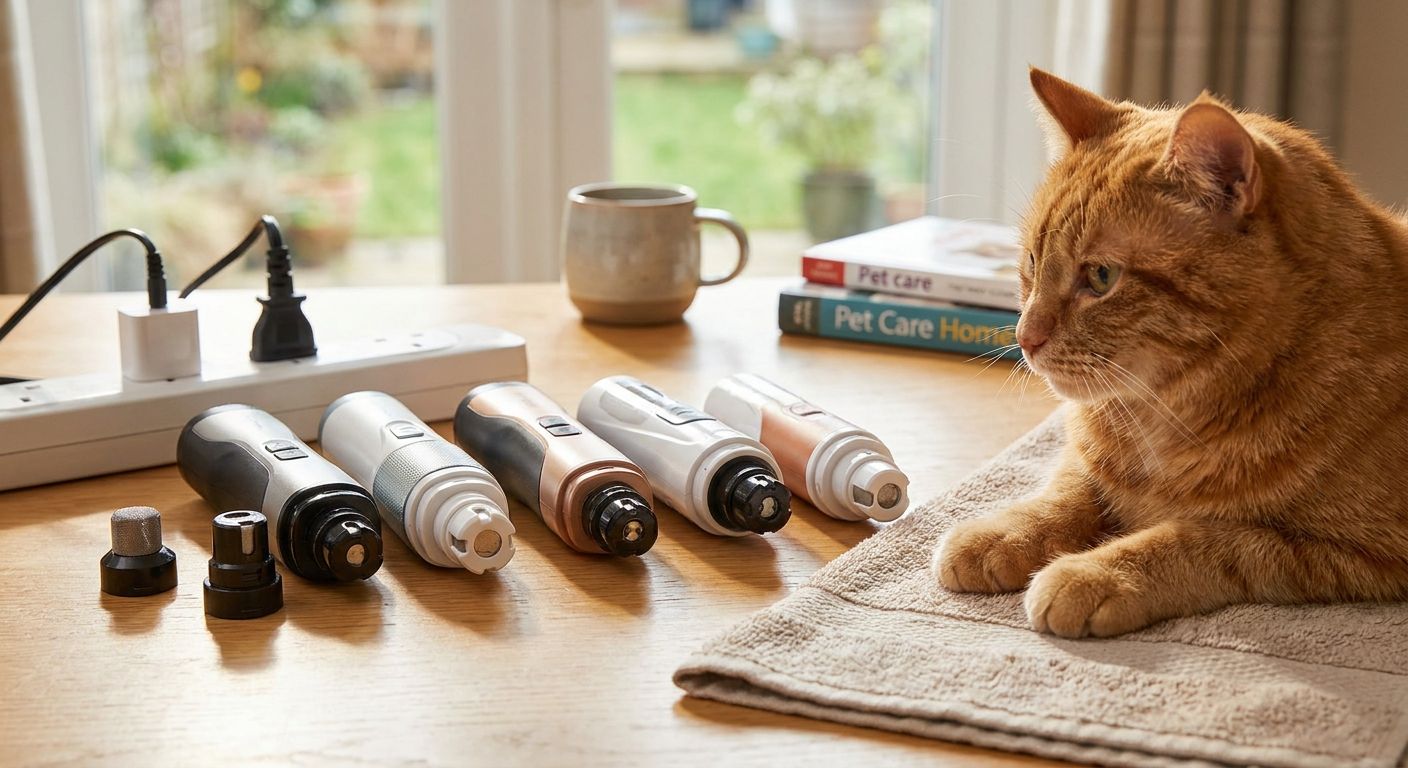
- Nail grinders work best for anxious cats who won't tolerate a single decisive cut.
- Human nail clippers repurposed for cats rank last for safety and should be skipped in 2026.
Why this matters
A badly designed clipper doesn't just cause a bad trim — it teaches your cat that nail time means pain, and that association compounds every month after. Purrttie's cat grooming range exists specifically because the wrong tool is usually why a cat starts dreading the whole ritual, not the trim itself.
Safety in a cat nail clipper comes down to blade mechanics, not marketing. A tool that squeezes before it cuts crushes the nail bed; a tool that hides the quick behind a hole invites a guessing game. Ranking clippers by these mechanics in 2026 gives you a decision, not just a shopping list.
What makes the best cat nail clippers for safety
- Single-motion blade — one clean cut beats a squeeze-and-recheck action that crushes before it slices
- Wide viewing window — you need to see the pink quick before the blade closes, not after
- Size-appropriate opening — a kitten nail and a senior cat's thick nail need different blade gaps
- Non-slip, ergonomic grip — a hand that slips mid-cut is the real safety risk, not the cat moving
- Rust-resistant material — clippers get washed after every use around a cat's paw; steel that corrodes gets dull and unsafe fast
- Noise and vibration level — for anxious cats, a loud grinder motor can undo more trust than a quiet clip ever would
Cat nail clippers ranked by safety features: at a glance
| Clipper type | Best for | Standout safety feature | Key limitation |
|---|---|---|---|
| Full Stainless Steel Cat Nail Clipper | Precise, single-cut adult trims | 18mm wide-view blade, one-piece steel | Less forgiving for total beginners |
| Scissor-style spring clippers | Kittens and thin nails | Light squeeze pressure | Squeezes before it cuts on thicker nails |
| Guillotine-style clippers | Thick or fast-growing nails | Leverage cuts through dense nail with less hand strength | Hole obscures the quick until it's too late to reassess |
| Nail grinders / filers | Anxious cats who resist cutting | No single decisive cut to mistime | Motor noise can itself trigger stress |
| Human nail clippers | Nobody — comparison only | None specific to cat anatomy | Flat blade doesn't match a cat's curved nail |
1. Full Stainless Steel Cat Nail Clipper: best for precise, single-cut trims
The Full Stainless Steel Cat Nail Clipper is machined from a single piece of steel with an 18mm wide-view blade, built around the idea that one clean snip beats repeated squeezing. That single-piece construction means there's no separate hinge or plate to loosen over time, and the wide blade window lets you spot the pink quick before you commit to the cut.
Full Stainless Steel Cat Nail Clipper pros:
- One-motion blade avoids the crush-then-split pattern common with cheaper scissor clippers
- 18mm blade window makes the quick easy to see on light and dark nails
- Single-piece steel resists the rust that builds up from washing after every session
- Sized for standard adult cat nails, not oversized dog clippers repurposed for cats
Full Stainless Steel Cat Nail Clipper cons:
- The firmer single-cut action feels different if you're used to a softer scissor squeeze
- Not built for the gradual, no-cut approach some severely anxious cats need
- No built-in nail catcher tray, so clippings land wherever the cat is sitting
Best for: pawrents who want one confident motion per nail instead of squeeze-and-recheck cutting. Verdict: Buy.


2. Scissor-style spring clippers: best for kittens
Scissor-style clippers use a spring-loaded action with a smaller blade opening, which matches the size of a kitten's paw better than adult-sized designs. The spring return also means less hand fatigue if you're doing several short sessions across a week instead of one full trim.
Scissor-style clippers pros:
- Light squeeze pressure works well on soft, thin kitten nail beds
- Spring return reduces hand strain during frequent short sessions
- Small blade opening limits how much nail you can accidentally take at once
Scissor-style clippers cons:
- The squeeze action can crush before it fully cuts once nails thicken past kitten stage
- Small opening becomes a limitation as your cat grows into adult nail size
- Cheaper models flex at the hinge, which dulls the cutting edge quickly
Best for: kittens and cats with fine, thin nails who don't yet need adult-sized clippers. See the full breakdown in best cat nail clippers for kittens. Verdict: Buy for the kitten stage, then reassess as nails thicken.
3. Guillotine-style clippers: best for thick or fast-growing nails
Guillotine clippers work by inserting the nail through a hole and sliding a single blade across it. The leverage in this design cuts through dense, older-cat nails with less hand strength than a scissor clipper needs, which matters if you're trimming a large or senior cat regularly.
Guillotine-style clippers pros:
- Leverage design handles thick, fast-growing nails without extra squeezing force
- Wide hole accommodates larger adult and senior cat nails
- Simple, familiar design many pawrents already own from a previous pet
Guillotine-style clippers cons:
- The hole hides the quick until the nail is already inserted, which raises the risk of misjudging the cut
- Blade dulls faster with repeated use on thick nails, and a dull guillotine blade crushes rather than slices
- Requires a steady hand to center the nail correctly every time
Best for: thick or fast-growing nails on adult and senior cats where cutting power matters more than a wide viewing window. More detail is in best cat nail clippers for thick nails. Verdict: Hold — fine for thick nails, but only with good lighting and full attention on centering.
“A guillotine clipper hides the quick until the nail is already through the hole — that's a design gap, not a cat behavior problem.”
4. Nail grinders and filers: best for anxious cats
A grinder shortens the nail gradually with a rotating file instead of one decisive cut, which removes the moment of commitment that spooks a lot of cats. Because there's no single snip, you can stop the instant your cat pulls back, without any risk of a half-finished cut.
Nail grinder pros:
- No single decisive cut means one mistimed movement doesn't cause a nick
- Gradual filing lets you pause the second your cat shows discomfort
- Smooths the nail edge afterward, leaving no sharp post-trim point
Nail grinder cons:
- Motor noise and vibration can spook cats who haven't been desensitized to the sound first
- Sessions run longer than a single clip, which tests patience mid-trim
- Not practical for a cat who's already stressed and squirming
Best for: cats who tolerate handling but flinch specifically at clipper or scissor sounds. Cross-reference with best cat nail clippers for anxious cats before choosing this route. Verdict: Hold — effective only after the motor sound is introduced separately from trim time.
5. Human nail clippers repurposed for cats: skip this in 2026
Household nail clippers use a flat blade built for a flat human nail, not the curved shape of a cat's claw. That mismatch means pressure lands unevenly across the nail instead of cutting straight through, which raises the odds of crushing rather than slicing clean.
Human clipper cons:
- Flat blade design doesn't match a cat's curved nail shape
- No viewing window sized for a cat's small quick
- Higher risk of an uneven, crushed cut compared to any purpose-built cat clipper
Best for: nobody — this entry exists as the comparison point every other option beats. Verdict: Skip.
How we ranked these
Each clipper type was measured against the six criteria above: blade motion, quick visibility, size fit, grip, material durability, and noise level. The Full Stainless Steel Cat Nail Clipper scored highest on blade motion and quick visibility together, which is why it leads the ranking rather than just topping one category.
Which cat nail clipper should you choose in 2026?
For most adult cats, the Full Stainless Steel Cat Nail Clipper is the default pick — one clean cut, a wide window to check the quick, and steel that holds its edge through repeated washing. If you're trimming a kitten, size down to a scissor-style clipper until the nails thicken. If your cat is thick-nailed or elderly, a guillotine-style clipper with good lighting does the job, and if your cat won't tolerate a cut at all, a grinder paired with prior sound desensitization is the safer route. Pairing any of these with something like the Snug Pro Cat Wrap for gentle restraint reduces the movement that causes most clipping accidents in the first place, regardless of which clipper you land on.
FAQ
What's the best cat nail clipper for safety in 2026?
The Full Stainless Steel Cat Nail Clipper ranks highest for safety in 2026 because its single-cut blade motion avoids the crush-then-split pattern common with scissor-style clippers. Its 18mm wide-view blade also makes it easier to spot the quick before cutting.
Are guillotine or scissor-style clippers safer for cats?
Scissor-style clippers are generally safer for kittens and thin nails because the squeeze pressure is lighter, while guillotine clippers suit thick adult nails but hide the quick inside the hole until the nail is already inserted. Neither is universally safer — the right choice depends on nail thickness and how well you can see the quick before cutting.
Is a nail grinder safer than clippers for anxious cats?
A nail grinder can be safer for anxious cats because it removes the single decisive cut that often triggers a flinch. The tradeoff is motor noise, which needs to be introduced separately from trim time or it becomes its own source of stress.
Can I use human nail clippers on my cat?
Human nail clippers are not recommended for cats because the flat blade doesn't match the curved shape of a cat's claw, which increases the risk of an uneven or crushed cut. A purpose-built cat nail clipper with a wide viewing window is the safer choice.
What safety features matter most when buying cat nail clippers in 2026?
Look for a single-motion blade, a wide window to see the quick, a size-appropriate opening for your cat's age, and a non-slip grip. Rust-resistant steel matters too, since clippers get washed after nearly every use.
Do stainless steel cat nail clippers stay sharper longer than other materials?
Single-piece stainless steel construction resists the corrosion that dulls cheaper plated blades over repeated washing. A dull blade is a safety issue on its own, since it crushes the nail instead of slicing it cleanly.
When should I switch my kitten from scissor-style clippers to an adult clipper?
Switch once the scissor clipper starts squeezing rather than cutting cleanly through the nail, which usually signals the blade opening has become too small. This typically lines up with the nail thickening as your kitten grows into adulthood.
Is at-home nail trimming safe for senior cats?
At-home trims can be safe for senior cats with the right clipper and gentle restraint, though thicker, more brittle nails need a design like a guillotine clipper with good lighting. Senior cats also tend to tolerate handling less, so shorter, more frequent sessions work better than one long trim.
One last thing
The safety gap in most cat nail trims isn't the blade — it's the ten seconds before the cut, when the cat starts squirming and the clipper gets rushed. Solving the restraint problem first, then picking the right clipper for your cat's nail stage, cuts the accident rate more than any single blade upgrade in 2026.