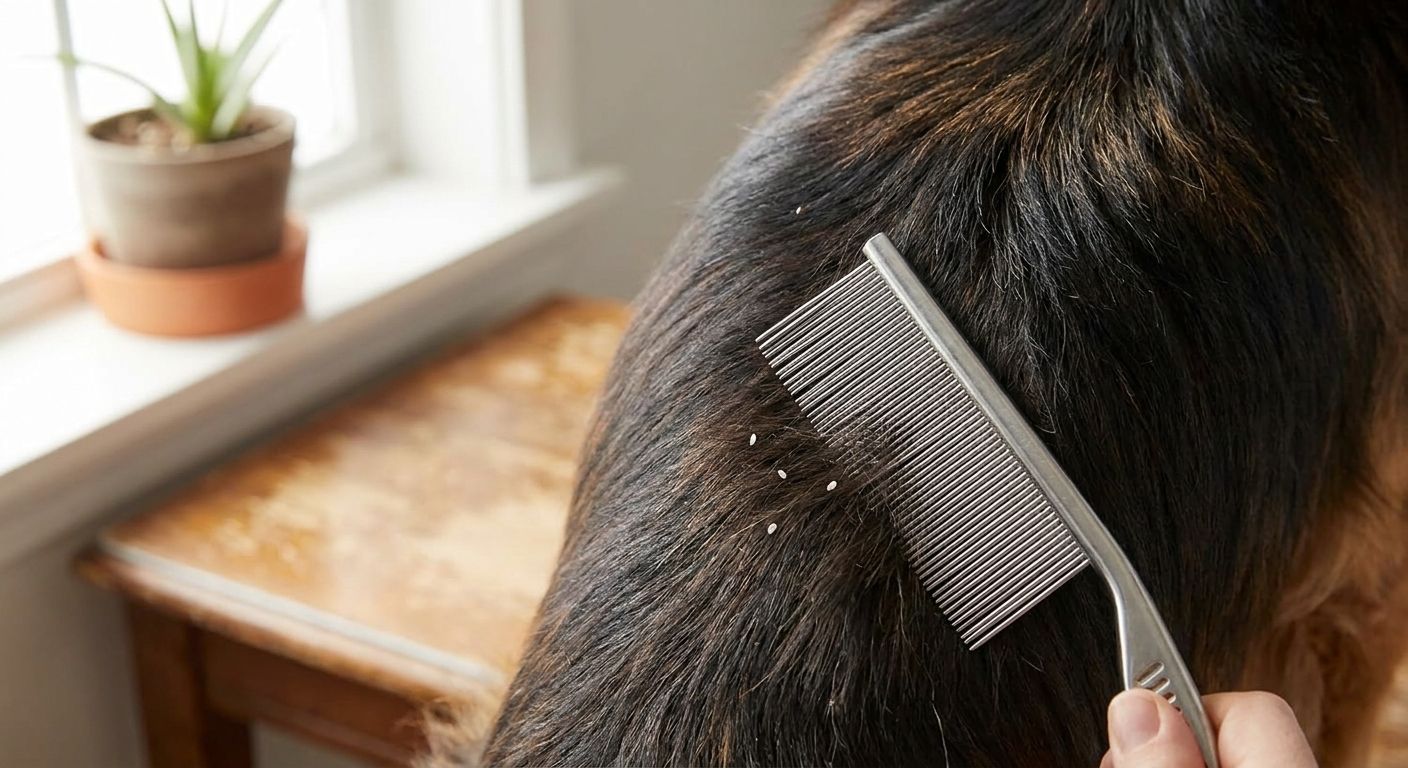
A flea comb removes adult fleas and flea dirt from a cat's coat, but it does not reliably remove flea eggs. Flea eggs are smooth, roughly 0.5mm oval specks that aren't glued to the fur the way flea dirt is, and most of them fall off the coat within a day or two of being laid, landing in carpet, bedding, and couch cracks before a comb ever reaches them. The comb still earns its place in a flea routine, just not as an egg-removal tool.
- Flea combs catch adult fleas (1.5-3mm) and flea dirt but miss most flea eggs (0.5mm, non-sticky).
- Flea eggs fall off a cat's coat within 1 to 2 days of being laid, often before a grooming session happens.
- Combing alone won't clear an infestation in 2026 or any other year because eggs and larvae live in the environment, not just the coat.
- Vacuuming, hot-washing bedding, and treating the home matter more than combing for egg control.
Why this matters
A lot of pawrents comb their cat once, see no live fleas fall out, and assume the problem is solved. That's the trap. Adult fleas on the cat are only a small slice of the total population in an infested home at any given time — eggs, larvae, and pupae are doing most of the multiplying somewhere in your carpet, sofa, or cat's grooming bag. Knowing what a comb actually catches, versus what it misses, changes how you treat the whole household, not just the cat.
Purrttie doesn't sell flea treatments, but the same coat-handling skills used for nail trims and grooming checks apply directly here — a calm, controlled comb-through is still the fastest way to see what's on your cat right now.
Can Flea Combs Remove Flea Eggs? What The Comb Actually Catches
A flea comb's teeth are spaced tightly, roughly 0.3mm apart, built to trap the body of an adult flea as it tries to slip through the coat. That spacing works for something 1.5 to 3mm long. It does very little for an egg a third that size that isn't attached to anything in the first place.
| Life stage | Approximate size | Caught by a flea comb? | Why |
|---|---|---|---|
| Adult flea | 1.5-3mm | Yes | Body is trapped between closely spaced teeth |
| Flea dirt (feces) | Pepper-like specks | Yes | Sticks near the skin, pulls out with the fur |
| Flea eggs | ~0.5mm, smooth, white | No | Not sticky, already falling off before combing |
| Flea larvae | 2-5mm, light-avoidant | Rarely | Burrow into carpet and bedding, not the coat |
The practical read: a comb-through is a good diagnostic — it tells you fleas are active — but it's a weak treatment for the egg stage specifically.
Why flea eggs slip past even careful combing
- Eggs aren't glued to fur. Unlike flea dirt, the egg's shell has no adhesive coating, so nothing holds it to the hair shaft.
- Gravity beats the comb. Most eggs drop off the coat within 1 to 2 days of being laid, often before you ever pick up the comb.
- Size mismatch. Comb teeth are spaced to trap a 1.5-3mm adult body, not a 0.5mm oval egg that can roll between the gaps.
- Eggs scatter into the environment, not just the coat. Carpet fibers, bedding, and upholstery become the real egg reservoir, well outside the reach of any comb.
- Combing can trigger more laying. Disturbing adult fleas mid-feeding sometimes prompts a burst of egg-laying in that same session, before you've finished the pass.
“A flea comb tells you fleas are present. It doesn't tell you the infestation is over.”
Do flea combs kill fleas?
Flea combs don't kill fleas on contact — they physically remove and trap adult fleas so you can drown or crush them afterward. They don't chemically affect fleas still on the cat, and they leave eggs and larvae in the home completely untouched, which is why combing is a monitoring tool rather than a stand-alone fix in 2026 or any other year.
How often should you comb a cat during a flea problem?
Vets commonly recommend combing once or twice a day for the first one to two weeks of an active flea problem, then dropping to two or three times a week once fewer fleas turn up. That daily contact also happens to be the same window most cats decide whether grooming is a chase or a routine — a cat wrapped snugly during the check, using something like the Snug Pro Cat Wrap, holds still long enough for you to actually see the base of the coat instead of just the surface.
What actually gets rid of flea eggs at home?
Flea eggs come out of a cat's coat mostly through vacuuming carpets and upholstery, washing bedding in hot water, and treating the environment directly rather than through combing. Because eggs fall off the host within 1 to 2 days, the floor and furniture usually carry more of them than the cat does by the time you notice a problem, which is why environmental treatment matters as much as anything done to the coat.
Where combing still earns its place
A flea comb stays useful for three things a household flea treatment can't do on its own:
- Confirming an infestation exists before you commit to full-house treatment.
- Pulling adult fleas and flea dirt off the coat between treatments, which keeps the cat more comfortable.
- Monitoring progress — fewer adults and less dirt on the comb over a week or two is a real signal the treatment is working.
What combing won't do is replace vacuuming, laundering, or a vet-directed treatment plan aimed at the egg and larval stages sitting in your home rather than on your cat.
A cat that tolerates a slow, unhurried comb-through is also easier to check for nail issues, skin flakes, or mats in the same sitting. If daily handling is the sticking point, the same desensitization approach used for grooming works just as well for a flea check — short sessions, no restraint fights, quit while the cat's still calm.
FAQ
Can flea combs remove flea eggs?
No, flea combs don't reliably remove flea eggs. Eggs are smooth, about 0.5mm, and mostly fall off the coat within 1 to 2 days, so a comb built to trap 1.5-3mm adult fleas simply misses them.
What size are flea eggs?
Flea eggs measure roughly 0.5mm, oval, and white or off-white. That size is well below what a standard flea comb's teeth spacing is built to trap.
Do flea combs catch flea dirt?
Yes, flea combs are effective at pulling out flea dirt. It sticks near the skin the way flea eggs don't, so the comb's teeth grab it as they pass through.
How do you tell flea eggs from flea dirt on a cat?
Flea dirt turns reddish-brown when placed on a wet paper towel because it's digested blood, while flea eggs stay white and don't dissolve or change color.
Is a flea comb enough to get rid of fleas?
No, a flea comb alone won't clear an infestation because it leaves eggs, larvae, and pupae in the environment untouched. Vacuuming, laundering, and a treatment plan are still needed.
Do flea eggs hatch on the cat or in the house?
Most flea eggs hatch in the house, not on the cat, because eggs fall off the coat within 1 to 2 days of being laid and land in carpet, bedding, or furniture.
Can I use a flea comb on kittens?
A flea comb is generally safe for kittens old enough to sit through a gentle comb-through, but check age guidance on any flea treatment product used alongside it.
One last thing
Widely cited flea life-cycle breakdowns put eggs at roughly half of the total flea population in an infested home at any given moment, with adult fleas actually on the cat making up only a small fraction of that total. That's the number that should reset expectations for 2026: even a flawless daily comb-through is only ever working on the smallest slice of the problem, which is exactly why environmental treatment carries the real weight in clearing an infestation, not the comb.