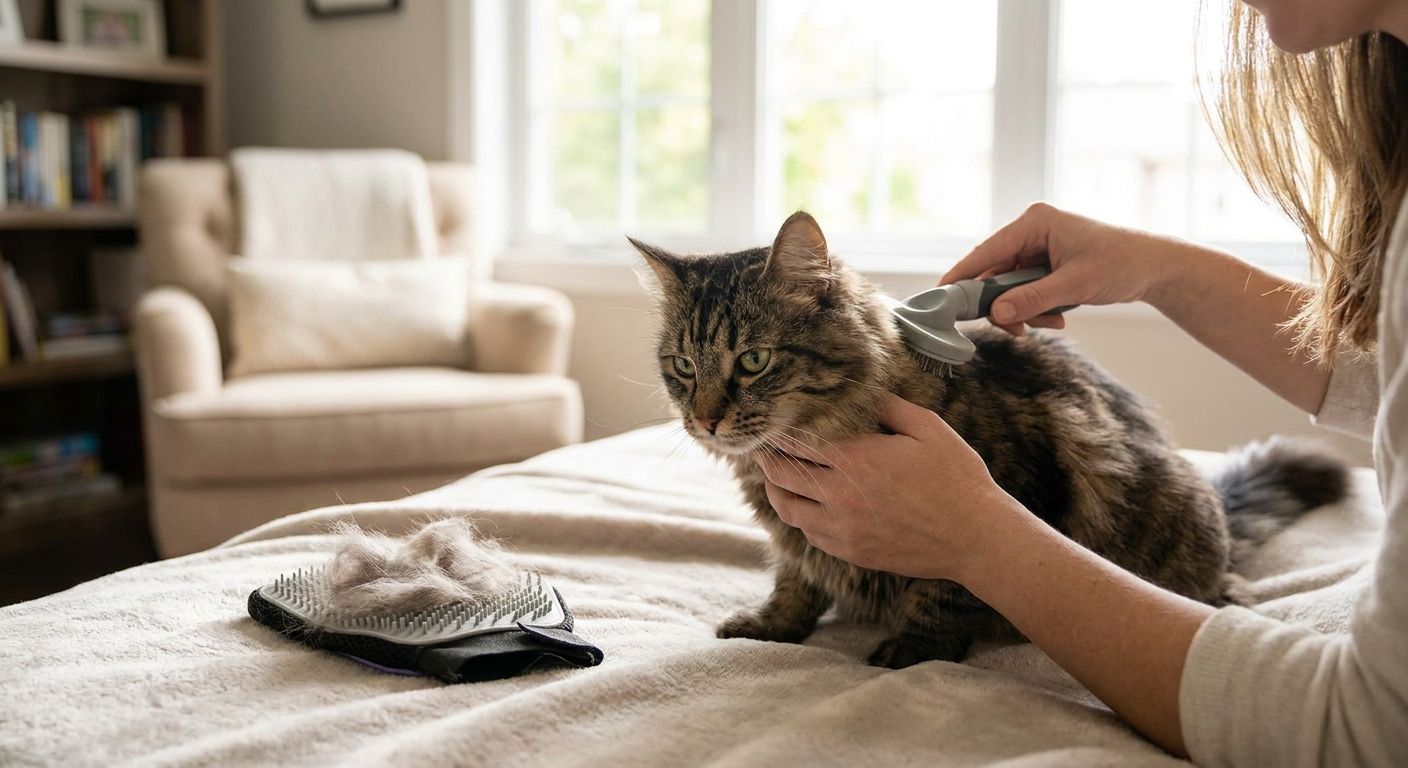
Yes, regular grooming reduces hairballs, and the mechanism is simple: brushing removes loose fur before your cat swallows it while self-grooming. Short-haired cats generally do well with brushing 2 to 3 times a week, while long-haired breeds need it daily to keep pace with shedding. Grooming alone won't solve hairballs caused by poor diet, low water intake, or a digestive issue underneath the fur.
- Regular grooming reduces hairballs by pulling out loose fur before your cat ingests it during self-grooming.
- Short-haired cats need brushing 2-3x a week; long-haired cats need it daily to keep hairballs down.
- Diet, hydration and coat health matter as much as brushing frequency for hairball control.
- Purrttie's Snug Pro Cat Wrap makes longer brushing sessions calmer for cats who fight the brush.
- Frequent vomiting of hairballs despite regular grooming means it's time to see a vet, not brush harder.
Why this matters
Cats swallow a surprising amount of their own fur every time they groom. That fur either passes through the gut or, when there's too much of it, balls up and comes back up on your rug in 2026's least favourite houseguest moment.
The fix isn't complicated, but it's often skipped. A brush that removes fur before it's swallowed is doing the job a hairball remedy tries to do after the fact. Owners who brush on a schedule report fewer hairball episodes than owners who only brush when they remember, because the loose undercoat never gets the chance to build up.
For a full grooming and handling routine, start at the Purrttie homepage to see the tools built specifically around calmer sessions.
Can regular grooming reduce hairballs?
The short answer is yes, and the supporting logic is straightforward:
| Grooming habit | Effect on hairballs |
|---|---|
| Brushing loose fur out before it's swallowed | Fewer hairballs, since less fur enters the gut |
| Skipping brushing during shedding season | More hairballs, as loose undercoat builds up fast |
| Brushing without addressing diet or hydration | Some reduction, but not full control |
| Combining brushing with a fibre-appropriate diet | Best overall hairball control |
Brushing works because it interrupts the cycle at the source. A cat that swallows less fur during self-grooming has less material to form a hairball with in the first place. That's the whole mechanism, and it's why vets consistently list brushing as the first line of defence before any supplement or remedy.
Short-haired cats: brush 1-2 times a week
Short-haired breeds shed less volume per session than long-haired cats, so 1 to 2 brushing sessions a week is usually enough to keep loose fur from building up. During spring and autumn shedding peaks, bumping this up to every other day helps more than any hairball paste.
Long-haired cats: daily brushing works best
Long-haired breeds like Persians and Maine Coons produce far more loose undercoat, and skipping even a few days lets mats and loose fur accumulate together. Daily brushing, even for 3-5 minutes, keeps the coat manageable and cuts down what gets swallowed.
Senior or arthritic cats: shorter, gentler sessions
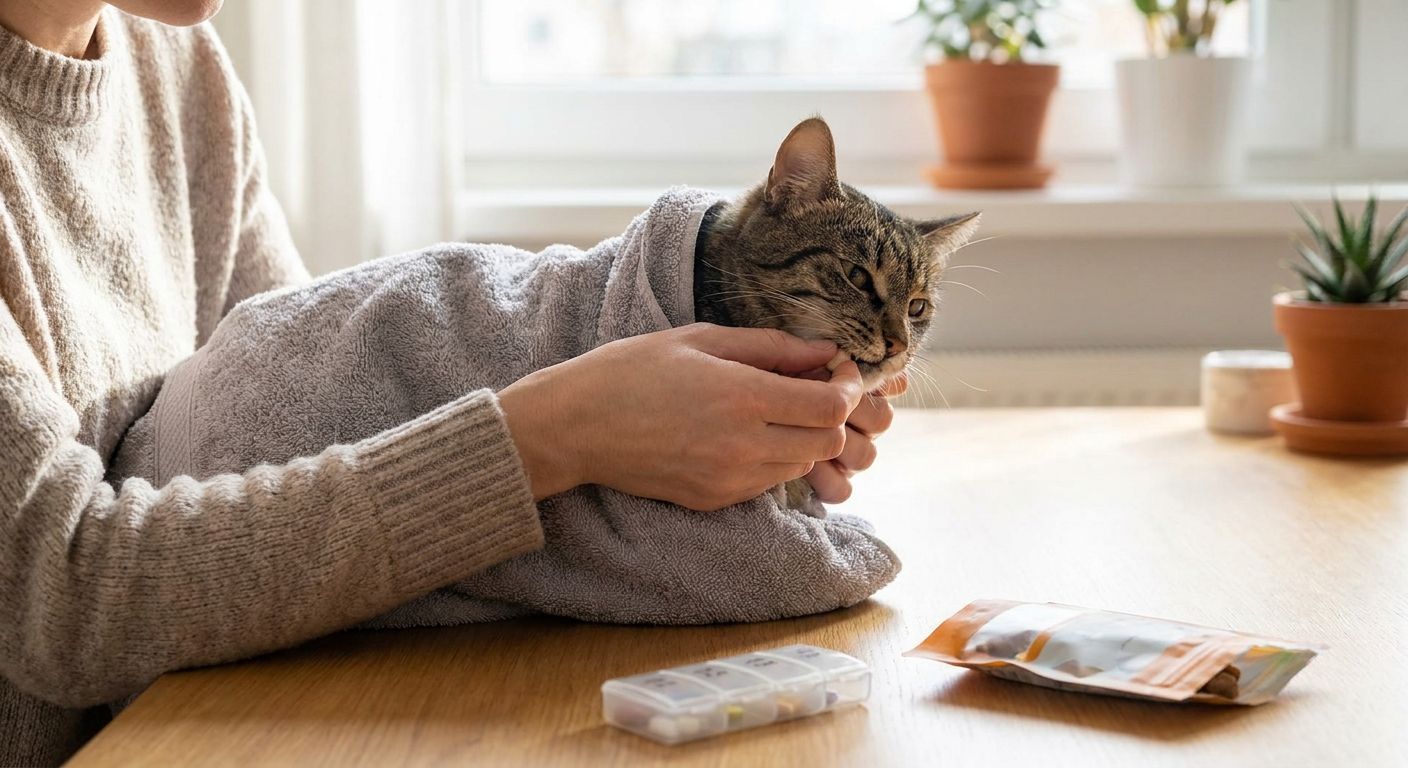
Older cats often groom themselves less because bending and reaching hurts, which means more fur sits on the coat waiting to be swallowed in short bursts rather than removed by regular self-grooming. Shorter, more frequent human-assisted brushing sessions fill that gap, and a wrap-style hold like the Snug Pro Cat Wrap keeps a stiff or anxious senior cat still without pinning them down.
Why hairball frequency varies from cat to cat
Hairball frequency isn't just about brushing. These factors move the needle too:
- Coat length and density — longer, denser coats shed more fur into the mouth during self-grooming
- Season — spring and autumn coat blowouts spike hairball frequency regardless of brushing habit
- Diet and fibre content — some diets are formulated to help fur pass through rather than ball up
- Hydration — cats drinking less water tend to have drier stools and slower fur transit
- Age and mobility — stiff joints reduce a cat's own grooming reach, leaving fur unremoved
- Grooming tool used — a dull or wrong-toothed brush leaves loose undercoat behind even with regular use
Cats that fight the brush often get groomed less often simply because the session is stressful for both sides. That's the gap a calming tool is meant to close, not by forcing more grooming but by making the grooming that does happen actually effective.


Most full grooming routines pair brushing with nail trims in the same sitting, since a calm cat rarely stays calm for two separate sessions later in the day. The best cat nail clippers for anxious cats guide covers pairing a trim with a brushing session without a second round of stress.
How often should I brush my cat to prevent hairballs?
Brush short-haired cats 1 to 2 times a week and long-haired cats daily to meaningfully cut hairball frequency. Shedding season is the exception — bump both up until the coat blowout settles, usually a few weeks in spring and autumn.
Does diet also help with hairballs, or is brushing enough?
Diet helps alongside brushing, not instead of it, since fibre-formulated food supports fur passing through the gut rather than balling up. Brushing removes fur before it's swallowed; diet manages what's already inside, and the two work best together.
When should I see a vet about hairballs despite regular grooming?
See a vet when hairballs continue despite consistent brushing, especially if your cat is vomiting more than once or twice a month or seems lethargic afterward. Frequent hairballs on a well-groomed cat usually point to a digestive or dietary issue rather than a fur problem.
Many owners keep the brushing and the nail trim on the same schedule since a cat already settled for one is usually settled for both. If nail trims are the part of the routine that turns into a wrestling match, the best cat grooming bags for stress-free nail trims roundup covers tools built for exactly that handoff.
“Brushing removes hair before your cat swallows it — that's the whole mechanism behind fewer hairballs.”
FAQ
Can regular grooming reduce hairballs in cats?
Yes, regular grooming reduces hairballs by removing loose fur before your cat swallows it during self-grooming. Short-haired cats need 1-2 sessions a week; long-haired cats need daily brushing.
How often should I groom my cat to stop hairballs?
Groom short-haired cats 1 to 2 times a week and long-haired cats daily to control hairball frequency. Increase this during spring and autumn shedding peaks.
Does brushing alone stop all hairballs?
Brushing alone reduces hairballs but doesn't eliminate them entirely, since diet, hydration and coat health also play a role. A cat with a healthy diet and regular brushing has the lowest hairball frequency.
Is a hairball every week normal?
A hairball every week is not typical for a well-groomed cat and usually signals a diet, hydration or digestive issue worth a vet visit. Occasional hairballs during shedding season are more normal.
What brush works best for reducing hairballs?
The best brush for reducing hairballs is one matched to coat length — a slicker brush for long fur, a shorter-bristle brush for short coats. The right tool removes more loose undercoat per session than a mismatched one.
Do kittens need grooming to prevent hairballs?
Kittens groom less efficiently than adult cats and benefit from gentle, short brushing sessions to build the habit early. Starting young also makes nail trims and vet visits easier later.
Can a calming wrap help with grooming sessions?
A calming wrap like the Snug Pro Cat Wrap helps by keeping a squirmy or anxious cat gently still, so brushing sessions actually happen instead of getting cut short. This makes regular grooming more consistent, which is what reduces hairballs.
Does wet food help with hairballs more than dry food?
Wet food supports hydration better than dry food, and better-hydrated cats tend to pass fur through the gut more easily. This works alongside brushing, not as a replacement for it.
One last thing
The part most owners miss isn't the brush, it's the timing: brushing right before a cat's usual self-grooming window (often after a meal or a nap) catches loose fur before your cat gets to it first. Brush after the cat has already groomed itself and you're just cleaning up fur that's already been ingested. Shift the timing and the same brushing frequency does noticeably more work in 2026 than it did on the old schedule.