Yes — arthritic cats can tolerate regular nail trims in 2026, but only when the trim itself changes shape: shorter sessions, one or two nails at a time, and no forcing a sore hip or elbow into a stretched position. The pain that makes cats fight nail trims almost always comes from the restraint, not the clipper.
- Can arthritic cats tolerate regular nail trims? Yes, when sessions are shortened and joints aren't forced into full extension.
- Radiographic signs of degenerative joint disease appear in over 90% of cats over 12 years old, per feline medicine research.
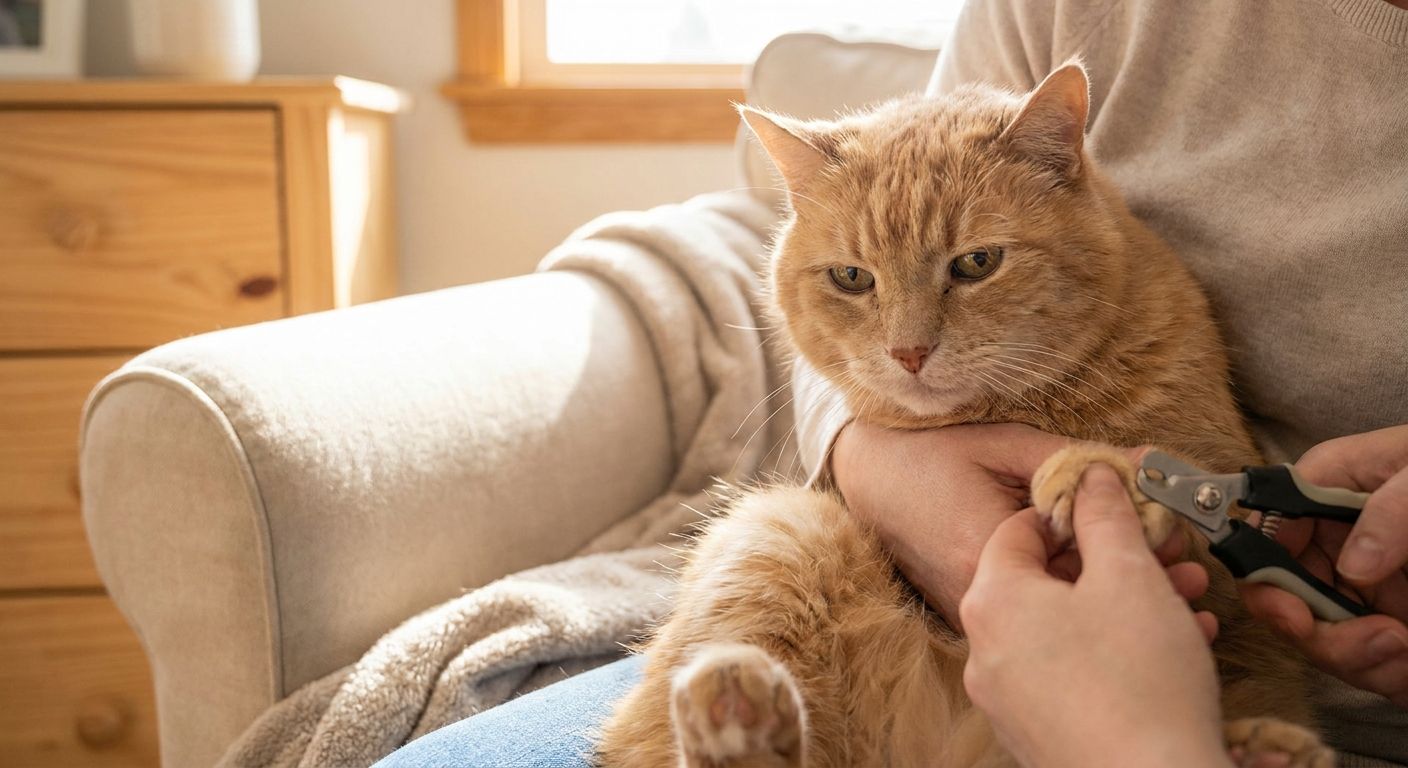
- Trim 1-2 nails per sitting instead of restraining the whole cat for one long session.
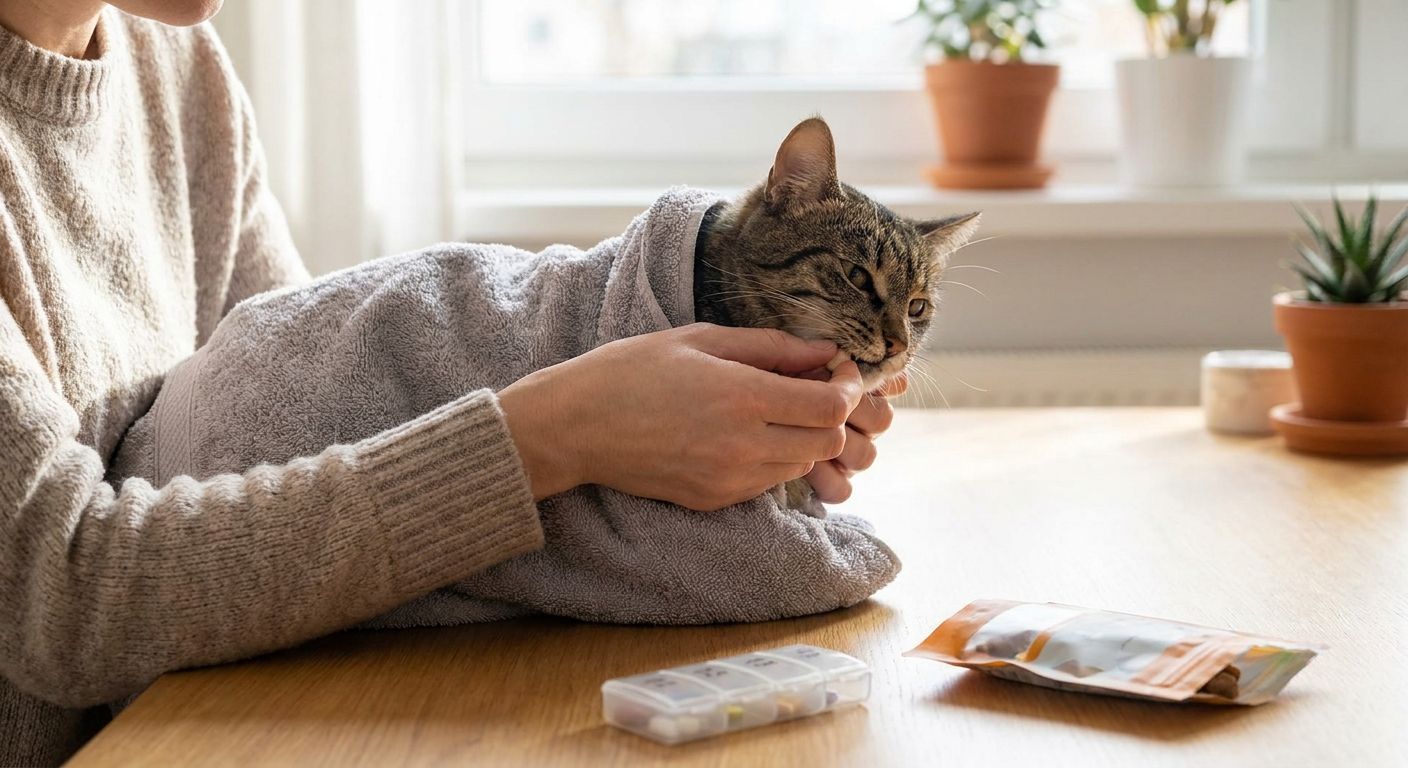
- A supportive wrap like the Snug Pro Cat Wrap holds body weight without pinning sore joints.
- Skip full-body scruffing on arthritic cats — it stretches hips and spine into positions that trigger pain flares.
Why this matters
Overgrown nails curl into paw pads and change how a cat distributes weight across its feet — a real problem for a cat that's already compensating for sore joints. Skip trims because a cat fights back, and you trade one discomfort for a worse one.
Most arthritic cats aren't fighting the clipper. They're bracing against a hold that stretches a hip, elbow, or spine that already hurts. Certain grooming setups make that hold unnecessary, which is the difference between a cat that tolerates trims through 2026 and one that dreads every session.
Can arthritic cats tolerate regular nail trims?
They tolerate them well when the approach matches their joints, and poorly when it doesn't. The table below shows why one method works and the other doesn't.
| Approach | What it does to the joints | Best for |
|---|---|---|
| Full-body scruff and pin | Forces hips, elbows, and spine into stretched, unnatural angles | Young, flexible cats with no joint pain — Skip for arthritic cats |
| One paw at a time, cat repositions freely | Cat chooses its own posture, no forced extension | Arthritic and senior cats — Recommended |
| Wrap-supported trim | Supports body weight without pinning sore joints | Cats that tense up, flare-day trims — Recommended |
Clippers built for senior and arthritic cats usually have a wider blade opening and a shorter squeeze stroke, which shortens the time a paw needs to stay still — a small detail that matters a lot when a shoulder or hip is sore.
Mild arthritis: nail trims stay close to normal
A cat with early, mild joint changes usually tolerates a fairly standard trim routine. The main adjustment is avoiding cold-floor trims first thing in the morning, since stiffness is worse before a cat has moved around. Verdict: proceed close to a normal trim schedule, just watch for stiffness cues.
Moderate arthritis: shorten sessions and skip full extension
At this stage, a cat starts resisting any hold that extends a leg fully or twists the spine to expose a back paw. Trim two or three nails, pause, and come back later the same day rather than pushing through resistance. Verdict: split the trim across multiple short sittings.
Severe arthritis or flare days: one nail, one sitting
On a flare day, even a gentle hold can hurt. Trim a single nail if that's all the cat allows, and treat the rest as tomorrow's job. Forcing a full trim on a bad day teaches the cat that nail trims equal pain, which makes every future session harder. Verdict: one nail is a win — don't chase the full set.
Why nail trim tolerance varies in arthritic cats
- Which joints are affected — a cat with hip arthritis tolerates a different hold than one with elbow or wrist arthritis.
- Pain medication timing — trims scheduled a few hours after a dose (when prescribed by a vet) are usually easier than trims right before the next one.
- Baseline handling stress — a cat that already dislikes being held will read arthritis pain as confirmation, not a new problem.
- How overgrown the nails already are — badly overgrown nails need more pressure to cut, which means more time gripping a sore paw.
- Weather and temperature — stiffness is commonly worse in cold, damp conditions, so timing trims for warmer parts of the day helps.
- Prior negative grooming experiences — a cat that's been pinned before associates the position with pain even once the joint issue is managed.
Cats that take longer to settle into handling usually need the same patience whether the resistance comes from fear or from joint pain — the desensitizing steps don't change, just the pace.


Purrttie designed the Snug Pro Cat Wrap around exactly this problem: a cat that needs to stay still for a nail trim without a joint being forced into an angle it can't hold anymore. It doesn't replace vet-directed pain management, but it removes the restraint fight that turns a two-minute trim into a wrestling match.
How often should an arthritic cat's nails be trimmed?
Every 2 to 4 weeks is the general range most vets recommend for adult cats, arthritic or not, since that's roughly how fast nails regrow to a length that catches on fabric or curls into the pad. Arthritic cats sometimes need that stretched slightly if a full trim isn't tolerated in one sitting — spreading the same nails across two shorter sessions still keeps you on schedule through 2026.
Do nail caps reduce how often an arthritic cat needs a full trim?
Nail caps don't remove the need for trims, but they buy time between sessions by covering the nail tip so it can't curl or catch. For a cat where every handling session is a negotiation, stretching the interval between full trims is a genuine win, even if the nail underneath still needs attention eventually.
Is scruffing safe for a cat with arthritis?
Scruffing is not recommended for arthritic cats because it typically pairs with a stretched or pinned body position that puts pressure through the spine and shoulders. A cat with joint pain reads that stretch as pain, and repeated bad experiences make every future handling attempt harder, not easier.
FAQ
Can arthritic cats tolerate regular nail trims?
Yes, arthritic cats tolerate regular nail trims when sessions are shortened, one or two nails at a time, without forcing a sore joint into full extension. Standard scruff-and-pin restraint is the part that causes pain, not the clipping itself.
How often should an arthritic cat's nails be trimmed?
Every 2 to 4 weeks is the standard range for adult cats, arthritic or otherwise. Split the trim across two shorter sessions if a full trim in one sitting isn't tolerated.
Is scruffing safe for a cat with arthritis?
No, scruffing usually pairs with a stretched body position that stresses the spine and shoulders. It's better avoided in favour of a hold that lets the cat keep its own posture.
Do nail caps help arthritic cats avoid frequent trims?
Nail caps stretch the interval between full trims by covering the sharp tip, though they don't eliminate the need for trims entirely. They're most useful for cats where every handling session is a struggle.
What signs show a nail trim is hurting an arthritic cat?
Sudden stiffening, pulling the paw back sharply, or vocalising beyond normal protest signals pain rather than fear. Stop the session and try again later or at a different joint angle.
Can a cat wrap help with arthritic cat grooming?
A supportive wrap holds body weight without pinning individual joints, which helps arthritic cats stay still without the fight response scruffing triggers. It is one tool among several, not a replacement for vet-directed pain management.
Should overgrown nails on an arthritic cat wait until the next vet visit?
No, overgrown nails that curl into the paw pad cause pain now and shouldn't wait for a scheduled visit. A single-nail trim at home addresses the worst offender until a fuller session is possible.
Is at-home nail trimming better than a groomer visit for a senior arthritic cat?
At-home trimming lets you stop the moment a joint shows discomfort, which a groomer working through a full booking list may not do. For cats with joint pain, shorter and more frequent at-home sessions usually beat one longer professional appointment.
One last thing
Feline medicine research has found radiographic signs of degenerative joint disease in over 90% of cats aged 12 and older, and in roughly 61% of cats over 6 — arthritis is common enough that most senior cats getting nail trims in 2026 are dealing with some degree of joint pain, diagnosed or not. Assume some stiffness is present in any cat over 6 and adjust the hold before the cat has to tell you.