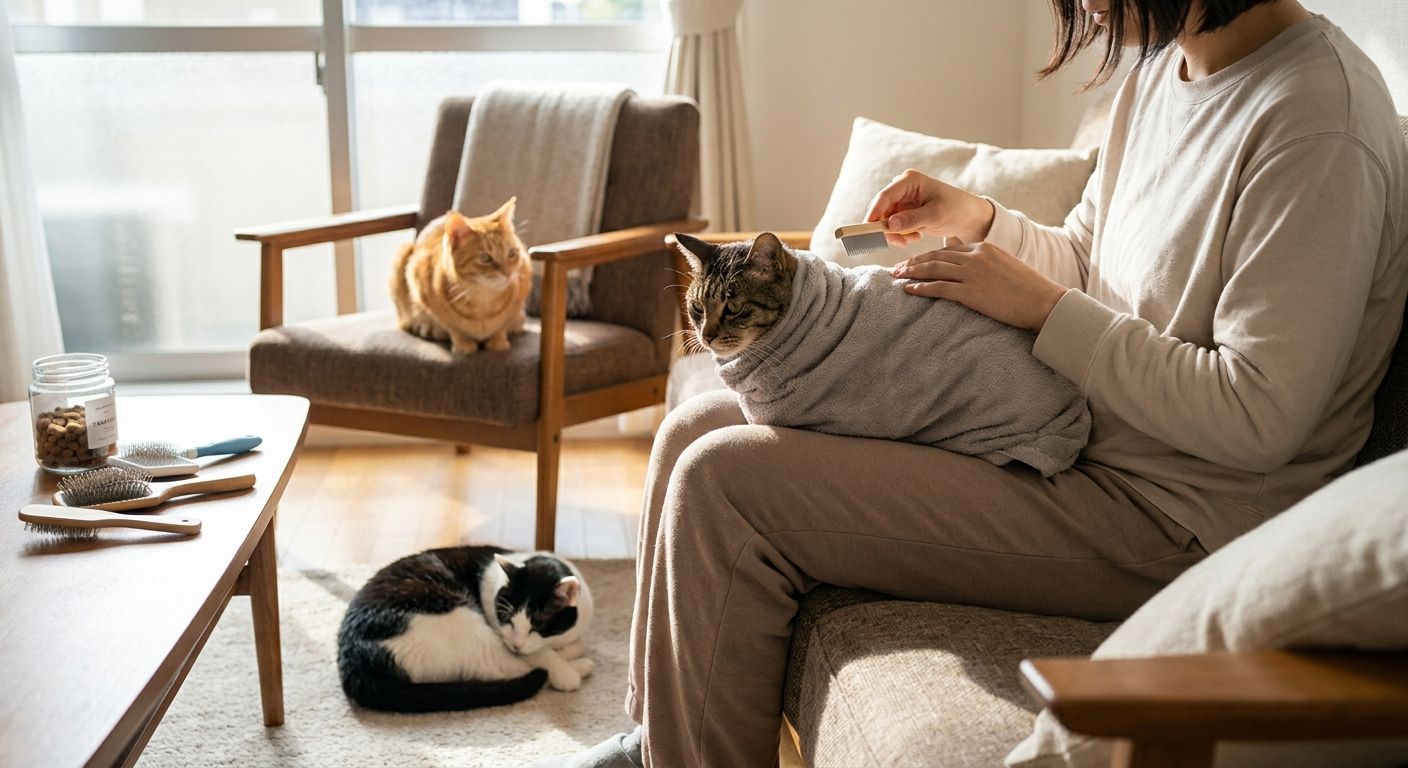
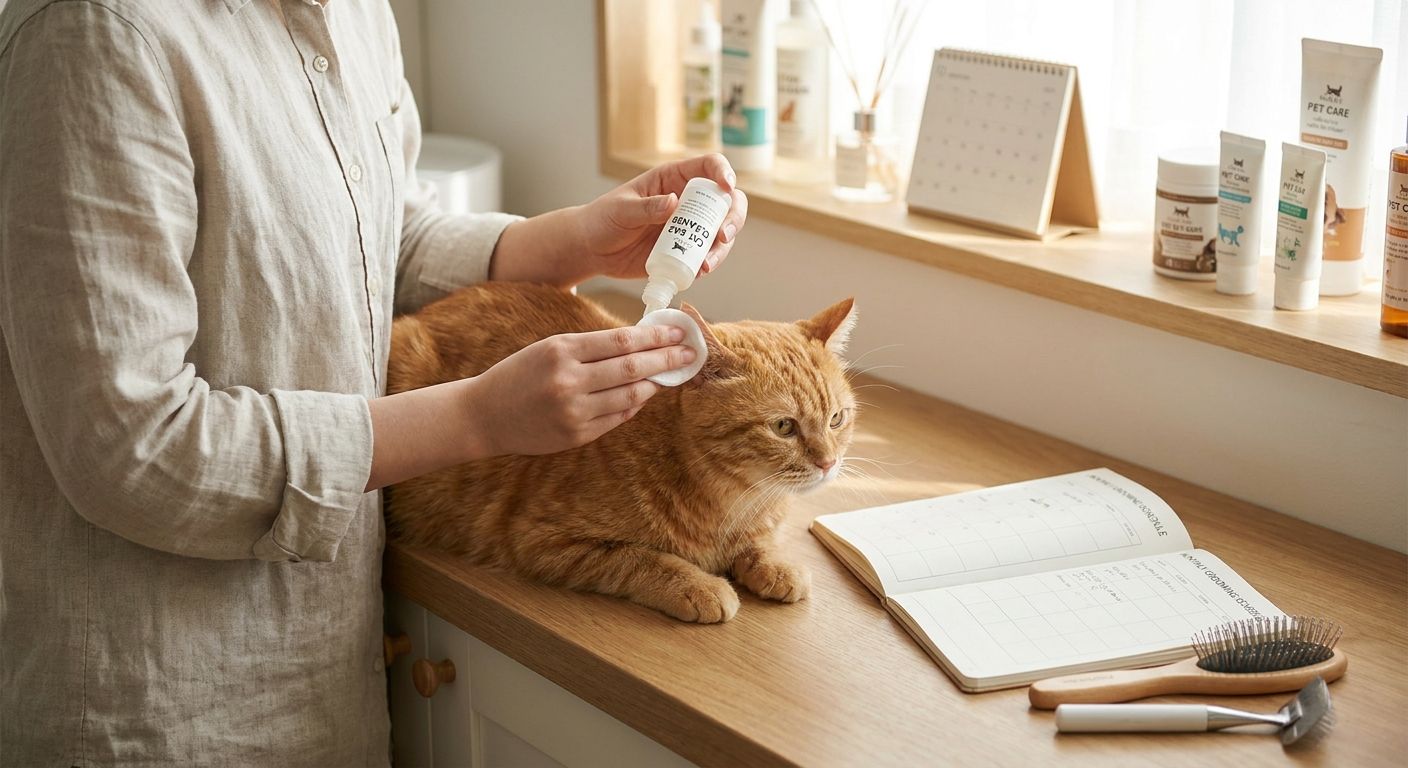
Cleaning your cat's ears whenever you happen to remember isn't a schedule, it's a coin flip, and wax buildup doesn't wait for your calendar. Anchor ear cleaning to a monthly grooming session instead of treating it as a separate chore, so ears, nails, and coat all get checked in one 15-minute sitting instead of three scattered fights across the month.
- A cat ear cleaning monthly grooming schedule works best when ears are checked every 4-6 weeks, not on a random whim.
- Stack ear checks after coat brushing and before nail trims so the cat is already calm, not the other way around.
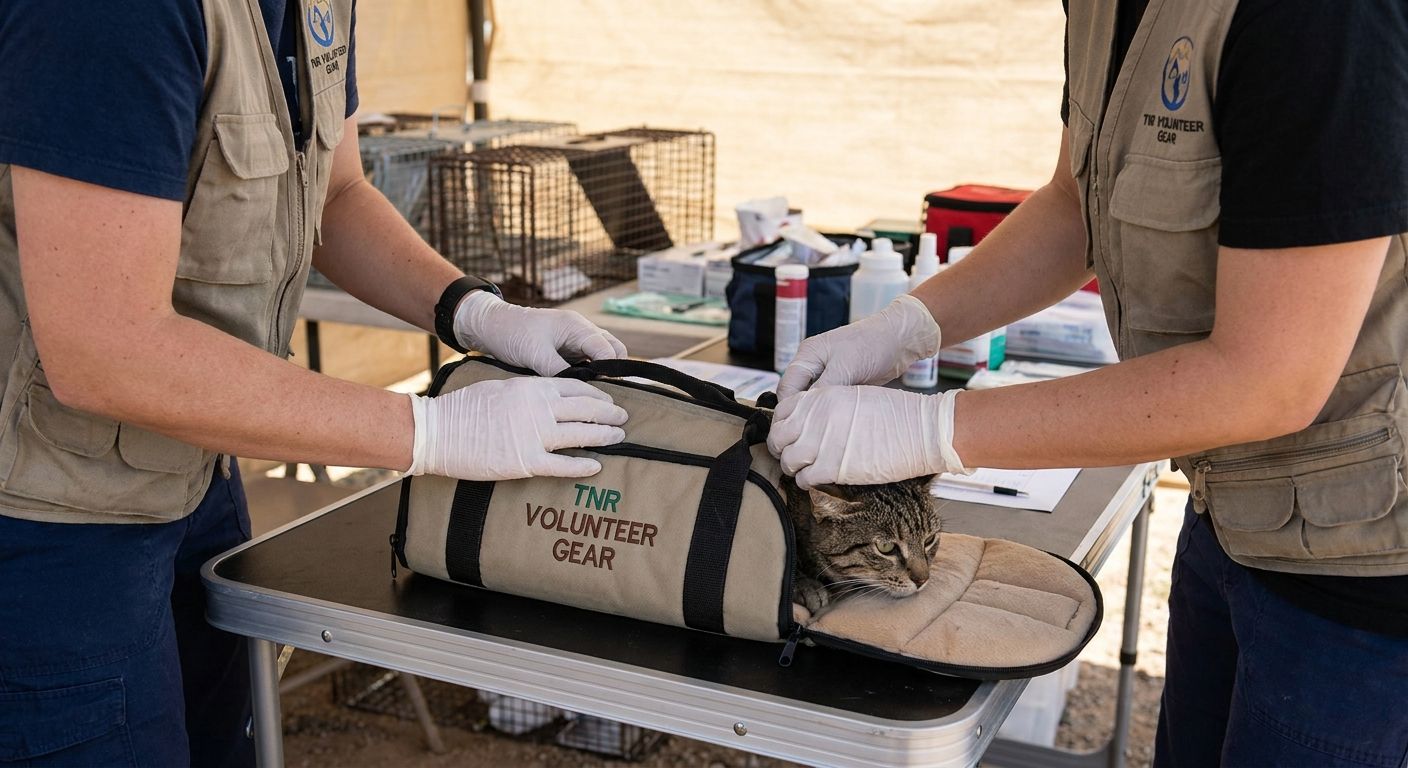
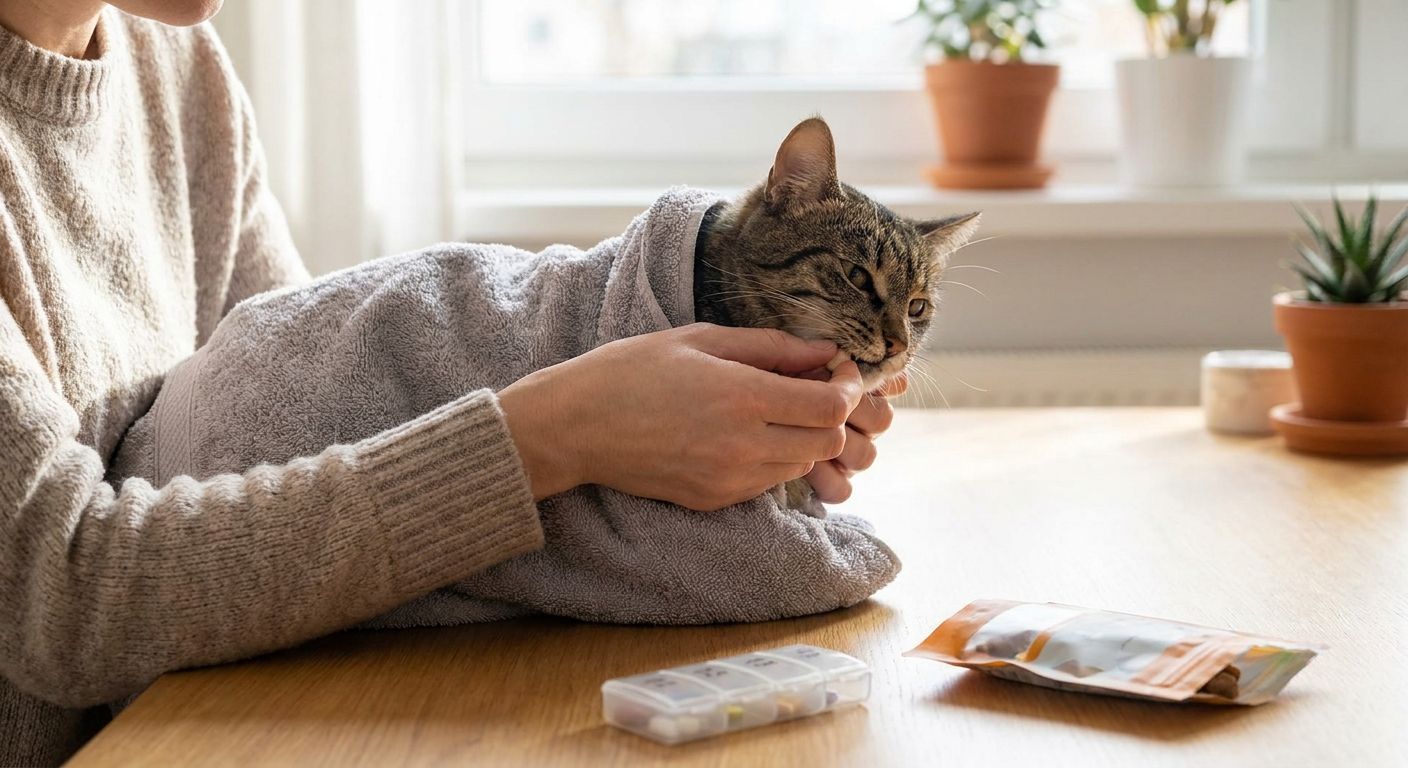
- Purrttie's Snug Pro Cat Wrap holds wriggly cats still for the ear-check step without anyone getting scratched.
- Wax buildup, head-shaking, or a bad smell between sessions means you switch to an event-triggered clean, not wait for the calendar.
Why this matters
Cats groom themselves obsessively but they can't clean inside their own ear canal. Wax and debris build up quietly, and by the time you notice head-shaking or a smell, it's often already an irritation rather than routine maintenance.
A monthly grooming session catches this early because you're already looking at the cat closely, brushing the coat, checking the nails. Folding ear checks into that existing routine costs almost no extra time, and 2026 is a good year to actually build the habit instead of putting it off again. Check Purrttie's site for the grooming tools that make each step faster.
Before you start
- Cat-safe ear cleaner solution and cotton pads or gauze — never cotton swabs deep in the canal, and never human ear drops.
- A calm, quiet spot and treats for after, plus a way to hold a wriggly cat still without a chase scene.
- The gotcha: never clean ears the same session as a bath. Trapped moisture from a bath plus cleaning solution is the fastest route to an ear infection — leave at least 24 hours between the two.
If your cat already tenses up at the sight of a cotton pad, work through how long it takes to desensitize a cat to grooming before locking in a monthly date. Rushing a scared cat through ear cleaning just teaches them to dread the whole session.
Set up your monthly trigger
- Pick a fixed anchor point — the first Saturday of the month, payday, whatever you won't skip. Put it in your phone as a recurring reminder titled something like "Cat grooming day."
- Prep the kit the night before: ear solution, pads, brush, nail clippers, and treats laid out so the session doesn't stall halfway through because you're hunting for supplies.
- Pick a 10-15 minute window when the cat is naturally relaxed — post-meal or post-nap works better than right after they've been zoomed around the house.
Expected result: the reminder fires, supplies are already out, and you're not negotiating with yourself about whether "this weekend" counts.
Configure your ear-cleaning step
- Hold the cat gently, snugly not tightly, and fold back the ear flap to look inside. Healthy ears are pale pink with little to no visible wax or odor.
- Apply a few drops of cat-safe ear cleaner to a cotton pad, never directly into the canal, and wipe the visible folds and outer canal only.
- Let the cat shake its head if it wants to — that's normal and helps loosen debris the solution just softened.
- Reward immediately with a treat so the ear check gets filed under "fine, not scary" in the cat's memory bank.
Expected result: pad comes away with light tan residue at most; dark coffee-ground debris or a strong odor means a vet visit, not more cleaning.
Configure your nail trim and coat check in the same session
- Move straight into nail trims once ears are done and the cat is still calm — don't lead with nails, since that's the step cats resist most.
- Brush through the coat last, checking for mats, fleas, or bald patches while you're already handling the cat closely.
- If your cat squirms through handling, the Snug Pro Cat Wrap keeps them gently contained for the nail-trim portion without anyone getting bitten or scratched.
Expected result: one 15-minute session covers ears, nails, and coat instead of three separate standoffs spread across the month.


Clean ears whenever you spot buildup (event-triggered variant)
Some cats need more than a monthly pass. Outdoor cats, kittens, and breeds with folded or hairy ears tend to accumulate wax faster than a 4-6 week cycle allows for.
If you notice head-shaking, scratching at one ear, or a smell between scheduled sessions, clean that ear on the spot rather than waiting for the calendar date. Treat the monthly schedule as the floor, not the ceiling — event-triggered cleaning fills the gaps a fixed schedule misses.
Troubleshooting
- Cat bolts the second it sees the cotton pad. Back up to short, reward-only handling sessions for a week before reintroducing the pad — this is what the desensitization timeline covers in detail.
- Solution keeps rolling straight back out. You're using too much liquid per application; a few drops on the pad is enough, you don't need to flood the canal.
- Dark debris returns within days of cleaning. That's not a cleaning-frequency problem, it's a sign of mites or infection — book a vet check instead of cleaning more often.
- The monthly reminder keeps getting snoozed. Attach the reminder to something else you already do monthly, like paying rent or restocking litter, so it rides along instead of standing alone.
- Cat tolerates ears fine but fights the nail trim after. Split the session: ears and coat one day, nails a day or two later, until tolerance for the full routine builds up.
Customize your routine
Once the monthly rhythm sticks, expand it rather than leaving it static. Long-haired cats often need the coat-check step to double as a hairball check — see can regular grooming reduce hairballs for how the two connect. Senior cats need a gentler version of the same routine, with shorter handling windows and more breaks.
A cat ear cleaning monthly grooming schedule that's tied to an existing routine gets followed; one that lives on its own gets skipped by month three.
FAQ
How often should I clean my cat's ears in 2026?
Most healthy indoor cats need ear cleaning every 4-6 weeks as part of a monthly grooming session. Outdoor cats or breeds with folded ears often need it every 2-3 weeks.
What is the best way to build a cat ear cleaning monthly grooming schedule?
Anchor the ear check to an existing monthly grooming day so ears, nails, and coat get handled in one session. A fixed calendar reminder tied to something you already do monthly keeps it from slipping.
Can I clean my cat's ears and give a bath on the same day?
No, leave at least 24 hours between a bath and an ear cleaning. Trapped moisture combined with cleaning solution raises the risk of ear irritation.
What should healthy cat ears look like during a monthly check?
Healthy ears are pale pink inside with little to no visible wax and no odor. Dark, coffee-ground-like debris or a strong smell means a vet visit, not more home cleaning.
Is it normal for a cat to shake its head after ear cleaning?
Yes, head-shaking right after cleaning is normal and helps loosen debris the solution just softened. Repeated shaking days later, outside of the cleaning session, is worth a vet check.
Should I clean ears before or after nail trims?
Clean ears before nail trims, while the cat is still calm from handling. Nail trims tend to be the most resisted step, so save them for last in the session.
What if my cat won't sit still for ear cleaning?
A gentle wrap or towel restraint that holds the cat snugly without pressure makes the ear-check step manageable. Pair it with a reward immediately after so the cat associates the session with something good.
Do kittens need ear cleaning on the same monthly schedule as adult cats?
Kittens can start on a lighter version of the same monthly schedule once they're comfortable with basic handling. Shorter sessions with more treats build tolerance before you add nail trims and coat checks.
One last thing
The cats that fight ear cleaning hardest are usually the ones whose parents only touch their ears when there's already a problem. Folding the ear check into a monthly session where nothing hurts and treats show up afterward flips that association — by month three or four, most cats stop bracing for it at all.