Kittens need a different nail clipper than adult cats: smaller claws, thinner blades to see through, and a lot less patience for being held still. Best overall for precision one-snip trims: Full Stainless Steel Cat Nail Clipper. Best for first-time owners: scissor-style clippers with a spring return. Best for kittens transitioning to adult claws: guillotine-style clippers. Best budget starter for tiny newborn-stage claws: small curved human nail clippers.
- Full Stainless Steel Cat Nail Clipper wins for precision one-snip trims on kitten claws in 2026 - buy it as your main tool.
- Scissor-style clippers suit first-time owners because the squeeze motion feels familiar from human nail scissors.
- Guillotine-style clippers work best once a kitten's claws thicken past the newborn stage, usually a few months in.
- Small curved human nail clippers are fine as a stopgap for very young kittens but skip a safety guard entirely.
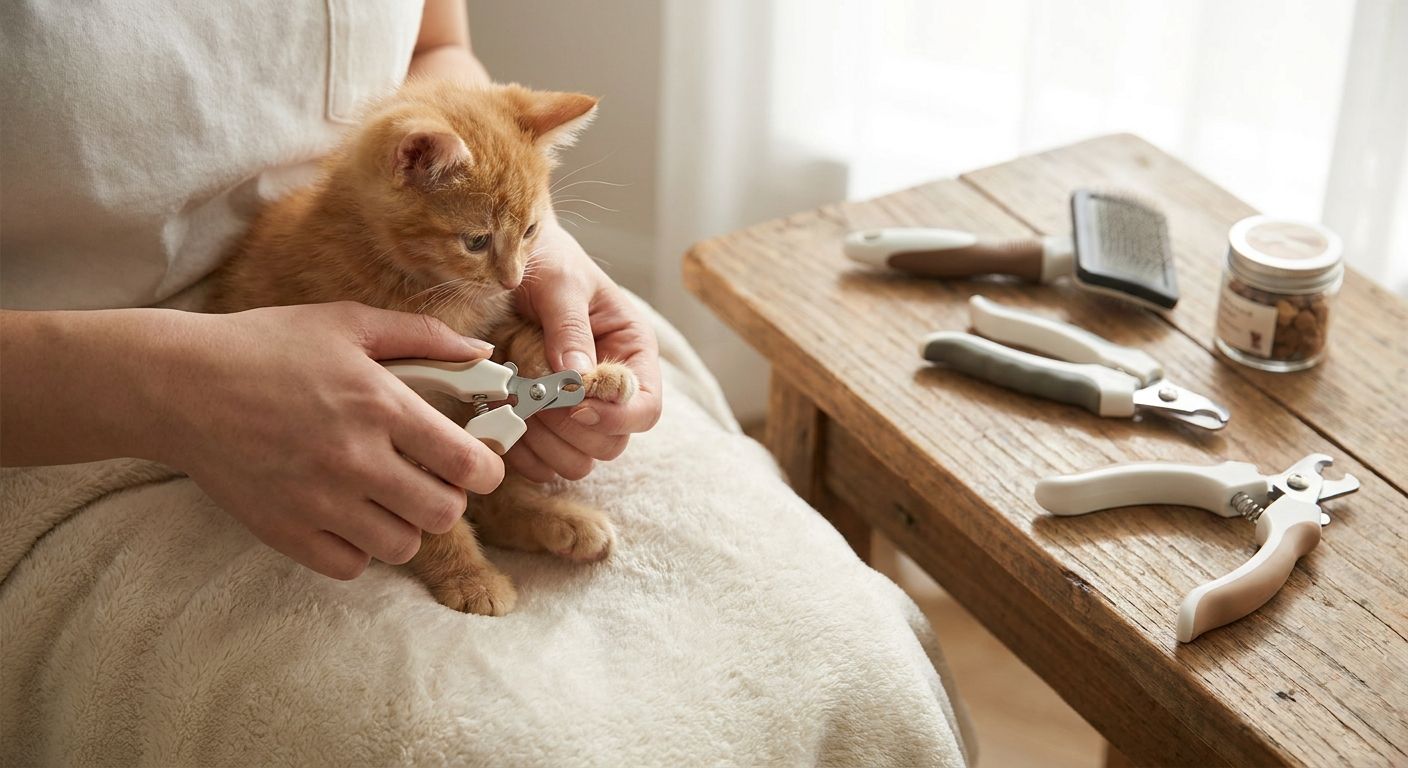
- Pairing any clipper with a calming hold, like a wrap-style restraint, cuts down on the squirming that causes overcuts.
Why this matters
A kitten's claw is thin, translucent near the tip, and the quick sits closer to the surface than in an adult cat. The wrong blade angle or too much spring tension turns a 30-second trim into a fight, and a fight at eight weeks old becomes a cat that hides at the sight of clippers by the time it's grown.
The goal in 2026 isn't finding the flashiest clipper - it's finding the one that matches your kitten's current claw stage, because that stage changes fast. A clipper that's right at six weeks is often wrong at six months.
What makes the best cat nail clippers for kittens
- One-snip blade design that cuts cleanly instead of squeezing and splitting a soft claw
- A clear view of the quick so you can see the pink line before the blade closes
- Light spring tension a kitten's small paw can tolerate without flinching
- A handle sized for adult hands that doesn't force your fingers to overlap the kitten's paw
- A safety stop or guard that limits how far the blade travels, so an overcut is a rare slip, not a pattern
At a glance: cat nail clippers for kittens in 2026
| Type | Best for | Standout feature | Key limitation |
|---|---|---|---|
| Full Stainless Steel Cat Nail Clipper | Precision one-snip trims | 18mm wide-view blade cut from a single piece of steel | Full-size body needs a steady hold, not ideal mid-squirm |
| Scissor-style clippers | First-time owners learning the motion | Familiar squeeze action, spring-return blade | Two moving blades can pinch if the kitten twists |
| Guillotine-style clippers | Kittens transitioning to adult claws | Single hole guides the claw into the blade path | Fixed hole size, too wide for very thin newborn claws |
| Small curved human nail clippers | Budget starter for tiny claws | Already in most homes, curved blade suits soft claws | No safety guard, easy to misjudge the quick |
1. Full Stainless Steel Cat Nail Clipper: best cat nail clippers for kittens for precision one-snip trims
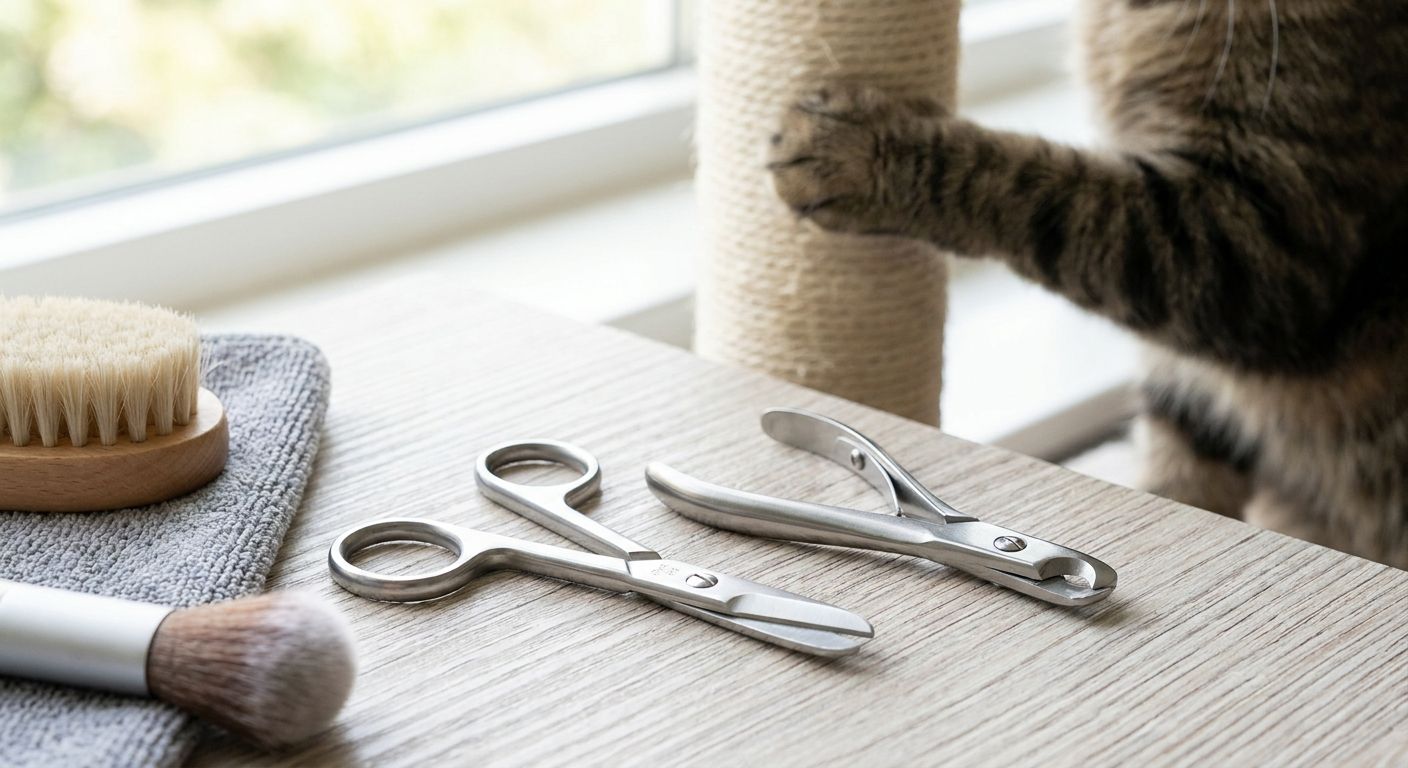
The Full Stainless Steel Cat Nail Clipper is cut from a single piece of steel with an 18mm wide-view blade, built to take a claw off in one clean motion instead of the squeeze-squeeze-squeeze most cheap clippers force. The wide blade window matters most on kittens because their claws are almost see-through - you need to spot the quick fast, before the kitten decides trim time is over.
Full Stainless Steel Cat Nail Clipper pros:
- Single-piece steel construction resists the blade wobble that causes splitting
- 18mm viewing window makes the quick easier to spot on light and dark claws alike
- One clean cut means fewer repeat squeezes per claw, which means less time held down
Full Stainless Steel Cat Nail Clipper cons:
- Full-size handle sits larger in hand than a micro kitten-only clipper
- Still requires the kitten to hold reasonably still - it's a precision tool, not a magic one
- No built-in mechanical guard stop; you're relying on the viewing window, not a physical limiter
Best for: pawrents who want one clipper that works through the kitten stage and stays useful into adulthood. Verdict: Buy.
2. Scissor-style clippers: best for first-time owners learning the trim
Scissor-style clippers cross two blades in a squeeze motion most people already know from trimming their own nails. A spring reopens the blades automatically, so you can go claw to claw without resetting the tool by hand.
Scissor-style clippers pros:
- Motion feels familiar, which shortens the learning curve for a nervous first-timer
- Spring return supports faster one-handed repeat trims
- Generally lighter in the hand than guillotine-style tools
Scissor-style clippers cons:
- Two moving blades raise pinch risk if a kitten yanks its paw mid-squeeze
- Blade visibility on darker claws varies a lot between models
- Cheaper models often have loose hinges that shift the cut angle over time
Best for: owners doing their first at-home trims who want a tool that mimics a motion they already trust. Verdict: Hold - workable as a starter, but most owners upgrade once the kitten sits calmer for trims.
3. Guillotine-style clippers: best for kittens transitioning to adult-strength claws
A guillotine clipper slides the claw through a hole, then a single blade sweeps across to cut. The hole does the positioning work for you, which is useful once a kitten's claws are thick enough to hold steady in the opening.
Guillotine-style clippers pros:
- The hole guides placement, lowering the chance of catching skin
- Single blade action needs one clean motion per claw
- Sturdy enough for the thicker claws that show up as a kitten heads toward adulthood
Guillotine-style clippers cons:
- Fixed hole size is often too wide for very thin newborn-stage claws
- The kitten has to hold still long enough to thread the claw through the hole first
- Less intuitive for a total beginner than a squeeze-style tool
Best for: households with a kitten already past the first few months, whose claws have started to thicken. Verdict: Wait - a solid second clipper, not the first one to buy.
4. Small curved human nail clippers: best budget option for tiny newborn-stage claws
A small, curved human nail clipper - the kind sold for babies or in most bathroom cabinets already - works as a stopgap for the first few weeks of a kitten's life, before claws are big enough for a dedicated cat clipper to make sense.
Small curved human nail clippers pros:
- Inexpensive and already sitting in most homes
- Curved blade shape roughly matches the curve of a tiny claw
- Zero learning curve on the tool itself
Small curved human nail clippers cons:
- No safety guard or quick-visibility design built for a cat's claw
- Blade angle isn't shaped for claw anatomy the way a purpose-built clipper is
- Overcutting is easy without practice, since there's no viewing window
Best for: the first few weeks before you invest in a real cat clipper. Verdict: Skip once the kitten passes roughly 8-10 weeks old - move to a purpose-built clipper from there.
“If your kitten flinches at the sound of the clipper, not the pressure of the trim, the fix is usually the hold, not the blade.”
How this list was ranked
Each type above was measured against the same five criteria: blade design, quick visibility, spring tension, handle fit, and whether the tool has a built-in safety stop. The Full Stainless Steel Cat Nail Clipper scores highest on blade design and visibility; scissor-style tools win on familiarity for beginners; guillotine clippers win once claws thicken; human clippers only win on cost, and only briefly.
Most trim struggles in 2026 aren't a blade problem at all - they're a restraint problem. A kitten that twists out of an open-hand hold will make any clipper on this list look bad. A snug wrap-style hold that keeps paws accessible while the rest of the body feels secure changes the outcome more than switching clipper brands does.


Which cat nail clippers should you choose for your kitten in 2026?
If you only buy one tool this year, the Full Stainless Steel Cat Nail Clipper covers the widest range of kitten ages with the fewest compromises - the wide-view blade does the work that a safety guard would do on a lesser clipper. Add a scissor-style clipper only if the squeeze motion genuinely feels easier in your hand during the first week or two. Save guillotine-style clippers for later in the kitten's growth, and treat human nail clippers as a two-week bridge, not a long-term plan.
FAQ
What are the best cat nail clippers for kittens in 2026?
The Full Stainless Steel Cat Nail Clipper is the strongest all-round pick in 2026 thanks to its 18mm wide-view blade and one-snip cut. Scissor-style clippers suit total beginners, and guillotine-style clippers work better once claws thicken with age.
Are guillotine or scissor-style clippers better for kittens?
Scissor-style clippers are better for very young kittens because the squeeze motion is more familiar and the claws are still thin. Guillotine-style clippers work best once claws thicken, usually a few months into a kitten's growth.
Can I use human nail clippers on a kitten?
Small curved human nail clippers work as a short-term option for very young kittens with soft, tiny claws. They have no safety guard or quick-visibility design, so switch to a purpose-built cat clipper once the kitten passes about 8-10 weeks old.
How often should you trim a kitten's nails?
Kitten claws grow quickly, so most vets suggest checking every 1-2 weeks and trimming the sharp clear tip as needed. Checking this often also gets the kitten used to paw handling early.
Why does my kitten fight nail trims but not other handling?
Paw sensitivity and the feeling of being restrained cause most of the resistance, not the clipper sound itself. A secure hold that keeps the body still while leaving paws accessible usually solves this faster than switching clipper types.
What's the difference between a cat nail clipper and a dog nail clipper?
Cat nail clippers use a thinner, sharper blade built for a cat's narrower claw shape, while dog clippers are sized for thicker, rounder claws. Using a dog clipper on a kitten increases the risk of splitting rather than cleanly cutting the claw.
Do I need a safety guard on a kitten nail clipper?
A safety guard helps beginners avoid overcutting, but a clipper with a genuinely wide-view blade, like the Full Stainless Steel Cat Nail Clipper, achieves the same result through visibility instead. Either approach works as long as you can clearly see the quick before you cut.
What size claw clipper is right for a kitten versus an adult cat?
Kittens do fine with a standard-size cat clipper as long as the blade offers a clear view of the quick, since claw thickness matters more than clipper size at this stage. The same clipper typically carries you from kitten claws through to adult claws without needing an upgrade.
One last thing
The part most kitten guides skip: it's rarely the blade that scares a kitten in 2026, it's the sound the blade makes right before it closes. Kittens that hear the click without warning tense up faster than kittens whose paw is handled calmly first, clipper resting nearby, no sudden movement. Get the kitten comfortable with the clipper touching its paw before you ever squeeze - that single habit prevents more struggling than any blade upgrade on this list.