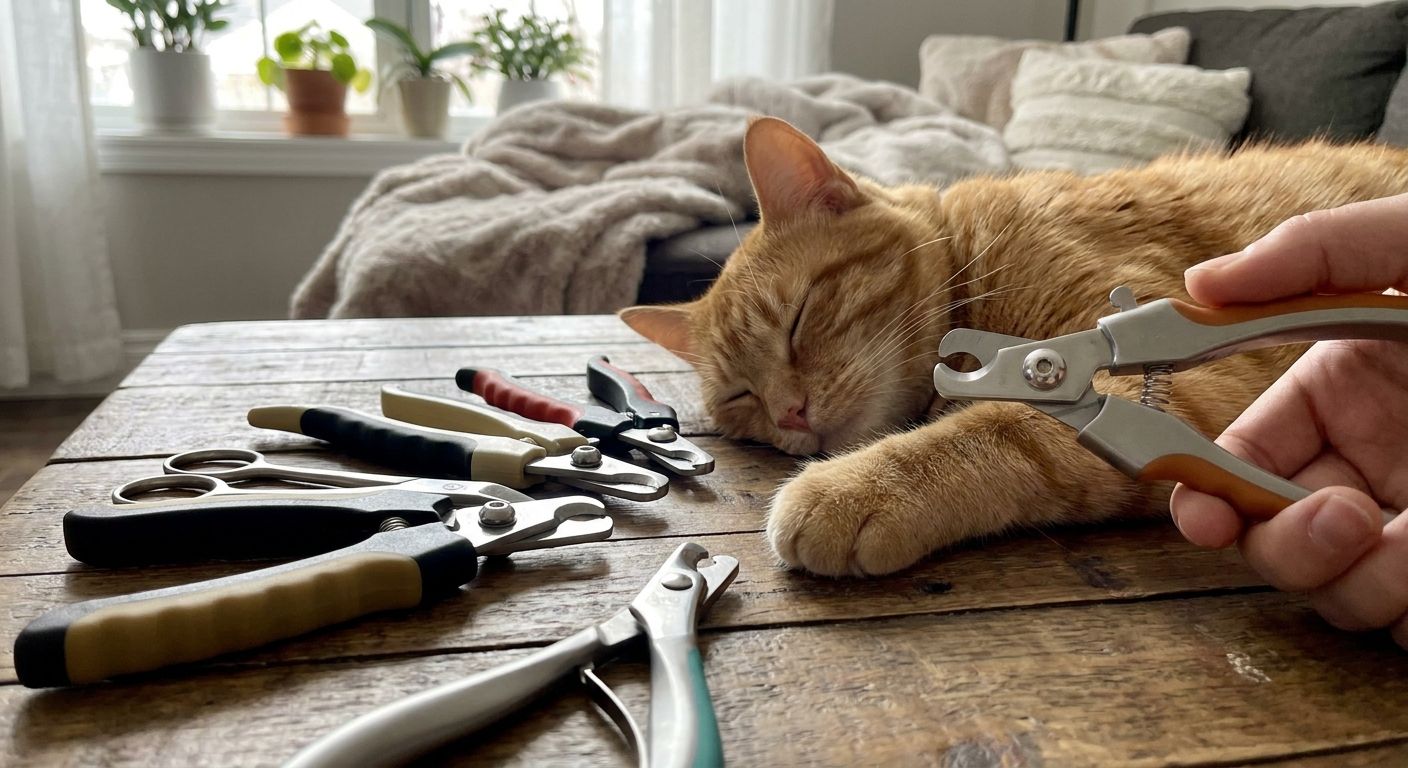
Cat nails on senior cats, big-boned breeds like Maine Coons, and cats who don't scratch enough grow thicker and denser than average, and a flimsy clipper will squeeze before it cuts. The Full Stainless Steel Cat Nail Clipper from Purrttie wins best overall for thick cat nails in 2026, plier-style guillotine clippers win for the densest, most curled nails on large or senior cats, scissor-style clippers win for cats who fight the squeeze motion, and basic entry-level guillotine clippers stay the budget pick for thin-to-medium nails only.
- Full Stainless Steel Cat Nail Clipper wins best overall for thick cat nails in 2026 with a single-piece steel body and 18mm wide-view blade.
- Plier-style guillotine clippers give the most leverage for very thick or curled nails on senior or large-breed cats.
- Scissor-style clippers suit cats who resist the squeeze motion but need more passes on dense nail.
- Basic guillotine clippers are the budget pick but struggle once nails thicken past medium.
- Pair any clipper with a cat wrap or towel restraint to cut trim time and stress.
Why this matters
A cat's nail is made of layered keratin that thickens with age the same way human nails do, and cats who don't scratch regularly or spend most of their time indoors don't wear that keratin down naturally. Thick nails curl faster, catch on carpet and furniture, and eventually grow into the paw pad if left too long between trims. Most vets recommend trimming every 2 to 4 weeks, and a clipper that isn't built for thicker nail will crush or splinter it instead of making a clean cut, which is what actually causes cats to hate nail trims.
The wrong clipper doesn't just make the trim harder — it makes the next trim harder too, because a splintered nail hurts and the cat remembers.
What makes the best cat nail clippers for thick nails
- Blade material and sharpness — stainless steel holds an edge longer than coated or budget alloy blades, which matters more once nail is dense.
- Cutting mechanism — guillotine, scissor, or plier-style leverage changes how much force reaches the nail before it splits.
- Blade visibility — a wide viewing window helps you spot the quick on darker or overgrown nails before you cut.
- Grip and hand fatigue — thick nails need a firmer squeeze, so handle shape and leverage matter over repeated trims.
- Cat cooperation — even the best clipper struggles if the cat won't hold still, which is why pairing it with a restraint tool changes the outcome.
At a glance
| Clipper | Best for | Standout feature | Key limitation |
|---|---|---|---|
| Full Stainless Steel Cat Nail Clipper | Best overall for thick nails | Single-piece steel body, 18mm wide-view blade | Not a guillotine mechanism, so technique differs from vet-clinic tools |
| Plier-style guillotine clippers | Very thick or curled nails on large/senior cats | Longer handles give more leverage per squeeze | Bulkier, harder to angle on small kittens |
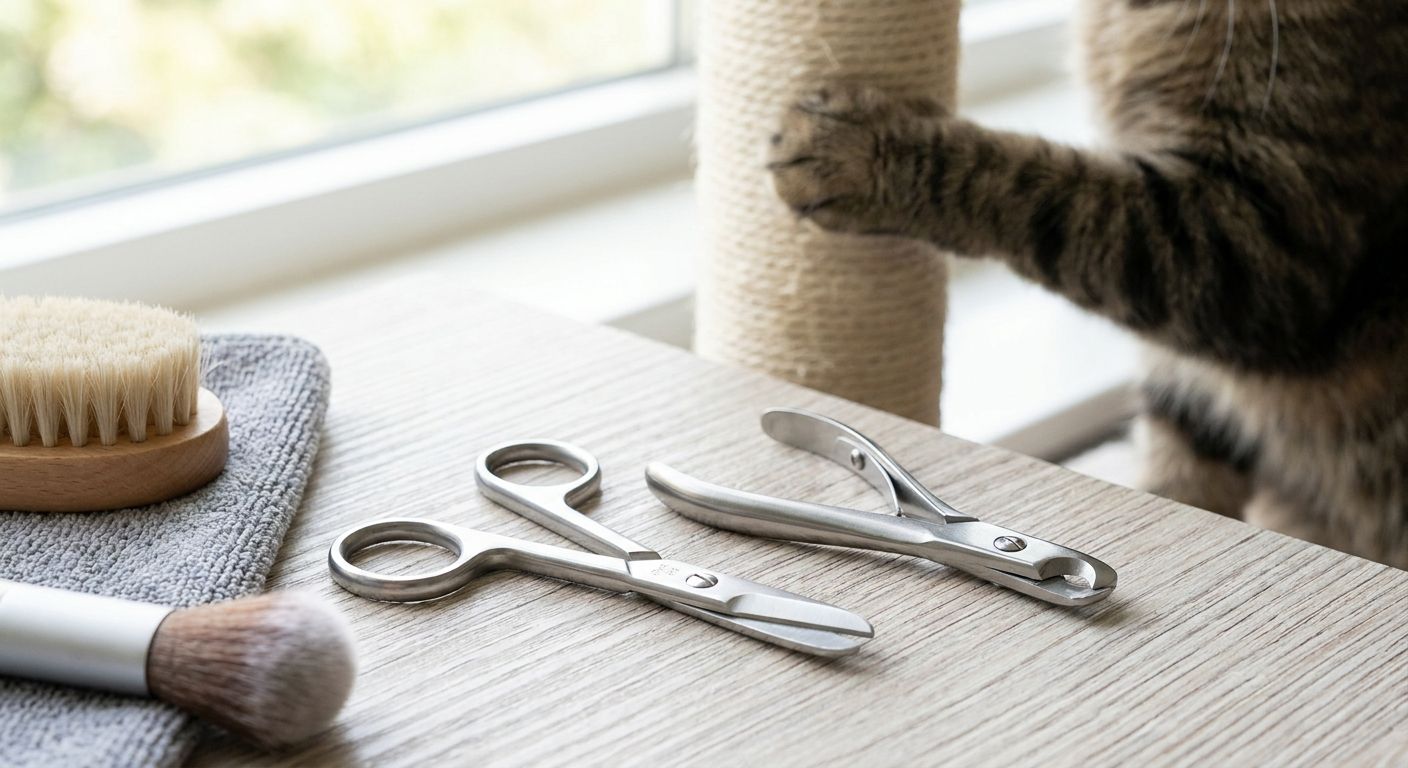
| Scissor-style clippers | Cats who resist the squeeze motion | Familiar scissor action, fast single snip | Thinner blade can need multiple passes on dense nail |
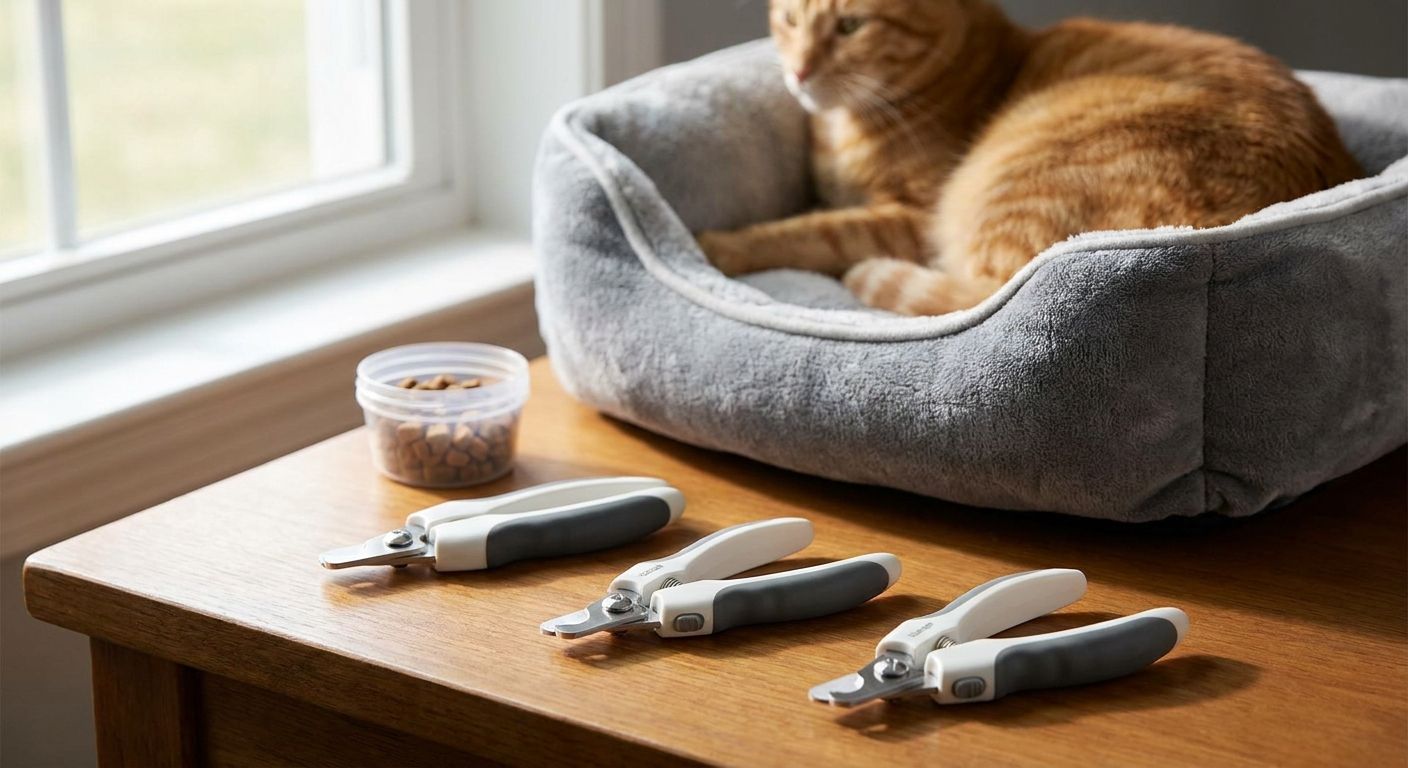
| Basic guillotine clippers | Budget option, thin-to-medium nails | Lowest cost entry point | Blade dulls fast and struggles once nails thicken |
1. Full Stainless Steel Cat Nail Clipper: best overall for thick cat nails
The Full Stainless Steel Cat Nail Clipper from Purrttie is cut from a single piece of steel with an 18mm wide-view blade, built for one clean snip instead of the squeeze-and-crush that splits thicker nail. The wide blade opening lets you see the quick clearly before you commit to the cut, which matters more on cats with darker nails or nails that have gone a few months without a trim.
Full Stainless Steel Cat Nail Clipper pros:
- Single-piece steel construction resists the flex that causes splitting on thick nail
- 18mm wide-view blade makes the quick easier to spot before cutting
- One clean snip design cuts the number of passes needed on dense nail
Full Stainless Steel Cat Nail Clipper cons:
- Not a guillotine mechanism, so cat parents used to that style need a short adjustment period
- Best paired with a restraint tool for cats who wriggle during the trim
Full Stainless Steel Cat Nail Clipper best for: cat parents who want one clipper that handles both routine trims and thicker, overgrown nail without upgrading tools.
Verdict: Buy.
2. Plier-style guillotine clippers: best for very thick or curled nails
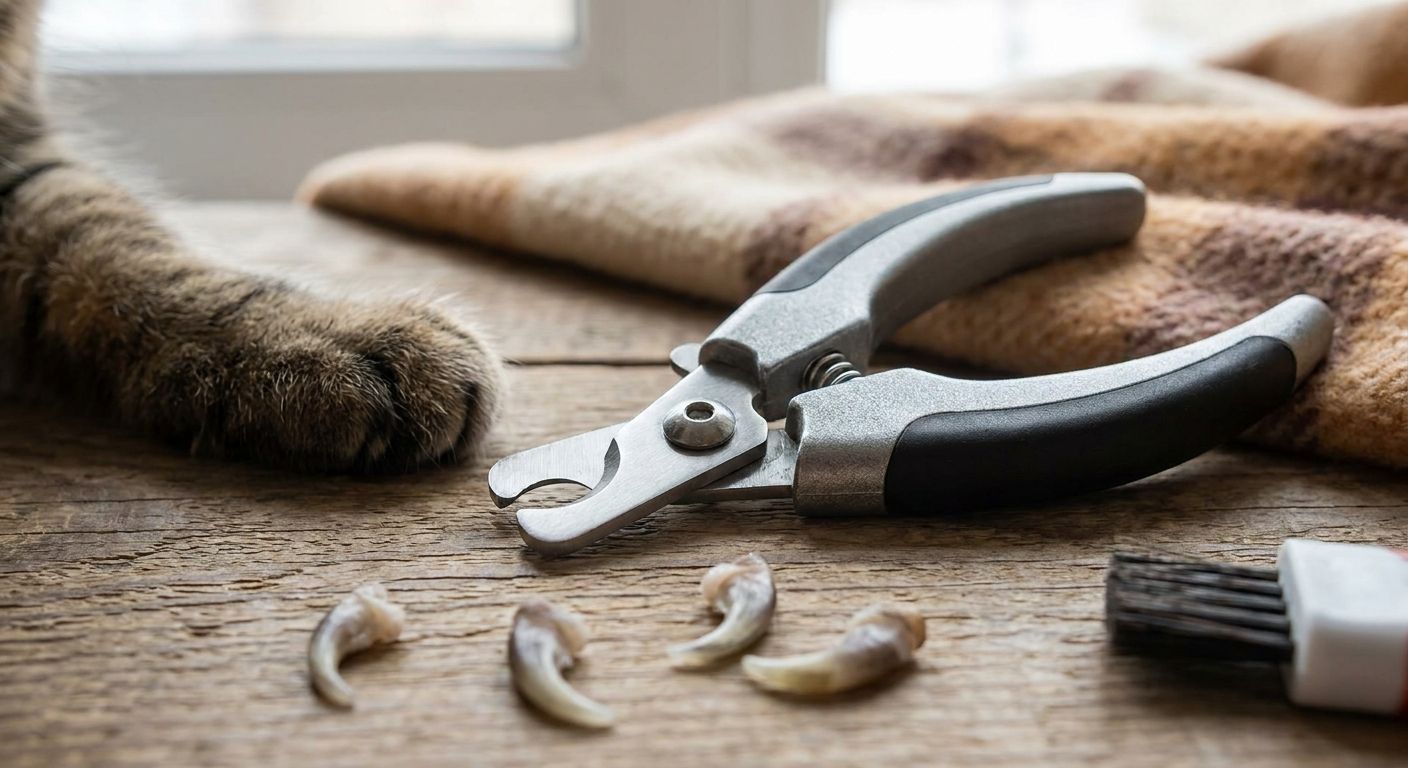
Plier-style guillotine clippers use longer handles to multiply the force your hand generates into the blade, which is the mechanical reason they're the standard pick for the thickest, most curled nail on senior cats or large breeds like Maine Coons and Norwegian Forest Cats. The trade-off is size — the extra leverage comes from a bigger handle, which is harder to angle precisely on a smaller paw.
Plier-style guillotine clippers pros:
- Highest leverage of any style, built for dense or curled nail
- Common choice in vet clinics for large-breed and senior cats
- Handles hold up well over repeated heavy use
Plier-style guillotine clippers cons:
- Bulkier grip makes precision harder on kittens or small paws
- Blade window is usually narrower than a wide-view design
Plier-style guillotine clippers best for: senior cats and large-breed cats whose nails have gone noticeably thick or curled between trims.
Verdict: Buy if your cat's nails fall into this category; otherwise, hold.
3. Scissor-style clippers: best for cats who resist the squeeze
Scissor-style clippers mimic a familiar household scissor motion rather than a squeeze-and-release mechanism, which some cats tolerate better because the movement is faster and less prolonged against the paw. On thinner nail this style cuts cleanly in one pass; on thick nail it often needs two or three smaller snips instead of one clean cut.
Scissor-style clippers pros:
- Fast, familiar motion that some cats tolerate better than a squeeze
- Easy to control at odd angles compared to guillotine designs
- Widely available at most price points
Scissor-style clippers cons:
- Thinner blade struggles to get through dense nail in one pass
- More passes per nail means more time your cat has to hold still
Scissor-style clippers best for: cats who tense up or pull away from squeeze-style clippers but tolerate a quick scissor snip.
Verdict: Hold for thick nails specifically — better suited to medium nail thickness.
4. Basic guillotine clippers: best budget option
Basic entry-level guillotine clippers are the cheapest way into cat nail trims and work fine for kittens or cats with naturally thin nail. Once nail thickens past medium, the smaller blade opening and lighter-gauge steel common at this price point tend to squeeze before they cut, which is the exact failure mode that makes cats dread trims.
Basic guillotine clippers pros:
- Lowest cost entry point for new cat parents
- Compact size, easy to store and travel with
- Fine for kittens and cats with thin, regularly-worn nail
Basic guillotine clippers cons:
- Blade dulls faster under repeated use
- Struggles once nails thicken past medium, increasing splitting risk
- Narrower blade window makes the quick harder to see
Basic guillotine clippers best for: kittens or cats with thin nail on a first-time budget.
Verdict: Skip if your cat's nails are already thick — upgrade before the next trim.
How we ranked
Each clipper style was measured against the same five criteria: blade material, cutting mechanism, blade visibility, grip and hand fatigue over repeated squeezes, and how much the mechanism depends on the cat holding still. The Full Stainless Steel Cat Nail Clipper ranks first because its single-piece steel build and 18mm wide-view blade address the two biggest failure points on thick nail — blade flex and poor visibility of the quick — without requiring the bulk of a plier-style tool.
A cat that won't sit still undermines any clipper on this list, thick nails or not. Pairing your clipper with the Snug Pro Cat Wrap keeps your cat gently held during the trim so the clean single-snip cut a good clipper is capable of actually happens on the first try, not the fourth.


“If the clipper squeezes before it cuts, the nail splits — that's how thick nails end up worse, not trimmed.”
Which cat nail clipper should you choose in 2026?
For most cat parents dealing with thick nail, the Full Stainless Steel Cat Nail Clipper is the default pick — the single-piece steel build and wide-view blade handle dense nail without the bulk of a plier-style tool. If your cat is a senior or a large breed with genuinely curled, overgrown nail, step up to a plier-style guillotine for the extra leverage. Scissor-style stays a fallback for cats who won't tolerate squeeze pressure, and basic guillotine clippers only make sense while nails are still thin.
If the real obstacle isn't the clipper but the wriggling, a cat grooming bag or wrap built for stress-free nail trims solves the other half of the problem.
FAQ
What's the best cat nail clipper for thick nails in 2026?
The Full Stainless Steel Cat Nail Clipper is the best overall pick for thick cat nails in 2026 because its single-piece steel body and 18mm wide-view blade cut cleanly instead of squeezing the nail apart. Plier-style guillotine clippers are the next step up for very thick or curled nail on senior or large-breed cats.
Is a guillotine or scissor-style clipper better for thick nails?
Guillotine and plier-style clippers generally handle thick nail better because their mechanism generates more leverage per squeeze. Scissor-style clippers work fine on medium nail but often need multiple passes once nail thickens.
Why do my cat's nails get so thick?
Nail thickness increases naturally with age and tends to be more pronounced in cats who scratch less or spend most of their time indoors. Senior cats and large breeds like Maine Coons commonly develop denser, more curled nail than younger or smaller cats.
How often should I trim thick cat nails?
Most vets recommend trimming every 2 to 4 weeks regardless of nail thickness, though cats with denser nail may need closer attention to avoid overgrowth and curling into the paw pad. Checking nails at each trim interval catches thickening early.
Can a dull clipper hurt my cat during a trim?
Yes — a dull or undersized blade tends to crush or splinter thick nail instead of cutting it cleanly, which causes pain and makes cats resist the next trim. Stainless steel blades with a wide viewing window reduce this risk.
Do I need a restraint tool along with a good clipper?
A restraint tool like a cat wrap makes a real difference because even the sharpest clipper needs the cat to hold still for a clean single snip. Pairing a quality clipper with gentle restraint cuts trim time and stress for both cat and owner.
Are plier-style clippers safe for kittens?
Plier-style clippers are bulkier and harder to angle precisely on small kitten paws, so a scissor-style or standard-size clipper is usually the safer fit until the cat is fully grown. Save plier-style tools for adult cats with genuinely thick or curled nail.
What's the sign a cat's nails have gotten too thick to trim safely at home?
If the nail visibly curls back toward the paw pad or the clipper you're using struggles to get through in one squeeze, it's a sign the nail has thickened past what a basic clipper can handle. At that point, a steel plier-style clipper or a vet trim is the safer move.
One last thing
The blade window matters more than most cat parents expect: a wide-view blade like the 18mm opening on the Full Stainless Steel Cat Nail Clipper doesn't just cut better, it lets you see the quick clearly enough to trim more confidently in low light, which is exactly when most home nail trims happen after a long day.