A cat grooming kit can replace a professional groomer for routine coat maintenance, nail trims and mat prevention, but it cannot replace a groomer for full-body haircuts, severe matting removal, or sanitary trims around a cat's rear end. The hidden cost most owners miss: skipping professional visits entirely on a long-haired or senior cat lets small mats turn into pelted fur that eventually requires a vet sedation shave, which costs far more than either option alone.
That's the honest split, and it's the one worth planning around before you buy anything.
- A cat grooming kit handles brushing, nail trims and de-shedding at home; it does not replace a groomer for haircuts or severe mats.
- Long-haired and senior cats still need periodic professional grooming even with a good at-home kit in 2026.
- Nail clippers and grooming wraps reduce stress for routine care, per the Purrttie product line.
- Matted or medically compromised cats are the clearest case for a professional groomer, not a kit.
- The real question isn't kit vs groomer, it's which tasks belong to each.
Why this matters
Pawrents ask this because professional grooming appointments in Malaysia, Singapore, Thailand and Australia take time to book, cost money, and stress most cats out before the car ride even starts. A grooming kit at home sounds like it solves all three problems at once. It solves two of them - time and stress - for maybe 70-80% of what a cat actually needs done. The remaining tasks are the ones groomers train for specifically, and skipping them has real consequences by 2026 standards of feline coat care.
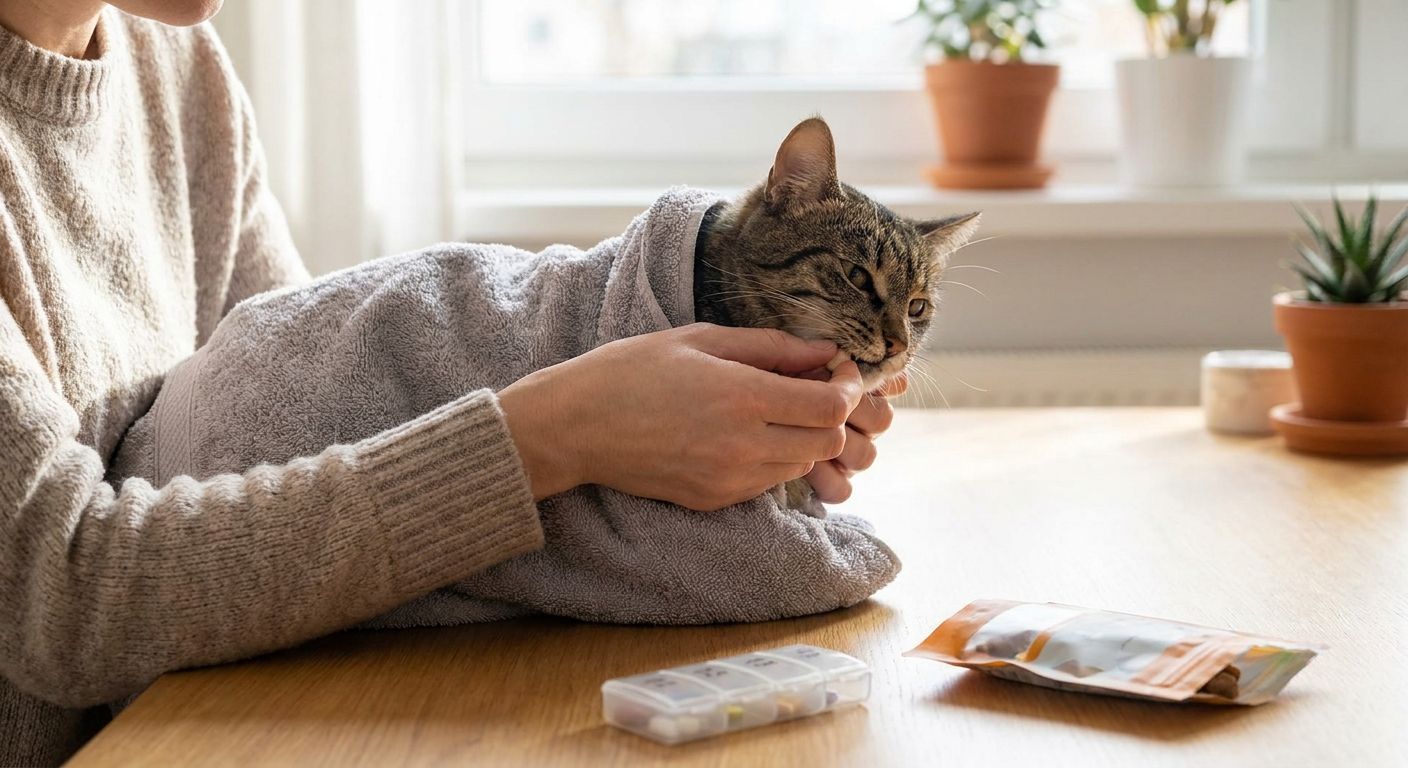
The Snug Pro Cat Wrap exists because the biggest barrier to at-home grooming isn't skill, it's the cat squirming or scratching mid-trim. Once that friction is gone, most routine tasks become manageable without a groomer.
Can a cat grooming kit replace a professional groomer?
Here's the direct comparison, task by task.
| Task | At-home grooming kit | Professional groomer |
|---|---|---|
| Weekly brushing / de-shedding | Handles it well | Not needed weekly |
| Nail trims | Handles it with the right clipper and restraint | Overkill for routine trims |
| Bathing a short-haired cat | Manageable with wipes or a bath | Rarely necessary |
| Full haircut / lion cut | Not possible safely at home | Required |
| Severe matting removal | Risky - clippers near matted skin can nick a cat | Required, sometimes under sedation |
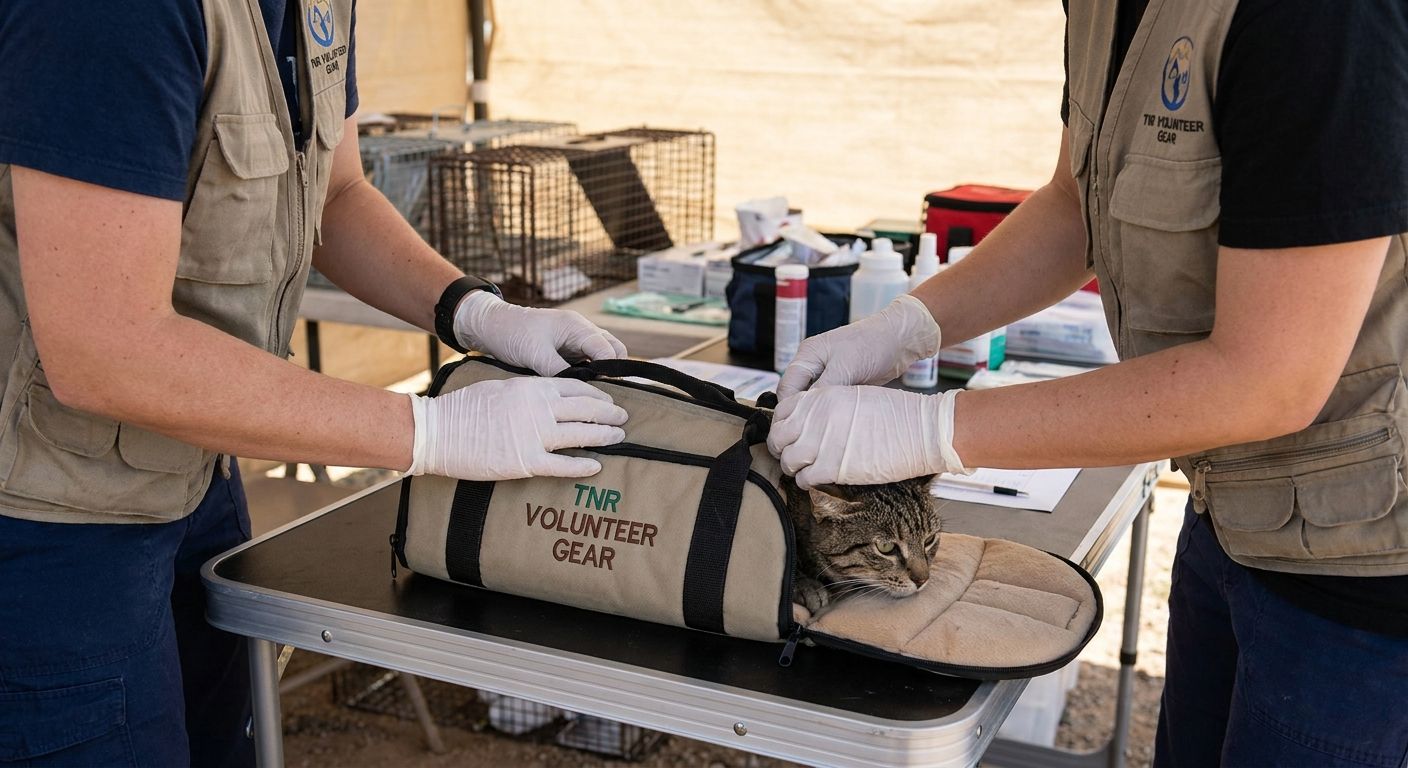
| Sanitary trim (rear-end fur) | Difficult to do safely alone | Groomer or vet tech territory |
| Anxious or medically fragile cats | Fine for light routine tasks with a wrap | Recommended for anything invasive |
The pattern is consistent across every version of this question: a grooming kit wins on frequency and stress reduction, a professional groomer wins on anything involving scissors near skin or a cat that won't hold still.
What a cat grooming kit handles well
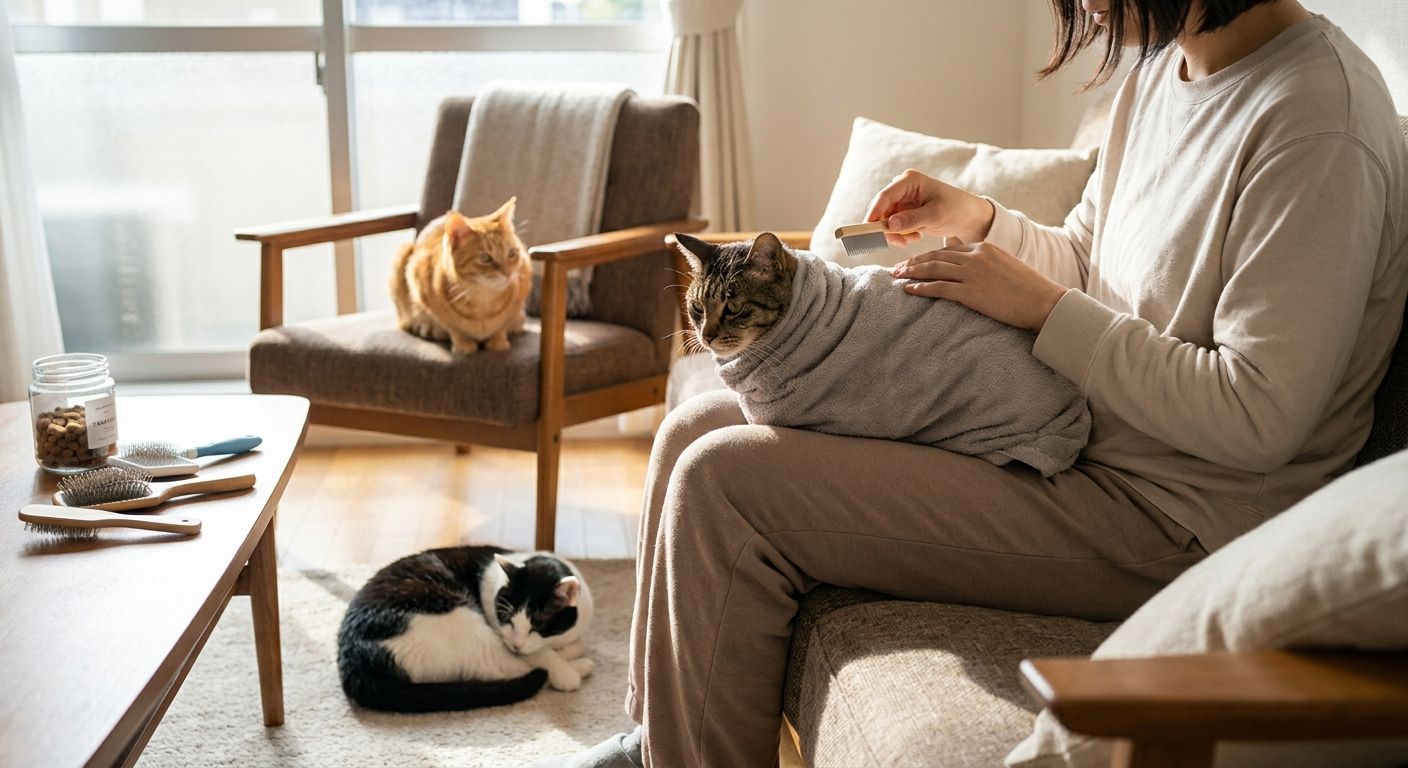
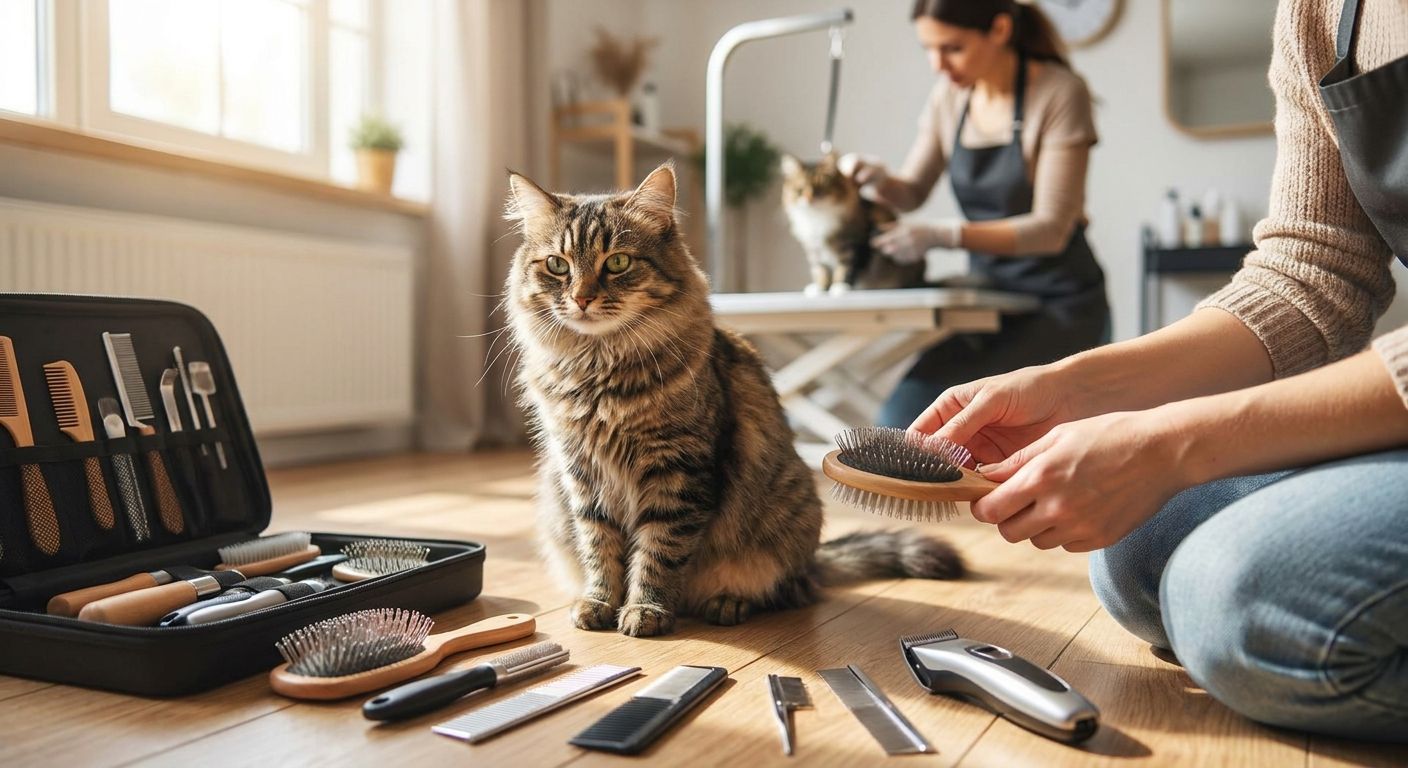
A decent at-home kit covers most of what a healthy, cooperative cat needs between professional visits:
- Weekly brushing to reduce loose fur and hairballs
- Nail trims every 2-3 weeks with a proper clipper
- Spot-cleaning with grooming wipes instead of a full bath
- Gentle restraint during trims or medication using a wrap-style tool
- Early mat detection before it becomes a shave-out situation
This is the category Purrttie builds for - tools that make the routine 80% of grooming less of a fight, so the cat associates handling with calm instead of chase.
What only a professional groomer can do
A kit runs out of usefulness fast once the job gets technical:
- Full-body haircuts on long-haired breeds like Persians or Maine Coons
- Removing established mats without risking the skin underneath
- Sanitary trims that require precise scissor work in a hard-to-reach area
- Expressing anal glands, which is a medical-adjacent task, not a grooming one
- Handling a cat that becomes aggressive under any restraint, at-home or otherwise
If your cat falls into any of these categories in 2026, book the groomer and use the kit for maintenance in between appointments, not as a substitute for the appointment itself.
Why the answer varies by cat
The kit-vs-groomer split isn't fixed - it moves depending on a few factors:
- Coat length and type - short-haired cats need far less professional intervention than long-haired breeds prone to matting
- Age and mobility - senior cats groom themselves less and mat faster, which pushes more toward professional care
- Temperament - a cat that tolerates handling makes at-home grooming realistic; one that doesn't may need a groomer's experience regardless of coat
- Medical conditions - arthritis, obesity, or skin issues change what's safe to attempt at home
- Owner confidence - a nervous owner with clippers is a bigger risk to the cat than a confident one, independent of the tool quality
A cat grooming kit for long-haired cats has to work harder than one for a short-haired breed, which is why the tools you pick should match the coat in front of you, not a generic checklist.


Is at-home grooming safe for an anxious cat?
At-home grooming is safe for an anxious cat when the restraint is gentle and the sessions stay short, but forcing a struggling cat through a full trim raises the risk of scratches on both sides. A wrap-style tool that limits movement without squeezing tends to lower the panic response compared to holding a cat down by hand. If the anxiety doesn't ease after a few short sessions, a professional groomer with more restraint experience is the safer next step.
Does a grooming kit reduce hairballs?
Regular brushing with an at-home kit does reduce hairballs, because less loose fur ends up swallowed during self-grooming. This works for both short- and long-haired cats, though long-haired breeds need brushing more often to get the same effect. A groomer's de-shedding treatment goes further for heavy shedders, but weekly brushing at home covers most of the year in between.
Can I trim my cat's nails myself instead of paying a groomer?
You can trim a cat's nails yourself with a proper clipper and a calm hold, and most cats tolerate this better at home than in an unfamiliar grooming salon. The main risk is cutting into the quick, which a sharp, single-piece clipper with a clear blade view helps you avoid. If your cat fights every attempt regardless of tool, a groomer or vet tech can do it faster and with less stress on both of you.
FAQ
Can a cat grooming kit fully replace a professional groomer?
No, a cat grooming kit cannot fully replace a professional groomer for haircuts, severe matting, or sanitary trims. It replaces the groomer for routine brushing, nail trims, and spot-cleaning between visits.
How often does a long-haired cat need a professional groomer in 2026?
Long-haired cats generally need professional grooming more often than short-haired cats because their coats mat faster. Between visits, daily or weekly brushing at home keeps mats from forming in the first place.
Is it cheaper to groom a cat at home than pay a professional?
At-home grooming with your own tools cuts down on the frequency of paid visits, since routine tasks like brushing and nail trims no longer require an appointment. A groomer is still worth booking for anything beyond routine maintenance.
What can't a cat grooming kit do that a groomer can?
A cat grooming kit can't safely perform full-body haircuts, remove established mats close to the skin, or handle sanitary trims around the rear end. Those tasks require a groomer's training and tools.
Is at-home nail trimming as safe as a professional trim?
At-home nail trimming is as safe as a professional trim when you use a sharp, single-piece clipper and a calm restraint method. The risk of cutting the quick comes down to steady technique, not who's holding the clipper.
Do senior cats need professional grooming more than younger cats?
Senior cats often need more professional grooming attention because reduced mobility makes self-grooming and mat prevention harder. A gentle at-home kit still covers routine brushing and nail care in between visits.
Can grooming wipes replace bathing a cat?
Grooming wipes replace full baths for most healthy short-haired cats that don't get visibly dirty or oily. Cats with skin conditions or heavy odor still need an actual bath, at home or with a groomer.
What's the best cat grooming kit for a first-time cat owner?
The best starter kit for a first-time cat owner pairs a restraint tool with a basic nail clipper, since most early grooming friction comes from handling, not the tools themselves. Add a brush once the cat tolerates short handling sessions.
One last thing
The cats that end up needing an emergency vet shave aren't usually the ones skipping grooming entirely - they're the ones whose owners bought a kit, used it for a few weeks, then stopped once the cat resisted once. Consistency matters more than the tool. A cat that gets a calm 2-minute wrap-and-clip session every couple of weeks in 2026 rarely needs the groomer for anything beyond an occasional full coat trim, while a cat groomed sporadically ends up needing professional intervention more, not less.