Flea combs are not all the same tool with different price tags - the tooth spacing, row count, and handle shape change what the comb actually catches. Best overall: a double-row stainless steel flea comb. Best for kittens and sensitive skin: a narrow-tooth single-row comb. Best for anxious or fidgety cats: a rounded-tip comb with a locking guard, used alongside a restraint wrap. If you only buy one, get the double-row stainless steel comb and keep a grooming kit for kittens nearby if you're working with a young cat.
- Double-row stainless steel flea combs win overall for catching adult fleas and flea eggs in one pass in 2026.
- Narrow-tooth single-row combs are the safer starter tool for kittens and cats with thin, sensitive skin.
- A combo flea/de-shedding comb helps during seasonal shedding but should not replace a dedicated flea comb during an active flea problem.
- Anxious cats do best with a rounded-tip locking-guard comb paired with a restraint wrap, not a bare comb alone.
Why this matters
A flea comb that misses eggs buys you a week before the infestation is back. Fleas lay eggs loosely in fur - they fall off within hours - so the comb's job during a check is to catch adult fleas and "flea dirt" (digested blood, visible as dark specks) before you decide on a bath or treatment. The wrong comb for your cat's coat or temperament means shorter sessions, missed spots, and a cat who dreads the next check.
Most of the confusion around best cat flea combs in 2026 comes from treating it as one category when it's really five different tools solving five different problems - kitten skin, long fur, shedding season, anxious cats, and routine adult checks. Purrttie sells the grooming and restraint tools that make these sessions calmer, even though a flea comb itself isn't part of the current lineup - which is exactly why this guide focuses on comb type, not a single branded pick.
What makes the best cat flea comb
- Tight tooth spacing that traps adult fleas and flea dirt, not just loose surface hair
- Row count - double-row combs clear more debris per stroke; single-row combs are gentler
- Rounded, blunt tips that won't scrape skin during a 10-15 minute session
- Ergonomic grip so your hand doesn't cramp near the face, ears, and tail base
- A profile that sits flat against a curved body without gapping - matters more on long-haired cats
- Easy cleaning - fleas and debris should rinse off in soapy water between passes
At a glance
| Comb type | Best for | Standout feature | Key limitation |
|---|---|---|---|
| Double-row stainless steel | Adult fleas and flea dirt, routine checks | Clears more debris per stroke | Teeth snag heavily matted fur |
| Narrow-tooth single-row | Kittens, sensitive skin | Lighter, gentler pass | More strokes needed to clear one section |
| Ergonomic anti-slip handle | Long-haired cats, long sessions | Reduces hand fatigue past 10 minutes | Bulkier around tight spots like behind the ears |
| Combo flea/de-shedding | Shedding season, dual-purpose checks | Clears undercoat and flags fleas together | Wider spacing misses some eggs |
| Rounded-tip with locking guard | Anxious or fidgety cats | Fewer skin nicks near delicate areas | Fewer strands combed per stroke |
1. Double-row stainless steel flea comb: best cat flea comb for routine adult checks
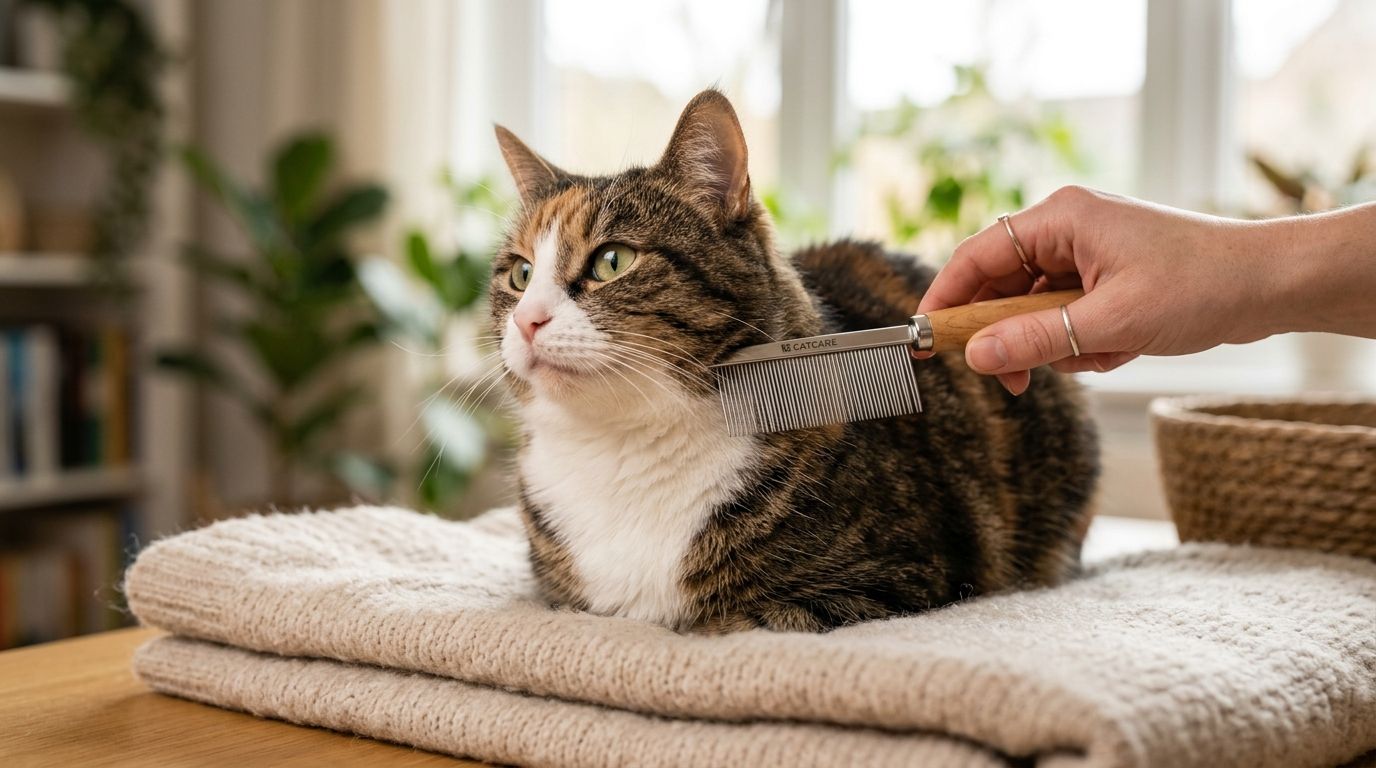
This is the standard tool for a weekly or biweekly flea check on an adult cat with a normal coat. Two rows of closely spaced stainless steel teeth mean one stroke covers more ground than a single-row comb, and stainless steel holds up to repeated rinsing without rusting.
Double-row flea comb pros:
- Catches adult fleas and flea dirt in the same pass
- Wide-view spacing common across most models makes debris visible immediately
- Stainless steel teeth don't dull or rust after months of use
Double-row flea comb cons:
- Tight spacing snags on heavily matted or tangled fur
- Can feel dense and scratchy on a kitten's thinner coat
Best for: adult cats with a normal, untangled coat needing a routine check. Verdict: Buy.
2. Narrow-tooth single-row flea comb: best cat flea comb for kittens and sensitive skin
Kittens have thinner skin and less fur density, so a dense double-row comb can feel harsh. A single-row, narrow-tooth comb is lighter and slower - which is actually the point when you're building a young cat's tolerance for grooming tools.
Single-row flea comb pros:
- Gentler pass reduces the chance of catching or scraping thin skin
- Lighter weight is easier to control for first-time handlers
- A good bridge tool before introducing a double-row comb
Single-row flea comb cons:
- Needs more strokes to clear the same section a double-row comb covers in one pass
- Misses more flea dirt per stroke since fewer teeth make contact
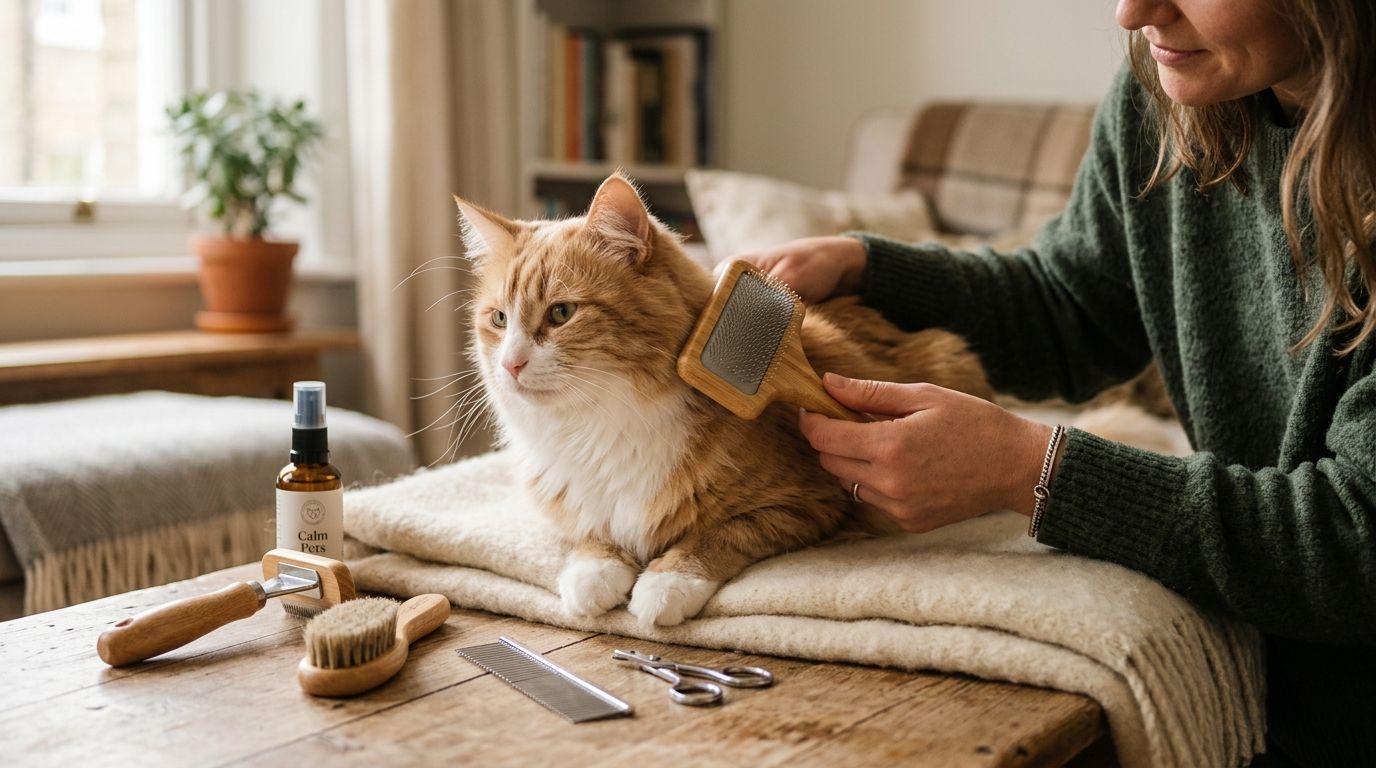
Pairing this with a grooming kit for kittens early on makes flea checks part of a routine instead of a battle later.
Best for: kittens and adult cats with visibly sensitive or thin skin. Verdict: Buy.
3. Ergonomic anti-slip handle flea comb: best cat flea comb for long-haired cats and long sessions
Long-haired breeds need multiple passes to reach skin level, which means longer sessions and more hand fatigue. An ergonomic, anti-slip handle keeps your grip steady over 10-15 minutes without your fingers cramping around the comb's neck.
Ergonomic-handle flea comb pros:
- Reduces hand strain on sessions that run past 10 minutes
- Better control near sensitive zones like the face and tail base
- Handles well on dense, long coats that need repeated passes
Ergonomic-handle flea comb cons:
- Bulkier grip can feel awkward working behind the ears or under the chin
- Adds bulk compared to a slim single-row comb
Check whether a flea comb is effective on long-haired cats before assuming one pass is enough - dense coats usually need a systematic section-by-section approach.
Best for: long-haired cats and pawrents doing thorough, multi-section checks. Verdict: Buy.
4. Flea comb and de-shedding comb combo: best cat flea comb for shedding season
During heavy shedding, a two-sided tool that combines flea-comb teeth on one side and wider de-shedding teeth on the other saves a step. You clear loose undercoat and check for fleas in the same session instead of switching tools mid-groom.
Combo comb pros:
- Cuts total grooming time during shedding season
- Useful for cats who tolerate only one grooming session per week
- Reduces loose fur around the house while doubling as a flea check
Combo comb cons:
- Wider de-shedding spacing misses smaller flea eggs that a dedicated flea comb would catch
- Not a reliable primary tool if you already suspect an active flea problem
If shedding is the main concern rather than fleas, the dedicated de-shedding tools guide breaks down options built specifically for that job.
Best for: multi-purpose grooming during shedding season, not active flea outbreaks. Verdict: Hold - use as a supplement, not a substitute for a dedicated flea comb.
5. Rounded-tip flea comb with locking guard: best cat flea comb for anxious or fidgety cats
An anxious cat who flinches at a bare-tooth comb needs a rounded, guarded tip that reduces the risk of a nick if the cat moves suddenly. This type sacrifices some tooth exposure for safety, which slows the check but keeps the session from turning into a fight.
Guarded-tip comb pros:
- Fewer accidental nicks near delicate areas like the belly and tail base
- Safer for cats prone to sudden movement mid-groom
- Works well as a starter comb for cats new to grooming tools altogether
Guarded-tip comb cons:
- Fewer teeth exposed per stroke means slower overall coverage
- Not the fastest choice if you're checking multiple cats in one sitting
For cats who won't sit still at all, combine this comb with a restraint tool - the Snug Pro Cat Wrap is designed to keep a cat gently in place for exactly this kind of check, hands-free of the chase.

Best for: anxious, fidgety, or first-time-groomed cats. Verdict: Buy - especially paired with a wrap for full-body checks.
How we ranked
Each comb type was measured against the six criteria above - tooth spacing, row count, tip safety, grip, coat fit, and cleanability - rather than brand names, since the right comb depends on coat length and temperament more than any single feature. A double-row stainless steel comb wins on raw debris capture; a guarded single-row comb wins on safety for a cat who won't hold still.
Which cat flea comb should you choose?
For most adult cats with a normal coat, the double-row stainless steel flea comb is the default pick for 2026 - it clears more per stroke and holds up over years of rinsing. Kitten owners and sensitive-skin cats should start narrow-tooth and single-row, long-haired cats need the ergonomic handle version for session length, and anxious cats do best with a rounded guard tool paired with a restraint wrap rather than a bare comb.
“If the comb doesn't turn up flea dirt after three or four strokes over the lower back and tail base, check those two spots specifically - they're the areas a cat can't reach to self-groom.”
FAQ
What's the best cat flea comb for long-haired cats?
An ergonomic-handle double-row flea comb works best for long-haired cats in 2026 because it reduces hand fatigue during the multiple passes a dense coat requires. Section the coat and work from the skin outward rather than skimming the surface.
Do flea combs actually remove flea eggs?
Flea combs remove some loose eggs and flea dirt but eggs fall off fur naturally within hours, so combing alone won't clear an active infestation. It's a detection and monitoring tool, not a standalone treatment.
Is a flea comb better than flea medication?
A flea comb is a detection tool, not a treatment - it tells you whether fleas are present so you can decide on medication or a vet visit. Use combing for checks and medication for actual treatment.
How often should you flea comb a cat?
A weekly flea comb check is reasonable for most indoor cats, increasing to every few days if you've spotted fleas recently or your cat goes outdoors. Kittens and senior cats benefit from shorter, more frequent sessions.
Can kittens use a flea comb?
Kittens can use a flea comb once they're a few weeks old, but a narrow-tooth single-row comb is safer than a dense double-row model on their thinner skin. Keep first sessions under two minutes.
What's the difference between a flea comb and a de-shedding comb?
A flea comb has tightly spaced teeth built to trap fleas and flea dirt, while a de-shedding comb has wider spacing built to pull out loose undercoat. A combo tool does both but misses some eggs a dedicated flea comb would catch.
How do you clean a flea comb after use?
Rinse the comb in warm soapy water immediately after each pass to remove fleas and debris before they're reintroduced to the coat. Stainless steel combs handle repeated rinsing without dulling.
One last thing
Run the comb over the tail base and back of the neck before anywhere else - those are the two spots a cat physically can't reach to self-groom, so fleas concentrate there first. If those two areas come up clean, the rest of the coat almost always does too.