Anxious cats don't need more force during grooming — they need tools that remove the struggle entirely. This guide ranks the six grooming tools that actually work for cats who freeze, bolt, or scratch at nail trims, brushing, and vet prep in 2026.
- Snug Pro Cat Wrap is the best overall pick among cat grooming tools for anxious cats in 2026, built for nail trims, meds and vet prep.
- A nail grinder beats clippers for cats who bolt at the snipping sound, but each paw takes longer to finish.
- Grooming gloves solve brush-phobia in cats, not matting in heavily shed coats.
- A cat muzzle is a last-resort tool for biting or scratching cats, never a first grooming step.
- Grooming wipes are the budget option for quick touch-ups between full sessions, not a bath replacement.
Best overall for anxious cats: Snug Pro Cat Wrap. Best for nail trims once your cat is settled: Full Stainless Steel Cat Nail Clipper. Best for cats who panic at the clipper snip: a cat nail grinder. Best for cats who flee from brushes: grooming gloves. Best for cats who bite or scratch during handling: a cat muzzle. Best budget option for quick touch-ups: grooming wipes.
Why this matters
A cat that hisses, thrashes, or hides at the sight of a nail clipper isn't being difficult — it's reacting to restraint it can't escape. Swapping the tool, not just the technique, is usually what breaks that cycle. Purrttie (https://purrttie.com/) builds around that idea: reduce the physical fight before you touch a claw or a brush.
Desensitization also plays a bigger role than most pawrents expect. Pairing the right tool with a slow introduction schedule changes outcomes fast — see how long it takes to desensitize a cat to grooming for a realistic timeline. Most of the tools below fail or succeed based on how much control they hand back to the cat, not how sharp or fast they are.
What makes the best grooming tool for anxious cats
- Restraint without a full-body hold — the cat should feel snug, not pinned.
- Low noise output — clipper snips and clipper-grinder motors both trigger flight response in sound-sensitive cats.
- Short contact time per session — tools that finish fast beat tools that are gentle but slow.
- Visible safety stops — a quick-stop guard or blade guide reduces the one bad clip that ruins six months of trust.
- Low learning curve for the pawrent — a tool you fumble with stresses the cat more than the tool itself.
- Reusable across life stages — kitten to senior, without buying a second tool at year two.
At a glance: cat grooming tools for anxious cats compared
| Tool | Best for | Standout feature | Key limitation |
|---|---|---|---|
| Cat restraint wrap | Overall anxious-cat handling | Snug hold, cat's head stays free | Needs a short intro period before first real use |
| Nail clippers | Fast trims once calm | Single clean snip, wide-view blade | Snip sound spooks sound-sensitive cats |
| Nail grinder | Cats scared of the snip | Continuous low hum, no sudden noise | Takes longer per paw, motor vibration bothers some cats |
| Grooming gloves | Brush-phobic cats | Feels like petting, not grooming | Weak on mats and heavy undercoat |
| Cat muzzle | Biting or scratching cats | Blocks bite risk during handling | Should follow a wrap and clippers, not replace them |
| Grooming wipes | Quick touch-ups | No water, no bath stress | Not a substitute for brushing or bathing |
1. Snug Pro Cat Wrap: best overall for anxious cats
The Snug Pro Cat Wrap wraps around the cat's body while leaving the head and face free, so nail trims, medication, and vet prep happen without the full-body chase. It's designed for the moment right before you pick up a clipper or a syringe — the part where most cats decide to fight.
Snug Pro Cat Wrap pros:
- Cat keeps its head free, which cuts panic compared to full-body towel burritos
- Works for nail trims, oral meds, and pre-vet handling with one product
- Reusable across multiple cats in a household
Snug Pro Cat Wrap cons:
- Cats need a short intro period before the wrap feels routine, not instant
- Not a substitute for a muzzle if your cat is a biter, not just a wriggler
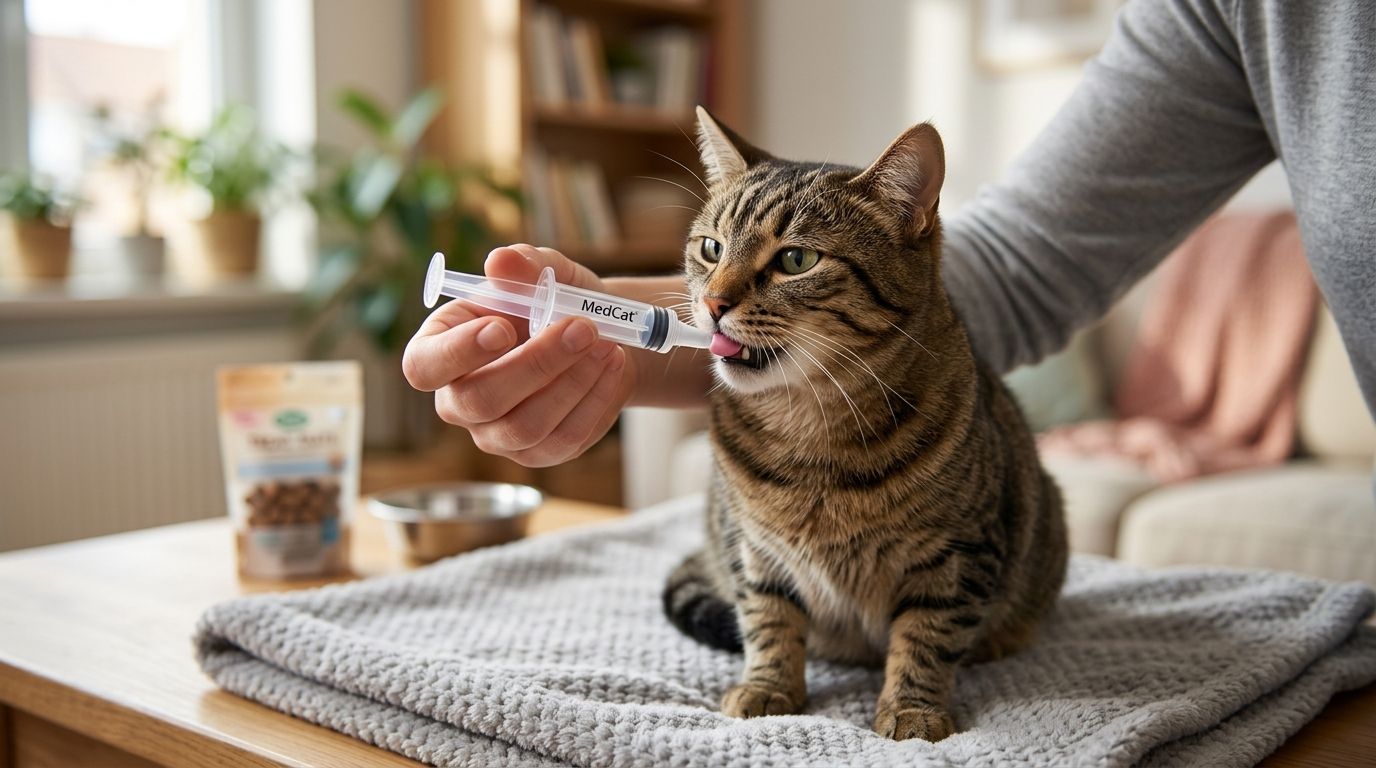
If your cat needs medication regularly, pair the wrap with a slow-intro approach — see how to give a cat medication alone using a restraint wrap. Best for: pawrents doing nail trims, meds, or vet prep solo. Verdict: Buy.
2. Full Stainless Steel Cat Nail Clipper: best for fast trims once your cat is calm
The Full Stainless Steel Cat Nail Clipper is cut from one piece of steel with an 18mm wide-view blade, built for a single clean snip instead of a squeeze-and-split motion. It's the tool you reach for once the cat is settled, not the one that calms the cat down.
Full Stainless Steel Cat Nail Clipper pros:
- Single-piece steel blade means no splitting or crushing the nail
- Wide blade view makes it easier to avoid the quick
- Stainless steel holds an edge longer than coated blades
Full Stainless Steel Cat Nail Clipper cons:
- The snip sound still startles noise-sensitive cats
- No built-in restraint — pair it with a wrap for a wriggling cat
Best for: cats who tolerate handling but need a fast, clean trim. Verdict: Buy.


3. Cat nail grinder: best for cats scared of the clipper sound
A nail grinder files the nail down with a continuous low hum instead of a sudden snip, which suits cats who flinch or bolt at the clipper sound specifically, not the trim itself. It sacrifices speed for predictability — the cat hears one steady noise instead of six sharp ones.
Nail grinder pros:
- No sudden snip sound to trigger flight response
- Rounds the nail edge, reducing snag risk on fabric
- Works well for cats who've already been startled by clippers once
Nail grinder cons:
- Motor vibration bothers some cats as much as the snip did
- Takes noticeably longer per nail than a clipper
- Not ideal for very thick or dark nails where you can't see the quick
Check the differences directly in is a cat nail grinder better than clippers before switching tools entirely. Best for: cats specifically scared of the snip sound. Verdict: Buy if clippers have already failed twice.
4. Grooming gloves: best for cats who flee from brushes
Grooming gloves look and feel like a hand petting the cat, with small nubs that catch loose fur during normal contact. For cats who associate a brush shape with stress, this removes the trigger entirely.
Grooming gloves pros:
- Feels like petting, so cats rarely notice the grooming part
- Good for daily light shedding maintenance
- Low learning curve for first-time pawrents
Grooming gloves cons:
- Weak against mats and heavy undercoat compared to a proper brush
- Needs daily use to keep up with long-haired shedding
Best for: cats that panic at brush shapes but tolerate hands. Verdict: Buy for light coats, Hold for heavy shedders.
5. Cat muzzle: best for biting or scratching cats
A grooming muzzle blocks bite risk during handling and is reserved for cats whose anxiety escalates to biting or scratching, not general nervousness. It should follow a restraint wrap and calm handling, not replace the groundwork.
Cat muzzle pros:
- Removes bite risk during nail trims or medication
- Lets a second pawrent or a groomer work without injury risk
- Useful short-term while desensitization is still in progress
Cat muzzle cons:
- Increases stress if used as the first tool instead of a last resort
- Requires its own slow introduction, same as any restraint tool
See the full comparison at best cat muzzles for grooming. Best for: cats with a documented bite or scratch history during handling. Verdict: Hold as backup, not a starting tool.
6. Grooming wipes: best budget option for quick touch-ups
Grooming wipes clean fur between full sessions without water, which matters for cats who associate bathing with panic. They're the lowest-friction tool on this list but the most limited.
Grooming wipes pros:
- No water, no bath-related stress
- Fast for spot-cleaning paws or fur after a messy day
- Cheapest entry point on this list
Grooming wipes cons:
- Doesn't replace brushing for shedding or matting
- Doesn't touch nail length or dental care at all
Best for: pawrents needing a fast fix, not a full grooming routine. Verdict: Buy as a supplement, Skip as a standalone solution.
“If your cat needs more than a firm hold to sit still, the tool is fighting the cat instead of calming it.”
How we ranked these tools
Each tool was scored against the six criteria above: restraint without a full hold, noise output, contact time, visible safety stops, learning curve, and reuse across life stages. The Snug Pro Cat Wrap ranked highest because it addresses the restraint problem directly, which is the root cause behind most anxious-cat grooming failures in 2026 — not the nail, the fur, or the ears, but the fight to hold still.
Which cat grooming tool should you choose?
Start with a restraint wrap if your cat fights any form of handling — it fixes the underlying problem before you introduce clippers, grinders, or wipes. Add a nail grinder only if clippers have already spooked your cat twice. Reserve a muzzle strictly for documented biting or scratching, and treat wipes as a supplement, never a replacement for brushing. For most anxious cats in 2026, the Snug Pro Cat Wrap plus a clean-cutting clipper is the combination that ends the grooming fight fastest.
FAQ
What is the best cat grooming tool for anxious cats?
The Snug Pro Cat Wrap is the best overall tool for anxious cats in 2026 because it restrains the body while leaving the head free, cutting panic during nail trims, meds, and vet prep.
Is a nail grinder better than clippers for anxious cats?
A nail grinder is better specifically for cats scared of the clipper's snip sound, since it replaces the sudden noise with a continuous low hum. Clippers still finish faster once a cat tolerates handling.
Do grooming gloves work on long-haired cats?
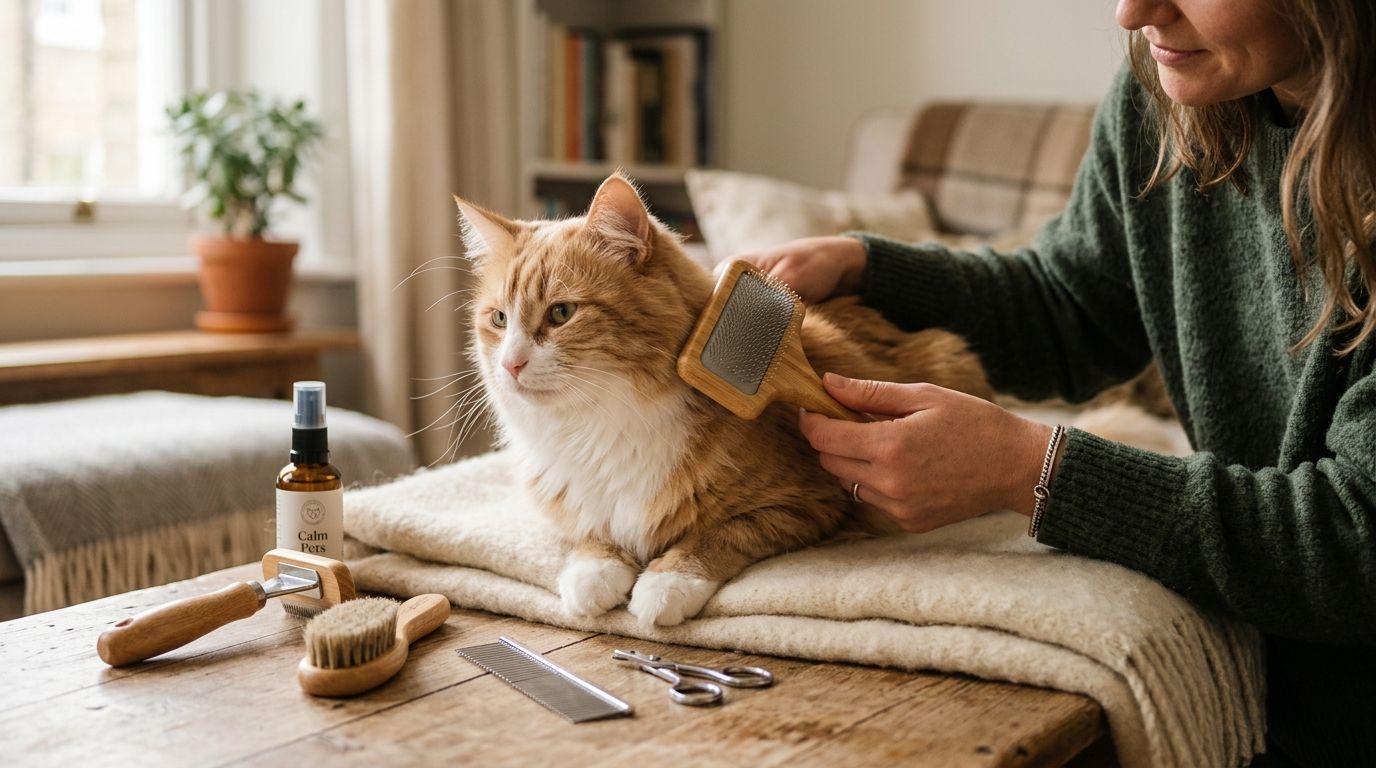
Grooming gloves work well for light daily shedding on long-haired cats but struggle against mats and heavy undercoat. Pair gloves with a dedicated brush for cats that mat easily.
Should I use a muzzle for a nervous cat?
A muzzle is only necessary if a cat bites or scratches during handling, not for general nervousness. Using one on a cat that's only wriggly can add stress instead of reducing it.
How long does it take to desensitize a cat to grooming tools?
Desensitization timelines vary by cat, but short, repeated low-stress introductions work faster than one long forced session. A cat that's already had a bad clipper experience typically needs a slower reintroduction.
Can grooming wipes replace bathing a cat?
Grooming wipes handle quick spot-cleaning but don't replace a full bath or brushing session for shedding and matting. Use wipes between sessions, not as the only grooming method.
What's the difference between a cat wrap and a towel burrito?
A dedicated cat wrap is built to keep the hold snug without slipping, while a towel burrito relies on manual tension that loosens as the cat struggles. The wrap generally holds longer with less regripping.
One last thing
The tool that ends the fight fastest is rarely the sharpest one — it's the one that removes the need for the cat to struggle at all. Most anxious-cat grooming failures trace back to restraint, not the clipper, the brush, or the wipe.